
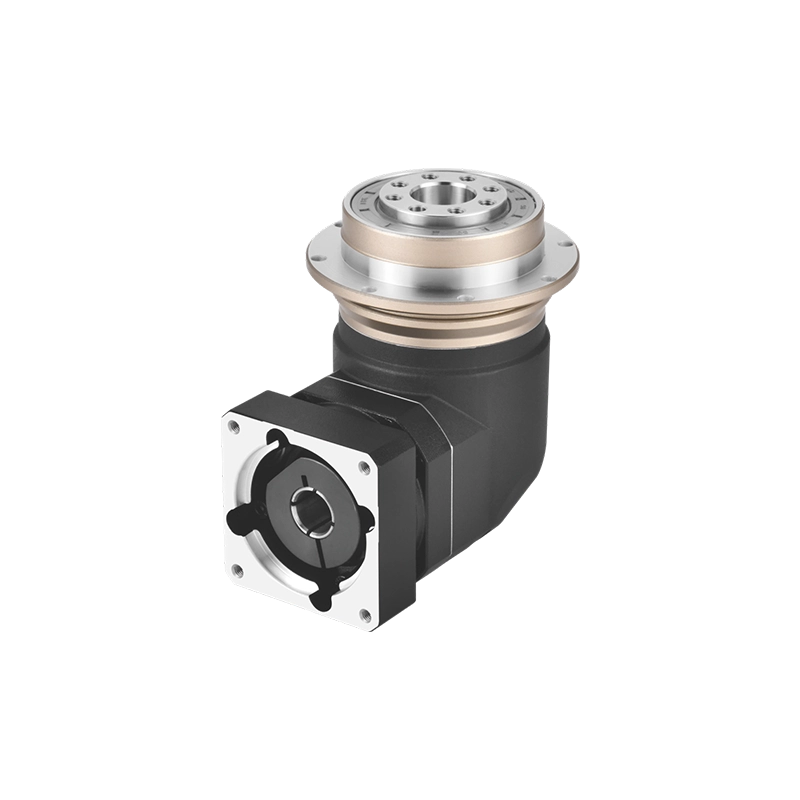
A servo rotary table is often chosen when an automation machine needs more than simple rotation. In many production systems, the rotary axis must stop accurately, repeat the same movement many times, change angles when the product changes, and work together with sensors, cylinders, robots, cameras, or other machine modules.
This is why servo-controlled rotary positioning has become common in automated assembly equipment, inspection machines, packaging systems, electronics manufacturing lines, testing equipment, and robotic workstations. The table is not just rotating a part. It is helping the whole machine move in a controlled and repeatable way.
For machine builders, the real question is usually not “Can the table rotate?” The more useful question is: can it rotate the load smoothly, stop at the required position, keep repeatability during long-term operation, and fit the machine structure without creating installation problems?
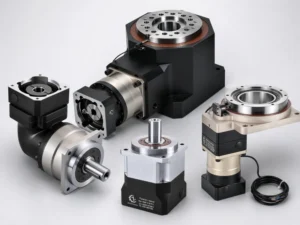
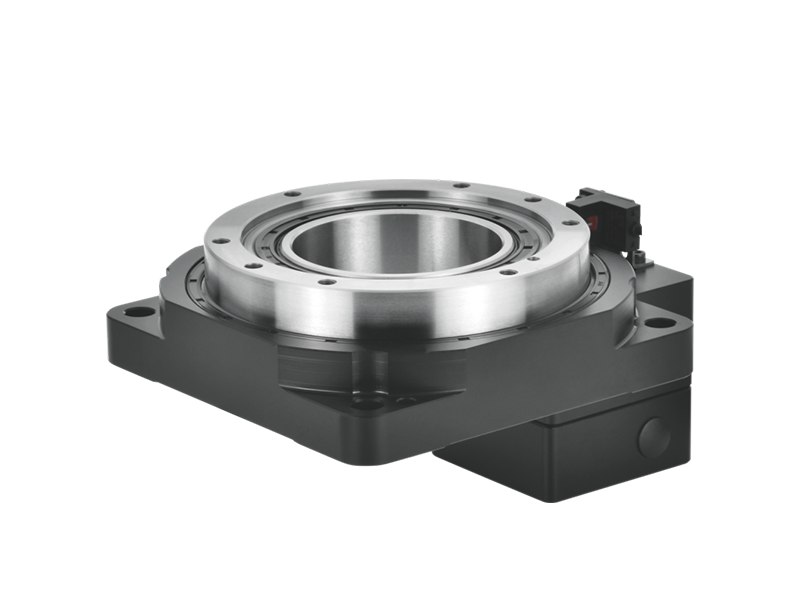
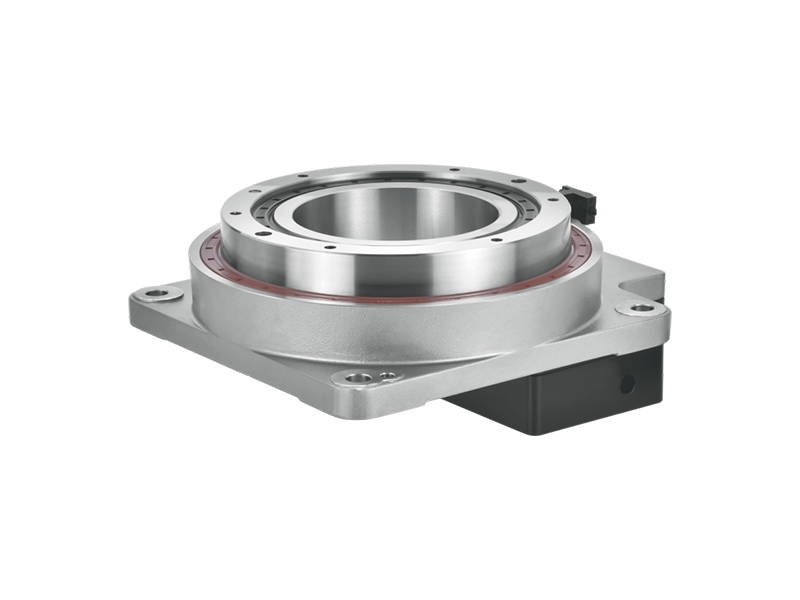
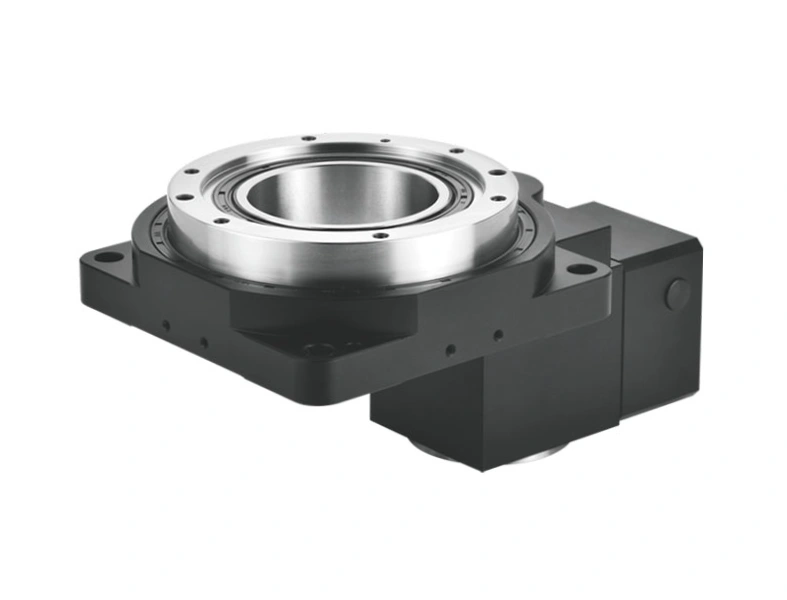
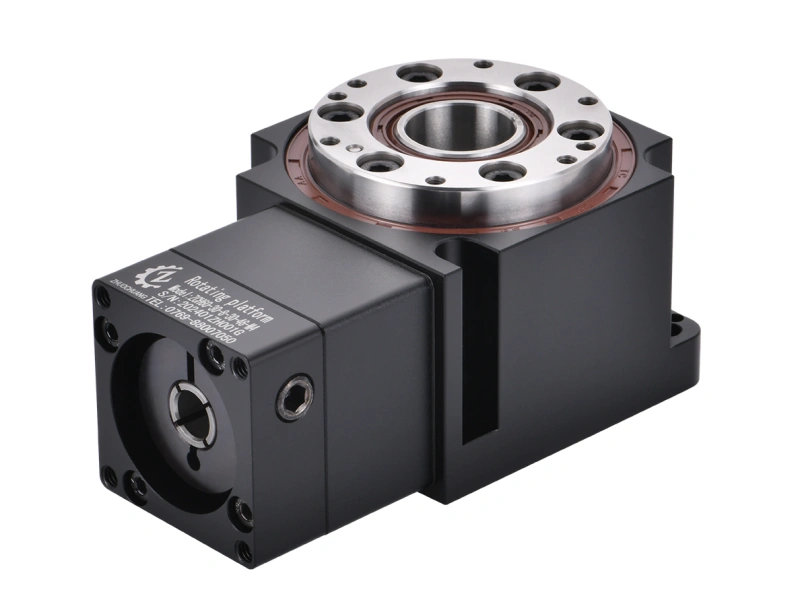
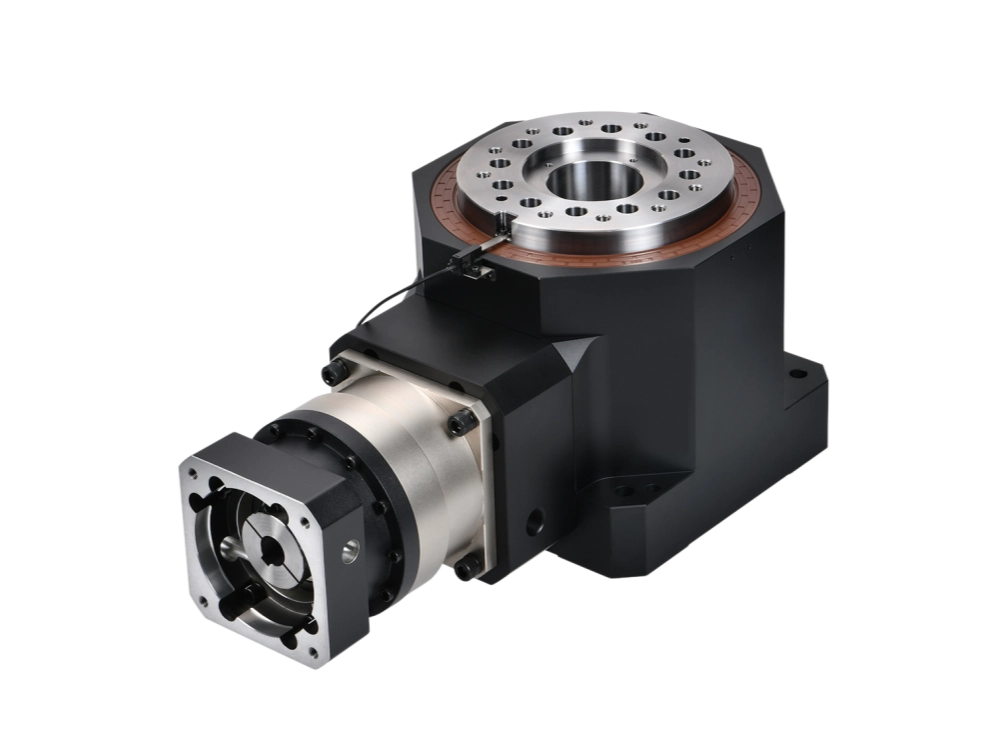
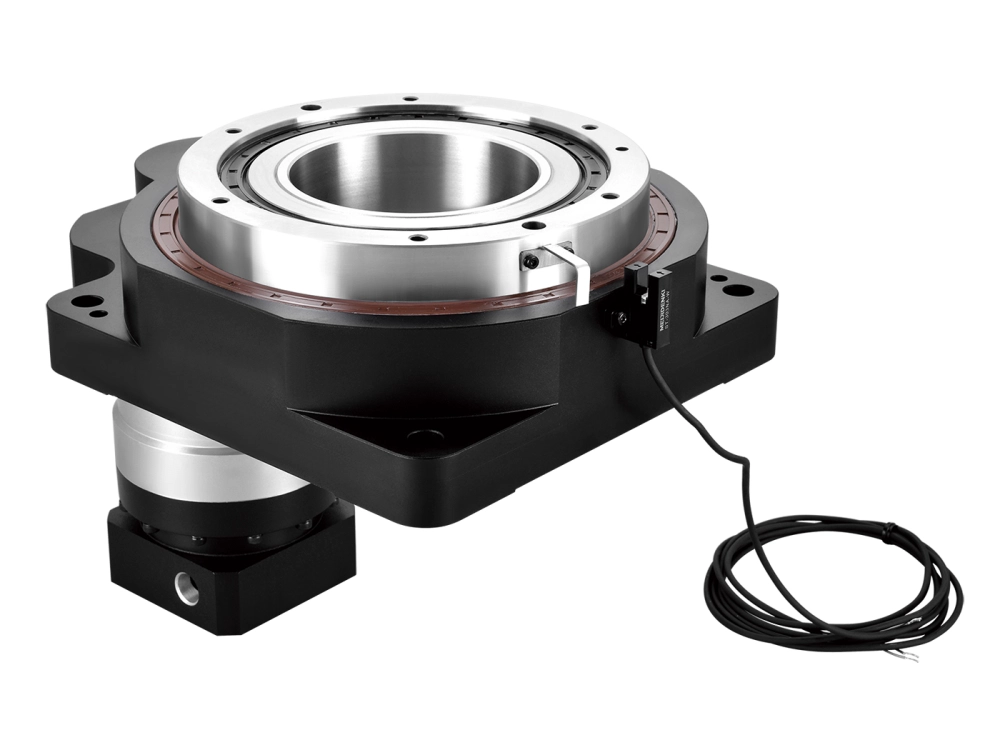
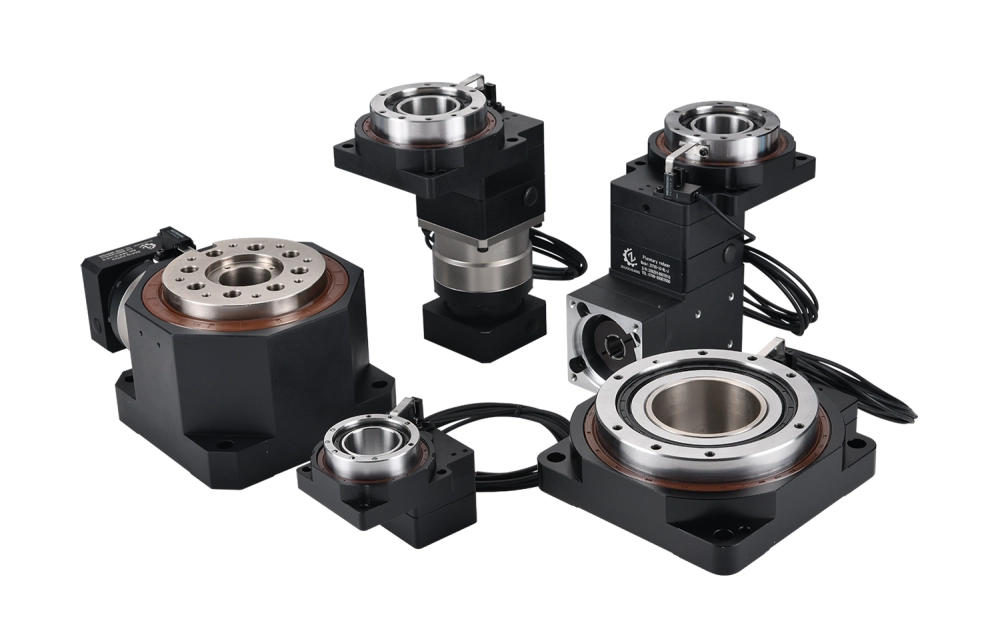
If your project needs a compact rotary positioning unit for automation equipment, you can review our hollow rotary table product range on the product page. This is especially useful when the machine also needs cable routing, air tube routing, or a center-through structure.
What Is a Servo Rotary Table?
A servo rotary table is a rotary positioning unit driven by a servo motor. It is used to rotate a fixture, tooling plate, workpiece, indexing disk, or machine module to a required angle under controlled motion.
In automation equipment, this product may also be described as a servo driven rotary table, servo rotary index table, servo rotary indexing table, or rotary positioning table. The wording may vary, but the main idea is similar: the rotary movement is controlled by a servo system, not by manual adjustment or only a fixed mechanical structure.
A servo rotary table can be used for repeated indexing, multi-angle positioning, controlled rotation, or part orientation. For example, a fixture may rotate 90 degrees for assembly, stop at different angles for visual inspection, or present a workpiece to a robot in a better picking position.
Compared with a basic rotary mechanism, the servo system gives the machine more control over speed, acceleration, deceleration, and stopping position. This makes it useful when the equipment needs flexible motion rather than only one fixed movement.
Why Servo Control Matters in Rotary Positioning
In real automation projects, rotary motion is rarely isolated. It usually has to work with other actions in the machine. A part may be clamped, rotated, inspected, pressed, tested, or unloaded within one cycle. If the rotary axis is unstable, the next step may also be affected.
Servo control allows the rotary table to move according to the machine program. The equipment can set different angles, adjust speed, control acceleration, and coordinate with sensors or PLC signals. This flexibility is important when one machine needs to handle different products or different working sequences.
For example, an inspection machine may need one product to stop at four positions, while another product may need six inspection angles. A servo rotary table can support this type of change through program settings. A fixed mechanical indexing structure may not be as convenient when the process changes.
Servo control is also helpful for smoother movement. Some parts cannot be rotated too aggressively. Small electronic parts, precision components, or loosely held workpieces may require gentle acceleration and controlled stopping. A servo-driven rotary table can reduce impact compared with a rough start-stop movement.
Servo Rotary Table vs Mechanical Indexing
Mechanical indexing still has value. If a machine always moves from one fixed station to the next, with the same angle and the same cycle, a mechanical indexer can be simple and reliable. It is often used in traditional multi-station turntables where the process rarely changes.
A servo rotary table is better when flexibility matters. It can support programmable angles, adjustable speed, and different motion profiles. This can help when the machine may need product changeover, process adjustment, or more precise control of the rotary axis.
The difference is not only accuracy. It is also about how much control the machine designer needs. Mechanical indexing is more fixed. Servo rotary positioning is more adjustable.
That does not mean servo is always the better choice. If the equipment only needs fixed-angle indexing and the cycle is stable, a mechanical solution may still be enough. But when the rotary movement needs to be controlled by the machine program, a servo rotary table becomes more practical.
Where Servo Rotary Tables Are Commonly Used
Servo rotary tables are widely used in automation equipment where accurate and repeatable rotation is required.
In automated assembly machines, the table may move fixtures between different process stations. One station may load the part, another may press or fasten it, another may inspect it, and the final station may unload it. The rotary table helps keep the process organized and repeatable.
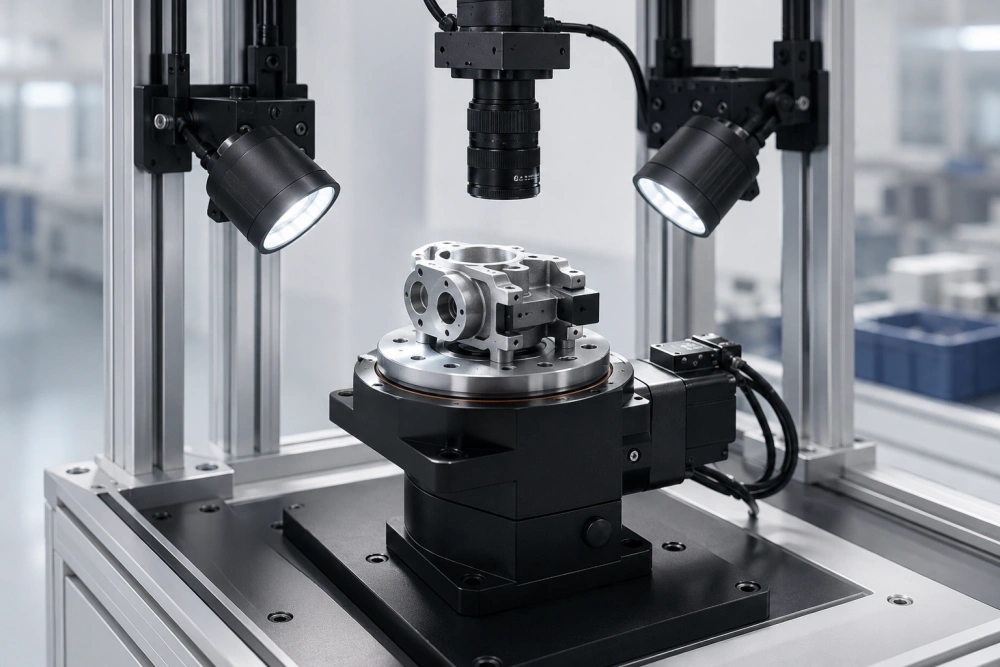
In vision inspection systems, a servo rotary table can rotate the part to different angles so cameras can inspect multiple sides. Stable positioning is important because even small errors can affect the inspection result.
In packaging machinery, rotary positioning can be used for feeding, filling, labeling, capping, sorting, or transfer. Servo control helps when the process needs accurate timing or different positioning angles.
In electronics manufacturing, components are often small, light, and sensitive to positioning errors. A servo rotary table can help move fixtures or parts accurately during testing, assembly, or inspection.
Robotic workstations also use rotary positioning. Instead of asking the robot to approach the part from a difficult angle, the table can rotate the workpiece into a better position. This can simplify robot motion and improve station efficiency.
Testing equipment is another common application. A part may need to be rotated during leak testing, functional testing, sensor calibration, or electrical testing. Servo positioning makes it easier to control the test sequence.
Key Factors When Selecting a Servo Rotary Table
A servo rotary table should not be selected only by looking at the picture or table diameter. The working condition of the machine is more important.
The first point is the total rotating load. This includes the workpiece, fixture, clamps, tooling plate, sensors, brackets, and other parts installed on the rotating surface. In many machines, the fixture may be heavier than the actual product.
The second point is inertia. A large round plate or wide fixture may create high inertia even if the weight does not look very heavy. High inertia affects acceleration, deceleration, stopping time, and servo tuning. If this is ignored, the rotary axis may vibrate or take too long to settle.
Torque also needs to be checked. The table must have enough torque for starting, stopping, and holding the load. A machine with frequent indexing usually needs more margin than a machine that moves slowly and occasionally.
Repeat positioning accuracy is another important factor. For general transfer applications, the requirement may not be very strict. But for inspection, assembly, dispensing, testing, or robotic loading, repeatability can directly affect production quality.
Backlash should also be considered. Lower backlash helps the table respond more accurately during positioning. If the application involves high-precision stopping or reverse movement, backlash becomes more important.
Installation space is often overlooked. The table diameter, body height, motor direction, mounting holes, and cable space should be checked before the machine frame is finalized. A product that looks suitable in the catalog may still create problems if the motor position conflicts with other parts of the equipment.
When a Hollow Rotary Table Becomes a Better Servo Solution
Some automation machines need more than servo positioning. They also need a clean way to route cables, pneumatic tubes, signal wires, or vacuum lines through the rotating area. In this case, a hollow rotary table can be a better solution.
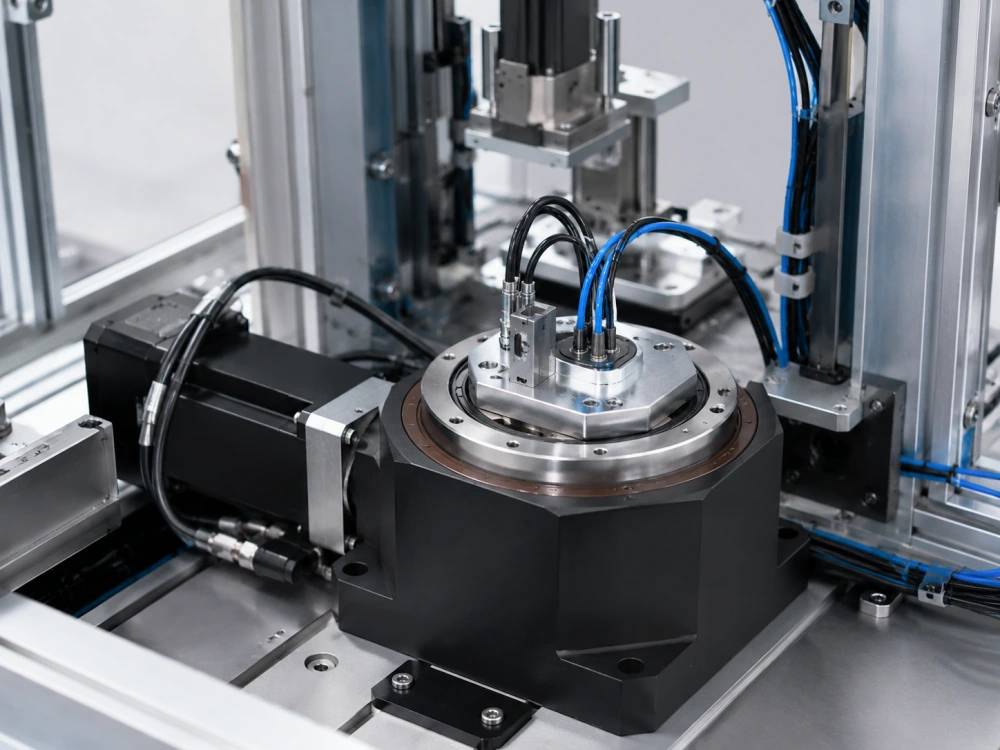
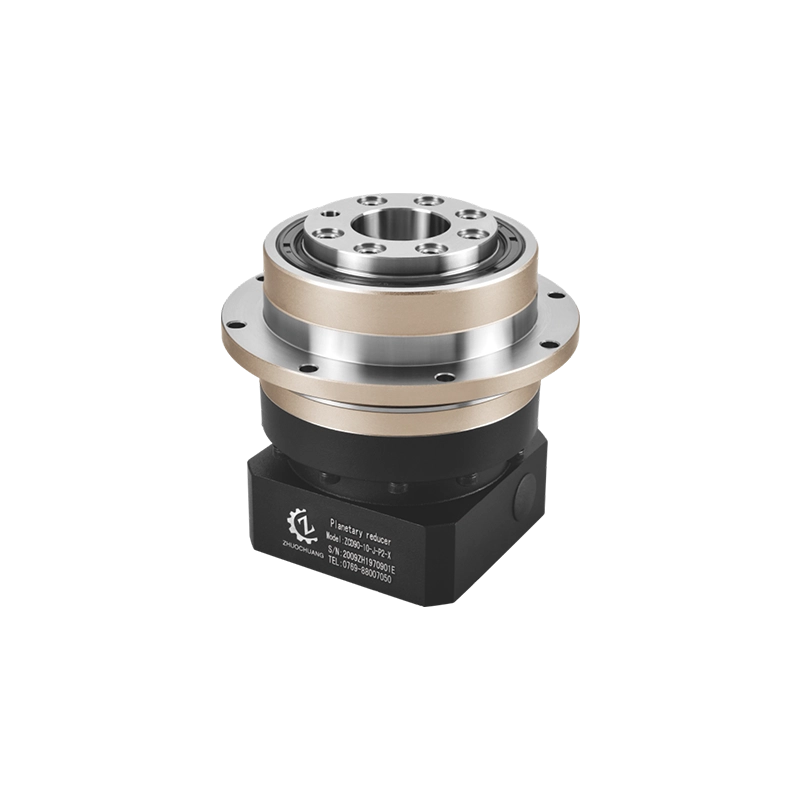
A hollow rotary table has a center-through structure. This means cables or air tubes can pass through the middle of the rotary axis instead of being routed around the outside. For equipment with sensors, clamps, grippers, vacuum tools, or pneumatic components on the rotating surface, this can make the machine layout much cleaner.
External cable routing can sometimes cause twisting, interference, or extra space requirements. A center-through design can reduce these problems, especially in compact machines.
This is why hollow rotary tables are often used as servo rotary positioning units in inspection systems, assembly machines, packaging equipment, electronics manufacturing, and robotic workstations. They combine servo-controlled motion with a structure that is easier to integrate into automation equipment.
For applications that require servo positioning, compact installation, and center-through routing, our hollow rotary table product range provides multiple options for automation equipment.
If the application requires a center-through structure, you may also read our guide on how to choose a hollow rotary table.
Common Selection Mistakes
One common mistake is choosing a servo rotary table only by the outer size. A larger table surface does not always mean better performance. Load, inertia, torque, rigidity, backlash, and bearing support all need to be reviewed.
Another mistake is checking only static load. Many automation machines use repeated start-stop motion. Dynamic movement places extra demand on the drive system. A table that can hold the load may still perform poorly if the acceleration and deceleration requirements are too high.
Some buyers also ignore motor matching. The servo motor must match the input interface, shaft size, flange size, torque range, and speed requirement. If the motor is selected without considering the rotary table structure, extra adapters or design changes may be needed.
Cable and tube routing is another issue. If the rotating fixture carries sensors or pneumatic components, the designer should think about wiring early. Waiting until the machine is almost finished may create avoidable layout problems.
A final mistake is sending too little information to the supplier. A reliable recommendation usually needs application details, load data, fixture size, required speed, accuracy target, motor information, and installation drawing if available.
How to Choose a Suitable Servo Rotary Table
The selection process should begin with the machine application. Is the table used for inspection, assembly, packaging, testing, robotic loading, or electronic component handling? Different applications have different requirements.
Next, calculate the real rotating load. Do not forget fixtures, clamps, tooling plates, sensors, brackets, and other mounted parts.
Then check the motion cycle. How often does the table rotate? How fast does it need to move? How much time is allowed for acceleration, stopping, and settling?
After that, confirm the accuracy requirement. If the machine only transfers parts, normal repeatability may be enough. If the machine performs inspection, assembly, or robotic pick-up, accuracy and backlash should be checked more carefully.
Installation space should also be reviewed. Motor direction, body height, mounting pattern, and available cable space can affect the final machine layout.
If the rotating area needs cables, air tubes, or vacuum lines, consider whether a hollow rotary table is needed. This decision is better made early, before the machine structure is fixed.
Finally, contact the manufacturer with enough project details. If you are not sure which servo rotary table is suitable, you can contact our team for model selection support.
Work with a Manufacturer for Model Selection
A catalog can provide dimensions and basic specifications, but real selection often depends on the actual working conditions. The same rotary table may behave differently depending on load distribution, fixture design, motor selection, motion cycle, and installation method.
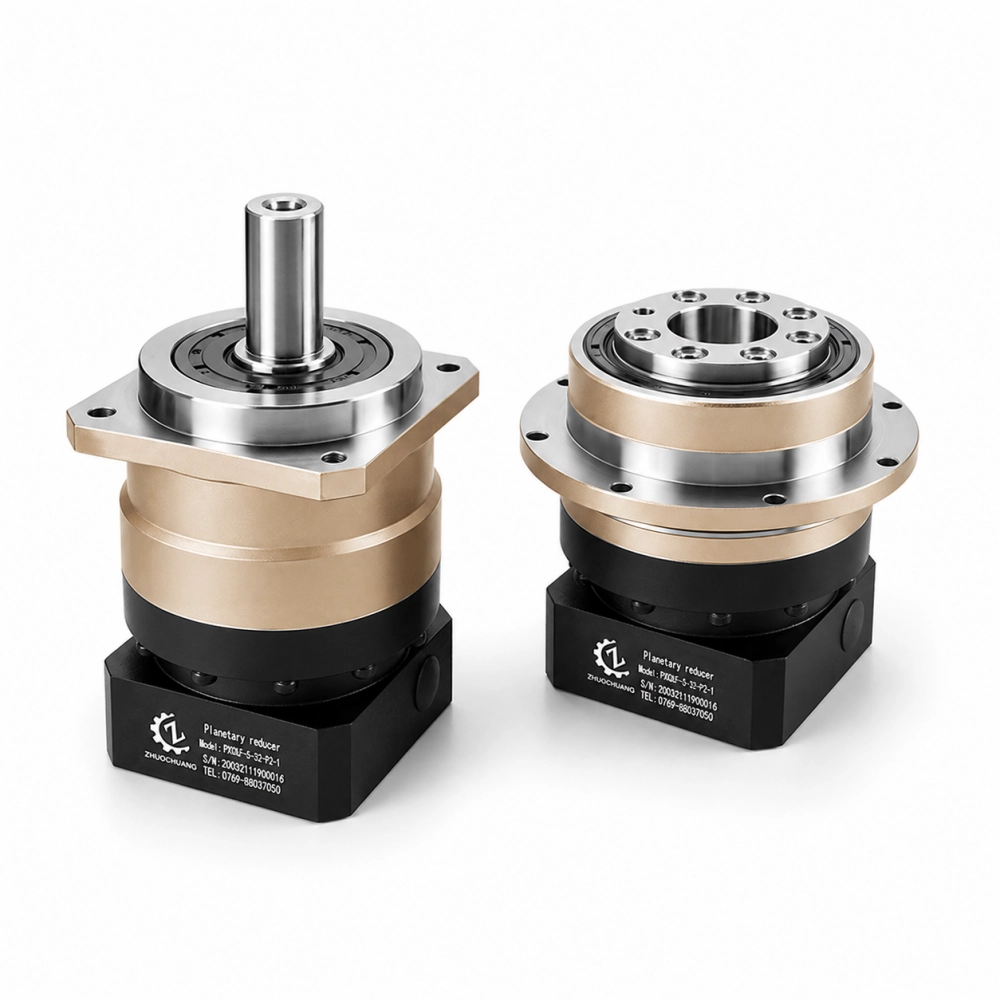
Dongguan Zhuochuang Precision Machinery Co., Ltd provides precision transmission products for automation equipment, robotics, CNC machinery, packaging systems, inspection machines, electronic manufacturing, and industrial motion control applications. Our product range includes hollow rotary tables and planetary gearboxes for different rotary positioning and transmission requirements.
If your equipment requires a servo rotary table for precision positioning, please prepare the application, total load, table size, required speed, accuracy requirement, motor brand, and installation drawing if available. This information helps our team review the working condition and suggest a suitable option.
For technical support or model recommendation, please contact our team with your application details.
Conclusion
A servo rotary table is a practical solution for automation equipment that needs controlled rotary positioning, repeatable indexing, flexible angle movement, and stable motion performance. It is widely used in assembly, inspection, packaging, electronics manufacturing, robotic workstations, and testing equipment.
When selecting a servo rotary table, do not focus only on size or price. Load, inertia, torque, accuracy, backlash, motor matching, installation space, and duty cycle all affect performance.
For machines that also require compact structure and clean cable or air tube routing, a hollow rotary table can be a strong servo-driven solution. The best choice is the model that matches the real working condition of the machine, not simply the largest or most expensive one.
FAQ
What is a servo rotary table?
A servo rotary table is a rotary positioning unit controlled by a servo motor. It is used to rotate a fixture, workpiece, or tooling plate to a required angle with controlled speed and repeatable positioning.
Can a servo rotary table be used for indexing?
Yes. A servo rotary table can be used for indexing applications. It can rotate to fixed or programmable positions according to the machine control system.
What is the difference between a servo rotary table and a mechanical indexer?
A servo rotary table offers programmable motion and adjustable speed. A mechanical indexer is usually better for fixed station-to-station movement with a repeated cycle.
How do I choose a servo rotary table?
Check the application, total load, inertia, torque, table diameter, speed, repeat positioning accuracy, backlash, motor compatibility, installation space, and working cycle.
When should I choose a hollow rotary table?
A hollow rotary table is useful when the machine needs servo rotary positioning and also requires cables, air tubes, signal wires, or vacuum lines to pass through the center of rotation.