
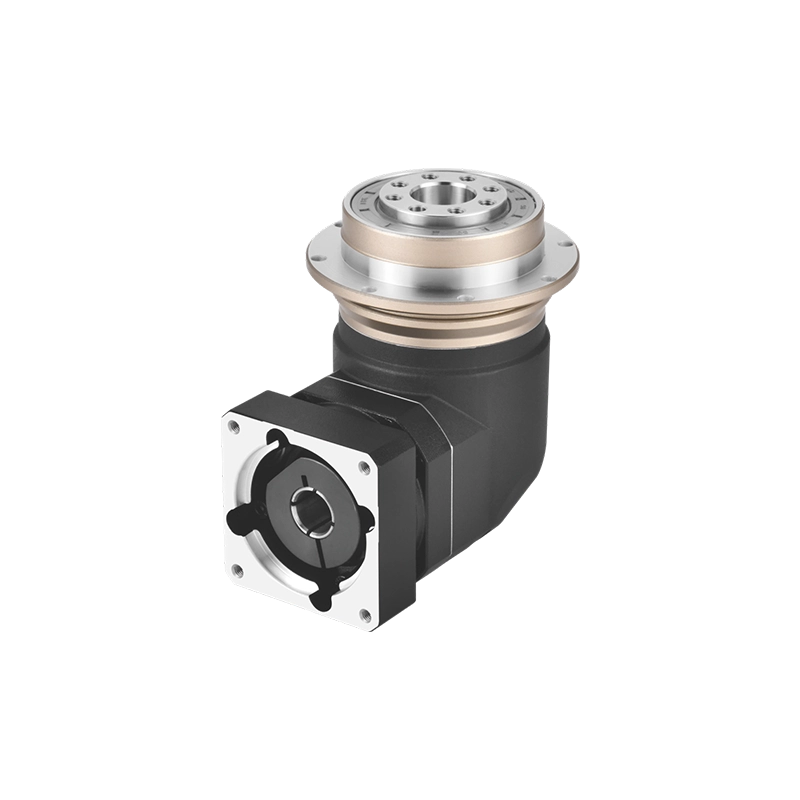
Right Angle Planetary Gearbox: When to Use a 90-Degree Servo Drive Layout
Learn when a right angle planetary gearbox is the right choice for 90-degree servo drive layouts, machine space constraints, perpendicular load axes, compact automation systems, and precision motion control.
Most drive system decisions start with performance: ratio, torque, backlash, efficiency, and motor matching. Layout often comes later, treated as a packaging issue once the mechanical specifications are settled. That approach works until the machine envelope cannot accommodate the motor and gearbox arrangement.
A right angle planetary gearbox solves a specific layout problem: what should engineers do when the motor and the load axis cannot be aligned in a straight line? In many compact automation systems, a 90-degree servo drive layout makes the machine buildable without sacrificing the required torque, ratio, and positioning performance.
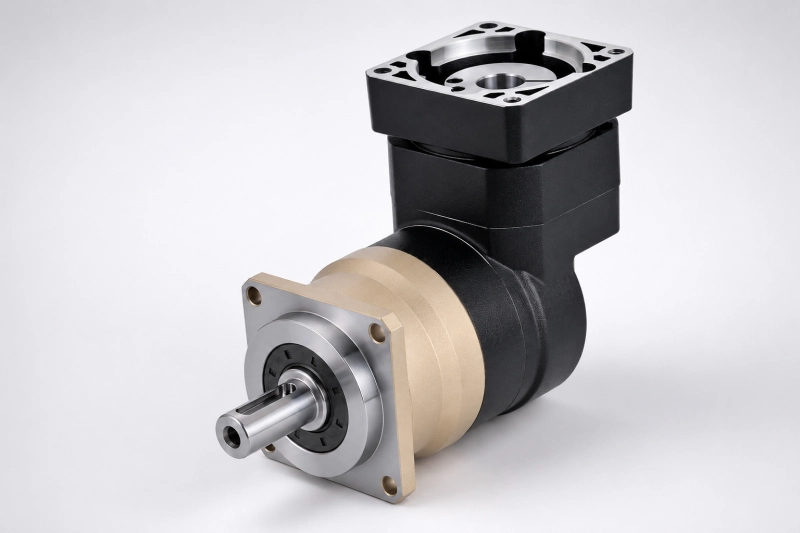
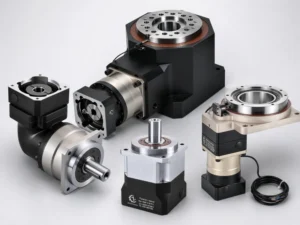
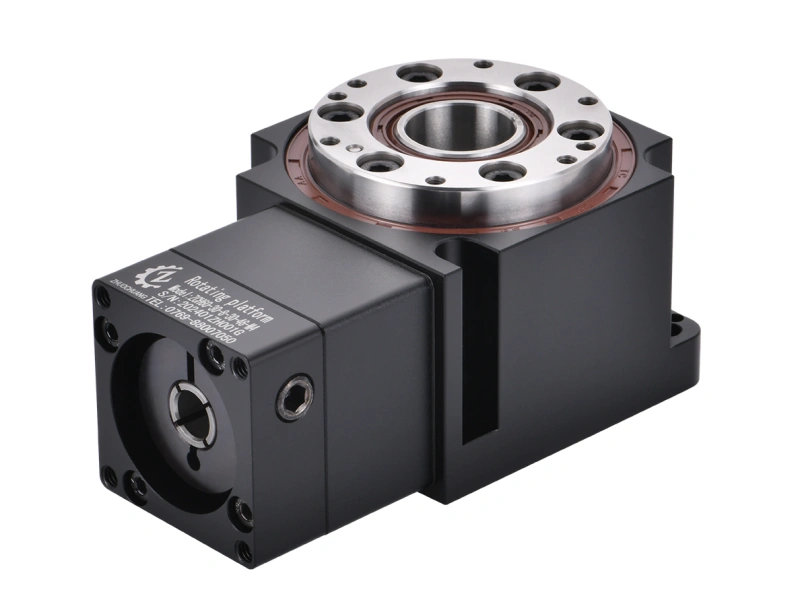
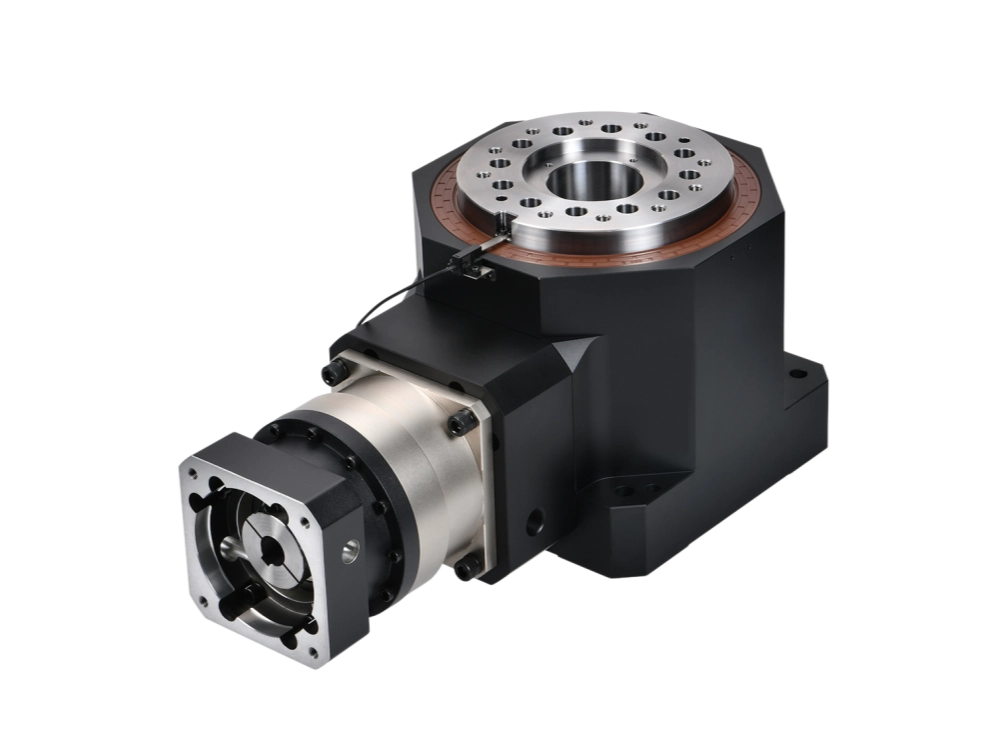
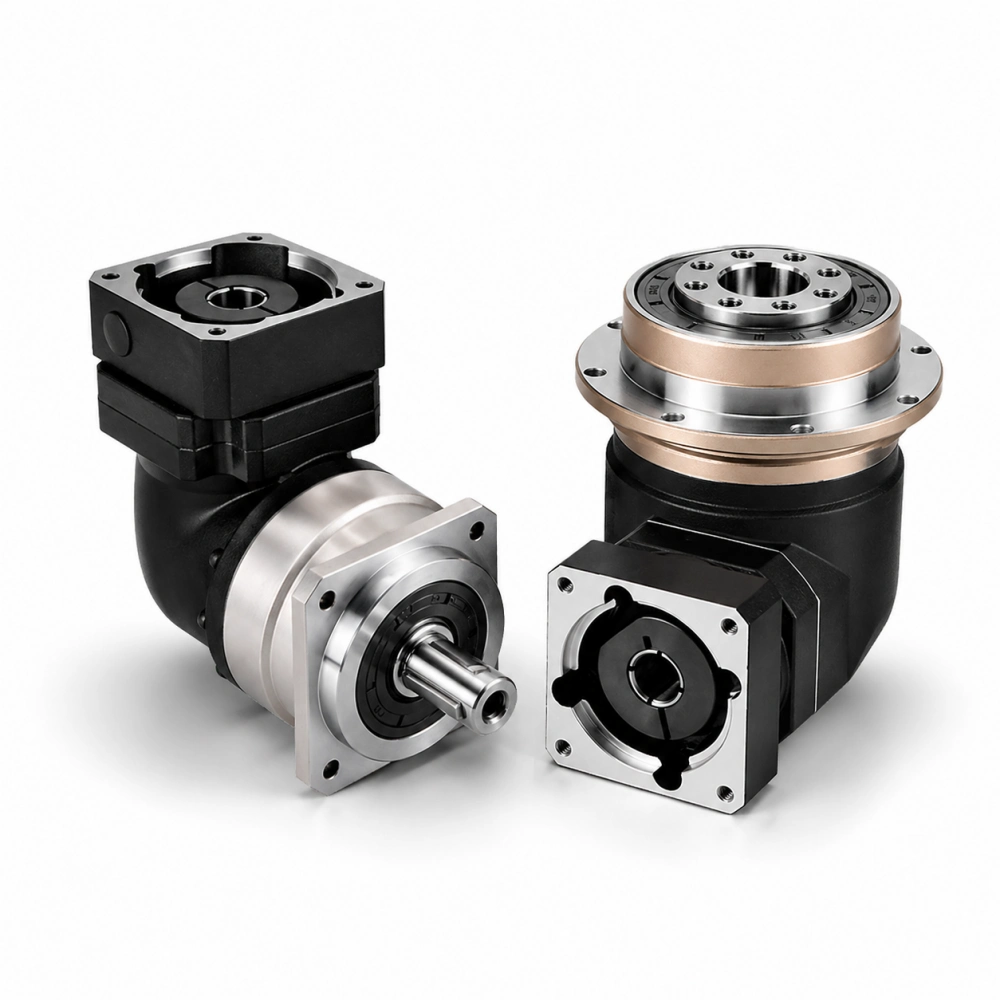
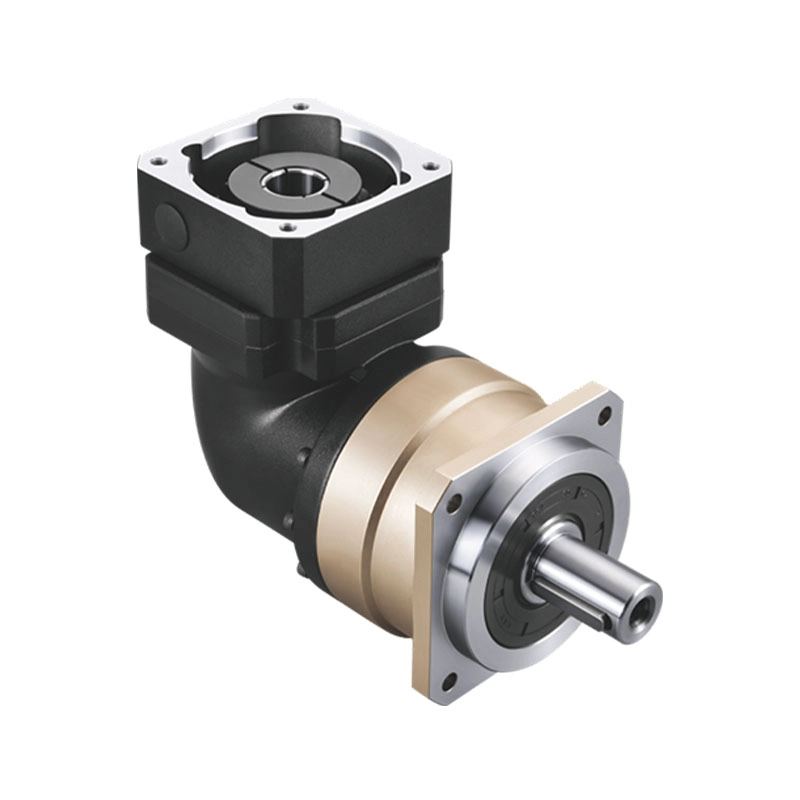
A right angle planetary gearbox redirects the motor input and output shaft by 90 degrees, helping servo-driven machines fit into compact layouts.
Key Reasons to Use a Right Angle Planetary Gearbox
Compact Machine Depth
When an inline motor would extend too far behind the load axis, a right angle layout can reduce the required installation depth.
Perpendicular Load Axis
When the load axis is naturally perpendicular to the best motor mounting face, a 90 degree planetary gearbox redirects the drive cleanly.
Multi-Axis Clearance
Right angle gearboxes help prevent motor interference when several servo axes share the same machine frame.
Maintenance Access
Repositioning the motor can keep the work area, tooling zone, and service access clear.
What a Right Angle Planetary Gearbox Actually Does
The basic function of any gearbox is to transmit torque between a motor and a load while adjusting speed and force. A right angle planetary gearbox adds one important capability: it changes the axis direction. The input shaft and output shaft are perpendicular rather than coaxial.
Inside the gearbox, this is usually achieved by combining a direction-changing gear stage with one or more planetary reduction stages. The bevel or hypoid stage redirects the axis, while the planetary stage provides most of the ratio and torque multiplication. In some designs, the ratio is shared between stages; in others, the right-angle stage mainly handles direction change.
The result is a compact reducer where the servo motor mounts on one face of the gearbox and the output shaft exits at 90 degrees. This allows the motor and load axes to be separated, repositioned, or fitted into a machine layout where an inline gearbox would not work.
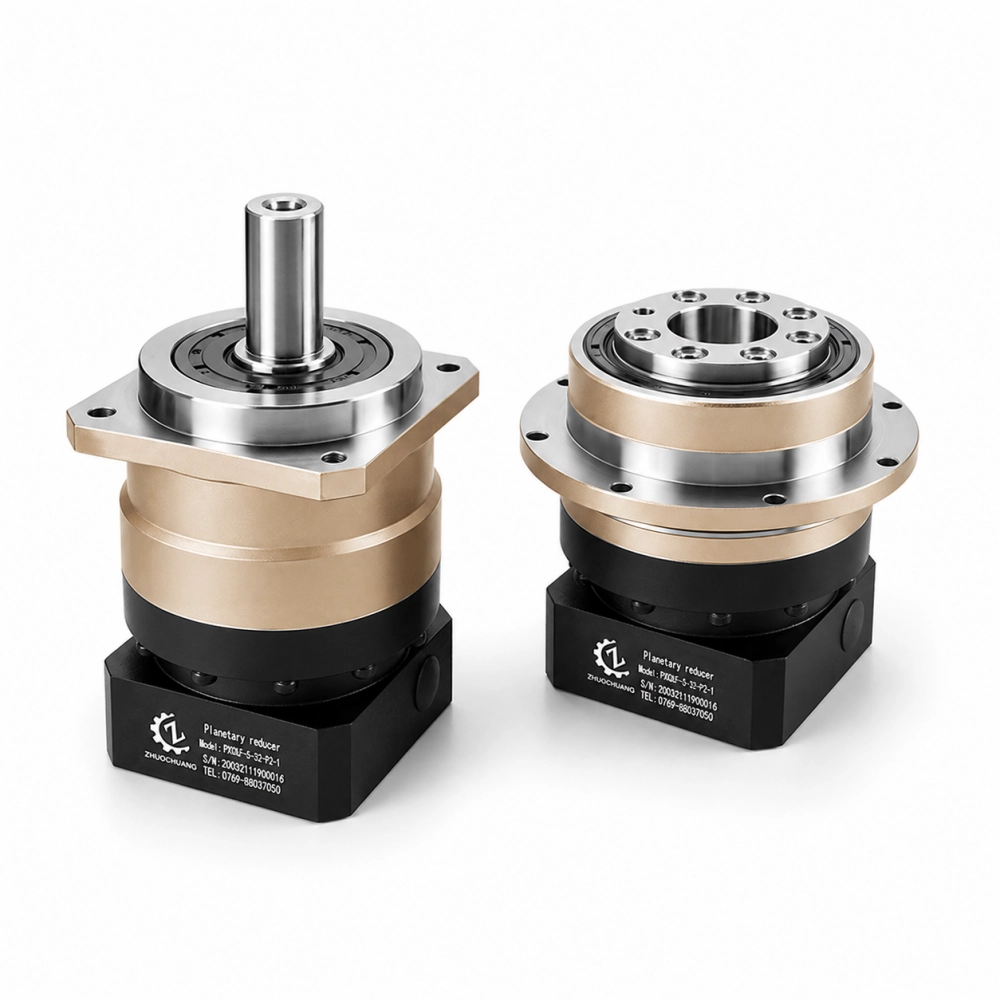
For engineers comparing available configurations, Zhuochuang provides right angle planetary gearbox products for servo-driven automation systems where motor and load axes cannot be aligned in a straight line.
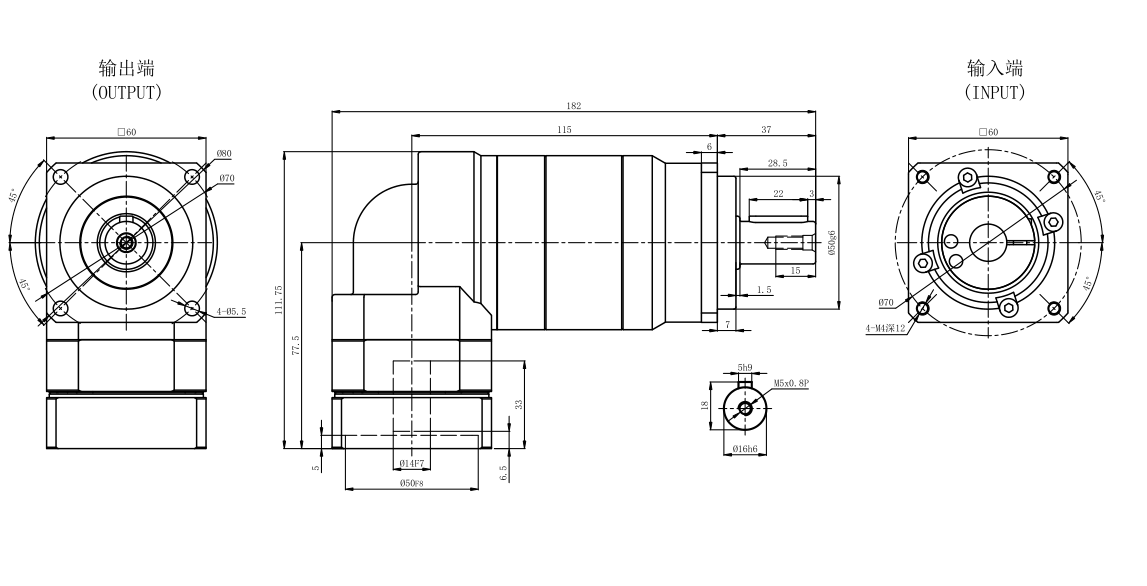
A right angle planetary gearbox changes the drive direction so the servo motor and output load can be arranged perpendicular to each other.
When the Layout Forces a 90-Degree Drive
The decision to use a 90 degree planetary gearbox instead of an inline planetary gearbox usually starts with a physical constraint, not a preference. If the motor and load axes can be aligned without conflict, inline is often simpler. If the machine layout makes alignment impossible, a right angle configuration becomes the practical solution.
Constrained Machine Depth
In gantry systems, pick-and-place machines, portal frames, and compact automation modules, there may be limited depth behind the carriage or load axis. A right angle planetary gearbox allows the motor to sit parallel to the machine frame instead of extending inline behind the load.
Multi-Axis Assemblies
In multi-axis automation cells, several servo axes may share the same structural frame. If two motors would collide in an inline arrangement, one or both axes can use a right angle planetary gear reducer to create the clearance needed without changing the driven load axis.
Perpendicular Load Axes
Conveyor cross-transfer units, rotary indexing systems, dial tables, and turntable drives often have a load axis that is naturally perpendicular to the most practical motor mounting face. A right angle planetary gear reducer handles the axis change inside the reducer and presents a standard output interface to the machine.
Operator Access and Maintenance
In some machines, an inline motor may block operator access, tooling access, or maintenance space. Repositioning the motor with a 90 degree planetary gearbox can keep the work area open while maintaining the required servo drive performance.
Existing Machine Frames and Retrofit Projects
Retrofitting a servo-driven axis into an existing machine often means working around fixed mounting points, frame members, conveyors, guards, and utilities. A right angle planetary gearbox gives designers more freedom to mount the motor where space is available.
The Mechanical Cost of Changing Direction
A right angle planetary gearbox adds layout flexibility, but it also adds mechanical complexity compared with an equivalent inline unit. The extra direction-changing stage should be considered during selection, especially for high-duty-cycle or high-precision applications.
Efficiency
The bevel or hypoid stage that redirects the axis can introduce additional friction losses. The actual loss depends on gear type, lubrication, speed, load, and operating conditions. For most automation applications, this is acceptable. For high-power or continuous-duty machines, the extra heat generation should be checked before final selection.
Backlash Contribution
The direction-changing stage has its own tooth mesh, so it can add a backlash component on top of the planetary stage. In a precision right angle planetary gear reducer, this is controlled through gear quality, bearing support, assembly accuracy, and proper adjustment. For extremely low backlash requirements, an inline layout may still be easier to optimize.
Axial and Radial Load Handling
Direction-changing gear stages may generate additional bearing loads. The housing and bearing arrangement must control these loads without excessive deflection. This is especially important when external radial or axial loads act directly on the output shaft.
Physical Size
A right angle gearbox may be larger than an inline gearbox of similar rating because the direction-changing stage adds structure. Its advantage is not always the smallest gearbox body; the advantage is that the motor can be positioned where the machine has available space.
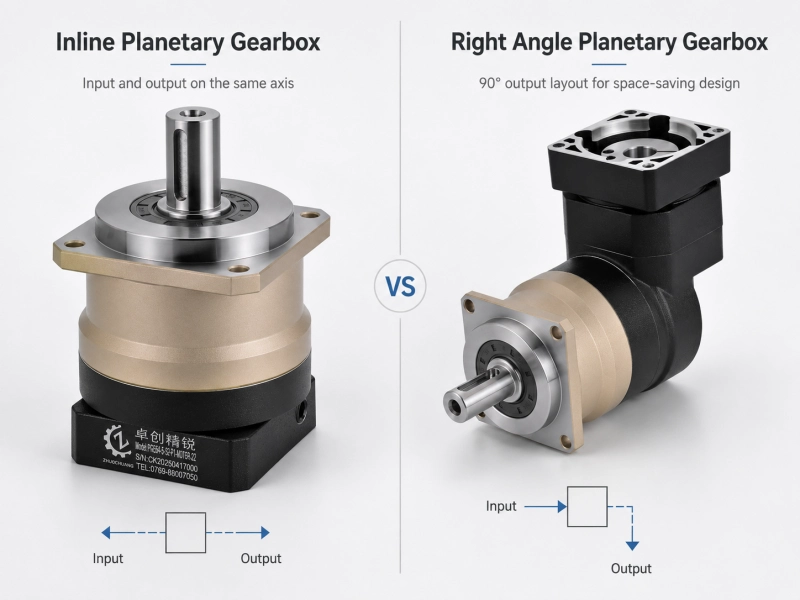
Inline gearboxes are usually simpler when the motor and load axes can align. Right angle planetary gearboxes are useful when the machine layout requires a 90-degree drive path.
Right Angle Planetary Gearbox in Automation: Real Layout Scenarios
The value of a right angle planetary gearbox becomes clearer when looking at real automation layouts. In these applications, the 90-degree structure is not used for appearance. It solves a physical installation problem.
Rotary Dial Indexing Machines
A rotary dial indexing machine moves a large table in repeated index positions. The table axis is often vertical, while the servo motor is easier to mount horizontally below or beside the table. A right angle planetary gear reducer can drive the table while keeping the motor accessible from the machine frame.
Conveyor Cross-Transfer Units
In automated assembly lines, workpieces may need to move laterally between parallel conveyors. The transfer direction can be perpendicular to the main conveyor direction, while the motor is more practical to mount inside the frame. A 90 degree planetary gearbox redirects the drive without pushing the motor into the aisle.
Packaging Machine Fold and Seal Axes
Packaging machines often have several servo axes arranged closely around the product path. A right angle planetary gearbox allows the motor to sit along the machine frame rather than protruding into the product flow or operator area.
CNC Rotary Table Drives
A CNC rotary table may require a vertical output axis while the servo motor is mounted horizontally for space and service access. A precision right angle planetary gearbox can form part of a compact rotary drive package.
Robot Arm Wrist Joints
In articulated robot arms, the wrist joint often has limited space along the output axis. A right angle planetary configuration allows the motor to be placed along an adjacent link while the output drives a perpendicular joint rotation.
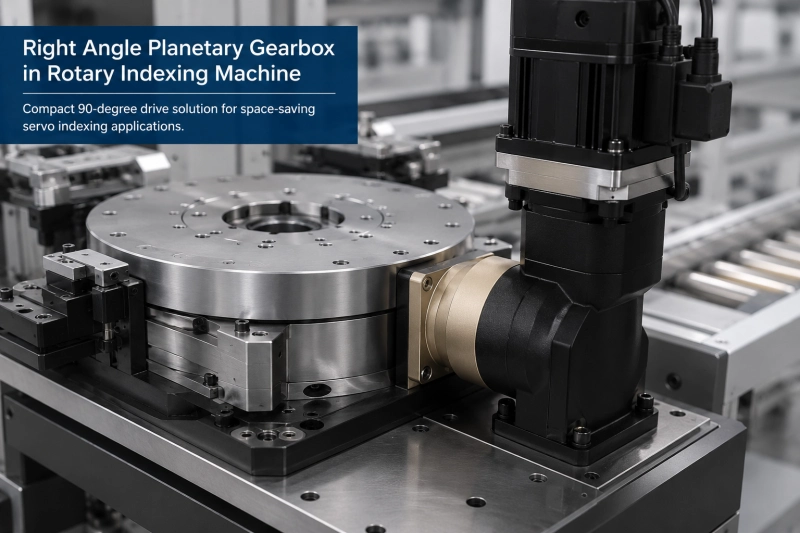
Right angle planetary gearboxes are used in rotary indexing, packaging machinery, conveyor transfer units, CNC rotary drives, and robot wrist joint layouts.
Selecting a Right Angle Planetary Gearbox: What to Confirm
Once the layout decision points toward a right angle configuration, the selection process still needs to confirm ratio, torque, backlash, motor interface, output interface, and duty cycle. Several factors deserve special attention for right angle units.
Bevel Gear Type: Spiral Bevel vs. Hypoid
Spiral bevel gears are commonly used for precise direction change with good efficiency. Hypoid gears can allow shaft offset and additional layout flexibility, but they may introduce different friction and lubrication behavior. The right choice depends on space, torque, efficiency, and cost requirements.
Output Shaft Orientation Options
Some right angle gearbox designs offer multiple output directions or mounting orientations. This can help when the motor direction is fixed but the output connection must clear nearby machine components.
Reaction Torque and Housing Support
The housing must be mounted securely enough to resist reaction torque. For higher torque applications, do not rely only on the motor flange. Confirm the gearbox mounting surface, bolt pattern, and support structure.
Motor Compatibility
A capable 90 degree planetary gearbox manufacturer should support common servo motor flange sizes, shaft diameters, input adapters, and mounting standards. Confirm the exact motor model before ordering.
Complete Unit Backlash
Confirm that the published backlash value refers to the complete unit, including the direction-changing stage and planetary reduction stage. The complete output backlash is the value that matters for positioning accuracy.
Right Angle Gearbox Selection Checklist
Before choosing a right angle planetary gearbox, confirm both the mechanical layout and the servo performance requirements.
Right Angle vs. Inline Planetary Gearbox: Practical Decision Guide
The choice between right angle and inline is not about which gearbox is better in general. It depends on the machine layout, installation space, accuracy requirement, and mechanical constraints.
| Choose Inline When | Choose Right Angle When |
|---|---|
| Motor and load axes can be aligned without conflict. | Machine depth or width prevents inline motor mounting. |
| Minimum backlash and maximum efficiency are the highest priorities. | The motor must clear tooling, guarding, operator access, or adjacent axes. |
| The motor mounting face is accessible behind the load axis. | The load axis is perpendicular to the practical motor mounting position. |
| The simplest mechanical transmission path is preferred. | A retrofit or compact machine frame blocks inline installation. |
Most automation engineers choose a right angle layout when the configuration provides a real packaging benefit. If inline is easy to build, inline may remain the simpler choice. If the motor and load axes genuinely cannot be aligned, a right angle planetary gearbox provides the geometric flexibility needed for a compact servo-driven machine.
Work With a Manufacturer for 90-Degree Servo Drive Layouts
A right angle planetary gearbox is both a drive component and a layout solution. It should be selected according to ratio, torque, backlash, motor compatibility, output direction, installation space, and the actual structure of the machine.
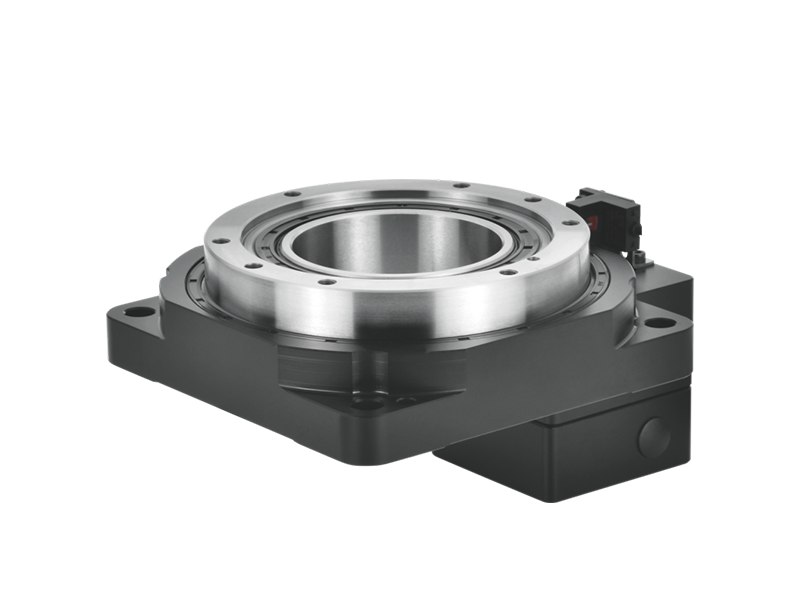
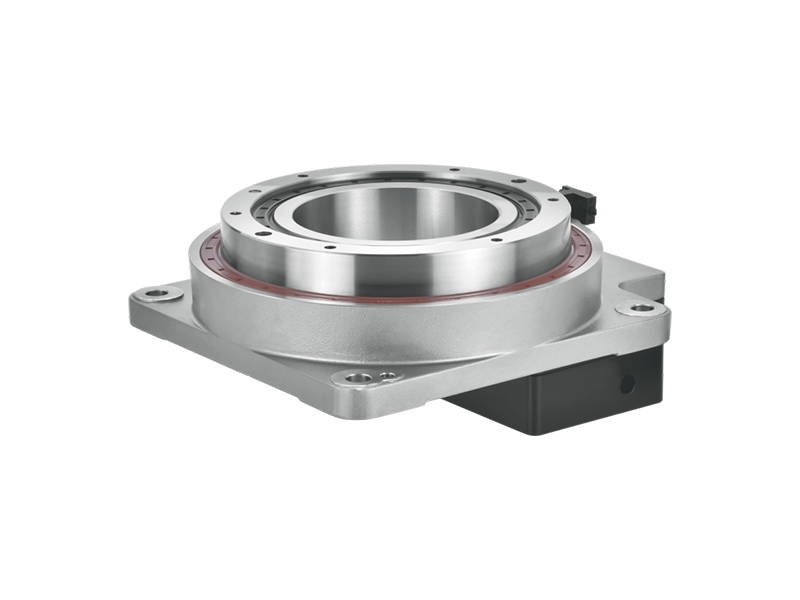
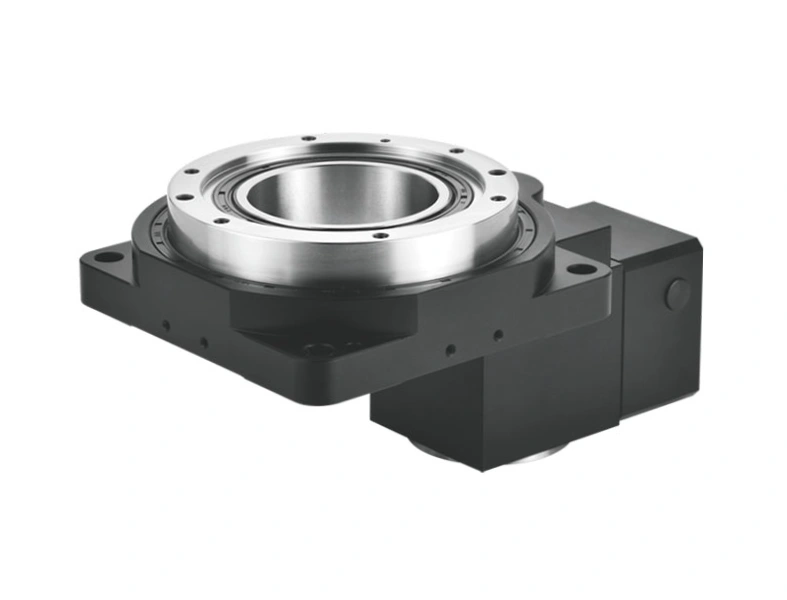
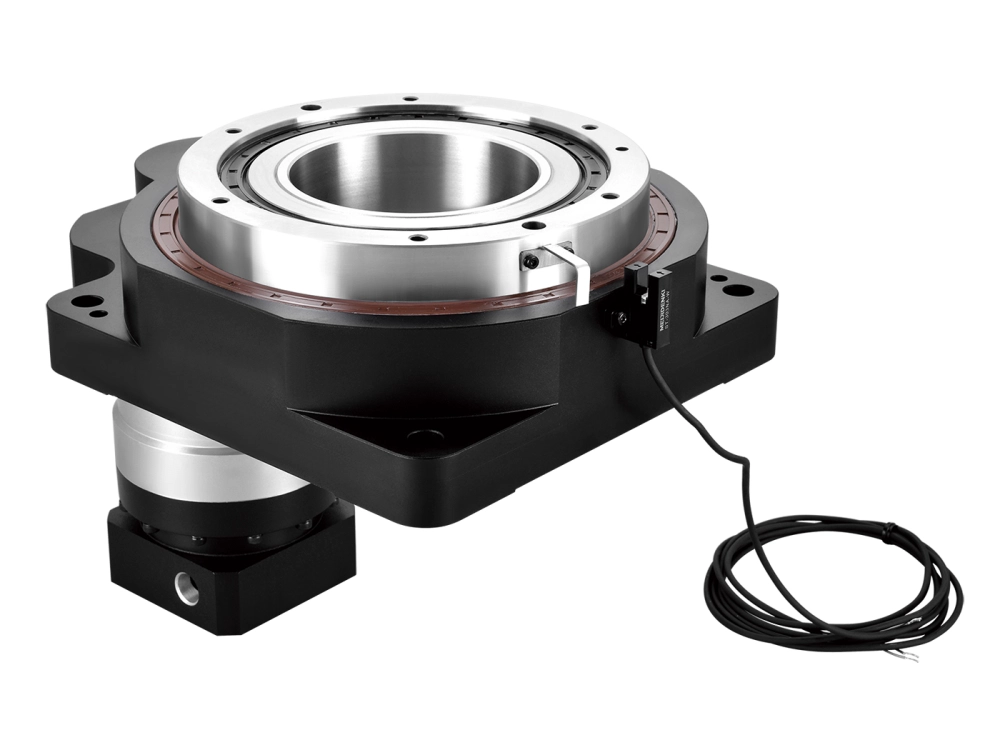
Dongguan Zhuochuang Precision Machinery Co., Ltd manufactures precision planetary gearboxes and hollow rotary tables for automation systems, robotics, CNC machinery, packaging machinery, and precision positioning applications. For machine layouts that require a 90 degree planetary gearbox, our team can help review the motor model, mounting orientation, ratio, torque, backlash, and output interface.
FAQ About Right Angle Planetary Gearboxes
What is a right angle planetary gearbox?
A right angle planetary gearbox is a reducer that changes the drive direction by 90 degrees while using planetary reduction stages to provide speed reduction and torque multiplication.
When should I use a 90 degree planetary gearbox?
Use a 90 degree planetary gearbox when the motor and load axes cannot be aligned because of machine depth, frame layout, operator access, tooling space, or perpendicular load direction.
Is a right angle planetary gear reducer less efficient than inline?
A right angle planetary gear reducer may have additional losses because of the direction-changing stage. The actual difference depends on gear type, load, lubrication, speed, and operating conditions.
Does a right angle planetary gearbox have more backlash?
It can have additional backlash from the direction-changing stage. For precision applications, confirm that the published backlash value represents the complete gearbox output, not only the planetary stage.
Related Gearbox Articles
Need Help Choosing a Right Angle Planetary Gearbox?
Send us your motor model, required ratio, torque, mounting space, output direction, backlash requirement, and application layout. Our team can help review whether a right angle planetary gearbox is suitable for your 90-degree servo drive system.
Contact Us Now