
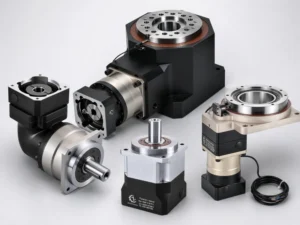
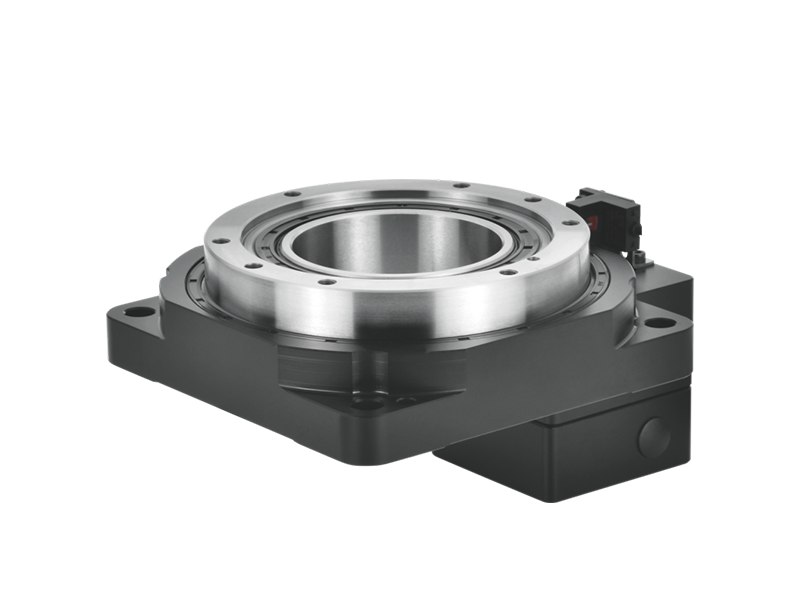
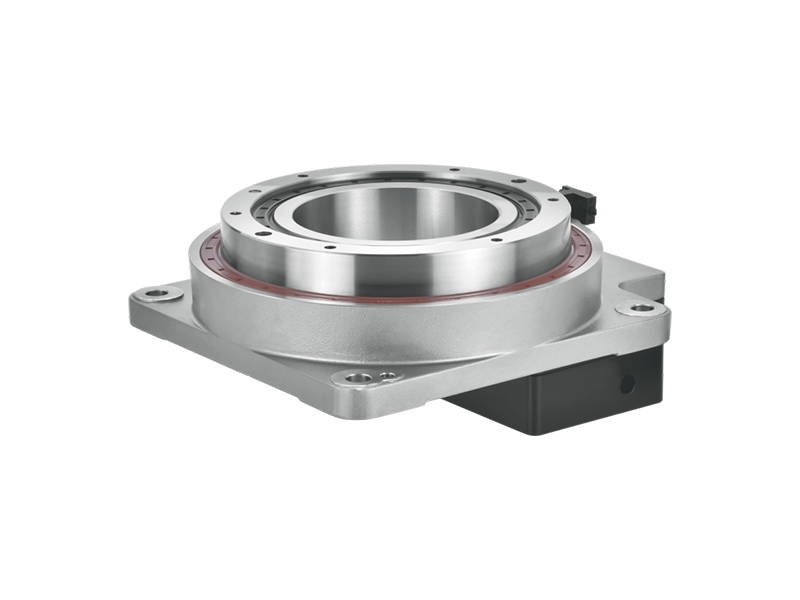
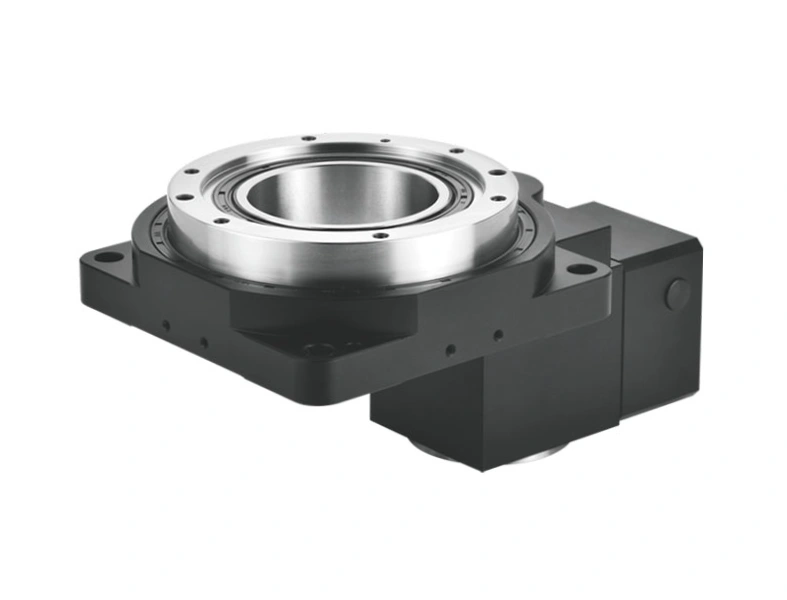
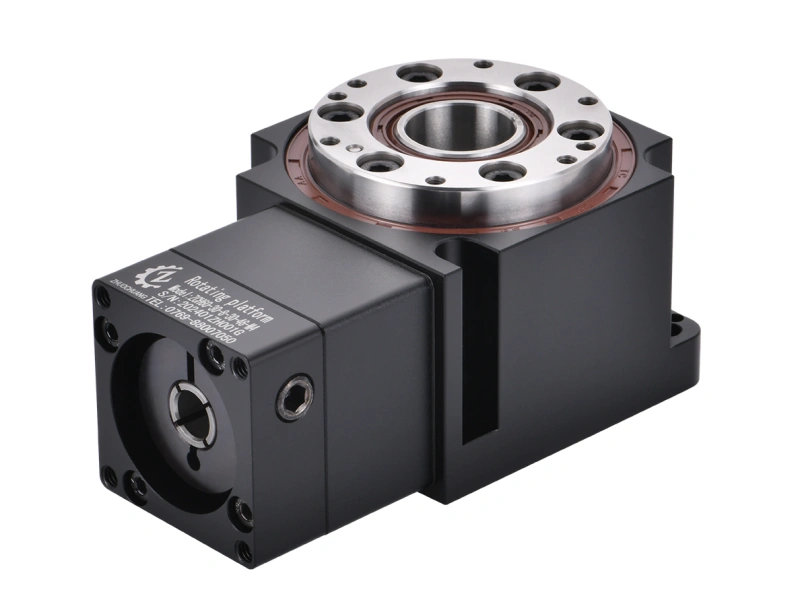
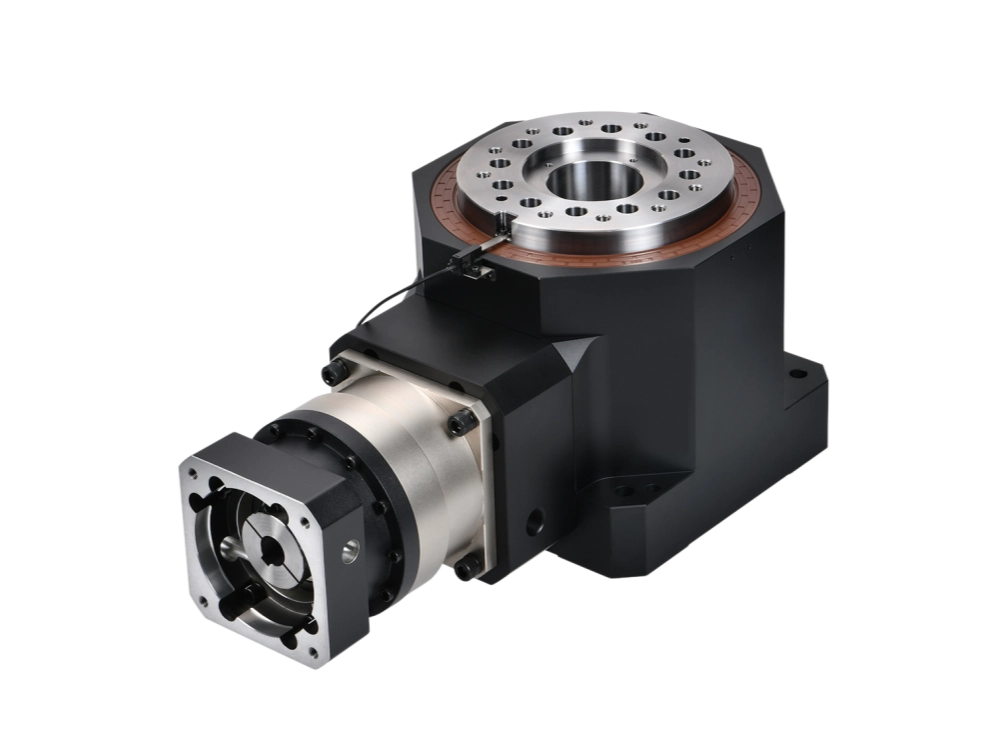
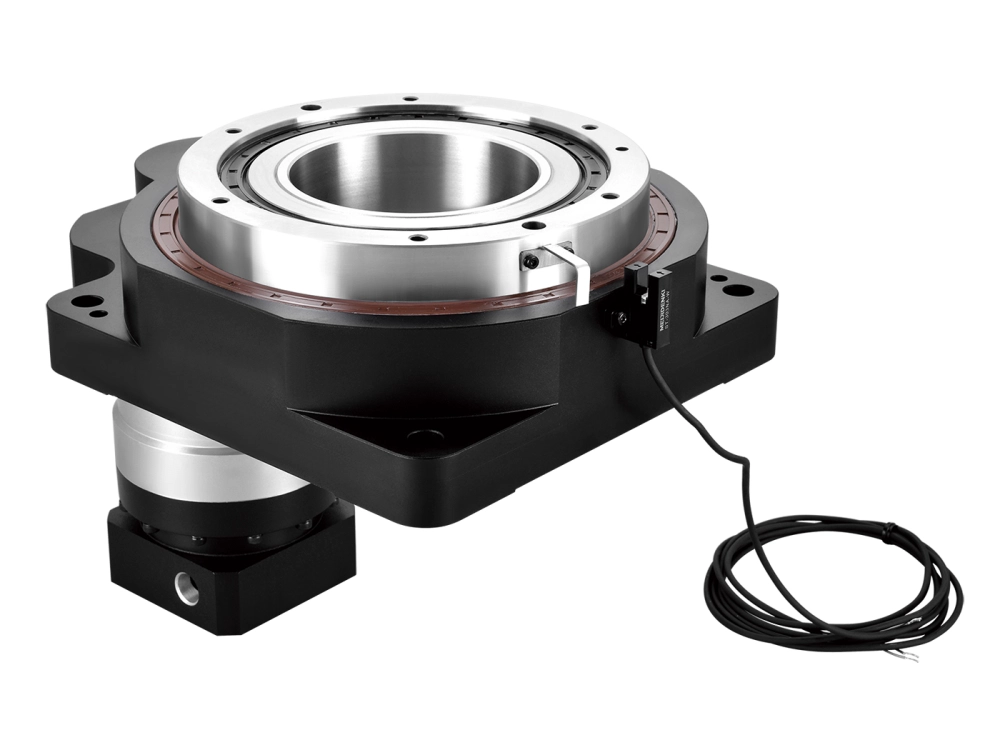
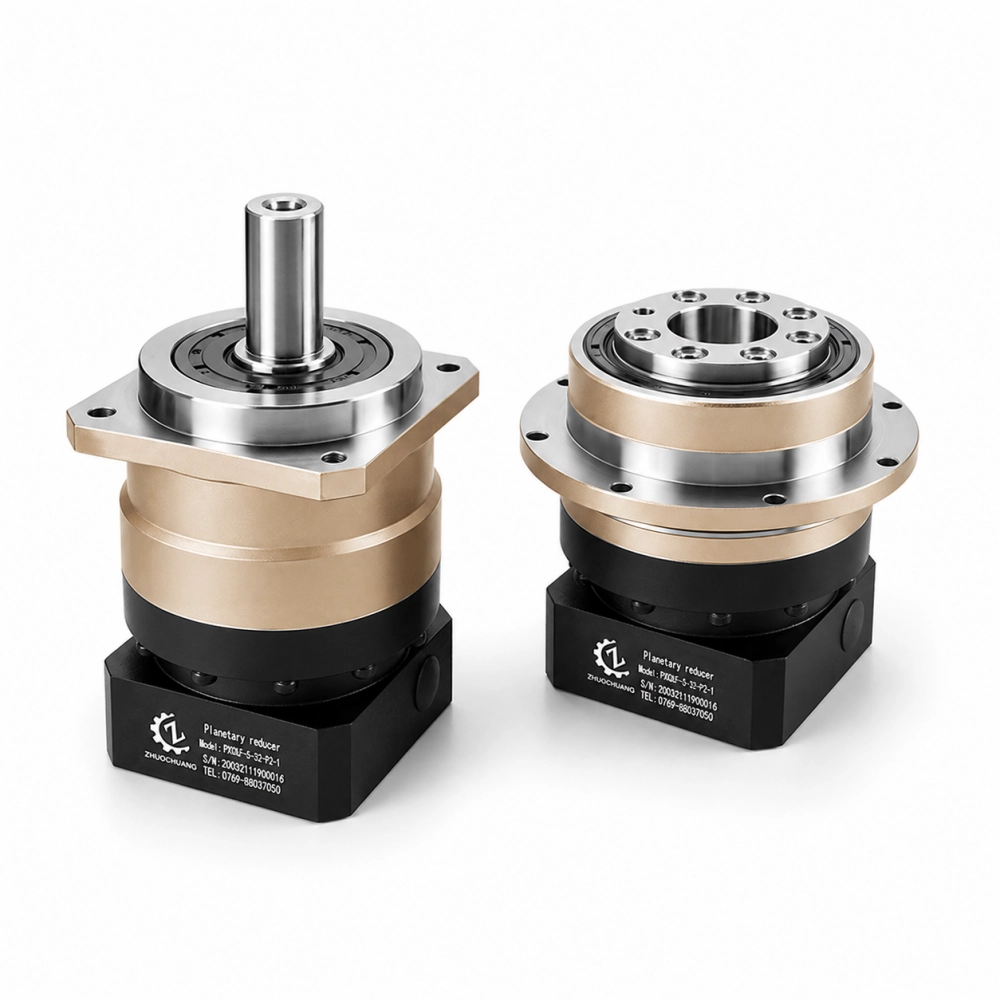
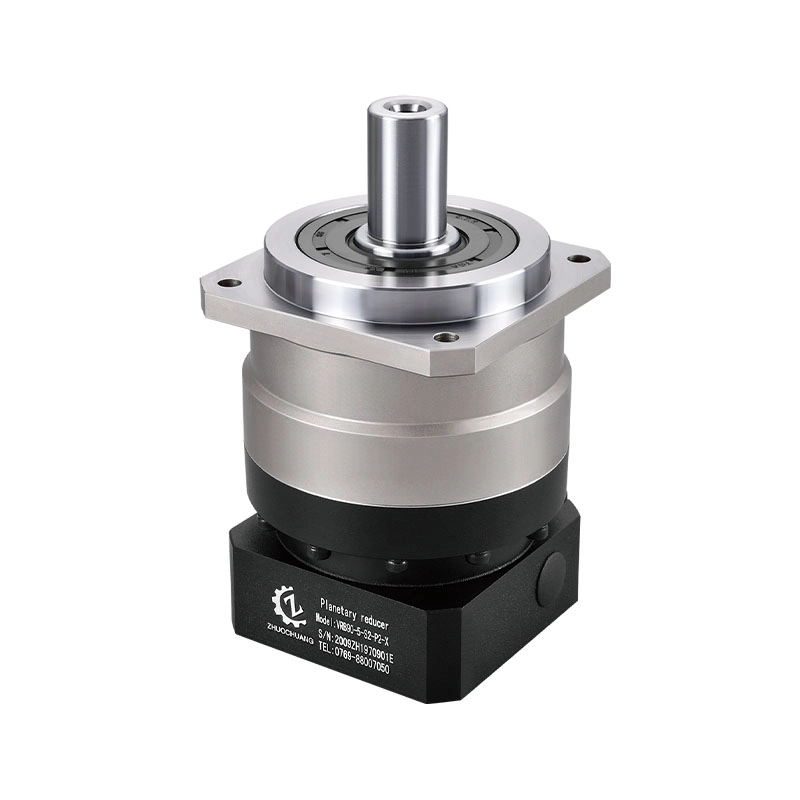
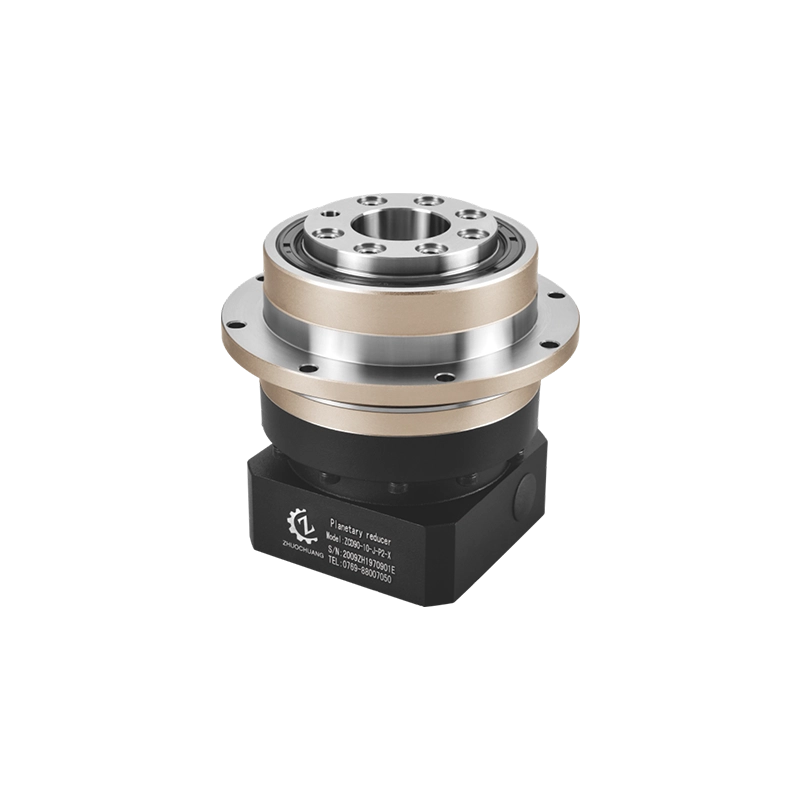
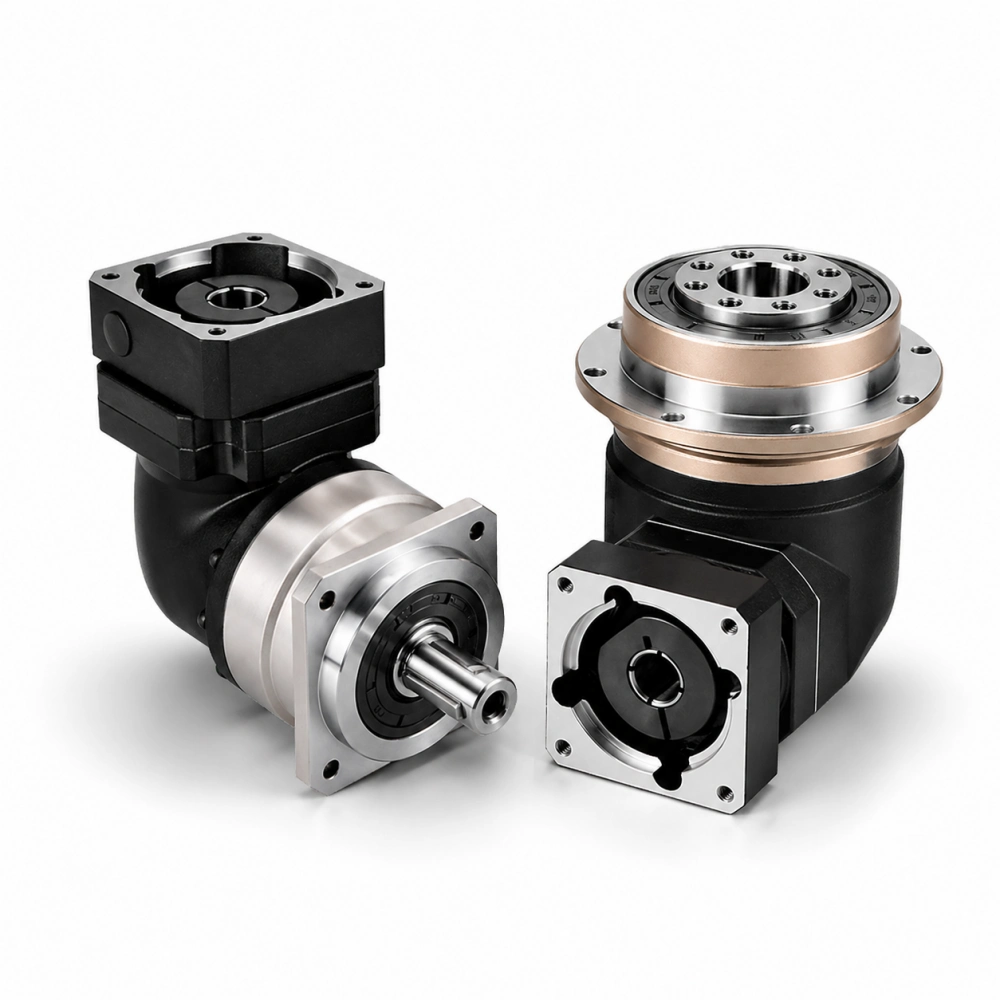
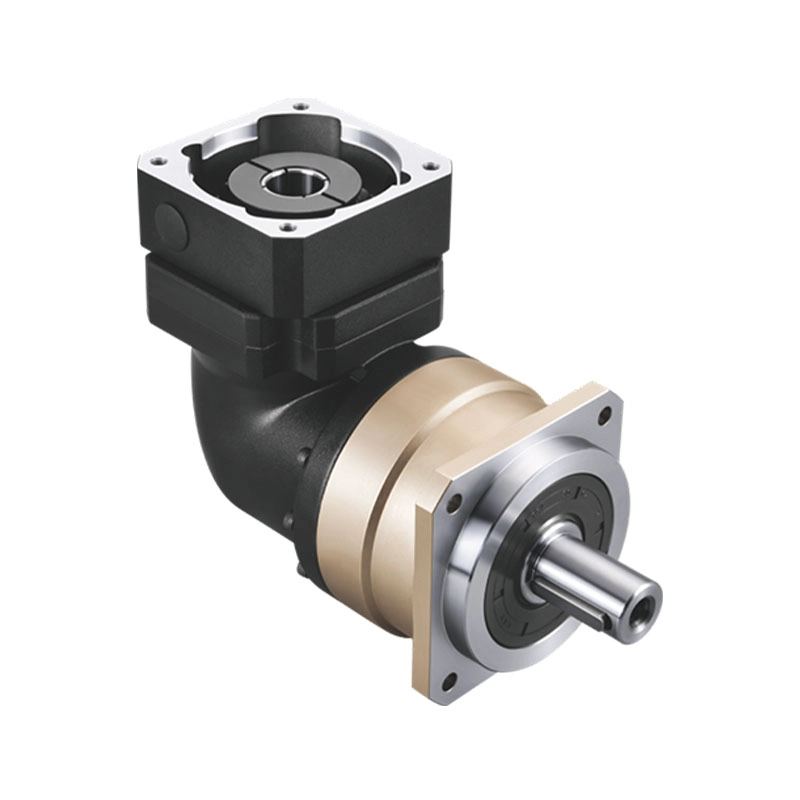
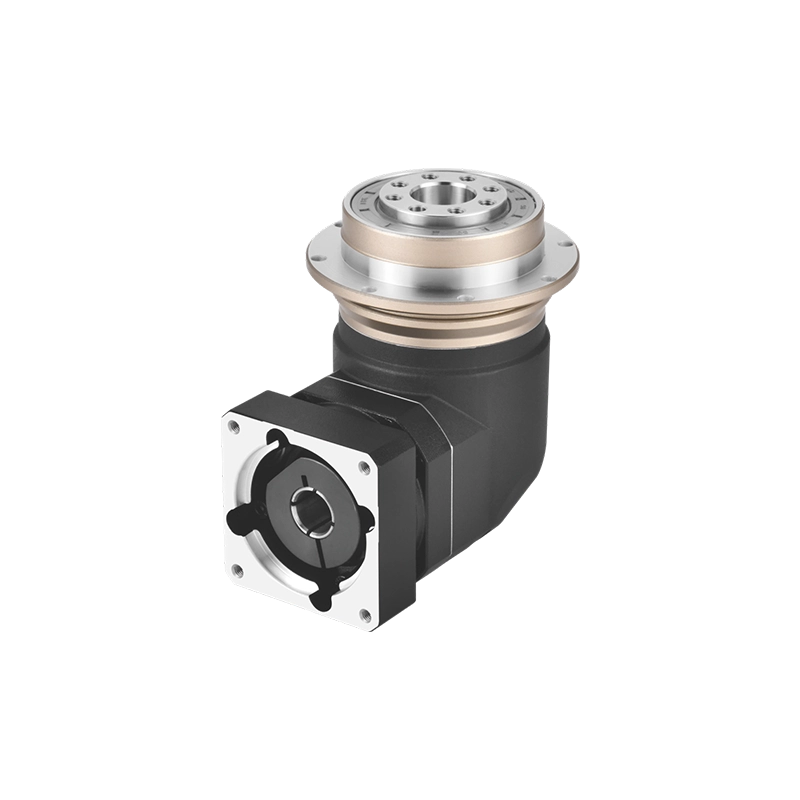
In many automation machines, the motor cannot always be installed in line with the driven axis. The machine frame may be too narrow. The motor may need to stay inside the guard. The output shaft may need to face upward while the servo motor is mounted horizontally. In these situations, a right angle servo gearbox becomes a practical solution.
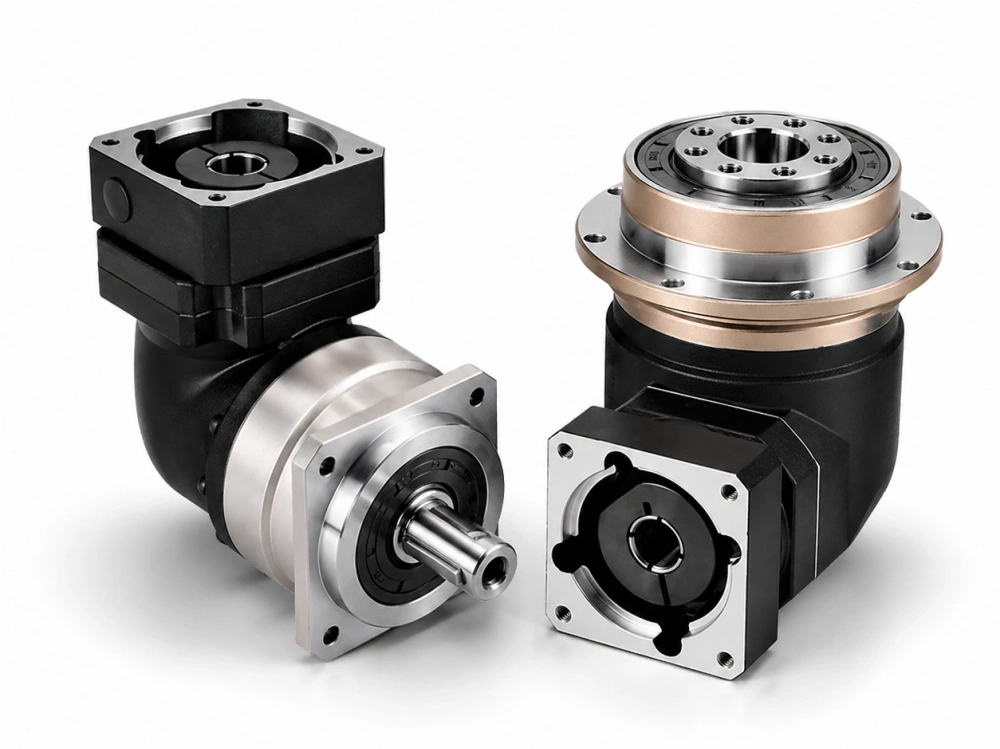
A right angle servo gearbox changes the drive direction by 90 degrees while still supporting the accuracy, torque, and dynamic response required by a servo system. It is commonly used in packaging machinery, automated assembly equipment, indexing stations, robotic auxiliary axes, AGV steering systems, and compact motion control equipment.
This article is not a basic explanation of what a right angle planetary gearbox is. Instead, it focuses on how to choose a right angle servo gearbox for real automation projects. The main questions are more practical: what specifications matter, how to check whether a gearbox matches your servo motor, when customization is necessary, and how to evaluate a gearbox manufacturer before placing an order.
For buyers comparing compact gearbox options for automation equipment, Zhuochuang’s right angle servo gearbox and right-angle planetary gearbox range can be reviewed on the product page.
What Makes a Right Angle Gearbox Suitable for Servo Applications?
A right angle servo gearbox is different from a general right angle reducer. A normal gearbox may only need to reduce speed and increase torque. A servo gearbox must do more than that. It must work inside a closed-loop control system where positioning accuracy, backlash, stiffness, motor matching, and dynamic response all affect the final machine performance.
In a servo-driven system, the motor receives commands from the controller and adjusts its movement based on feedback. If the gearbox has too much backlash, poor stiffness, or inconsistent machining quality, the servo system may still move, but the machine may not stop exactly where it should. This can affect inspection accuracy, assembly alignment, robotic positioning, or packaging repeatability.
A good servo right angle gearbox should provide low backlash, stable torque transmission, accurate gear meshing, and a reliable motor input interface. It should also have enough housing rigidity to handle the side loads and axial forces created by the 90-degree gear arrangement.
This is why buyers should not select a right angle servo gearbox only by ratio and price. For automation equipment, the better question is whether the gearbox can maintain repeatable performance during long-term operation.
Where Right Angle Servo Gearboxes Are Commonly Used
A right angle servo gearbox is often selected when the machine needs a compact drive layout. In a packaging line, for example, the motor may need to fit inside a narrow machine frame. A right angle gearbox allows the motor to be mounted parallel to the machine structure while the output shaft drives a perpendicular axis.
In automated assembly machines, a right angle servo reducer may be used to drive indexing plates, fixture rotation, transfer stations, or positioning arms. The compact layout helps reduce machine width and makes it easier to protect moving parts inside the machine frame.
Robotic workstations may use a 90 degree servo gearbox for auxiliary positioning axes. Instead of placing a motor directly in line with the driven shaft, the gearbox allows the motor to be installed in a more convenient direction. This is useful when space is limited around the robot or fixture.
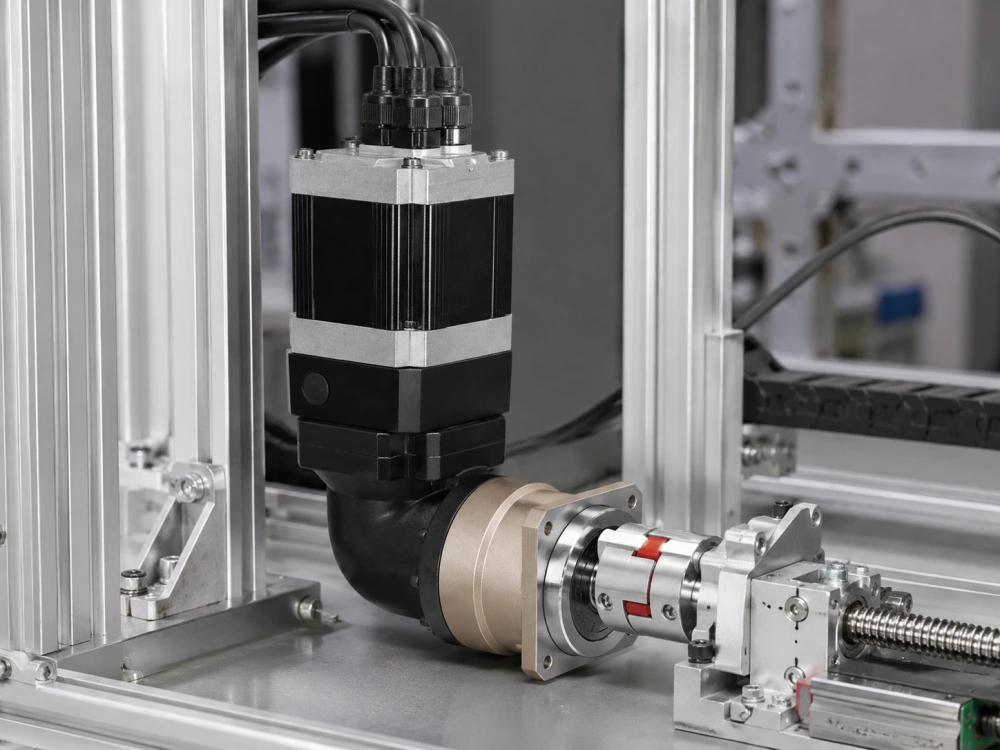
AGV steering modules, small rotary platforms, inspection systems, and electronic manufacturing equipment can also benefit from right angle servo gearboxes. In these applications, the gearbox is not only transmitting torque. It is helping the machine fit into a smaller and more controlled mechanical layout.
Key Specifications to Check Before Choosing a Right Angle Servo Gearbox
When comparing right angle servo gearbox options, the datasheet should be read carefully. Some buyers only check ratio, torque, and size, but several other specifications are just as important for servo applications.
Backlash is one of the first items to confirm. In a right angle gearbox, backlash comes from the combined transmission system, including the planetary stage and the right angle gear stage. The published backlash should represent the total output backlash, not only one part of the internal structure.
For general automation, moderate backlash may be acceptable. For precision positioning, inspection, robotic motion, or synchronized movement, a low backlash right angle gearbox is usually required. If the machine changes direction frequently, backlash becomes even more important.
Torsional stiffness is another important factor. A gearbox with poor stiffness may twist slightly under load before the output reaches the commanded position. In real equipment, this can appear as settling delay, vibration, or position error.
Rated output torque and peak output torque should both be checked. Rated torque is related to continuous operation. Peak torque is important during acceleration, deceleration, emergency stop, or short high-load movements. For servo applications, the torque demand is often not constant, so the motion profile should be considered.
Moment of inertia also matters. The gearbox adds inertia to the servo system. If the motor and load inertia are not properly matched, servo tuning becomes more difficult. Some suppliers do not clearly publish inertia data, but it is useful for accurate servo sizing.
Efficiency and temperature rise should also be reviewed, especially for continuous-duty machines. A right angle gearbox has an extra direction-changing gear stage compared with an inline gearbox, so heat generation and lubrication condition should not be ignored.
Motor Interface and Mounting Compatibility
Many problems in gearbox selection appear at the installation stage, not during the first quotation. The motor may be the correct power, but the flange does not match. The shaft diameter may be slightly different. The keyway may not fit. The input adapter may require modification. These small details can delay machine assembly.
Before ordering a right angle servo gearbox, confirm the servo motor brand and model. The supplier should check the motor flange size, shaft diameter, shaft length, pilot diameter, keyway, and mounting hole pattern. A reliable gearbox manufacturer should be able to provide or customize the correct motor adapter.
Output configuration should also be checked carefully. Some applications require an output shaft. Others require a flange output. The shaft diameter, keyway, mounting holes, and output direction must match the machine interface. If the gearbox is being used as a replacement, even a small dimensional difference can require new couplings, brackets, or mounting plates.
For compact automation equipment, motor direction is also important. A right angle servo gearbox is usually chosen to save space, but if the motor points into another machine module, cable area, or guard panel, the layout still needs to be adjusted. Always check the drawing before confirming the order.
Replacement Projects: What Must Match?
Many buyers search for a right angle servo gearbox because they need a replacement for an existing unit. This could be due to long lead time, high cost, discontinued models, or the need to find a supplier with better support.
A replacement should not be judged only by appearance. Four points must be checked before calling it a drop-in replacement.
The first point is ratio. The ratio must match the original gearbox unless the servo parameters and machine program will be adjusted. Even a small ratio difference can affect speed, torque, and positioning calculation.
The second point is motor interface. The replacement gearbox must match the existing servo motor, or the adapter must be redesigned. If the motor shaft or flange does not fit correctly, installation will fail even if the gearbox body size looks similar.
The third point is output geometry. Shaft diameter, shaft length, keyway size, flange pattern, and mounting face must match the existing machine interface. A small dimensional difference can create unexpected modification work.
The fourth point is performance grade. Replacing a low backlash gearbox with a higher backlash unit may reduce positioning performance. If the original machine required precise stopping or reverse motion, the backlash and stiffness of the replacement should match or improve on the original specification.
For replacement projects, it is best to provide the original model number, photos, drawings, motor information, and working conditions. This allows the manufacturer to review whether a standard product can fit or whether a custom adapter is needed.
When Customization Is Worth Discussing
A standard right angle servo gearbox can cover many automation applications, but not every machine fits a catalog model perfectly. Customization may be needed when the machine has special installation space, unusual output requirements, non-standard motor interfaces, or environmental requirements.
One common customization is the motor adapter. Different servo motor brands may use different flange and shaft dimensions. A custom adapter is often simpler and faster than redesigning the machine.
Another common request is output shaft modification. Some machines require a longer shaft, a different diameter, a special keyway, or a flange output. These changes should be confirmed with drawings before production.
Gear ratio can also be discussed. Standard ratios are usually enough for most projects, but some applications may require a ratio that better matches the speed and torque demand. In many cases, the manufacturer can suggest whether a standard ratio is acceptable or whether a special configuration is needed.
Environmental requirements should also be mentioned early. Dust, humidity, washdown conditions, temperature, or special sealing needs may affect the gearbox design. A standard servo gearbox may not be suitable for every installation environment.
Customization is most efficient when the manufacturer has modular product structures and experience with servo motor adaptation. A supplier that only sells fixed catalog models may not be able to support special requirements quickly.
Choosing a China Right Angle Servo Gearbox Manufacturer
Many automation buyers compare suppliers from China, Taiwan, Japan, and Europe. Country of origin alone does not determine quality. The more important question is whether the manufacturer has the machining capability, inspection process, engineering support, and production consistency required for servo gearbox applications.
For a China right angle servo gearbox manufacturer, buyers should first check whether the supplier understands servo applications. A gearbox for a servo motor is not the same as a general reducer. The supplier should be able to discuss backlash, ratio, torque, stiffness, motor adapter, and application load.
Gear manufacturing process is also important. Precision gears require stable machining and finishing processes. For low backlash servo gearboxes, gear accuracy and assembly quality directly affect performance.
Testing is another key point. A serious manufacturer should be able to explain how backlash is measured and whether inspection data can be provided. For export customers or repeat orders, documentation and consistency are important.
Engineering communication also matters. If the buyer provides a servo motor model, the manufacturer should be able to confirm adapter compatibility. If the buyer provides load and cycle information, the manufacturer should be able to suggest a reasonable gearbox size or ask the right follow-up questions.
Dongguan Zhuochuang Precision Machinery Co., Ltd manufactures right angle servo gearbox solutions in Dongguan for automation, robotics, packaging machinery, CNC-related equipment, and industrial motion control applications. Our right angle gearbox range includes VRBR and ZCDR series options for compact servo motor layouts, low backlash transmission, and machine integration support.
For more planetary gearbox details, you can review our product page on planetary gearbox suppliers.
Distributor or Direct Manufacturer: Which Is Better?
Right angle servo gearbox distributors can be useful when the buyer needs local stock, quick delivery, or standard catalog products. For maintenance teams or small urgent projects, buying through a distributor may save time.
Direct purchasing from a manufacturer is often better when the project requires customization, volume pricing, motor adapter confirmation, technical drawings, or engineering communication. If the gearbox needs to match a specific servo motor or replace an existing model, direct communication can reduce mistakes.
For export buyers, the best choice depends on the project. If the requirement is standard and urgent, a distributor may be convenient. If the requirement involves custom output shafts, non-standard motor adapters, price comparison, or long-term supply, working directly with a manufacturer may offer better control.
A good manufacturer should not only quote a price. It should help confirm whether the selected gearbox fits the application. This is especially important for servo applications where wrong ratio, wrong backlash grade, or wrong interface dimensions can create commissioning problems.
What to Confirm Before Ordering
Before placing an order for a right angle servo gearbox, prepare the key information clearly. This helps the supplier recommend the correct model and reduces the risk of misunderstanding.
Confirm the required gear ratio. The ratio affects output speed, torque, and servo parameter settings.
Confirm the rated and peak torque requirements. If you are not sure, provide load weight, motion cycle, acceleration time, and operating conditions.
Confirm the backlash requirement. General automation may not need the same backlash grade as robotic positioning or precision inspection equipment.
Confirm the servo motor model. The supplier should check flange size, shaft diameter, shaft length, and mounting dimensions.
Confirm the output style. Decide whether the machine requires shaft output, flange output, specific keyway, or special mounting dimensions.
Confirm the installation space. Motor direction, gearbox height, cable space, and access for assembly should all be reviewed.
Confirm duty cycle and working environment. Continuous operation, high ambient temperature, dust, humidity, or special sealing requirements should be discussed early.
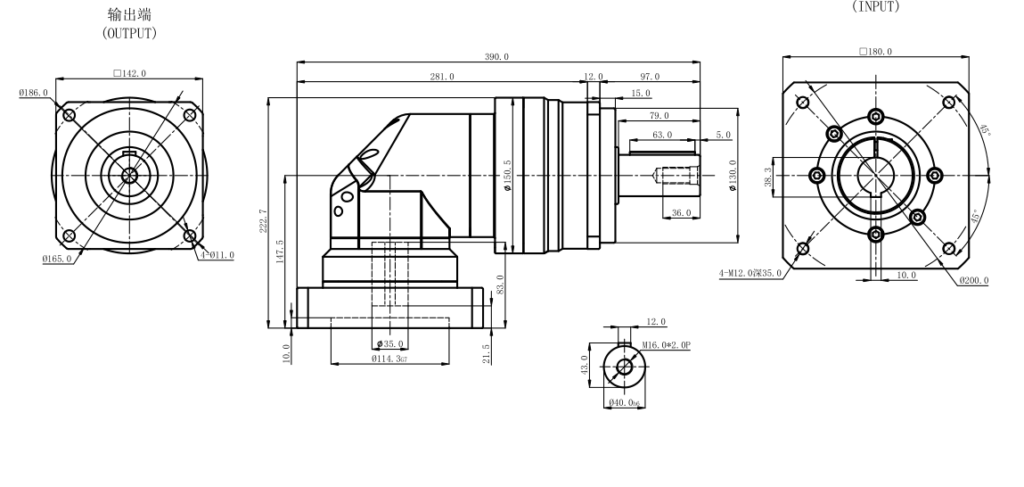
If drawings are available, send them before final confirmation. A simple drawing can prevent many installation problems.
Work with a Manufacturer for Model Selection
A right angle servo gearbox is a precision component in a motion control system. The gearbox affects positioning accuracy, torque transmission, machine layout, and long-term reliability. For this reason, selection should not depend only on price or catalog photos.
Dongguan Zhuochuang Precision Machinery Co., Ltd provides right angle servo gearbox and planetary gearbox solutions for automation equipment, robotics, packaging machinery, CNC-related equipment, and industrial motion control applications. We support motor adapter matching, model selection, and customization discussion based on project requirements.
If you are selecting a right angle servo gearbox for a new machine or looking for a replacement option, please prepare the application, servo motor model, ratio, torque requirement, backlash target, output dimensions, and installation drawing if available. You can contact our technical team for selection support and quotation.
Conclusion
A right angle servo gearbox is selected when the machine needs compact 90-degree power transmission without losing servo positioning performance. It is useful in automation systems where the motor cannot be installed in line with the driven axis, or where the machine layout requires a shorter and cleaner drive structure.
The right choice depends on more than ratio and torque. Backlash, stiffness, motor interface, output configuration, inertia, efficiency, installation space, and supplier support all affect the final result.
For standard applications, a catalog model may be enough. For replacement, customization, or precision servo positioning, it is better to work with a manufacturer that can confirm drawings, motor compatibility, backlash grade, and application requirements before production.
A competitive price is valuable, but only when the gearbox also meets the required performance. The better purchase is not simply the lowest-cost unit. It is the right angle servo gearbox that fits the machine, supports the servo system, and performs reliably over time.
FAQ
What is a right angle servo gearbox?
A right angle servo gearbox is a precision gearbox used with a servo motor to change the drive direction by 90 degrees while reducing speed, increasing torque, and supporting accurate positioning.
What is the difference between a right angle servo gearbox and a standard right angle gearbox?
A right angle servo gearbox is designed for servo applications. It usually requires lower backlash, better stiffness, accurate motor adapters, and more consistent positioning performance than a general-purpose right angle gearbox.
When should I use a right angle servo gearbox?
It is useful when the motor and output shaft need to be arranged at 90 degrees due to limited installation space, compact machine layout, or perpendicular drive requirements.
How do I choose the correct ratio?
The ratio should be selected according to required output speed, torque, load inertia, acceleration, and servo motor performance. If the gearbox is used as a replacement, the ratio should normally match the original unit.
Can a right angle servo gearbox be customized?
Yes. Common customization options include motor adapters, output shafts, flange dimensions, special ratios, sealing options, and mounting configurations.
What information should I provide before requesting a quote?
Provide the application, servo motor model, ratio, torque requirement, backlash target, output dimensions, installation space, working environment, and drawings if available.