
Planetary Gear Reducer vs Planetary Gearbox: Meaning, Uses and Buying Tips
If you have searched for a planetary gear reducer and found product pages titled “planetary gearbox,” you are not confused. In most industrial applications, the two terms describe the same type of product. The difference is usually terminology, not mechanical structure.
This naming overlap is common in international sourcing. Different suppliers, countries, industries, and catalog systems may use different words for the same planetary transmission unit. Before comparing price, ratio, backlash, torque, and delivery time, it is useful to understand what the names mean and what really separates one planetary gear reducer from another.
For industrial buyers, the important question is not only “gear reducer or gearbox?” The more important questions are: What precision grade do you need? Should the gearbox be inline or right angle? What backlash level is acceptable? Can the supplier match your servo motor? And can the manufacturer confirm real test data instead of only catalog values?
Planetary Gear Reducer vs Planetary Gearbox: Is There a Difference?
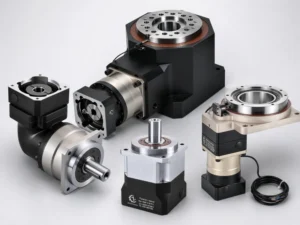
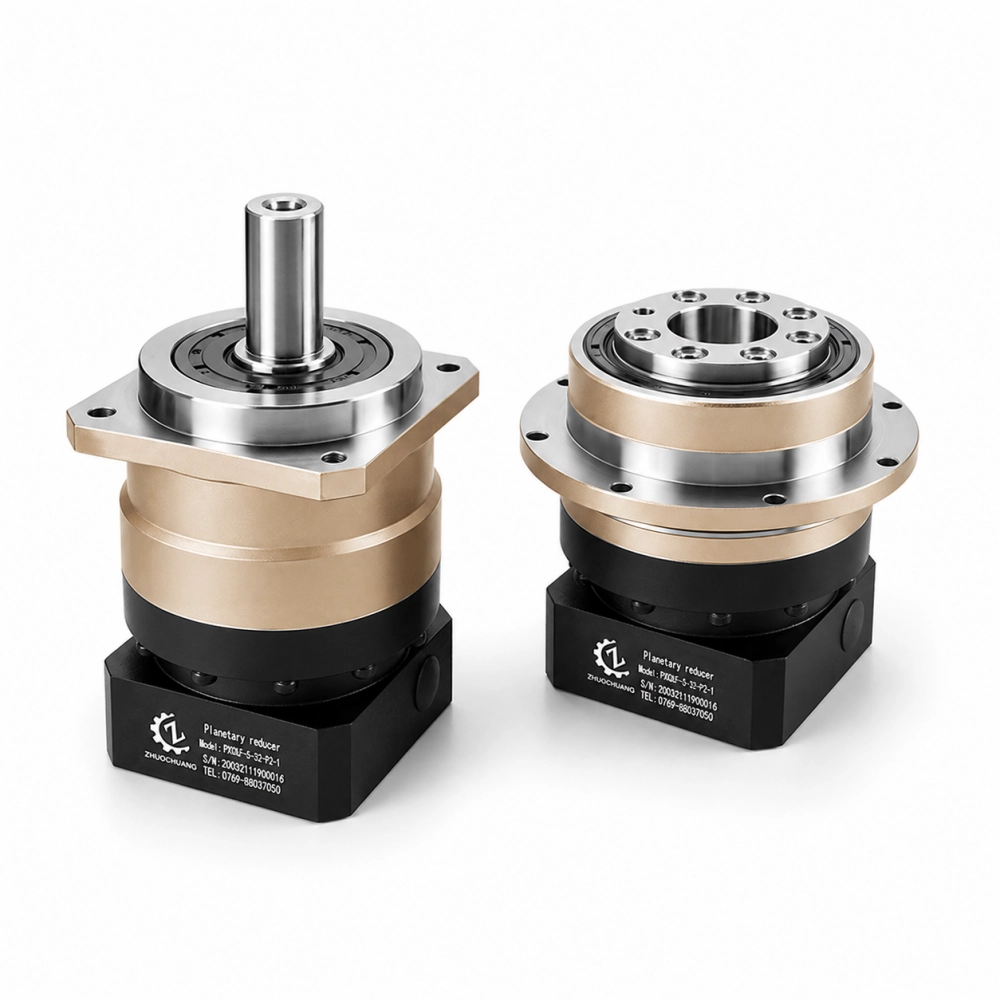
Mechanically, a planetary gear reducer and a planetary gearbox usually refer to the same type of product. Both use a sun gear, planet gears, ring gear, carrier, bearings, housing, input interface, and output interface to reduce speed and increase torque.
The word “reducer” emphasizes function. It reduces motor speed and increases output torque. The word “gearbox” emphasizes the mechanical assembly. It is a housing that contains gears, shafts, bearings, and lubrication. In real industrial use, both terms are widely used.
For example, a buyer in North America may search for a planetary speed reducer. A European engineer may search for a planetary gearbox. A Chinese manufacturer may use both terms on different pages of the same catalog. In automation and servo motion control, “planetary gearbox” is very common. In general industrial machinery, “gear reducer” or “speed reducer” is also common.
The practical conclusion is simple: do not judge the product only by the name. Judge it by configuration, ratio, torque capacity, backlash, precision grade, motor interface, mounting size, duty cycle, and supplier capability.
What Actually Distinguishes One Planetary Gear Reducer from Another?
Since the name itself does not tell the full story, industrial buyers should focus on the specifications that affect real machine performance.
Precision Grade and Backlash
Backlash is one of the most important differences between planetary gear reducers. Standard industrial reducers may be acceptable for conveyors, material handling equipment, and general machinery. Precision servo-grade planetary gear reducers are used where positioning accuracy, repeatability, and motion control stability are required.
For servo systems, CNC machinery, robotic joints, indexing equipment, and automated assembly machines, low backlash is often necessary. A standard reducer and a precision reducer may look similar from the outside, but they are not the same in manufacturing process, gear finishing, assembly control, and testing requirements.
Inline or Right Angle Configuration
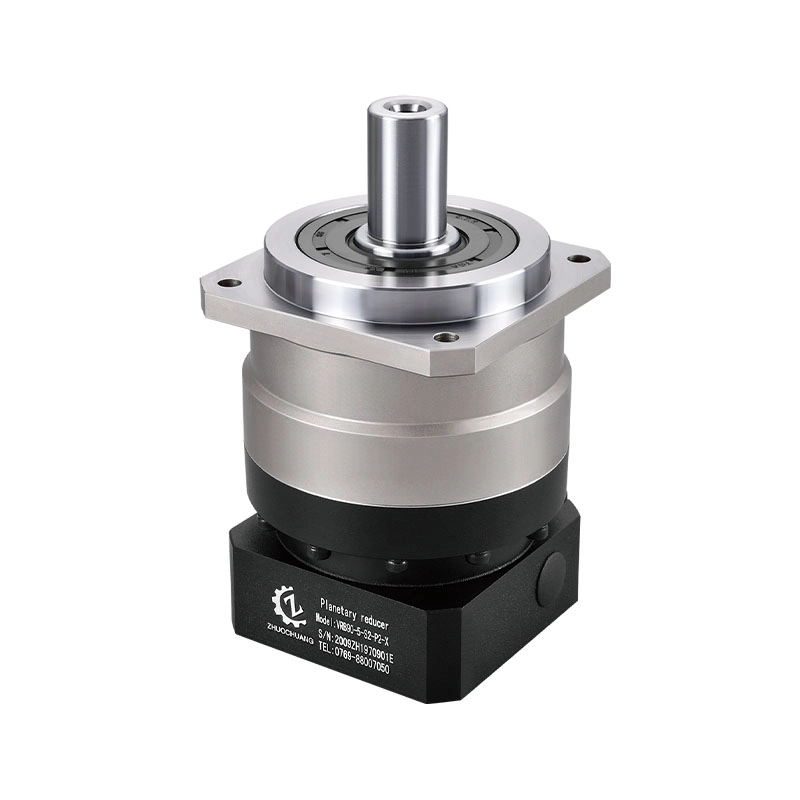
An inline planetary gear reducer has the input and output on the same axis. This is the most common structure for servo motor integration because it keeps the motor and load aligned in a clean coaxial layout.
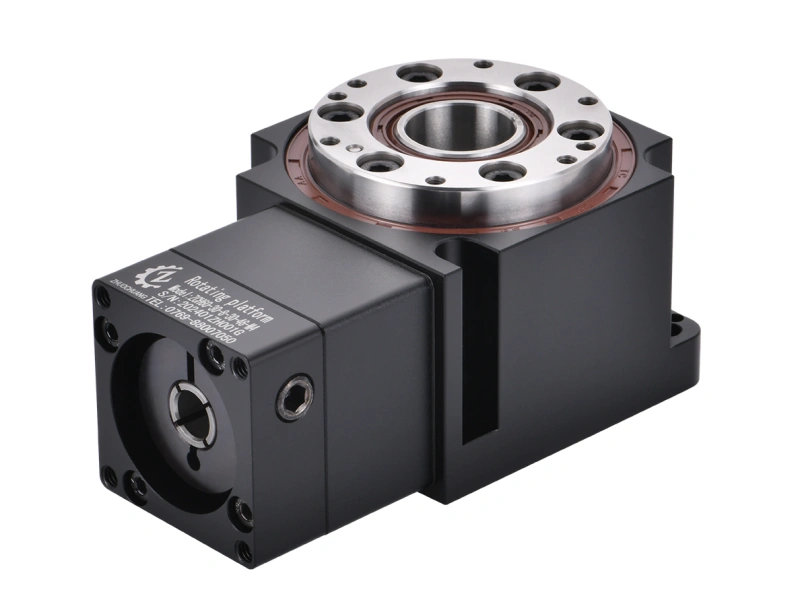
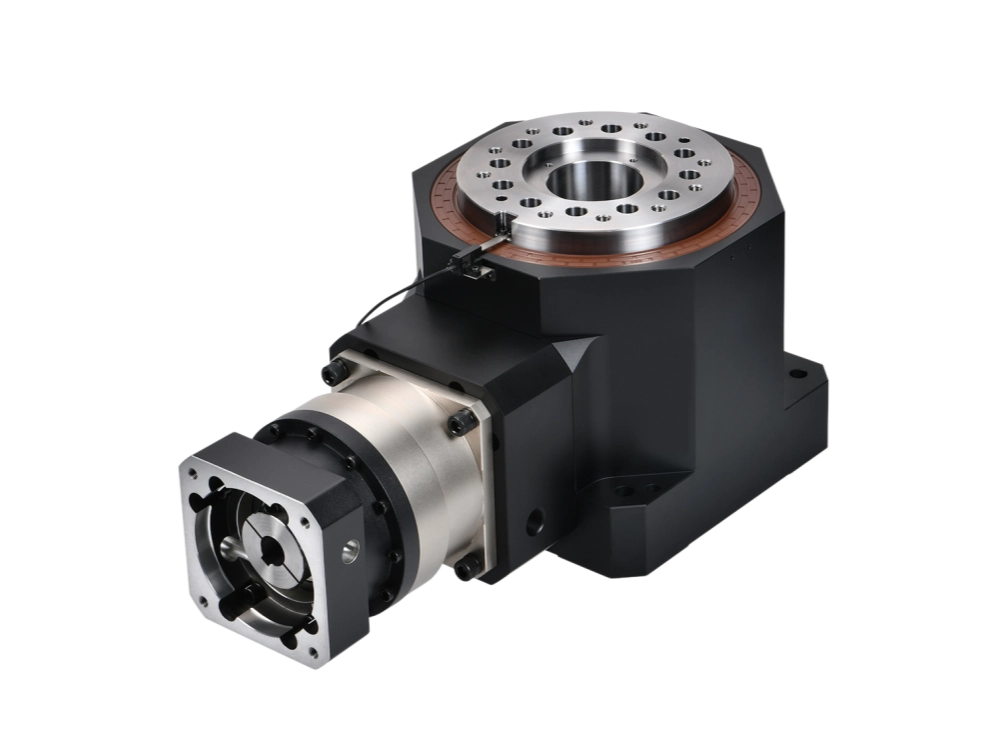
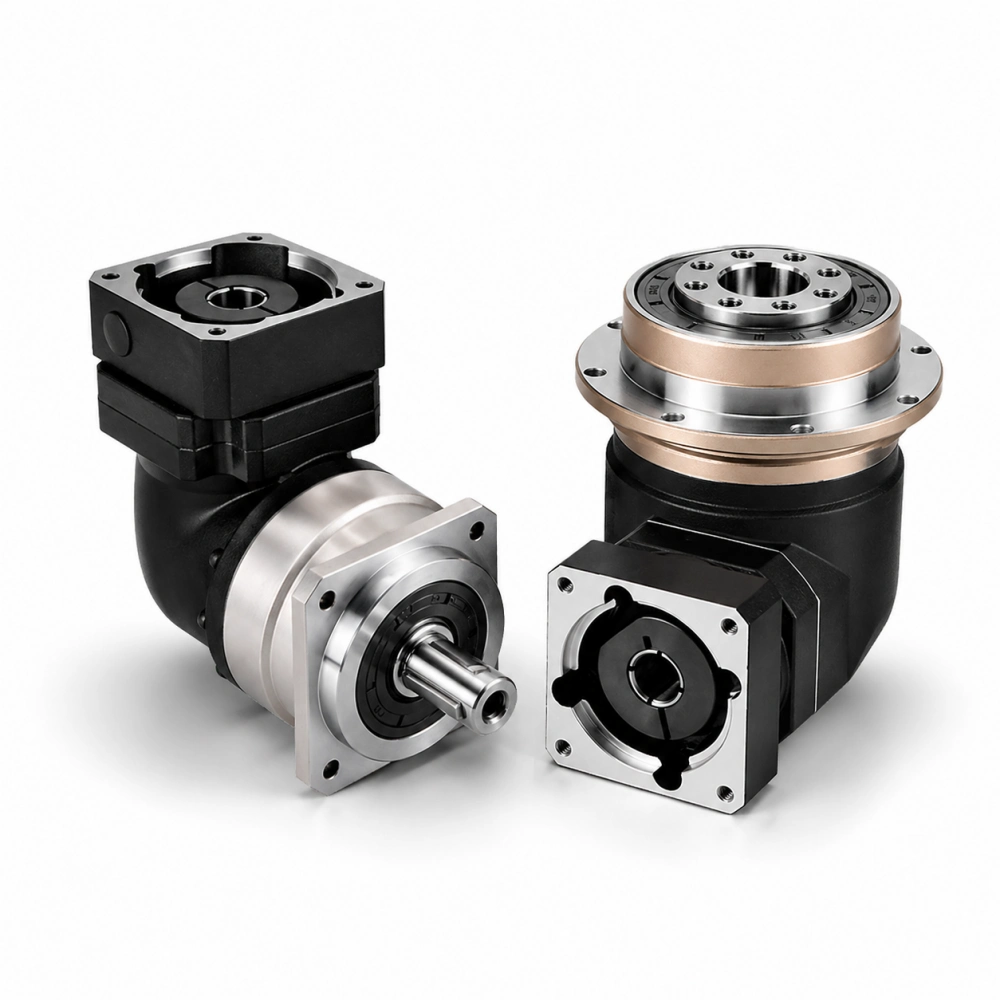
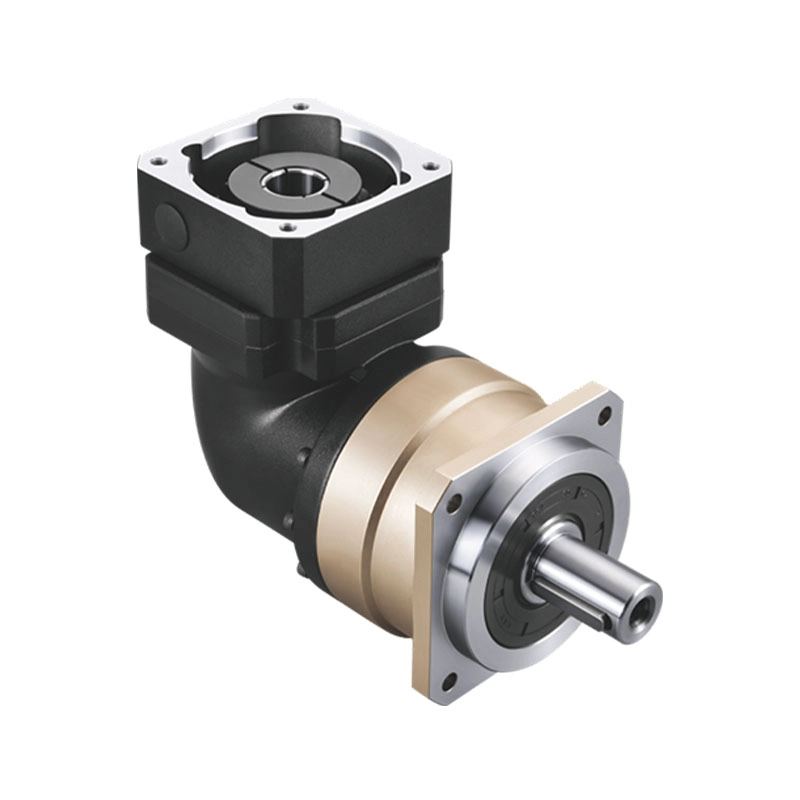
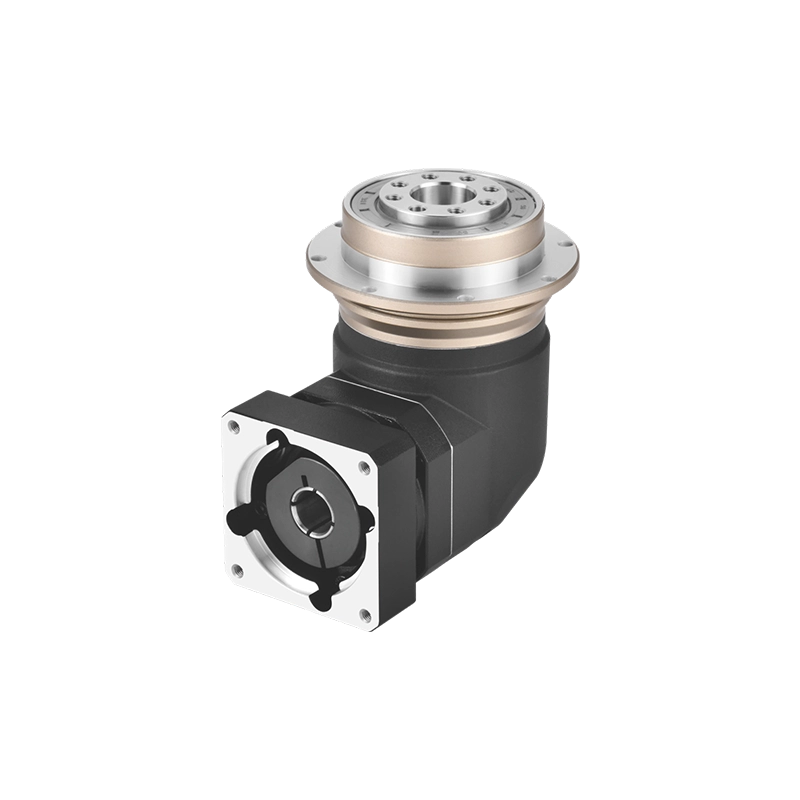
A right-angle planetary gear reducer changes the output direction by 90 degrees. It is used when the machine layout does not allow the motor and load to stay in a straight line. This configuration is useful in compact automation equipment, packaging machines, rotary indexing systems, and machine frames with limited installation space.
If your design allows straight motor-to-load alignment, inline is usually the simpler choice. If your motor must be placed perpendicular to the output axis, a right-angle configuration may be more practical.
Stage Count and Ratio Range
Planetary gear reducers are commonly available in single-stage, two-stage, and sometimes three-stage designs. A single-stage reducer is shorter and simpler, usually suitable for lower ratios. A two-stage reducer provides higher reduction ratios but increases length, weight, and internal gear mesh count.
The stage count affects more than ratio. It can also affect efficiency, backlash accumulation, noise, inertia, and overall gearbox size. For this reason, buyers should confirm not only the ratio, but also whether the selected ratio requires one stage or multiple stages.
Servo Grade or General Industrial Grade
Some planetary gear reducers are designed mainly for general industrial transmission. Others are designed specifically for servo motor applications. A servo-grade planetary gear reducer should provide proper motor adapter options, controlled backlash, torsional stiffness data, input inertia information, and accurate mounting dimensions.
If the reducer will be used in a closed-loop servo system, do not select only by torque and price. Check backlash, inertia, stiffness, motor mounting compatibility, and testing method.
Planetary Gear Reducer Series: How to Understand Model Names
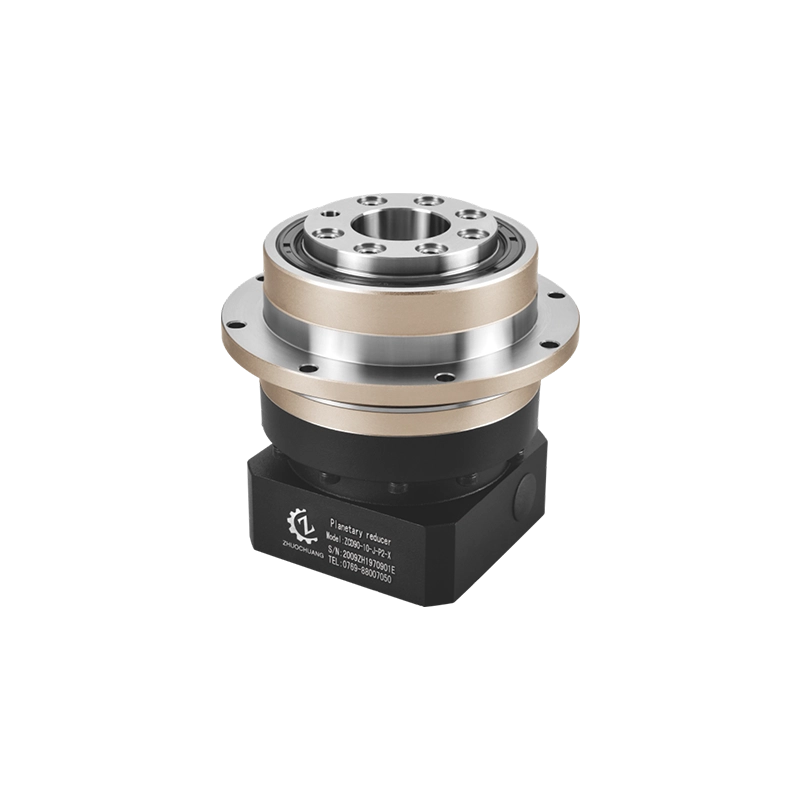
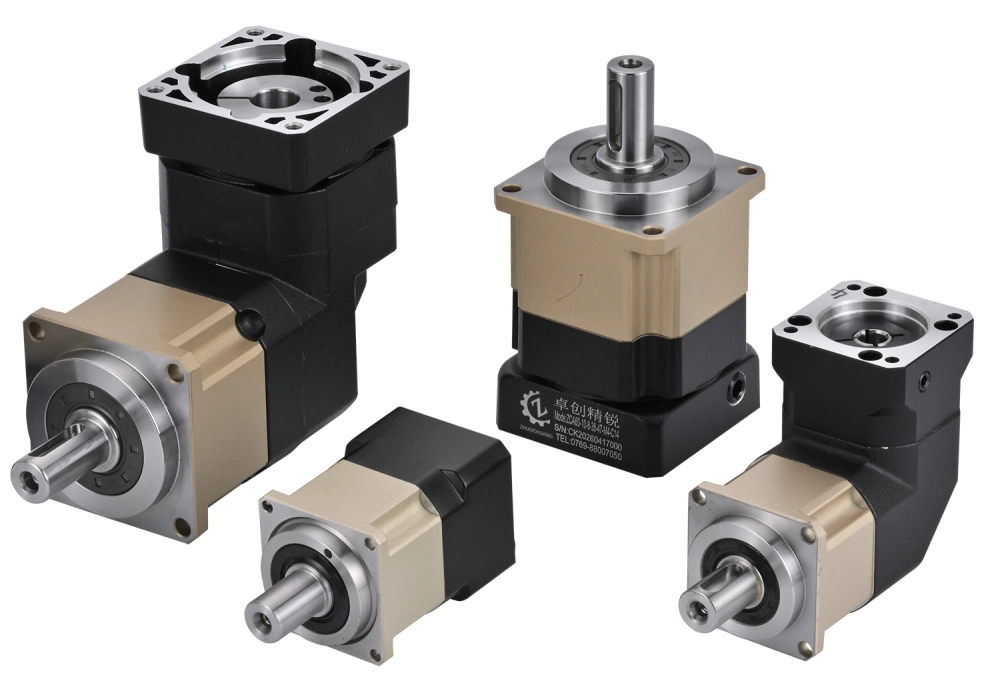
Different manufacturers use different model codes. The same physical category may appear under names such as PE series, EPL series, PER series, EPR series, ZCD series, VRB series, VRBR series, or ZCDR series. The code itself is not the most important thing. The meaning behind the series is what matters.
Some PE series inline planetary gear reducers in the market are positioned as standard or economy-grade inline units. Some EPL series reducers are used as precision or servo-grade inline units. Some PER or EPR series names are used by suppliers for right-angle planetary gear reducers.
At Dongguan Zhuochuang Precision Machinery Co., Ltd, our planetary gear reducer products include inline and right-angle configurations for industrial automation. For inline servo applications, buyers can review the inline planetary gearbox range. For compact 90-degree layouts, buyers can review the right angle planetary gearbox range.
The key point is this: do not compare two model series only by size and price. Confirm backlash grade, torque capacity, ratio range, input interface, output interface, dimensional drawing, and application suitability.
Planetary Gear Reducer China: What Buyers Should Check
China has many planetary gear reducer manufacturers, ranging from standard industrial gearbox suppliers to precision servo gearbox producers. The phrase planetary gear reducer China covers a wide range of product levels, so buyers should avoid judging only by country of origin or the lowest quotation.
A capable planetary gear reducer manufacturer should be able to answer technical questions clearly. For example, buyers can ask whether the gears are ground or hobbed, whether backlash is tested on every unit or only sampled, whether motor adapter dimensions can be confirmed before production, and whether dimensional drawings are available for the selected model.
For precision servo applications, it is also useful to ask whether the supplier can provide backlash test data, torque rating, allowable input speed, torsional stiffness, lubrication information, and installation instructions. These details help separate a real engineering supplier from a basic trading source.
Lead time is another practical factor. Standard ratios and common motor adapters may be available quickly. Non-standard ratios, special flange sizes, custom shafts, or customized mounting interfaces may require longer production time. If the reducer is needed for a production line, confirm both sample lead time and batch delivery capacity.
Inline Planetary Gear Reducer: The Most Common Servo Layout
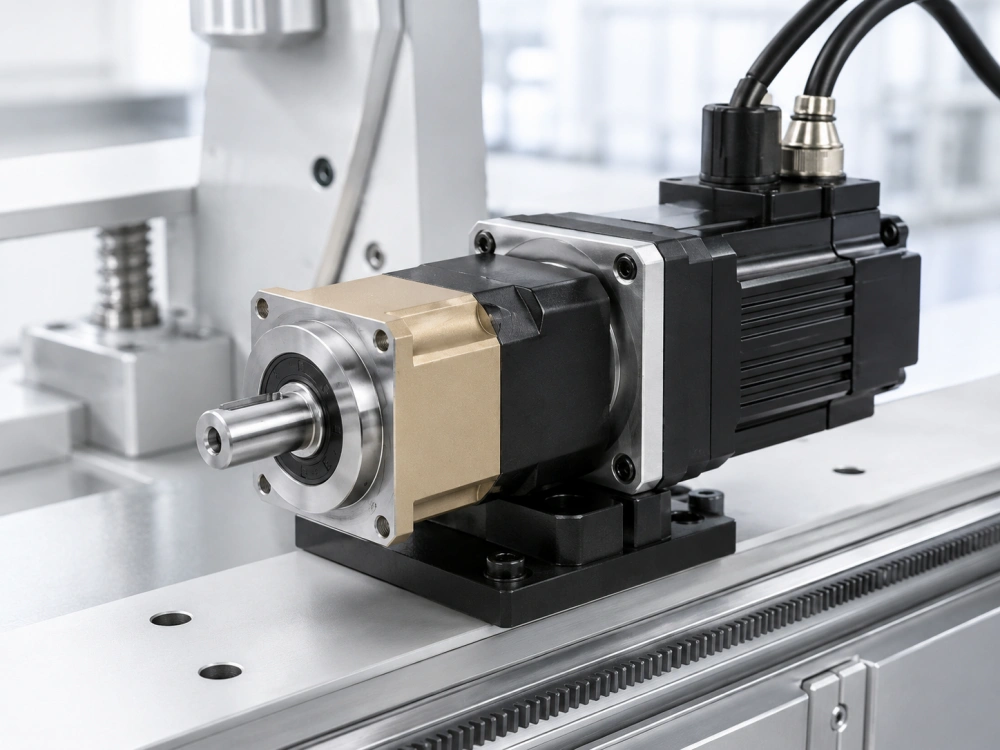
The inline planetary gear reducer is the most common configuration for servo automation because the motor shaft and output shaft stay on the same centerline. This makes installation simple when the machine load is coaxial with the motor.
Inline reducers are widely used in CNC machinery, robot joints, linear modules, packaging machinery, indexing systems, and general automation equipment. Their advantages include compact structure, good torque density, efficient transmission, and straightforward servo motor mounting.
When selecting an inline planetary gear reducer, buyers should confirm the motor flange, shaft diameter, input adapter, output shaft type, backlash grade, ratio, rated torque, peak torque, and installation space. For servo systems, inertia matching and stiffness should also be reviewed.
Right-Angle Planetary Gear Reducer: When Layout Matters
A right-angle planetary gear reducer is used when the motor and output load cannot be aligned in a straight line. It redirects the drive by 90 degrees, helping machine designers place the motor where space is available.
This configuration is common in rotary indexing machines, packaging equipment, conveyor transfer units, CNC rotary drives, and compact automation modules. Compared with inline units, right-angle reducers may add a direction-changing gear stage, so buyers should confirm complete-unit backlash, efficiency, mounting direction, and output orientation.
If your machine has enough space for inline mounting, inline may be the simpler choice. If the motor would interfere with tooling, guarding, operator access, or another axis, a right-angle planetary gear reducer can solve the layout problem.
Buying Tips: Avoid These Planetary Gear Reducer Mistakes
1. Buying Only by Price
The cheapest reducer is not always the lowest-cost solution. If the application requires low backlash, stable servo response, long service life, or reliable duty-cycle performance, buying a standard-grade reducer only because it is cheaper may create problems during commissioning.
2. Ignoring Backlash Test Conditions
A backlash number on a datasheet is useful only when you understand how it is measured. For precision systems, ask whether the value is measured on the actual unit, measured by batch, or only listed as a design specification.
3. Choosing Ratio Without Checking Motor Speed
The required ratio should be calculated from motor rated speed and required output speed. A wrong ratio can cause output speed mismatch, insufficient torque, poor acceleration, or unnecessary motor load.
4. Forgetting Thermal Rating and Duty Cycle
Planetary gear reducers generate heat during operation. In continuous-duty equipment, torque rating alone is not enough. Confirm allowable input speed, operating temperature, lubrication, ambient temperature, and thermal capacity.
5. Not Confirming the Motor Adapter
For servo motor applications, the motor adapter is critical. Confirm motor brand, flange size, shaft diameter, shaft length, keyway or clamping method, and pilot diameter before ordering.
What to Send a Supplier Before Asking for a Quote
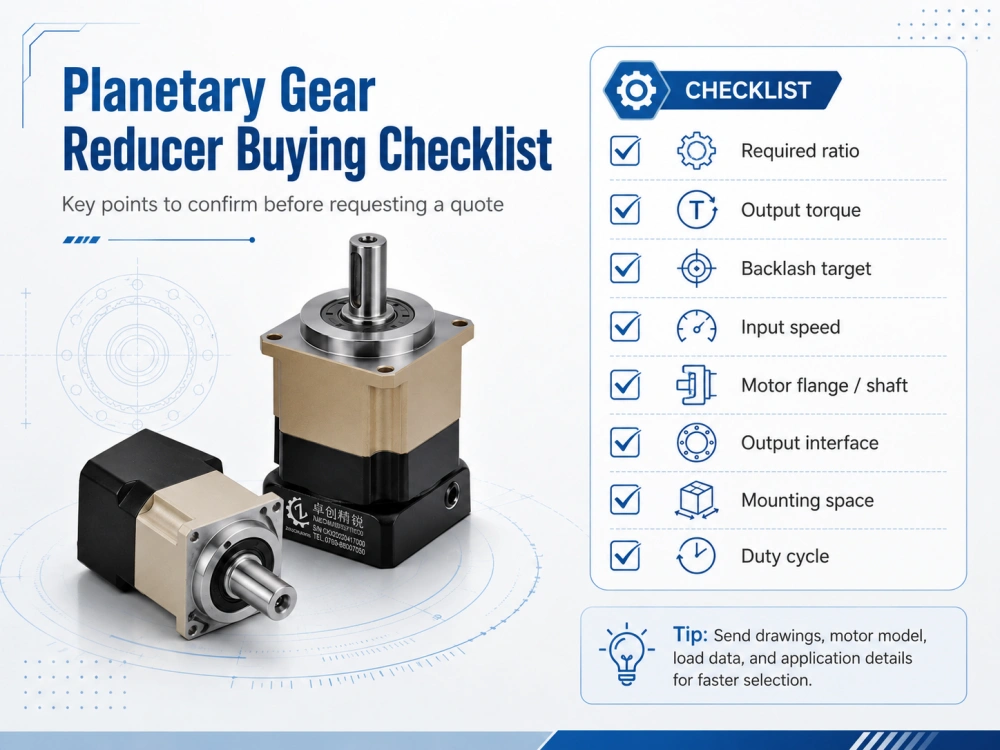
To receive a more accurate recommendation, provide the supplier with the following information:
- Motor brand and model
- Required gear ratio or required output speed
- Continuous torque and peak torque requirement
- Backlash requirement or positioning accuracy requirement
- Inline or right-angle configuration
- Output shaft, flange, or hollow bore requirement
- Duty cycle and daily operating time
- Application type and working environment
- Quantity, delivery schedule, and whether volume supply is required
This information allows the supplier to recommend a suitable frame size, ratio, precision grade, mounting interface, and delivery plan.
Work With a Planetary Gear Reducer Manufacturer
A planetary gear reducer and a planetary gearbox may be the same product in terminology, but not all reducers are the same in quality, precision, and application suitability. The real selection work is comparing precision grade, configuration, ratio, backlash, torque, motor interface, and supplier capability.
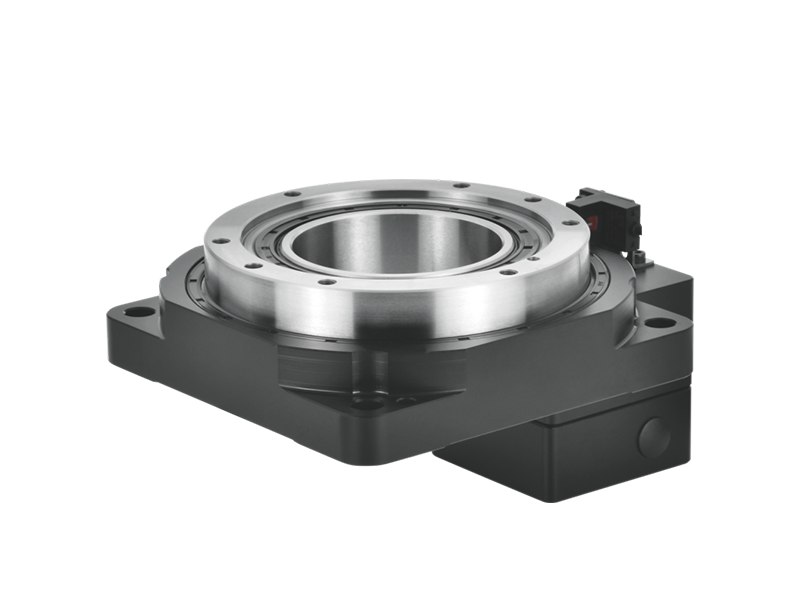
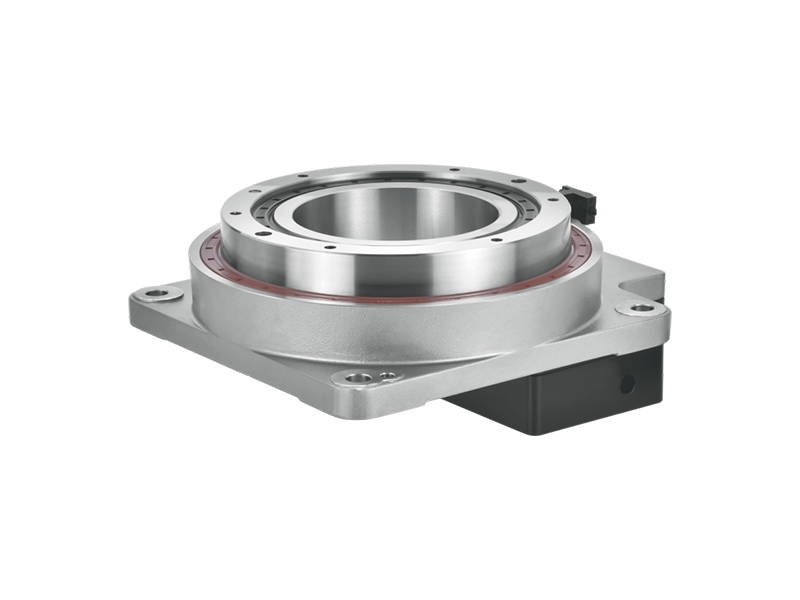
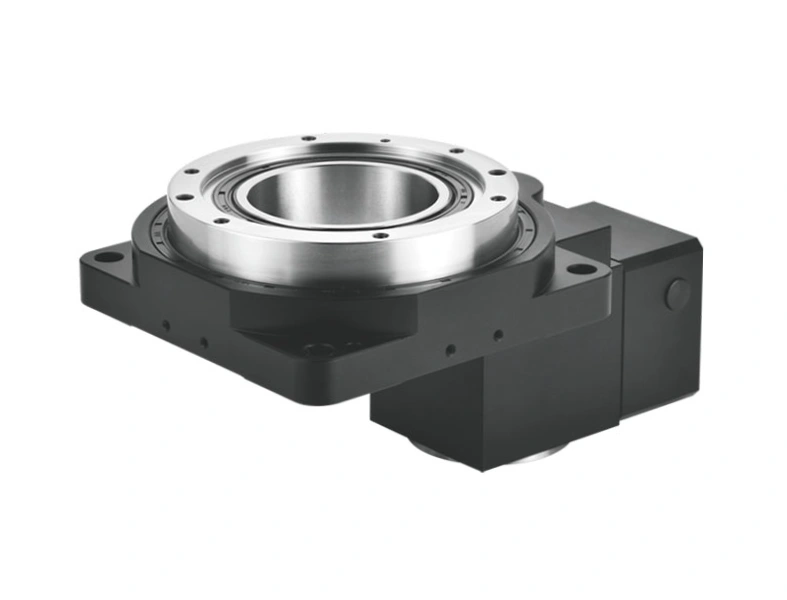
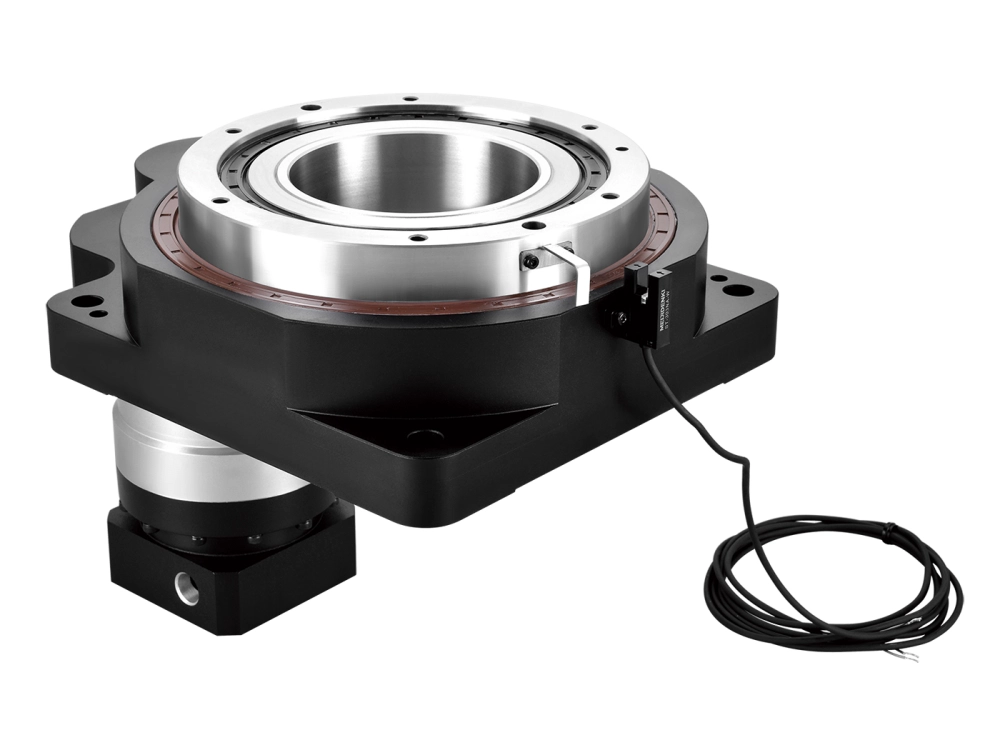
Dongguan Zhuochuang Precision Machinery Co., Ltd manufactures precision planetary gearboxes and hollow rotary tables for robotics, automation systems, CNC machinery, packaging machinery, and precision positioning applications. Our product range includes inline and right-angle planetary gear reducer options for different servo drive layouts.
If you are sourcing a planetary gear reducer for an automation project, send us your motor model, ratio, torque, backlash requirement, mounting space, and application information. Our team can help review the suitable configuration and frame size.
Browse Planetary Gear Reducers Contact Us for Technical Support
FAQ About Planetary Gear Reducers
Is a planetary gear reducer the same as a planetary gearbox?
In most industrial use, yes. A planetary gear reducer and a planetary gearbox usually describe the same mechanical product. “Reducer” emphasizes speed reduction, while “gearbox” emphasizes the gear assembly.
When should I use an inline planetary gear reducer?
Use an inline planetary gear reducer when the motor and load can stay on the same axis. It is common in servo motors, CNC machinery, robotics, packaging equipment, and automation modules.
When should I use a right-angle planetary gear reducer?
Use a right-angle planetary gear reducer when the motor and load cannot be aligned because of space limits, machine frame design, tooling clearance, or operator access.
How do I choose a planetary gear reducer manufacturer?
Check whether the manufacturer can provide real specifications, dimensional drawings, backlash data, motor adapter confirmation, torque rating, ratio options, and technical support for your application.