
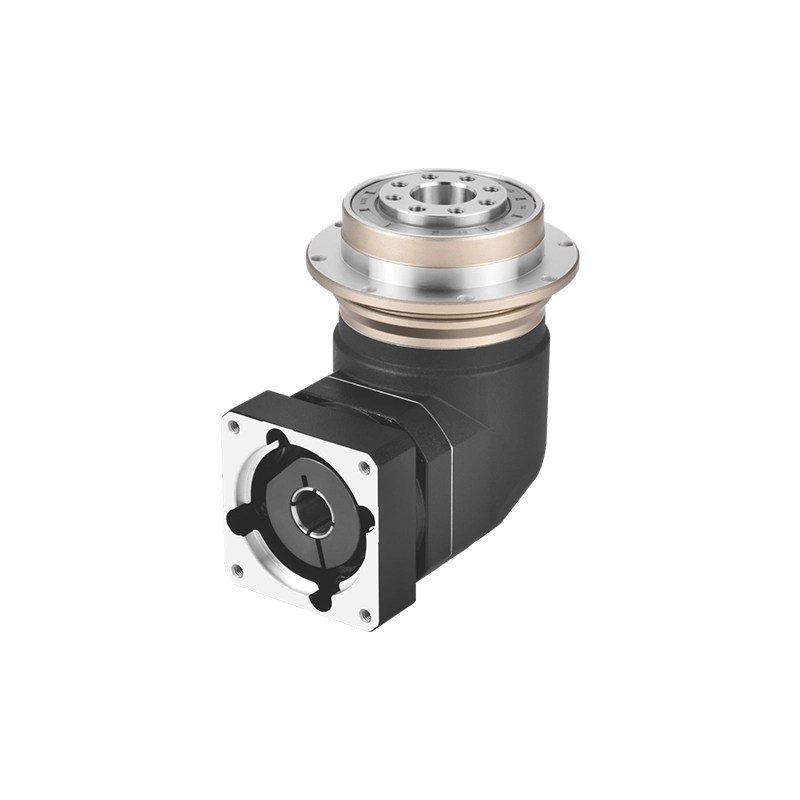
A gearbox rarely fails without leaving evidence. The difficulty is that the evidence may appear as a small change in sound, temperature, vibration, motor current, leakage or positioning behavior long before a shutdown. A useful gearbox maintenance program does not merely tell technicians to “check the gearbox.” It records what healthy operation looks like, compares later readings under equivalent conditions and defines what must happen when the trend changes.
Need a Gearbox Condition or Replacement Review?
Send the gearbox model, motor model, ratio, operating hours, machine drawing and observed symptoms. Zhuochuang can review the information needed to evaluate a compatible precision planetary gearbox—not sell you an unnecessary repair service.
Send Operating Data View Gearbox OptionsGearbox Maintenance Begins With a Healthy Baseline
A reading becomes meaningful only when it can be compared with something. Record a baseline after installation, after the running-in period specified by the manufacturer, or after the machine has been returned to a verified healthy condition. Run the equipment at a known speed, load and cycle until the temperature stabilizes. Then document the measurement point, instrument and surrounding conditions.
This approach prevents a common mistake in industrial gearbox maintenance: treating one temperature or vibration value from the internet as a universal limit. Gearbox construction, lubricant, mounting position, ratio, input speed and duty cycle all influence the reading. Even two identical units can show different surface temperatures when one is close to a motor or enclosed inside a poorly ventilated cabinet.
Mark measurement locations on a photo or machine drawing. A value taken near the input bearing should not later be compared with a reading from the output flange. The same rule applies to vibration direction and sensor mounting. Consistency turns scattered inspection notes into usable maintenance evidence.
Daily and Weekly Industrial Gearbox Maintenance
The best inspection is short enough to be completed and specific enough to expose change. Operators who work beside the machine often notice a new tone, smell or motion pattern before a scheduled specialist visit. Give them a fixed observation route instead of a vague instruction.
| Interval | Observation | What to record | Immediate escalation |
|---|---|---|---|
| Each shift | Sound and motion | New whine, clicking, rumble, hesitation or unstable output | Grinding, seizure, impact noise or sudden loss of motion |
| Daily | Housing and seals | Leak trace, contamination, fastener movement and surface-temperature trend | Active leakage, smoke, odor or rapidly rising temperature |
| Weekly | Drive interface | Coupling, mounting bolts, guards, cable interference and visible alignment | Loose mounting, coupling damage or shaft movement |
| Planned interval | Performance | Vibration, motor current, backlash or positioning repeatability | Sharp trend change or result outside the machine requirement |
For an oil-lubricated serviceable gearbox, the manufacturer may also require oil-level, breather, filter, sample or change checks. These instructions are model- and mounting-position-specific. For a factory-sealed precision planetary reducer, opening the housing or adding lubricant may cause contamination, sealing problems and a change in backlash. The maintenance sheet must therefore identify which gearbox type is installed before listing lubrication work.
Preventive Gearbox Maintenance Should Follow Duty, Not the Calendar Alone
Preventive gearbox maintenance is often converted into a fixed monthly or annual checklist. A calendar is useful for administration, but operating exposure determines mechanical risk. A continuously running conveyor, a high-frequency indexing axis and a lightly used adjustment drive should not automatically receive the same inspection interval.
Build the interval from operating hours, starts per hour, acceleration and deceleration, reversals, shock events, environment and the consequence of failure. Shorten the review interval after a production-speed increase, heavier tooling, revised motion profile or relocation into a hotter or more contaminated area. Restore the normal interval only after stable evidence has been collected.
Preventive Gearbox Maintenance After a Machine Change
Treat a machine modification as a new operating condition. Record the previous and new product mass, cycle time, motor program, output speed and driven geometry. A pulley moved farther from the output face can increase bearing moment without changing transmitted torque. A faster acceleration can increase peak torque while average production load appears unchanged. These changes belong in the maintenance record because they can explain a later shift in temperature, current or positioning.
Gearbox Predictive Maintenance Tracks Change, Not One Reading
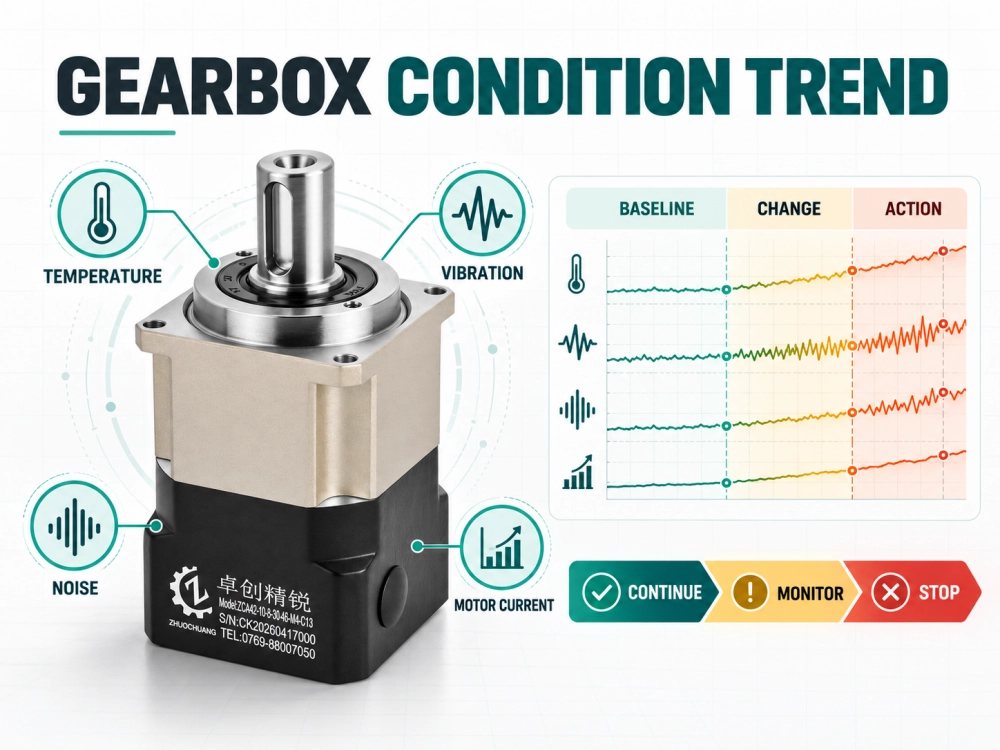
Gearbox predictive maintenance uses condition evidence to decide when closer inspection is justified. It does not require every machine to begin with an expensive online system. A repeatable handheld temperature and vibration route can establish useful trends; critical assets may justify permanent sensors, oil analysis and automated alarms.
Compare data only under similar operating states. Vibration and temperature naturally change with speed, torque and surrounding conditions. SKF condition-monitoring guidance notes that vibration data should be interpreted with operating load, speed and gearbox geometry, while monitoring may cover bearings, gears, shafts and couplings. Fluke’s thermography guidance similarly recommends establishing a normal thermal profile and comparing later scans with the same or equivalent equipment.
Gearbox Predictive Maintenance Signals That Belong Together
A temperature increase alone may come from higher ambient temperature or heat transferred from the motor. Higher vibration alone may originate in the driven machine or a loose mounting frame. Confidence rises when two or more related signals change together—for example, increasing vibration plus a new gear-mesh tone, or rising motor current plus heat and unstable motion.
| Observed change | Check next | Do not assume |
|---|---|---|
| Temperature rises above baseline | Load, speed, ambient temperature, motor heat, alignment and leakage | That lubricant alone is the cause |
| Vibration trend increases | Sensor point, mounting rigidity, coupling, driven load and frequency content | That every vibration comes from gear teeth |
| Motor current increases | Machine resistance, acceleration profile, binding and gearbox temperature | That the motor is necessarily defective |
| Positioning error grows | Coupling movement, fasteners, controller data, load deflection and gearbox backlash | That backlash is the only source |
Turn Maintenance Evidence Into a Clear RFQ
If the condition trend points toward replacement, send comparable readings plus the existing nameplate and interface drawing. We can check ratio, motor fit, allowable loads and available installation space before recommending a model.
Request a Replacement ReviewGearbox Maintenance for Sealed Planetary Reducers
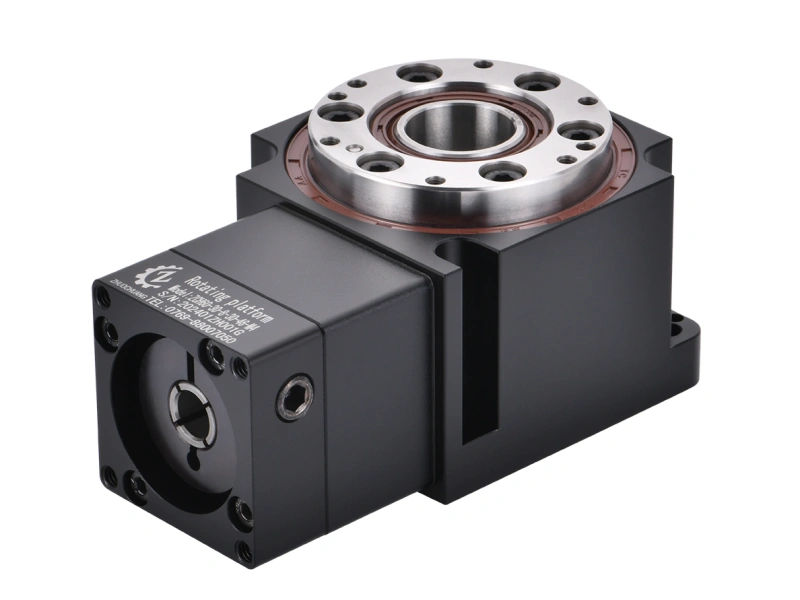
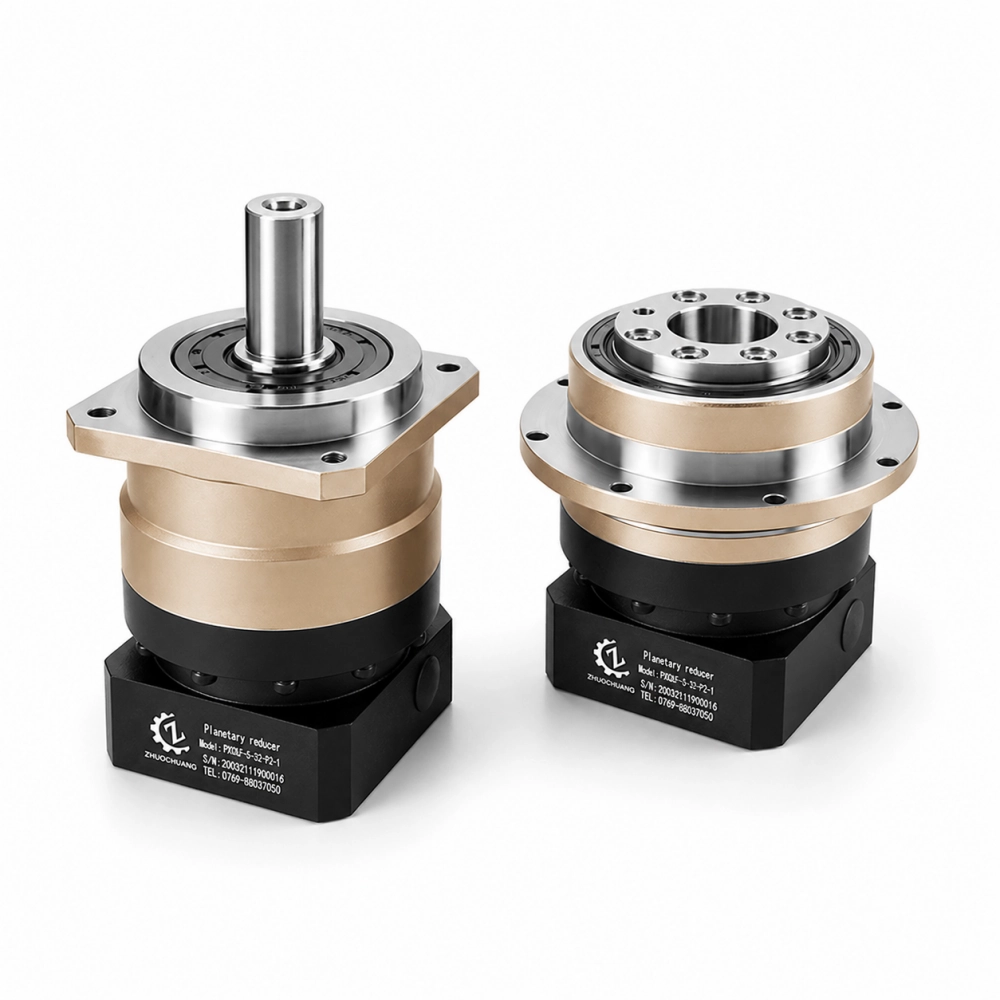
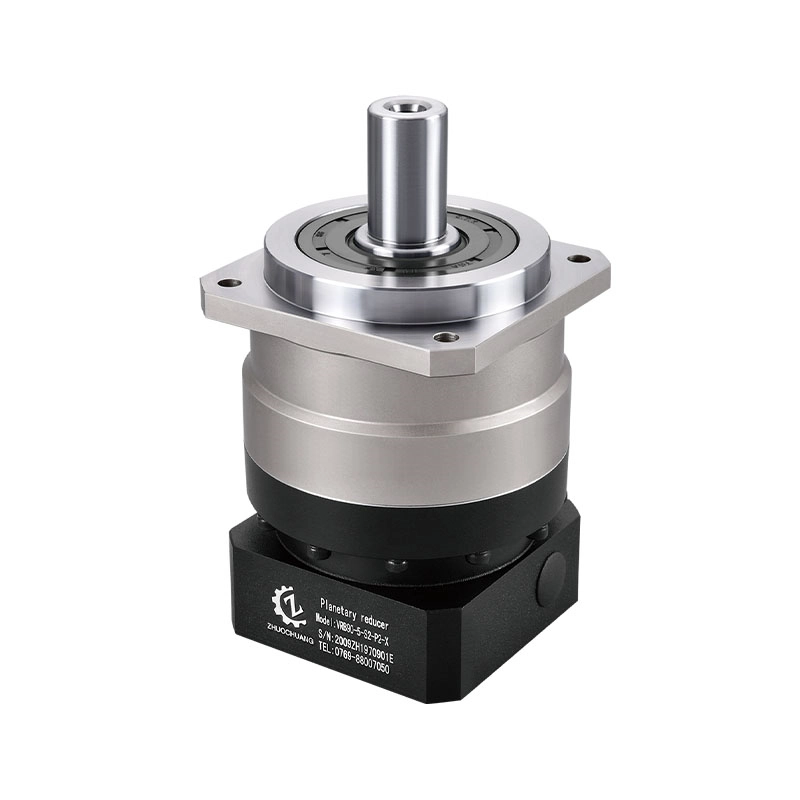
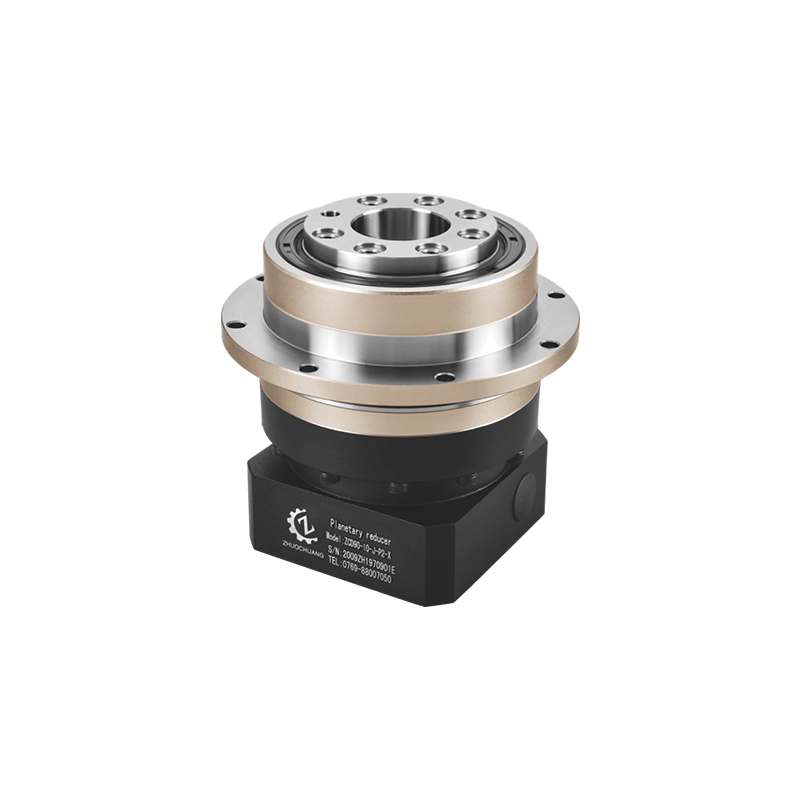
A sealed planetary gearbox changes the maintenance task. The user normally monitors the complete drive rather than servicing internal gears or replenishing grease. Keep the exterior clean enough to reveal leakage, confirm mounting security, protect the seals from contamination, and observe changes in sound, temperature, vibration, motor current and positioning performance.
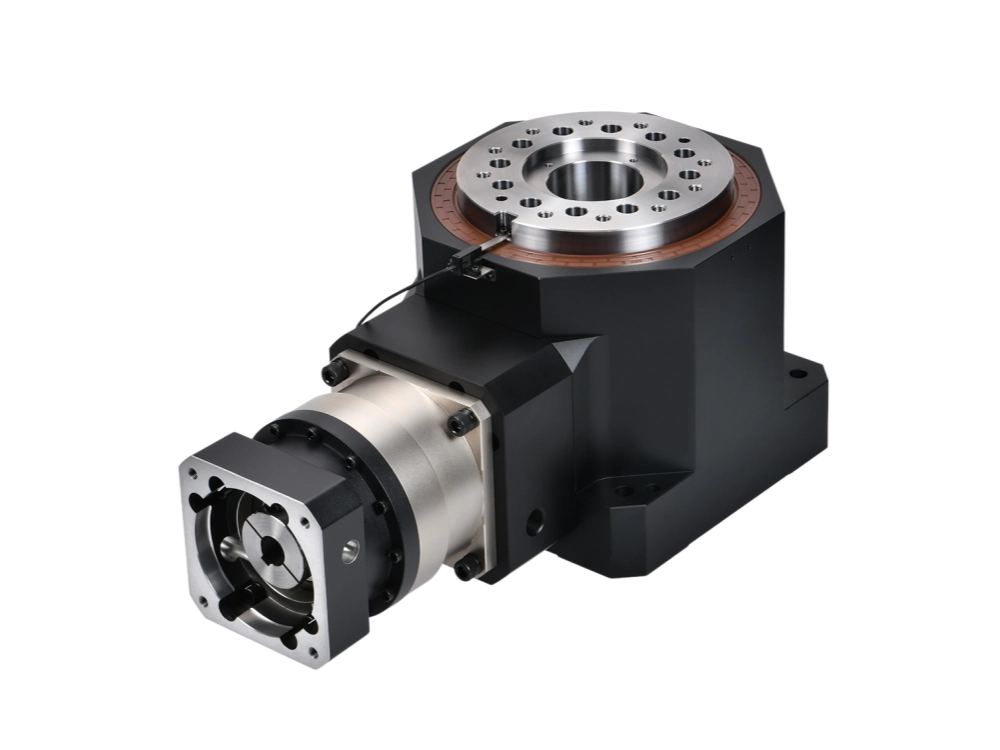
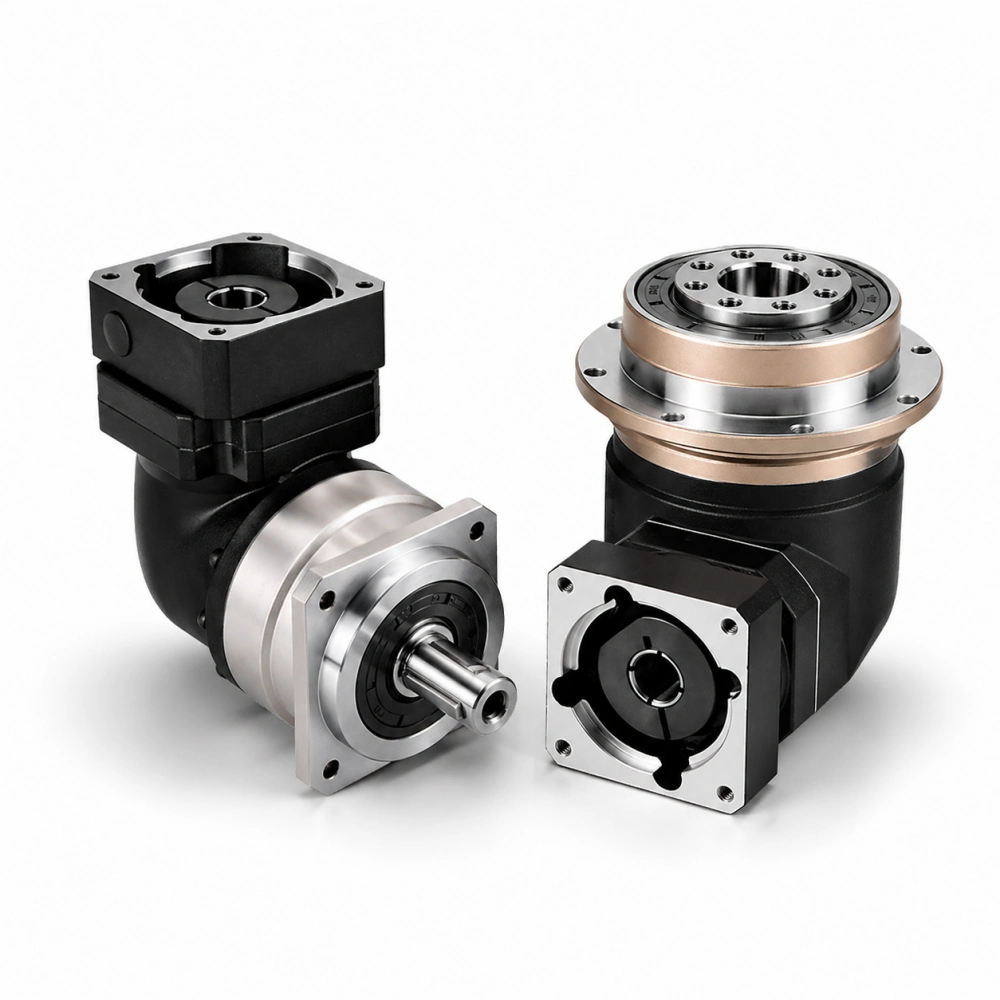
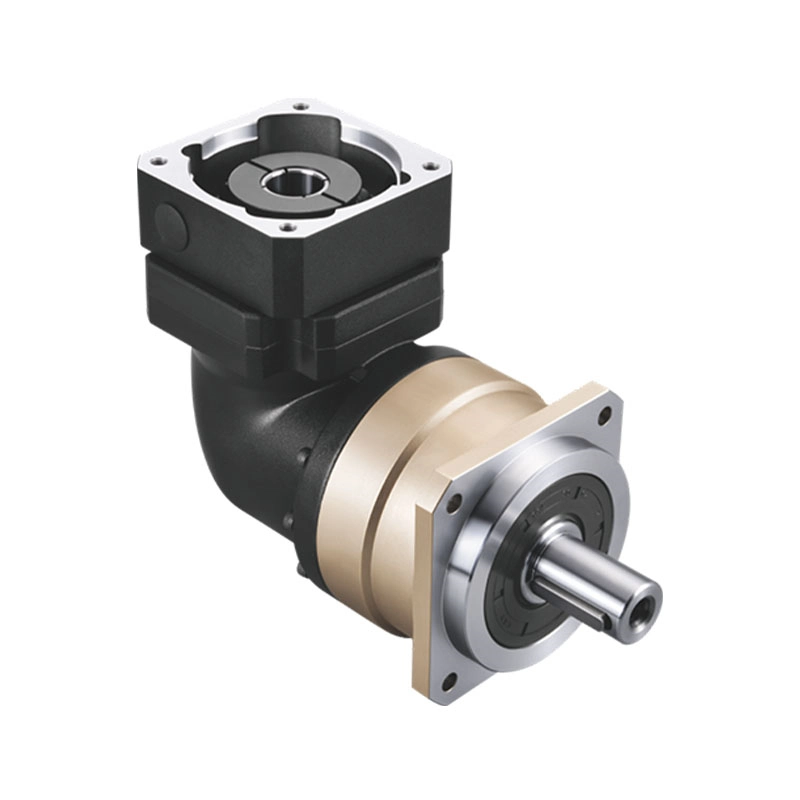
Do not open a sealed reducer merely because a general gearbox maintenance article recommends an oil change. Many industrial maintenance guides refer to large oil-lubricated gear units with sight glasses, breathers and drain plugs. Those procedures are not interchangeable with a compact servo planetary gearbox. Maintenance requirements depend on the gearbox structure, lubrication method, sealing design, mounting position and operating environment. For additional discussion of how layout, temperature, sealing and maintenance conditions affect gearbox selection, see this right-angle gearbox drive application guide.
Industrial Gearbox Maintenance After Impact or Emergency Stop
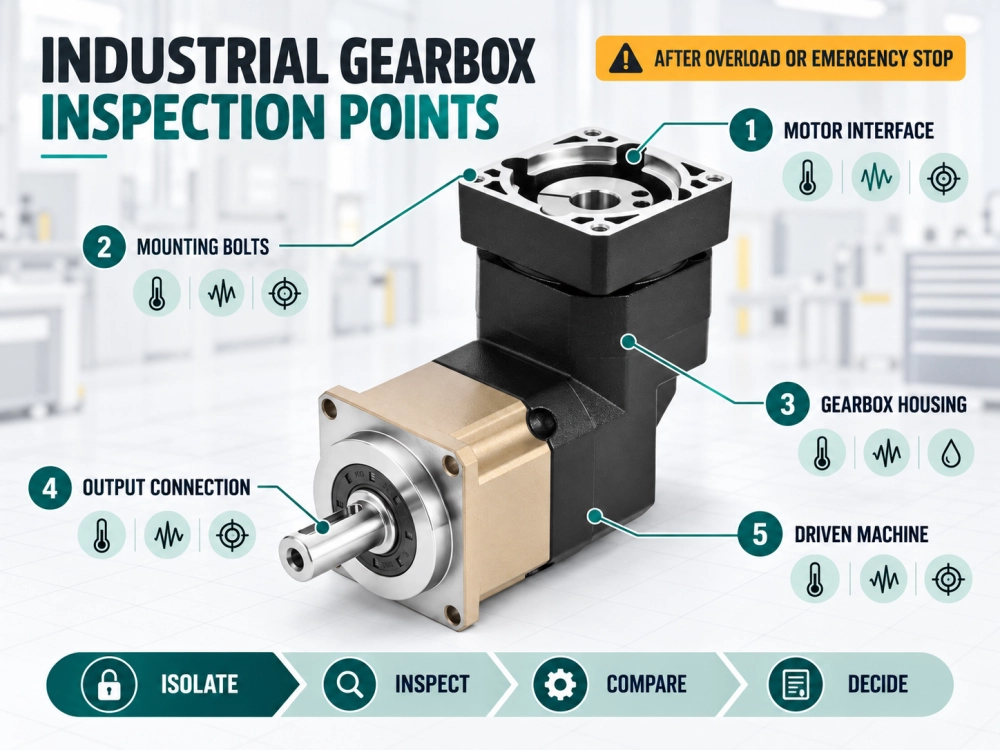
A collision, jam, overload alarm or emergency stop creates a separate inspection event even if the normal interval has not arrived. Preserve controller alarms and production data before resetting them. Inspect the tool, driven mechanism, coupling, mounting plate and gearbox exterior. Manually rotate only when the machine’s lockout procedure and manufacturer instructions permit it.
After restart, use reduced speed and controlled load if the machine builder’s procedure allows. Compare sound, current, vibration, temperature and positioning with the pre-event baseline. A unit that still rotates may nevertheless have lost the accuracy or bearing condition required by the application. Repeatedly clearing an alarm without identifying the mechanical source removes evidence and can turn limited damage into a larger failure.
Gearbox Maintenance Decision: Continue, Monitor, Stop or Replace
A professional gearbox maintenance record should end with an action, owner and review date. “Abnormal noise observed” is incomplete if nobody knows whether the machine may continue running. Use the model limits, machine risk assessment and maintenance authority at your facility; the framework below organizes the evidence but does not override safety procedures.
Continue
Readings remain close to the established baseline, performance is stable, there is no active leakage and all values remain within model and machine limits. Record the observation and retain the normal interval.
Monitor
A small repeatable change appears without a safety concern or functional loss. Shorten the interval, verify the measurement and compare related signals under the same operating state.
Stop and Inspect
There is rapid heat rise, grinding, impact noise, active leakage, visible movement, seizure, smoke, repeated overload alarms or a sudden loss of accuracy. Isolate the machine under the site’s safety procedure.
Review Replacement
The unit is damaged, undersized for revised duty, no longer meets backlash or positioning requirements, or cannot be supported economically. Recalculate the application before ordering the same size again.
When Industrial Gearbox Maintenance Becomes a Selection Problem
Maintenance cannot correct a gearbox that was selected for the wrong torque, speed, ratio, output load or installation geometry. If faults return after mounting and alignment have been corrected, compare the application with the current product data. Include continuous torque, acceleration and emergency-stop torque, input speed, duty cycle, inertia, radial and axial loads, required backlash and ambient conditions.
For background on one specific symptom, read Gearbox Overheating: Causes, Warning Signs and Prevention. If a pulley, pinion or cantilevered fixture is involved, use Planetary Gearbox Bearings and Output Loads. These pages address the detailed engineering questions; this guide remains focused on the maintenance decision process.
Gearbox Maintenance Record to Send Before Replacement
A useful inquiry is not “Please quote a similar gearbox.” Send enough evidence to separate an installation issue, changed duty and unsuitable gearbox from ordinary wear. This reduces repeated emails and makes a technically defensible replacement recommendation possible.
Prepare Your Gearbox Maintenance Evidence
For a Zhuochuang precision planetary gearbox selection or replacement review, attach the following information:
Technical note: General condition-monitoring guidance was cross-checked against published information from SKF, Fluke and SEW-EURODRIVE. Always apply the safety instructions, limits and service procedures for the exact gearbox and machine.