
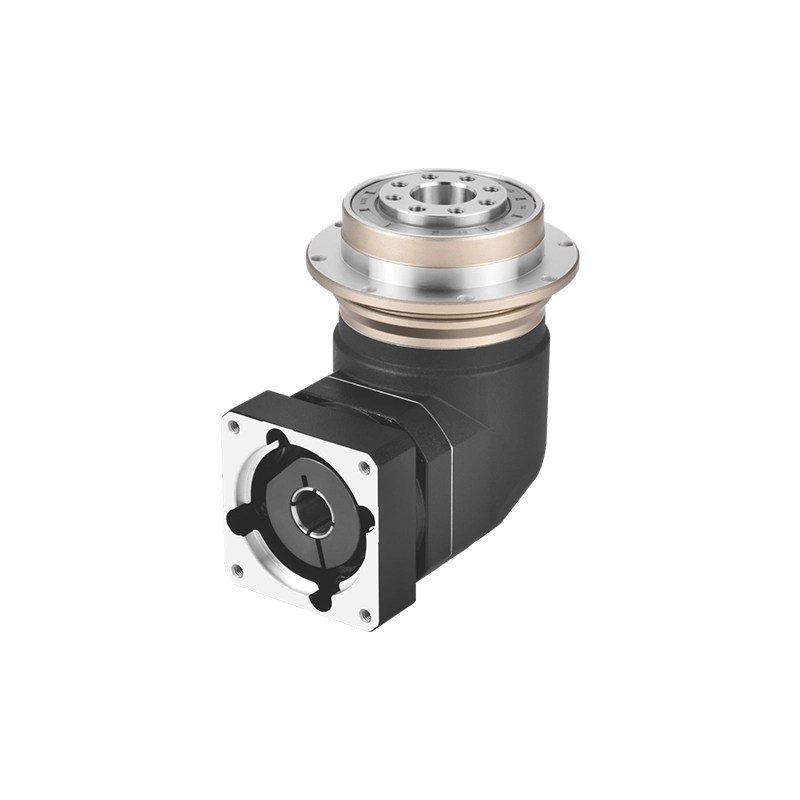
Why Is My Gearbox Making a Whining Noise? 7 Causes and Solutions
A whining noise from gearbox equipment can indicate gear mesh vibration, lubrication problems, bearing wear, or installation-related issues. But not every high-pitched sound means the gearbox is damaged.
In industrial machinery, a new or unusually loud gearbox whine deserves attention because gearboxes operate as part of a complete drive system. The servo motor, coupling, mounting frame, load and gearbox may all contribute to the noise.
This guide explains seven possible causes of whining noise from gearbox assemblies, practical ways to investigate the source, and when to consider repairing or replacing a precision planetary gearbox.
PlanetDrivePro supplies precision planetary gearbox solutions for industrial automation. If you are experiencing unwanted noise or planning a new machine, our team can help review your torque, ratio, motor interface and operating requirements.
What Causes Whining Noise From Gearbox Systems?
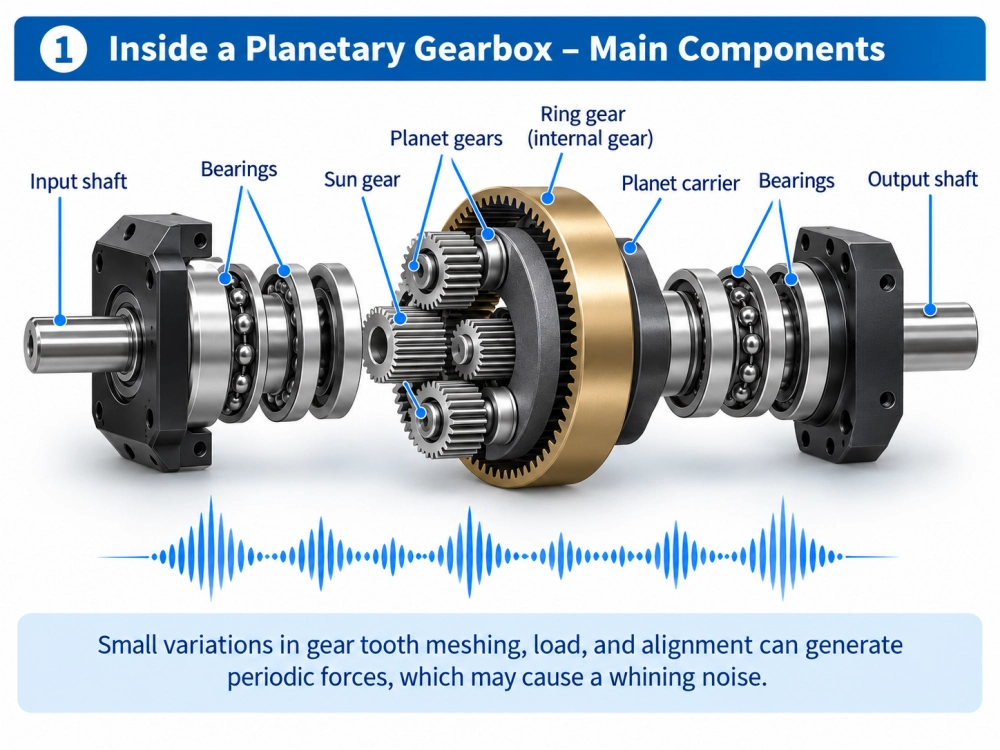
Gearbox whine is typically a tonal sound associated with periodic forces generated as gear teeth engage and disengage. These forces can excite the shafts, bearings and gearbox housing, producing audible noise.
One important concept is transmission error: the small difference between ideal and actual gear motion under operating conditions. Gear geometry, elastic deformation and tooth contact variation can influence these forces.
For a simple gear mesh, the fundamental gear mesh frequency can be estimated as:
For example, a gear with 30 teeth rotating at 1,800 rpm has a fundamental mesh frequency of 900 Hz.
This is a simplified illustration. Planetary gearboxes have multiple interacting elements, so accurate frequency analysis requires the actual gearbox geometry and operating data.
When a gearbox is making whining noise, the first question is whether the sound has always existed under that operating condition or represents a recent change. A stable, documented operating sound is different from a sudden increase in tonal noise accompanied by temperature rise or vibration.
7 Common Causes of Whining Noise From Gearbox Equipment
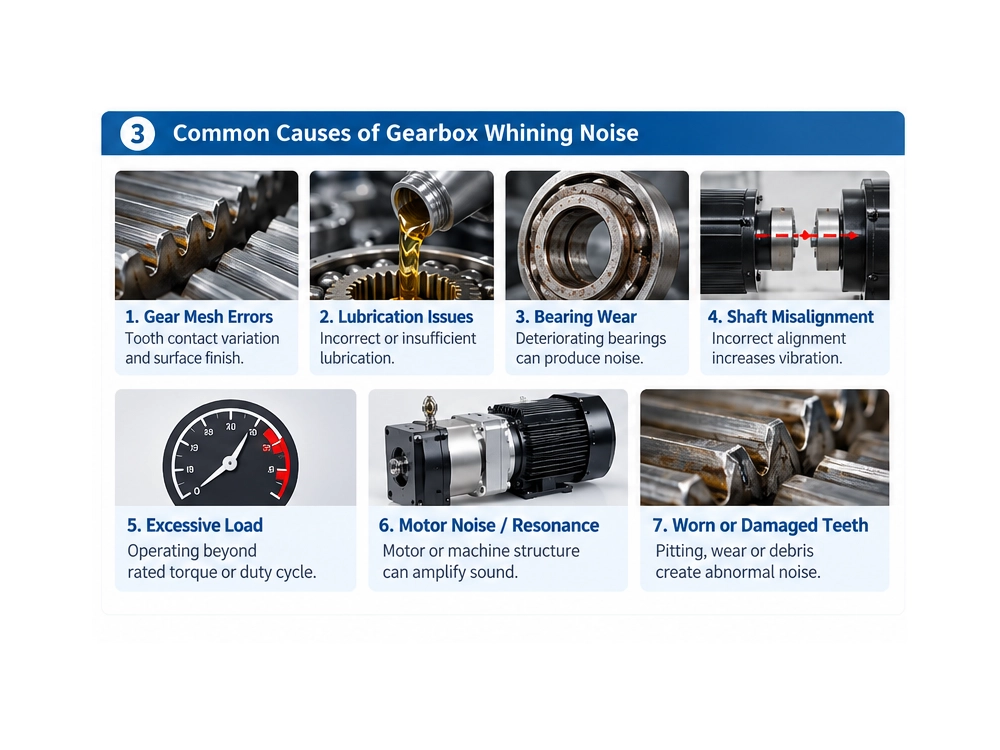
1. Gear Mesh Errors and Tooth Contact Variation
Gear whine noise can originate from variations in tooth geometry, surface finish, contact pattern and tooth deflection under load. These variations create periodic forces that can transmit through the gearbox structure.
What to check: Compare noise at different speeds and loads. If available, inspect gear contact patterns and review the manufacturer’s allowable operating conditions. Internal tooth inspection should be performed by qualified personnel.
2. Insufficient or Incorrect Lubrication
Lubrication separates contacting surfaces and helps control friction and wear. Incorrect lubricant selection, lubricant deterioration or insufficient lubrication can contribute to abnormal noise and increased temperature.
What to check: Follow the gearbox manufacturer’s maintenance and lubrication requirements. For a sealed planetary gearbox, do not open the housing or add lubricant unless the manufacturer specifically authorizes that procedure.
3. Worn or Damaged Bearings
Bearings support rotating shafts and maintain alignment. Deteriorating bearings may produce humming, rumbling or high-frequency vibration that can be mistaken for gear whine.
What to check: Review vibration measurements, shaft condition, temperature trends and operating history. A qualified technician may need to inspect the bearing assembly.
4. Shaft or Coupling Misalignment
Incorrect alignment between the motor, coupling, gearbox and driven equipment can introduce additional forces and vibration. This may make the overall transmission sound louder even when the gear teeth themselves are not the primary problem.
What to check: Verify shaft alignment, motor mounting and coupling installation against the manufacturer’s specified tolerances.
5. Excessive Load or an Incorrect Gearbox Size
A gearbox operating beyond its permitted torque, radial load, axial load or duty cycle can experience increased deflection, temperature and noise. Frequent acceleration, braking and reversing can also place demanding loads on a precision drive.
What to check: Confirm continuous torque, peak torque, ratio, acceleration requirements and service factor. Do not select a replacement gearbox based only on motor power.
6. Motor Noise or Structural Resonance
Sometimes the sound appears to come from the gearbox but actually originates in the servo motor, drive electronics, connected mechanism or machine frame. Structural resonance can amplify vibration at particular operating speeds.
What to check: With appropriate test procedures, compare the noise frequency with shaft speed, motor operating conditions and machine vibration data. Avoid assuming that replacing the gearbox alone will solve the problem.
7. Worn Gear Teeth or Internal Mechanical Damage
Surface pitting, abnormal wear, damaged teeth or debris can create irregular contact and additional vibration. A previously quiet gearbox that suddenly develops a loud whine, knocking or grinding sound may require urgent inspection.
What to check: Look for changes in temperature, vibration, positioning accuracy and operating sound. If the noise is severe or rapidly worsening, stop the equipment safely and arrange a professional inspection before restarting.
How to Diagnose Gearbox Whining Noise Step by Step
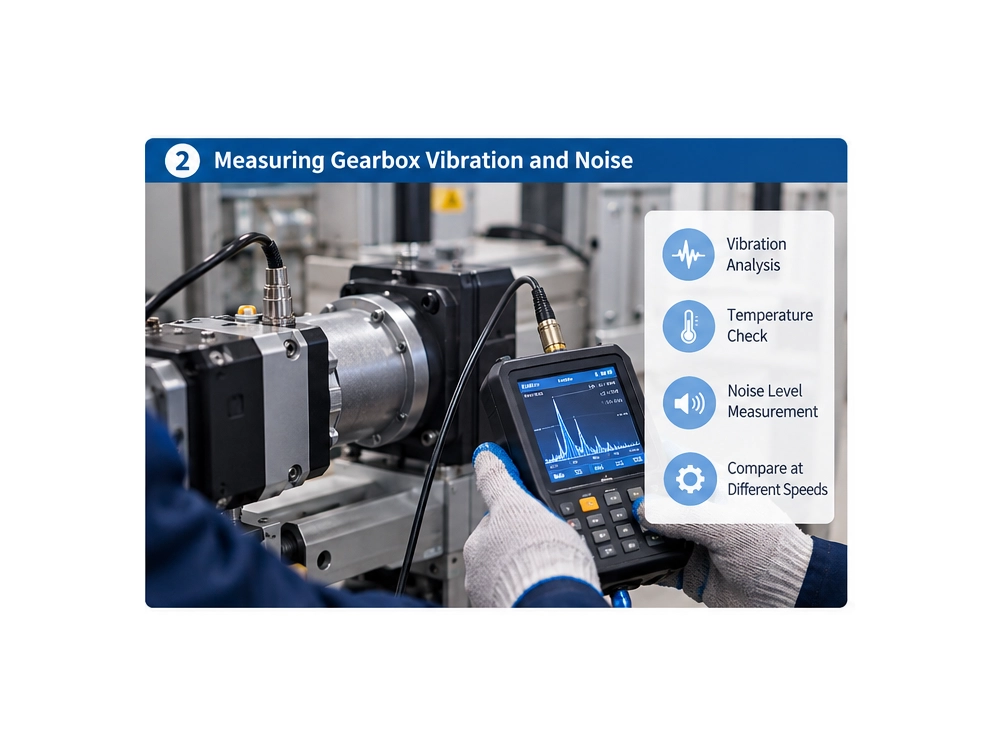
Effective troubleshooting starts with observations rather than immediately replacing parts. Different sound patterns can help determine which components deserve further investigation.
| Observed Symptom | Possible Source | Recommended Initial Action |
|---|---|---|
| High-pitched sound increases with speed | Gear mesh excitation or motor-related tones | Compare speed and vibration frequency |
| Noise becomes stronger under load | Gear contact, overload or bearing support | Check torque and load conditions |
| Low rumbling or irregular vibration | Bearing wear or connected machinery | Review bearing vibration and temperature |
| Noise occurs mainly at one speed | Possible structural resonance | Review operating-speed and vibration trends |
| Whine after gearbox replacement | Motor matching, mounting or alignment | Verify installation dimensions and coupling |
| Sudden grinding or impact sound | Potential internal mechanical damage | Stop safely and arrange inspection |
Five Practical Diagnostic Steps
- Record the conditions: Note the motor speed, load, ratio, duty cycle and when the noise appears.
- Compare operating states: Where safe and permitted, determine whether the noise changes during acceleration, steady running, deceleration or load variation.
- Review vibration and temperature: Use suitable instruments and compare results with a known healthy operating baseline.
- Inspect installation factors: After isolation and lockout, check accessible mounting bolts, alignment and external connections.
- Consult the manufacturer: Provide measurements and the full gearbox model before attempting internal repairs.
Never loosen mounting parts, touch rotating shafts, open a gearbox or inspect internal components while equipment is energized. Follow your facility’s lockout/tagout procedures and the manufacturer’s safety instructions.
How to Reduce Gearbox Whining Noise in Industrial Machinery
Reducing gearbox noise requires identifying its source. Adding sound insulation without addressing a mechanical defect may conceal an important warning sign.
Check Operating Speed and Load Conditions
Confirm that the gearbox is working within its specified operating envelope. If noise appears at one speed, investigate possible resonance rather than assuming that the gears are defective.
Improve Motor and Machine Alignment
Correct mounting, suitable coupling installation and adequate frame rigidity can help reduce unwanted vibration transmission. Alignment should follow the equipment manufacturer’s requirements.
Follow the Correct Lubrication Procedure
Use the lubricant type and maintenance interval specified for the gearbox. Sealed-for-life models require different maintenance procedures from serviceable industrial gear units.
Select an Appropriate Precision Gearbox
For new equipment, compare rated torque, backlash, gear ratio, input speed, efficiency, noise data and motor compatibility. Where noise is a critical purchasing requirement, request the measurement method and operating conditions behind the published dB figures.
PlanetDrivePro can help you compare inline and right-angle planetary gearbox arrangements. Send your existing gearbox model or motor drawing and the noise performance you need.
When Should a Noisy Gearbox Be Repaired or Replaced?
A gearbox making whining noise does not automatically require replacement. Before making that decision, determine whether the sound originates from normal gear meshing, the installation, an overloaded drive or an internal defect.
Replacement becomes more reasonable when the gearbox has confirmed internal damage, cannot meet its required torque or positioning performance, or has repair costs and downtime that outweigh the benefits of continued use.
For older equipment, replacement selection should include more than the advertised gear ratio. Output shaft dimensions, mounting-hole patterns, motor shaft diameter, pilot diameter, backlash and permissible loads must also match the application.
Choosing a Low-Noise Planetary Gearbox for Servo Automation
If troubleshooting reveals that an existing drive is unsuitable, a precision planetary gearbox may be considered as a replacement, provided its mechanical specifications and operating limits match the machine.
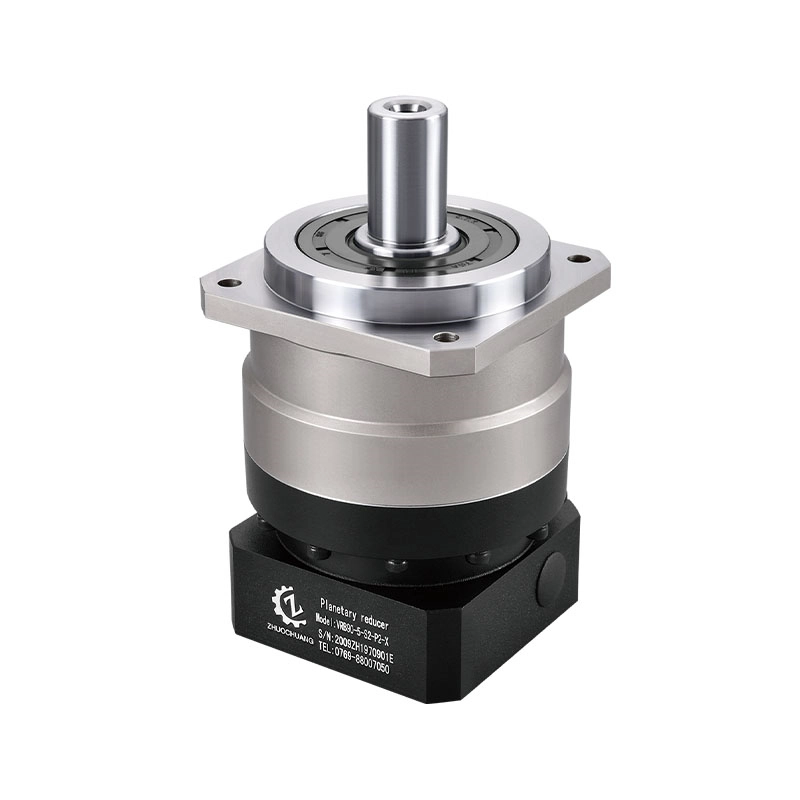
VRB Inline Planetary Gearbox
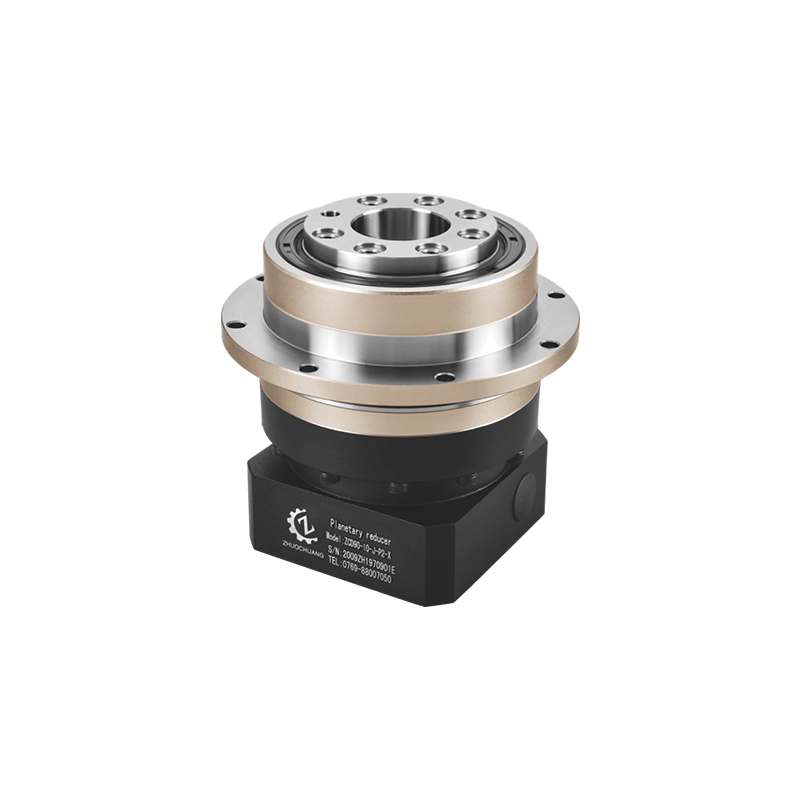
The VRB Series inline planetary gearbox uses a coaxial arrangement for servo-driven equipment. Its published specification table includes noise ratings across different frame sizes, providing a starting point for low-noise gearbox selection.
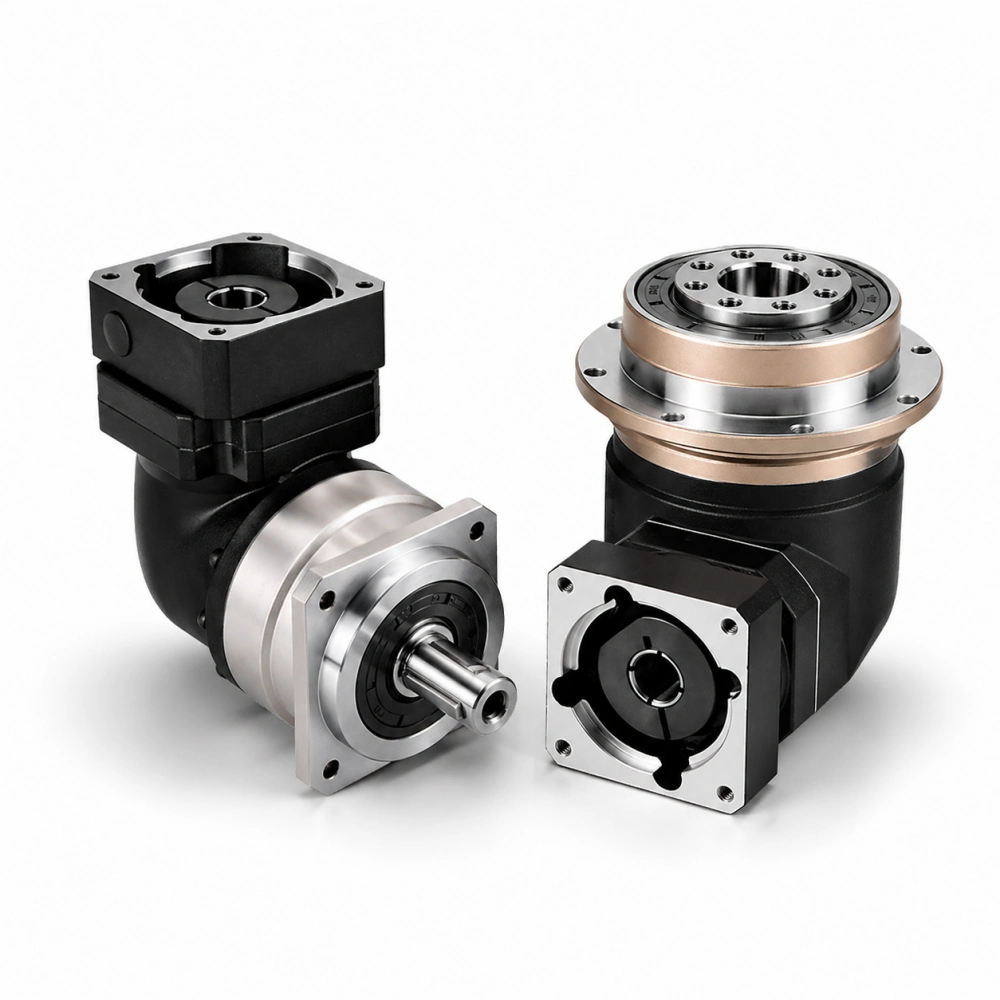
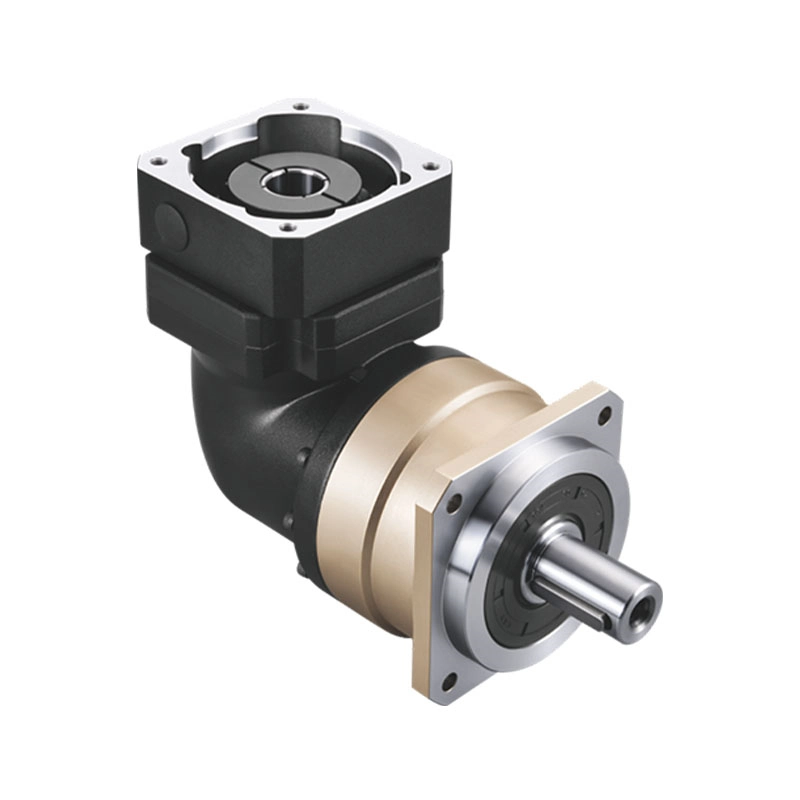
VRBR Right-Angle Planetary Gearbox
The VRBR Series right-angle planetary gearbox provides an alternative when a 90-degree motor arrangement is needed. Motor clearance, mounting geometry and transmission loads should be considered together with the noise specifications.
Neither model should be described as completely silent. Real operating noise depends on the full transmission system, and published values should be compared under equivalent test conditions.
Information to Provide Before Requesting a Replacement
- Existing gearbox brand and complete model number
- Servo motor brand and model
- Required output torque and gear ratio
- Input speed and operating duty cycle
- Mounting dimensions or technical drawings
- Current noise symptoms and acceptable noise level
- Required quantity and delivery destination
Frequently Asked Questions About Gearbox Whining Noise
Is whining noise from a gearbox always a sign of damage?
No. Some gear meshing noise is normal. However, an unexpected change in loudness, frequency, temperature or vibration should be investigated.
Why is my gearbox making whining noise only at high speed?
Gear mesh excitation changes with rotational speed, while housing and machine resonances can amplify certain frequencies. Check the speed-dependent vibration characteristics and motor operating conditions.
Can low backlash cause gearbox whine?
Backlash and gearbox noise are related through gear geometry and contact conditions, but low backlash alone does not prove that a gearbox will be quiet or noisy. Gear precision, loading, lubrication and design all matter.
Can lubrication reduce gear whine noise?
Correct lubrication can help reduce friction and wear-related noise. However, lubricant changes will not correct damaged teeth, poor alignment or structural resonance. Follow the manufacturer’s lubrication instructions.
Is a silent gearbox completely noise-free?
No. The term silent gearbox is generally used to describe relatively quiet operation rather than an absolute absence of sound. Buyers should compare measured noise data at relevant speeds and loads.
Should I replace an industrial gearbox that makes a high-pitched sound?
Not necessarily. Diagnose the cause first. Replacement may be appropriate if internal damage is confirmed or the installed drive cannot meet the machine’s performance requirements.
Conclusion: Investigate Gear Whine Before Replacing the Gearbox
Whining noise from gearbox systems can result from several interacting mechanical and operating factors. Gear mesh variation, bearings, lubrication, alignment, loading and structural resonance should all be considered before deciding on corrective action.
For new machinery or gearbox replacement projects, selecting the correct transmission size, ratio, motor interface and noise performance can help reduce avoidable installation and operating problems.
Contact PlanetDrivePro for assistance selecting a suitable inline or right-angle planetary gearbox for your industrial automation application. Share your motor model, drawings and technical requirements for evaluation.
Technical Reference
For additional engineering background on gear mesh excitation and gear whine, see the research review Classifying, Predicting, and Reducing Strategies of the Mesh Excitations of Gear Whine Noise.