
The honest answer is that neither design is universally better.
A worm gear reducer and a planetary gearbox solve different mechanical problems. One may be a better fit for a simple low-speed drive, while the other may be the safer choice for servo-driven automation, positioning accuracy, and continuous-duty operation.
The more useful question is not “Which reducer is better?”
The better question is:
Which reducer fits the real operating condition of the machine?
This article compares worm gear reducers and planetary gearboxes from a practical automation point of view. It explains where worm reducers still make sense, where they become limiting, and when a precision planetary gearbox becomes the better direction for servo automation, robotics, CNC machinery, packaging equipment, and precision motion systems.
How a Worm Gear Reducer Works
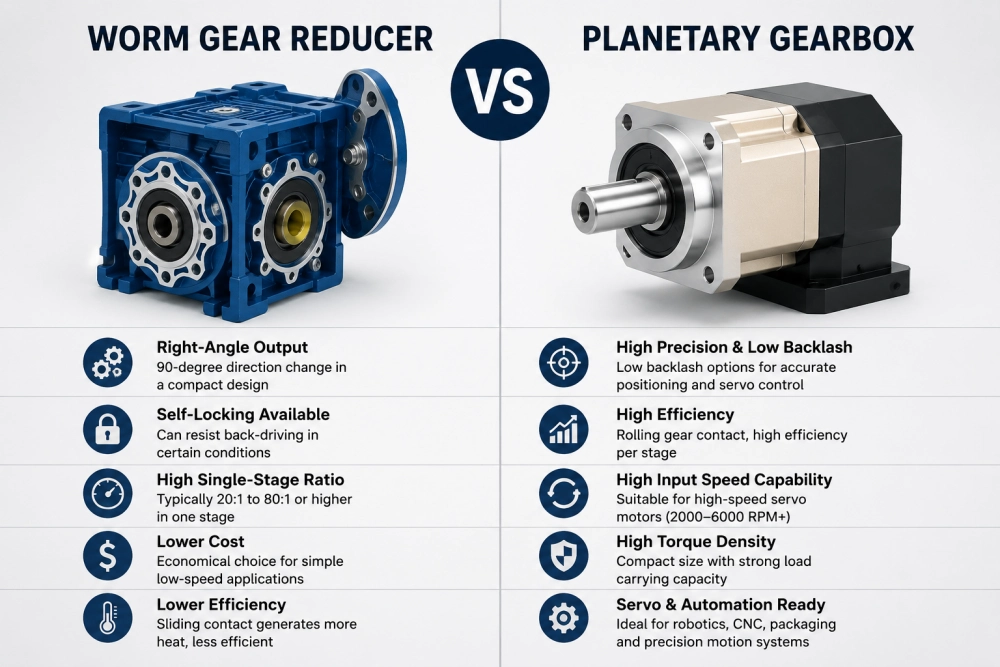
A worm gear reducer uses a threaded shaft, called the worm, that meshes with a larger gear wheel at 90 degrees. As the worm rotates, its thread pushes the wheel teeth and turns the output shaft.
This structure makes it possible to achieve a relatively high reduction ratio in one compact stage. For example, a single-start worm with a 40-tooth worm wheel can produce a 40:1 ratio.
That is one of the reasons worm reducers are widely used in machinery. A compact housing can provide high ratio, right-angle output, and simple installation.
But the same structure also creates the main limitation of worm reducers.
The contact between the worm thread and the worm wheel is mostly sliding contact. Sliding contact creates friction. Friction creates heat. Heat affects lubricant life, seal life, and long-term efficiency.
So a worm gear reducer can be a good solution, but it must be used in the right type of machine.
Where Worm Gear Reducers Are Still a Good Choice
Worm gear reducers are not outdated products. They remain useful because they solve several practical industrial problems very well.
High Ratio in a Compact Right-Angle Layout
A worm reducer can achieve ratios such as 20:1, 40:1, 60:1, or even higher in a single stage.
This is useful when the machine needs low output speed and the installation space does not allow a long multi-stage reducer.
For simple machinery, this can be a cost-effective solution.
Self-Locking Behavior
Some worm gear reducers can resist back-driving, depending on ratio, lead angle, friction, and design.
This can be useful in applications such as lifting devices, gates, valve actuators, or simple holding mechanisms where the load should not easily drive the motor backward.
However, self-locking should not be treated as a guaranteed safety brake without checking the specific reducer design and machine requirement.
Lower Cost in Standard Applications
Standard worm reducers, including common NMRV-type units, are widely available and relatively economical.
For conveyors, small mixers, simple transfer units, agricultural machinery, and low-precision equipment, a worm reducer may be the most practical choice.
If the machine does not require servo positioning, low backlash, high input speed, or high efficiency, a worm gear reducer may be enough.
Simple Replacement and Maintenance
Many worm reducer series have standard frame sizes, common mounting patterns, and familiar shaft options.
For maintenance teams, this is useful. A failed standard unit can often be replaced quickly with a similar frame size.
In plants where downtime matters and precision motion is not required, this practical advantage should not be ignored.
Where Worm Reducers Become a Limitation
A worm reducer becomes less suitable when the machine needs high efficiency, accurate positioning, fast servo response, or continuous high-duty operation.
Heat in High-Duty Applications
Because worm reducers use sliding contact, part of the input power is converted into heat.
In intermittent operation, this may be acceptable. The reducer has time to cool between cycles.
In continuous-duty machinery, the heat may accumulate. If the reducer runs above its thermal limit, the result may not be immediate failure, but lubricant aging, seal wear, bearing noise, and gradually increasing backlash.
This is why thermal rating should be checked, not only output torque.
Backlash in Positioning Systems
A standard right angle worm gear reducer often has backlash measured in degrees rather than arcminutes.
For conveyors or simple open-loop drives, this may not matter.
For servo-driven automation, backlash becomes a real problem. When the motor reverses direction, the output may not respond immediately. The servo controller sees motor movement, but the driven load may still be inside the mechanical clearance zone.
This can cause positioning error, vibration, overshoot, and unstable motion.
For dispensing, assembly, CNC positioning, indexing, vision inspection, and precision packaging, this is usually unacceptable.
Input Speed Limits
Many standard worm gear speed reducers are designed around moderate motor input speeds.
Servo motors often operate at 2,000 to 3,000 RPM or higher. If a worm reducer is not designed for that input speed, the system may need to run the motor below its efficient range, or the reducer may operate outside its preferred thermal condition.
Neither result is ideal.
Lower Efficiency Compared with Planetary Gearboxes
A precision planetary gearbox usually has rolling gear contact and multiple load-sharing gear meshes. This gives it much higher efficiency per stage than a typical worm gear reducer.
In servo automation, higher efficiency means less heat, more stable operation, better energy use, and better response during acceleration and deceleration.
This is one of the biggest reasons planetary gearboxes are common in servo-driven machinery.
NMRV Worm Gear Reducers: Useful but Not Precision Servo Reducers
NMRV worm gear reducers are common in the industrial reducer market.
They are available in many frame sizes, ratios, and mounting options. They are often used in conveyors, light machinery, small mixers, gate systems, and general low-speed drives.
But NMRV is mainly a frame and product family designation. It does not automatically tell you the real performance of the reducer.
Different suppliers may offer different:
Housing materials
Worm wheel materials
Efficiency levels
Backlash values
Thermal ratings
Input speed limits
Mounting details
Lubrication quality
So when comparing NMRV worm gear reducers, do not only compare frame size and price. Check efficiency, backlash, thermal rating, duty cycle, and input speed.
For simple general transmission, NMRV may be enough. For servo positioning and precision automation, it usually should not be the first choice.
How a Planetary Gearbox Handles the Same Problem Differently
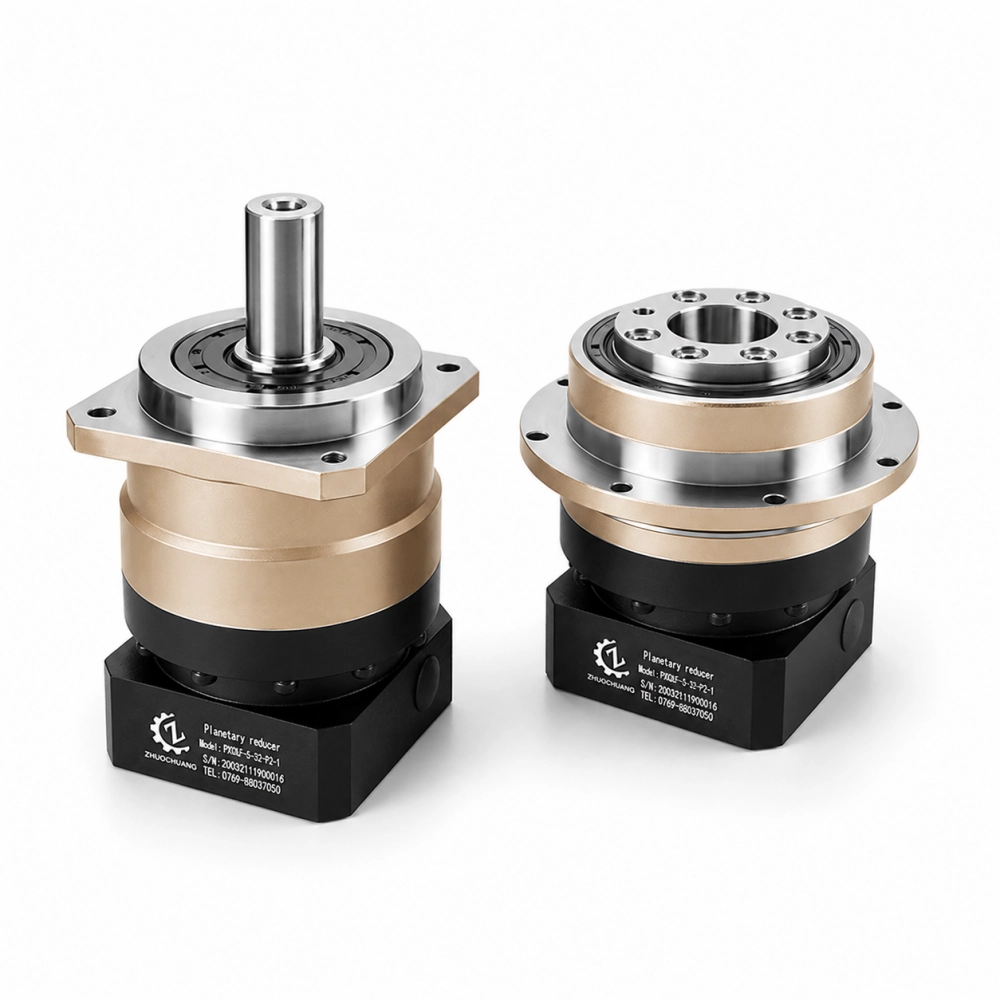
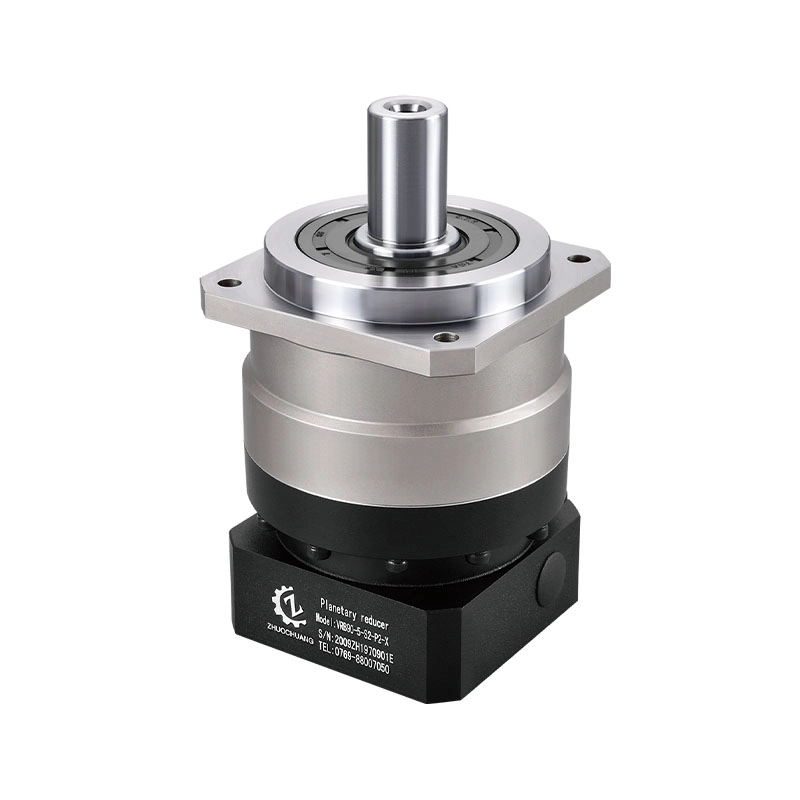
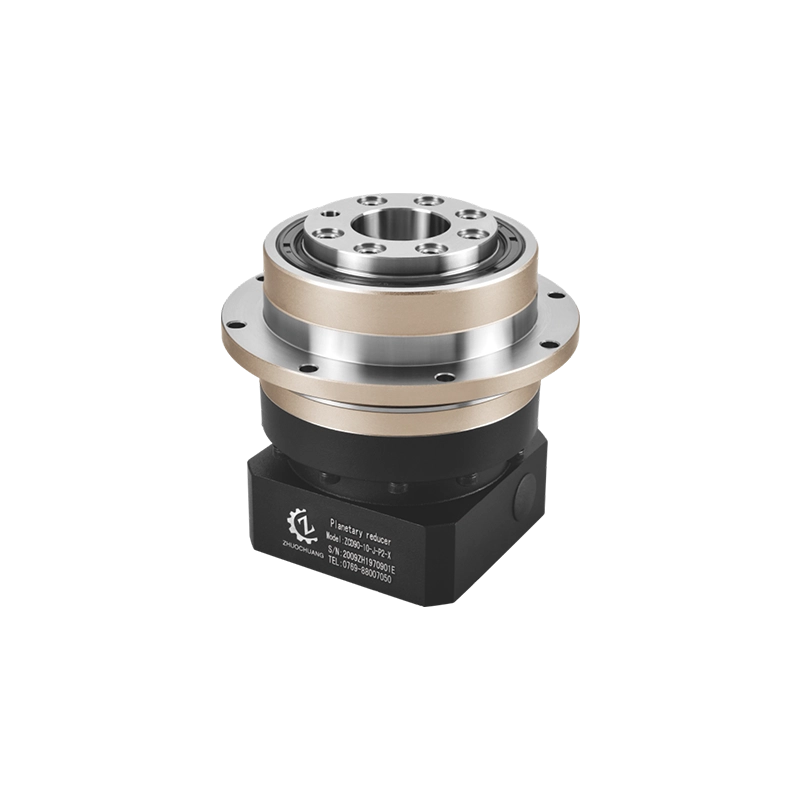
A planetary gearbox uses a sun gear, planet gears, ring gear, and planet carrier. Several planet gears share the load at the same time.
This structure gives planetary gearboxes several important advantages in automation equipment:
High torque density
Compact coaxial layout
High efficiency
Good torsional stiffness
Low backlash options
Servo motor compatibility
High input speed capability
Stable performance in repeated cycles
Unlike a worm reducer, a planetary gearbox does not rely mainly on sliding contact. The gear contact is more efficient, which helps reduce heat and improve continuous-duty operation.
For servo-driven systems, this matters because the reducer is not just transmitting torque. It is part of the motion control chain.
Worm Gear Reducer vs Planetary Gearbox Comparison
| Parameter | Worm Gear Reducer | Planetary Gearbox |
|---|---|---|
| Main layout | Usually right-angle | Usually inline; right-angle versions available |
| Contact behavior | More sliding contact | Mostly rolling gear contact |
| Efficiency | Lower, especially at high ratios | High per stage |
| Backlash | Usually higher | Low-backlash options available |
| Self-locking | Possible in some designs | Usually not self-locking |
| Single-stage ratio | High ratio possible | Usually lower per stage |
| Servo compatibility | Limited in precision applications | Strong fit for servo automation |
| Input speed | Often lower | Better for high-speed servo motors |
| Cost | Lower in standard applications | Higher, but better for precision motion |
| Best use | Simple low-speed transmission | Precision automation and controlled motion |
The table does not mean one product is always better.
It means the machine requirement decides the correct choice.
When a Worm Gear Reducer Is the Better Fit
A worm gear reducer is likely the better fit when:
The drive is simple and open-loop.
The machine does not need accurate positioning.
Self-locking or resistance to back-driving is useful.
The duty cycle is intermittent.
Input speed is moderate.
Cost is the main selection factor.
The application uses standard industrial frame sizes.
Backlash does not affect the machine function.
Typical examples may include simple conveyors, gates, valve actuators, small mixers, light lifting equipment, and general low-speed mechanical drives.
When a Planetary Gearbox Is the Better Fit
A planetary gearbox is likely the better fit when:
The system uses a servo motor.
The axis needs repeatable positioning.
Direction reversal happens frequently.
Low backlash is required.
High input speed is expected.
Continuous-duty operation creates heat concerns.
The machine needs compact size with high torque density.
The reducer is part of the servo control loop.
The application involves robotics, CNC machinery, packaging equipment, or precision automation.
In these applications, the advantages of a planetary gearbox are not only mechanical. They directly affect machine accuracy, tuning stability, cycle speed, and long-term reliability.
Right-Angle Layout: Worm Reducer or Right-Angle Planetary Gearbox?
One reason buyers compare worm reducers and planetary gearboxes is the right-angle layout.
A worm gear reducer naturally provides a 90-degree transmission direction.
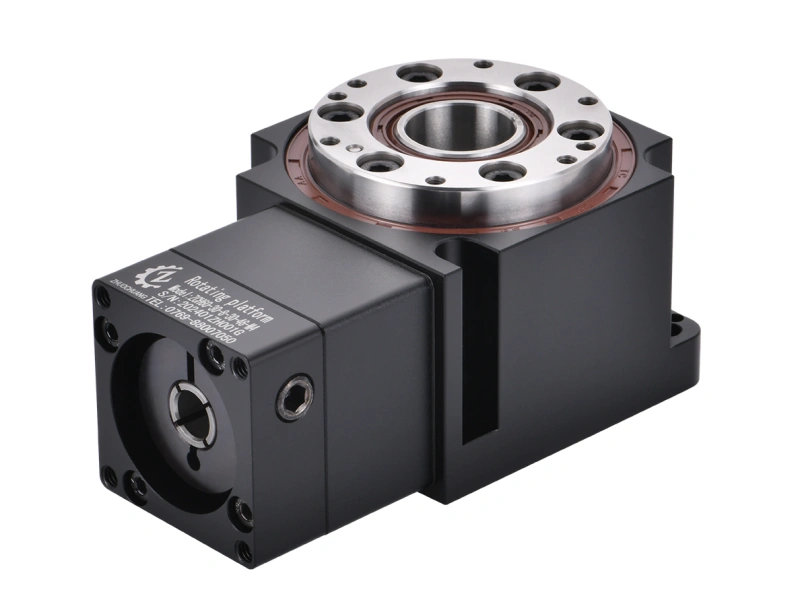
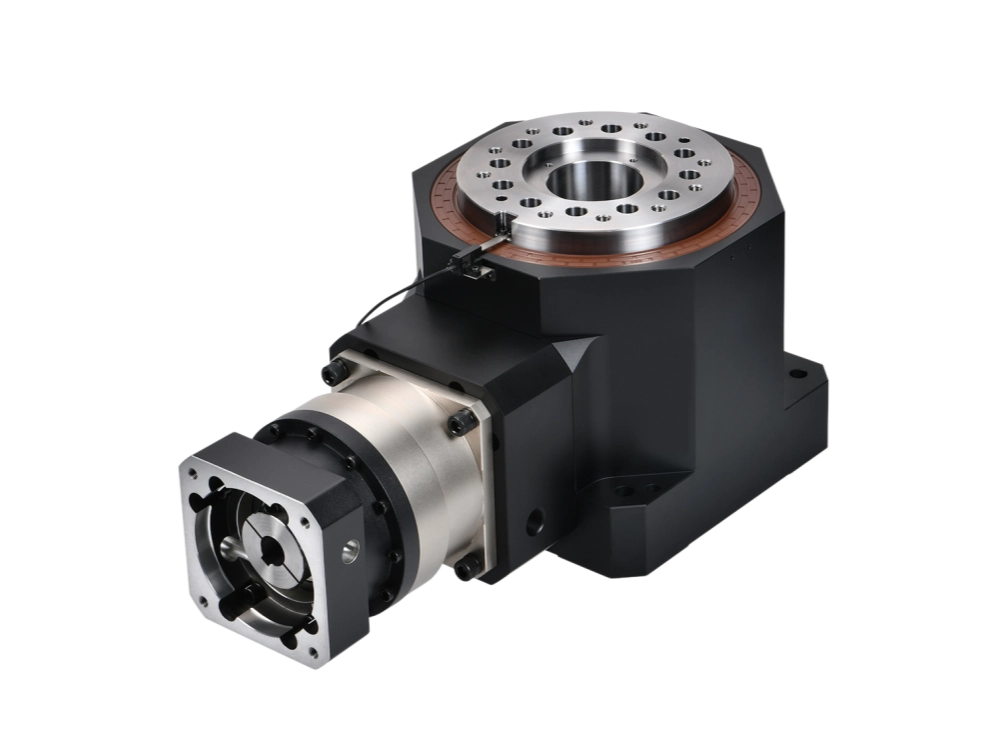
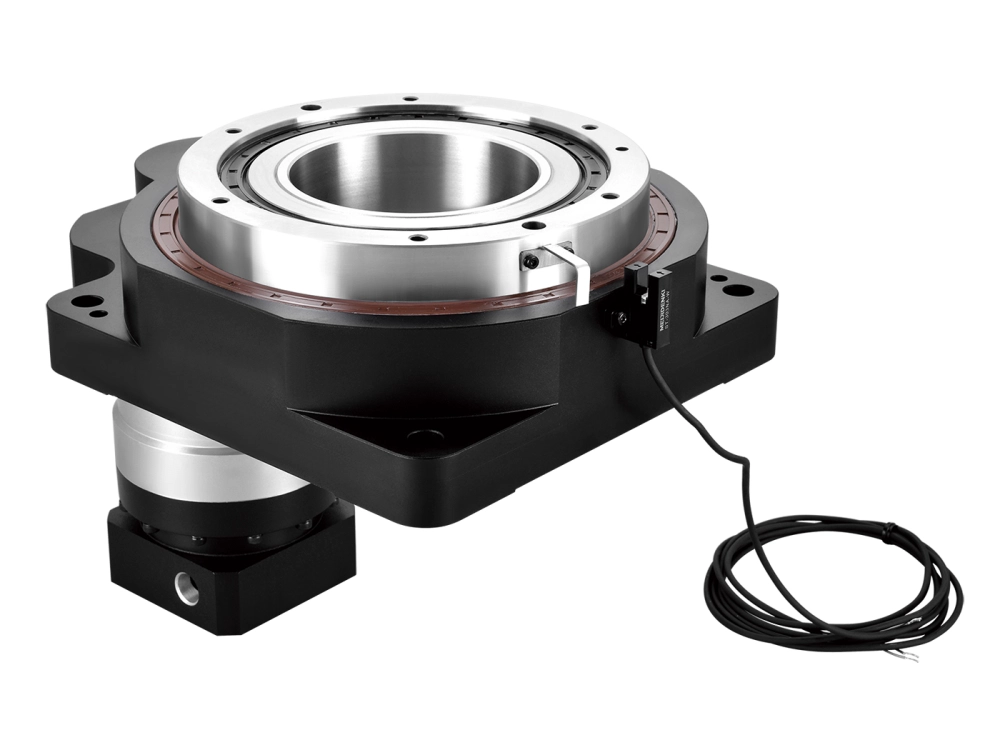
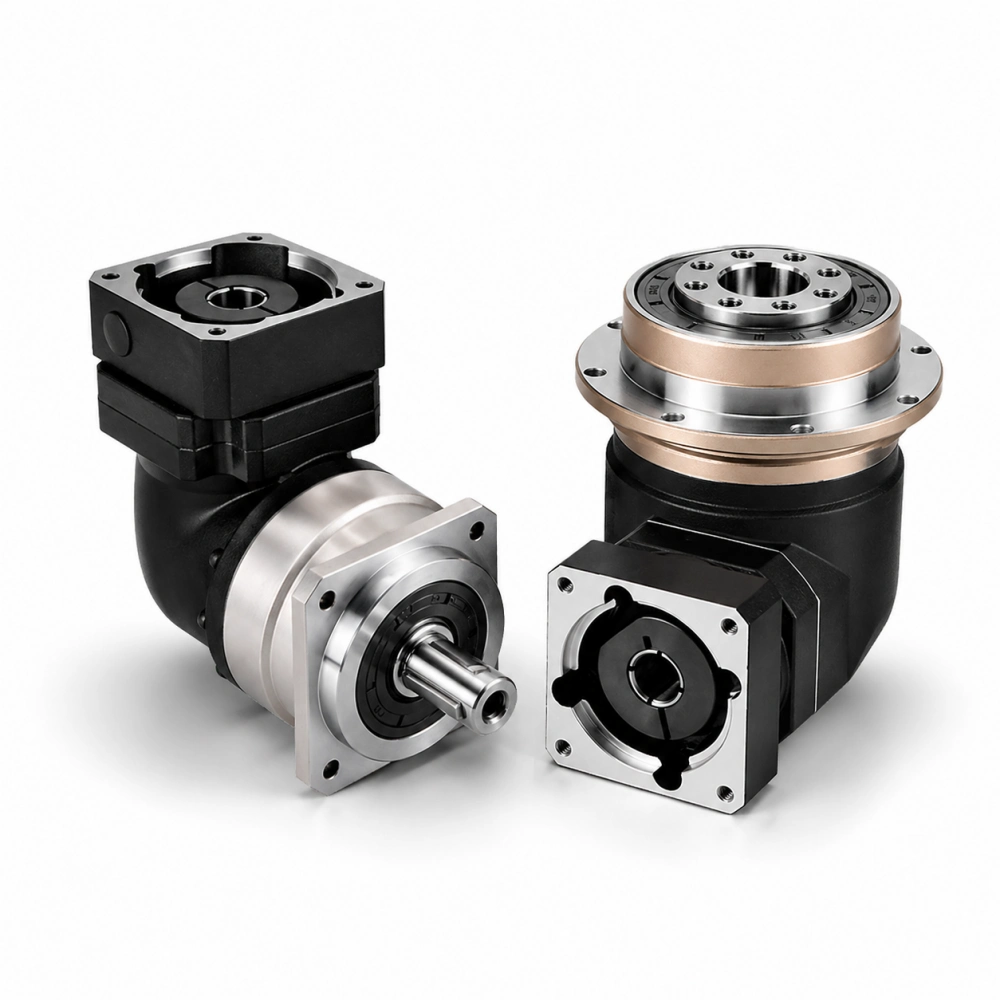
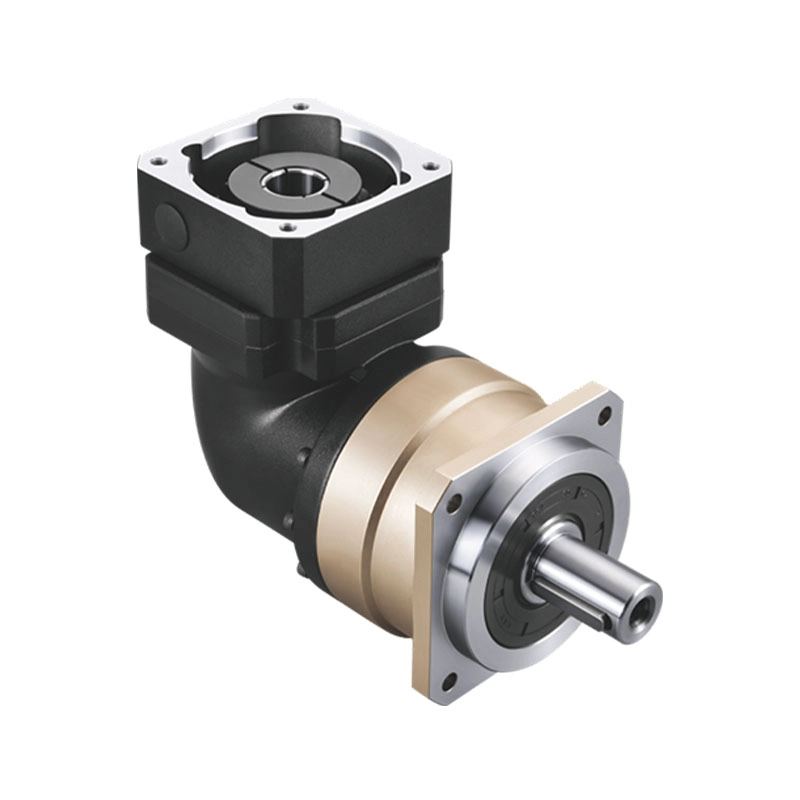
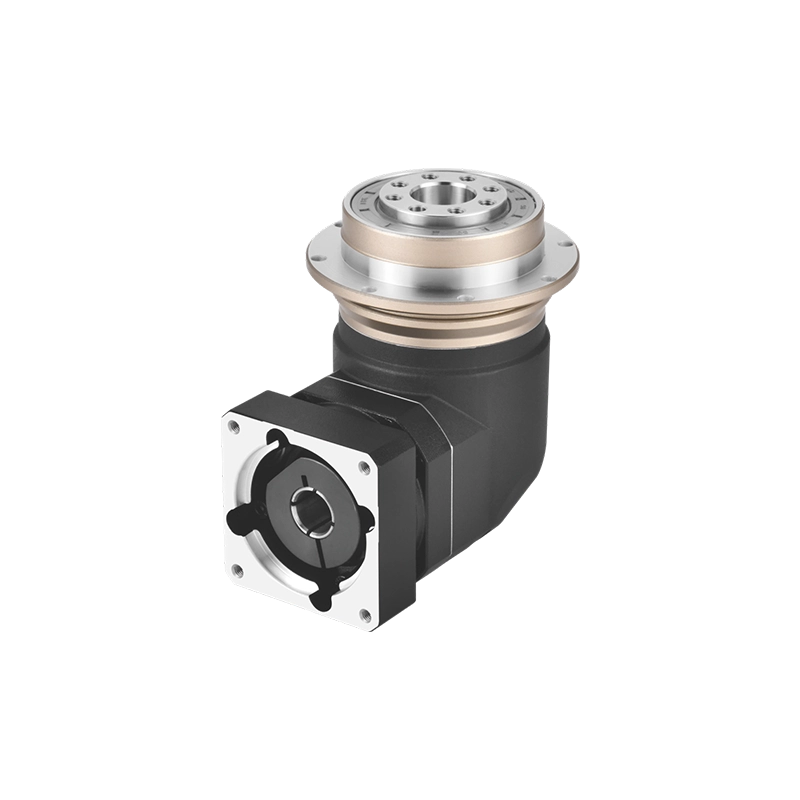
But a right-angle planetary gearbox can also provide a compact 90-degree layout while offering better servo compatibility, lower backlash, higher efficiency, and higher torsional stiffness.
So the question is not only:
Do I need a right-angle reducer?
The better question is:
Do I need simple right-angle power transmission, or do I need precision right-angle servo motion?
If the machine only needs slow, simple transmission, a worm reducer may work.
If the machine needs servo positioning, frequent reversing, low backlash, and stable dynamic response, a right-angle planetary gearbox is usually the stronger option.
You can view Zhuochuang’s right-angle product range here:
Selection Checklist Before Choosing
Before deciding between a worm gear reducer and a planetary gearbox, confirm the real application data.
Important points include:
Motor type
Motor speed
Required output speed
Required ratio
Continuous torque
Peak torque
Duty cycle
Direction reversal frequency
Backlash requirement
Thermal condition
Mounting direction
Input and output interface
Need for self-locking
Servo control requirement
Installation space
Expected service life
If you only compare price and ratio, the selection may look simple.
If you compare heat, backlash, input speed, duty cycle, and motion accuracy, the better choice becomes much clearer.
Supplier and Quality Checks
For standard worm reducers, check frame size, ratio, shaft type, mounting, efficiency, thermal rating, and backlash.
For precision planetary gearboxes, check backlash grade, torque capacity, bearing support, input speed, motor adapter compatibility, output interface, and test data.
If you are comparing international suppliers, quality documentation and process control are also useful. For general quality management background, buyers can refer to the ISO quality management standard as a reference when evaluating supplier consistency and documentation:
This does not replace supplier testing data, but it helps buyers ask better questions about process control and repeatability.
For broader gearbox terminology and application notes, you may also refer to this external gearbox drive resource:
Where Zhuochuang Fits
Dongguan Zhuochuang Precision Machinery Co., Ltd does not position itself as a worm gear reducer supplier.
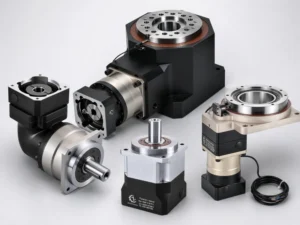
Our focus is precision planetary gearboxes for servo-driven automation, CNC machinery, robotics, packaging equipment, and industrial motion systems.
This distinction matters.
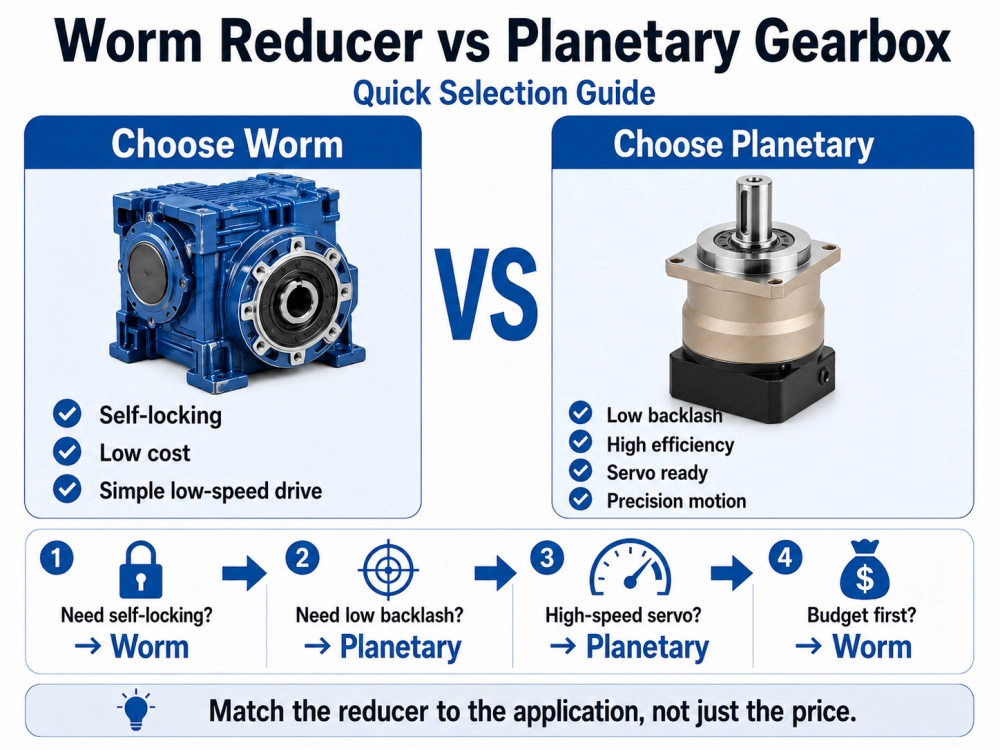
If your application needs self-locking, low cost, and simple low-speed transmission, a worm gear reducer may be the correct choice.
If your application needs servo compatibility, high efficiency, low backlash, compact size, and repeatable positioning, Zhuochuang’s precision planetary gearbox range may be the better direction.
You can browse the main product range here:
For technical support or model selection, send your motor model, required ratio, output torque, backlash target, mounting direction, and installation drawing.
FAQ About Worm Gear Reducers and Planetary Gearboxes
Is a worm gear reducer better than a planetary gearbox?
Not always. A worm gear reducer can be better for simple low-speed transmission, self-locking needs, and cost-sensitive applications. A planetary gearbox is usually better for servo automation, low backlash, high efficiency, and repeatable positioning.
When should I use a worm gear reducer?
Use a worm gear reducer when the application needs a compact right-angle layout, high single-stage ratio, possible self-locking, and does not require precision servo positioning.
When should I use a planetary gearbox?
Use a planetary gearbox when the machine uses a servo motor, requires low backlash, has frequent direction reversals, needs high efficiency, or must maintain repeatable positioning.
Is a worm gear reducer suitable for servo motors?
It can be used in some simple servo applications, but standard worm reducers are often limited by backlash, input speed, and efficiency. For precision servo positioning, a planetary gearbox is usually more suitable.
Can a planetary gearbox be self-locking?
Usually no. A planetary gearbox is normally back-drivable unless combined with a brake or other holding mechanism. If true holding is required, check the safety and braking requirements carefully.
Is a right-angle planetary gearbox the same as a worm reducer?
No. Both can provide 90-degree direction change, but they use different internal mechanisms. A worm reducer uses worm-and-wheel contact, while a right-angle planetary gearbox combines right-angle transmission with planetary reduction for precision servo applications.
Related Reading
90 Degree Gear Reducer: Standard vs Precision Right-Angle Drives
Planetary Gearbox Efficiency: Typical Values, Losses and Design Factors
Gear Reducer Basics: Types, Ratios and Selection for Industrial Equipment
Right Angle Planetary Gearbox: When to Use a 90-Degree Servo Drive Layout