
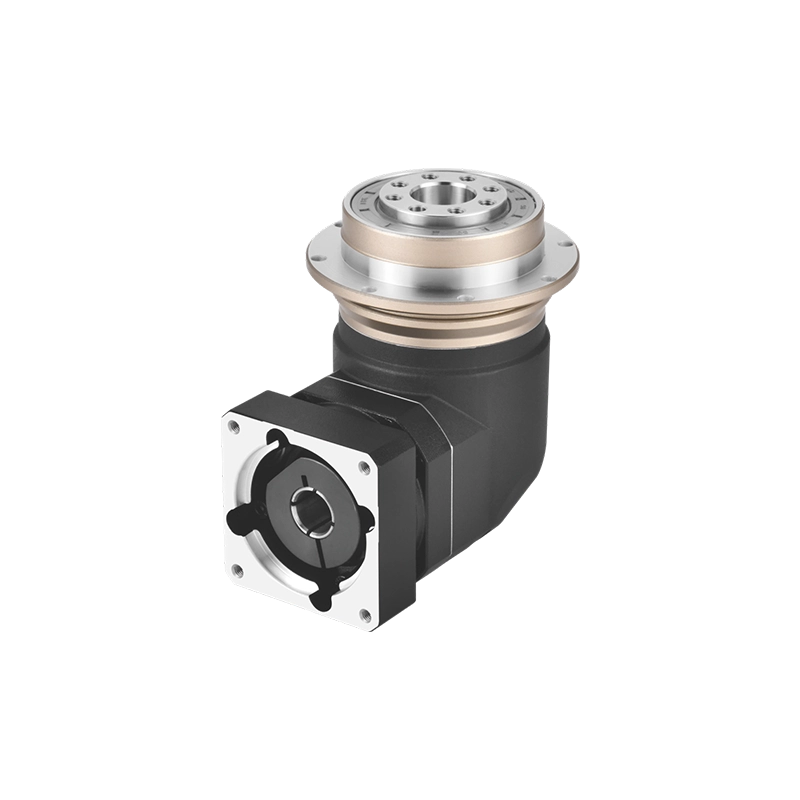
Electric Rotary Actuators for Precision Automation: What Engineers Need to Know
When machine builders need controlled rotation rather than linear motion, they turn to an electric rotary actuator. Unlike simple motors that only spin, a well-designed electric rotary actuator delivers torque, positioning accuracy, load support, and often a clean path for cables or air lines—all in a compact package suited to automation, robotics, inspection, and assembly equipment.
This article explains how electric rotary actuators work in real industrial settings, when they outperform pneumatic or hydraulic alternatives, which performance factors matter most, and how specialized forms such as hollow rotary tables fit into modern machine design. The goal is practical guidance that helps engineers specify the right solution and avoid common selection mistakes.
What Exactly Is an Electric Rotary Actuator?
An electric rotary actuator converts electrical energy into controlled rotational motion. At its core is an electric motor (servo or stepper) paired with a transmission system—gears, belts, or direct drive—that multiplies torque and reduces speed to useful levels. Feedback devices such as encoders close the control loop so the actuator can stop accurately at commanded angles.
In industrial automation the term covers a range of products:
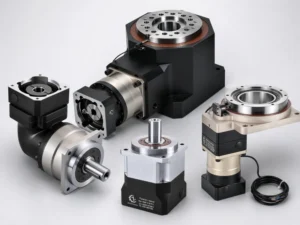
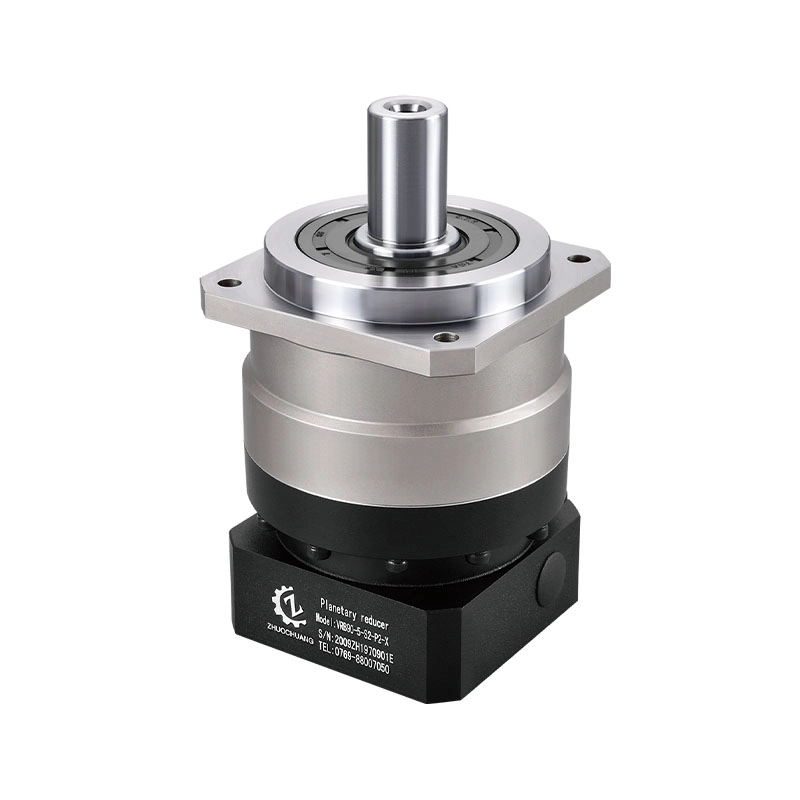
- Compact units with a solid output shaft for simple swinging or turning tasks
- Table-style platforms that support fixtures directly
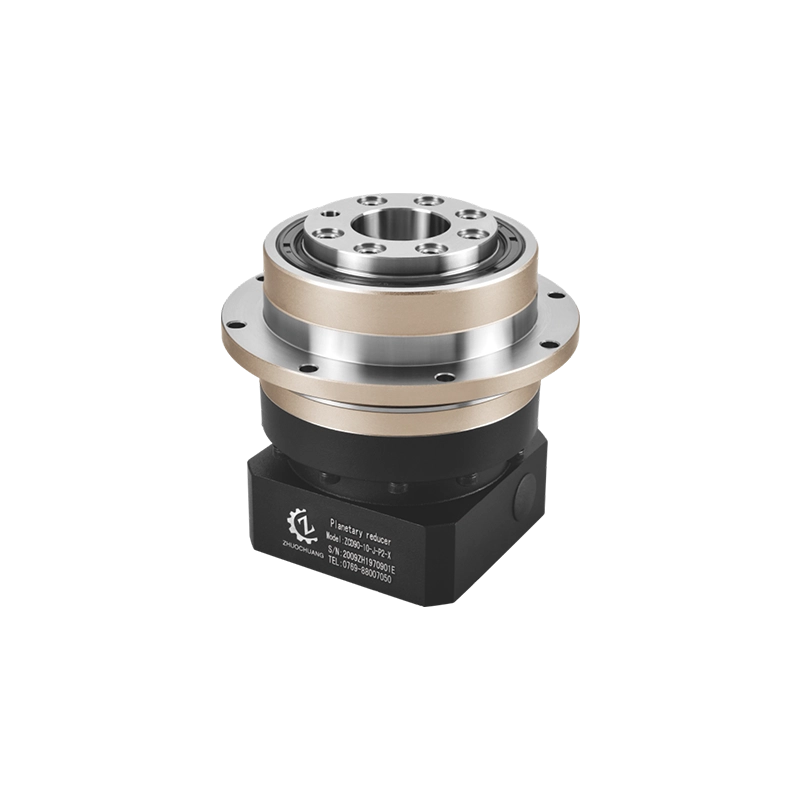
- Hollow-bore designs that allow cables, vacuum lines, or air tubes to pass through the center
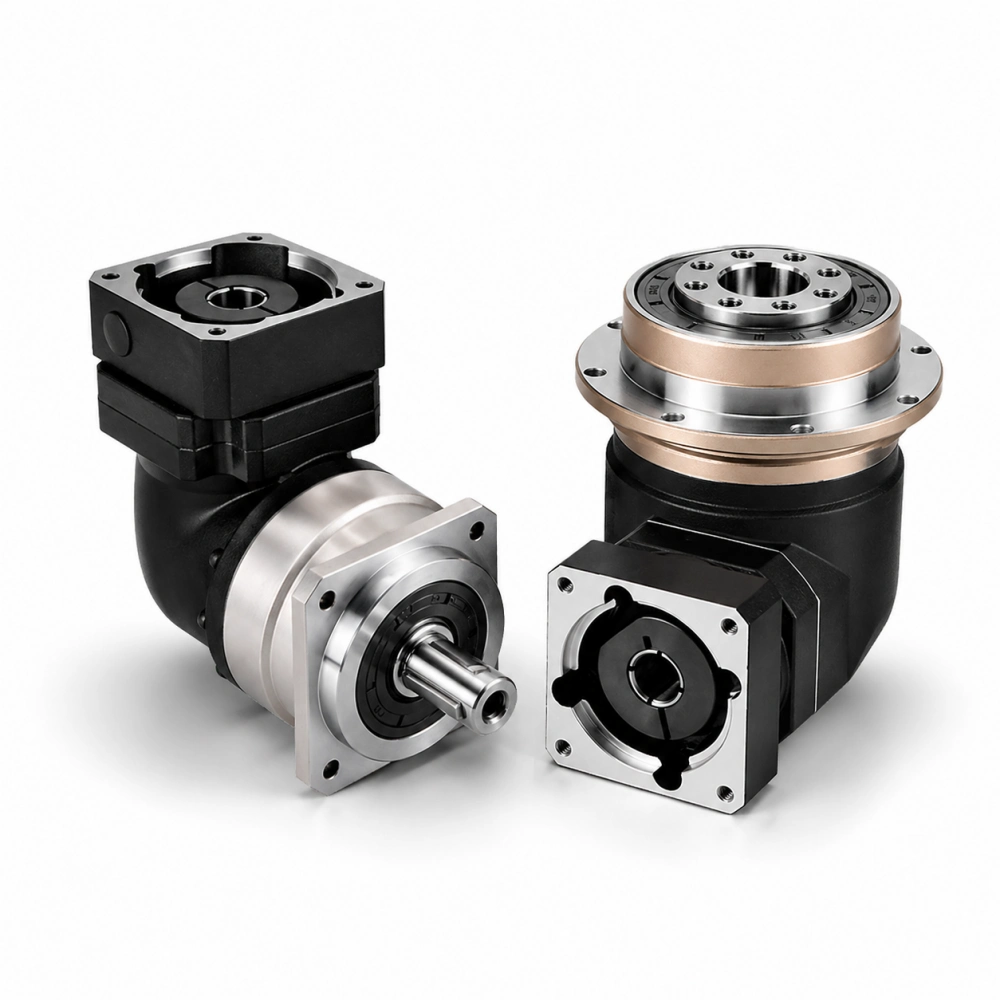
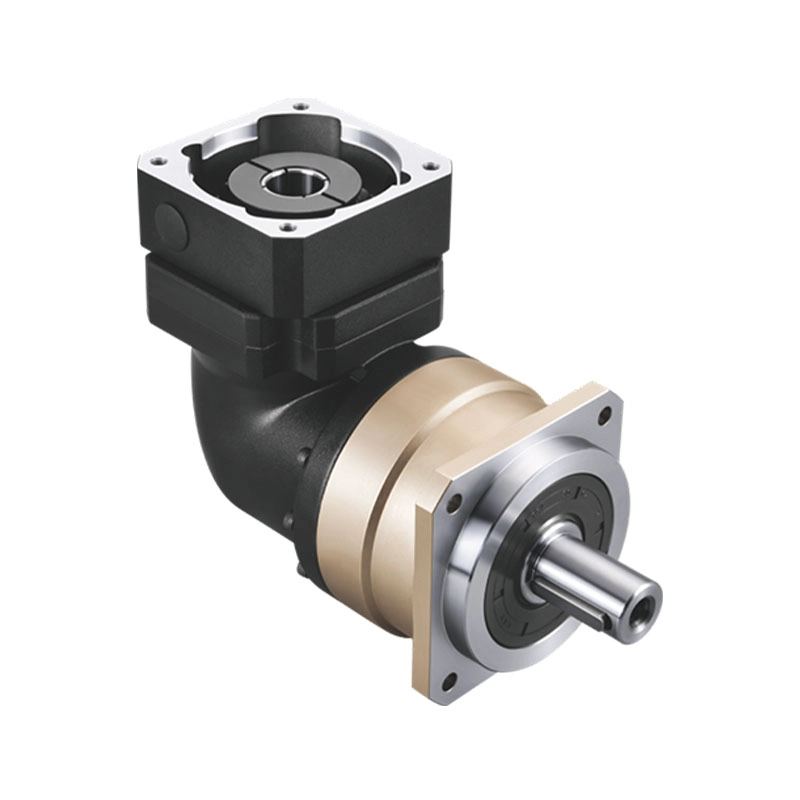
- Right-angle or inline configurations that adapt to tight machine layouts
What unites them is electric power and the ability to deliver programmable, repeatable motion under closed-loop control. This is the key difference from pneumatic rotary actuators (limited to fixed angles and air-pressure variability) and hydraulic units (high force but messier infrastructure).
Why Electric Drive Matters in Modern Machines
Electric rotary actuators have become the default choice for many precision applications for several practical reasons:
- Programmable positioning – Stop at any angle, change motion profiles, or run multi-station sequences without mechanical stops.
- Clean operation – No air compressors, oil leaks, or pressure fluctuations that affect repeatability.
- Easy integration – Direct communication with PLCs, motion controllers, and industrial networks.
- Energy efficiency – Power is consumed mainly during motion; holding can often be done with low or zero current when self-locking transmissions are used.
- Predictable performance – Torque, speed, and accuracy remain consistent across temperature and duty-cycle variations within rated limits.
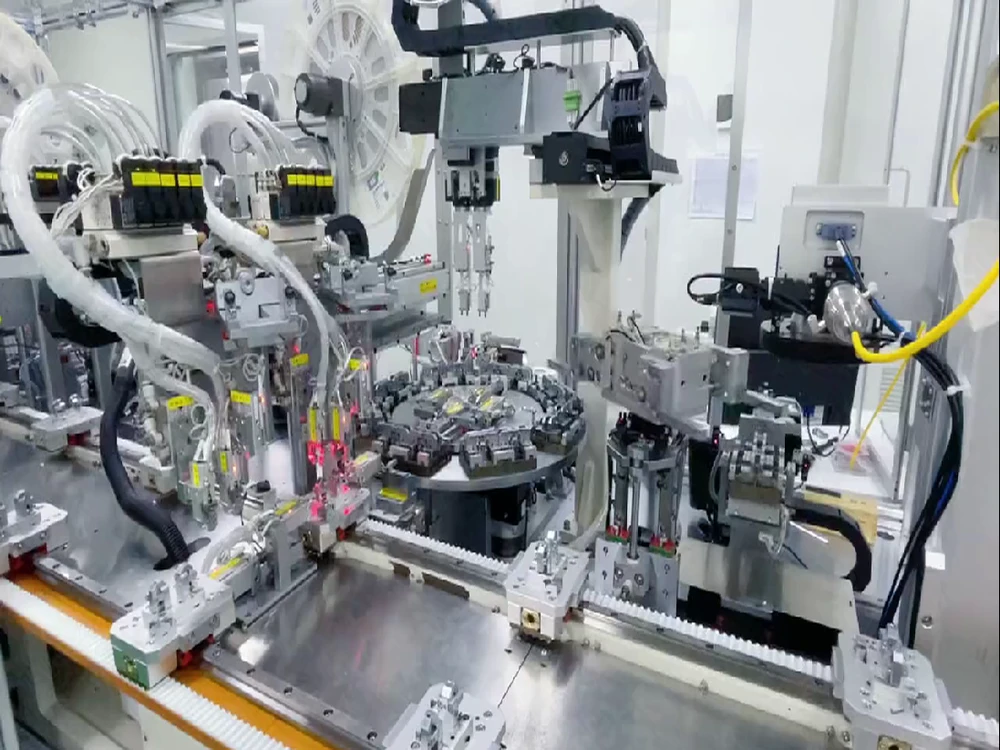
These advantages explain why electric solutions dominate vision inspection stations, electronic assembly cells, packaging orientation modules, and robotic auxiliary axes.
Core Performance Factors That Determine Success
Catalog torque numbers alone rarely tell the whole story. Successful selection requires looking at the complete operating condition.
Load, Inertia, and Moment
The actuator must accelerate and decelerate the combined inertia of the fixture plus workpiece. Offset loads create overturning moments that stress bearings. Always calculate both the radial/axial load capacity and the allowable moment. A unit that looks strong on paper can still deflect or wear prematurely if the load center is far from the rotation axis.
Torque Profile and Duty Cycle
Peak torque during acceleration is often higher than continuous running torque. Duty cycle, ambient temperature, and available cooling all affect whether the motor and transmission stay within thermal limits. Over-sizing slightly is usually safer than running continuously near the rated limit.
Accuracy, Repeatability, and Backlash
For most automation tasks, repeatability matters more than absolute accuracy because the machine can be calibrated. Low backlash (or zero-backlash designs) and rigid bearings keep positioning stable over thousands of cycles. Lost motion under load should also be checked when the application involves inspection or tight-tolerance assembly.
Speed and Cycle Time
Higher speed is useful only if the actuator can decelerate smoothly and settle quickly. Aggressive motion profiles that cause vibration or overshoot reduce effective throughput even if the theoretical cycle time looks short.
Hollow Bore and Cable Management
When sensors, grippers, or vacuum fixtures sit on the rotating side, external cable loops become a maintenance headache and a source of failure. A hollow center allows clean routing through the middle of the actuator—one of the strongest practical advantages of modern table-style electric rotary actuators.
Specialized Form: The Hollow Rotary Table as an Electric Rotary Actuator
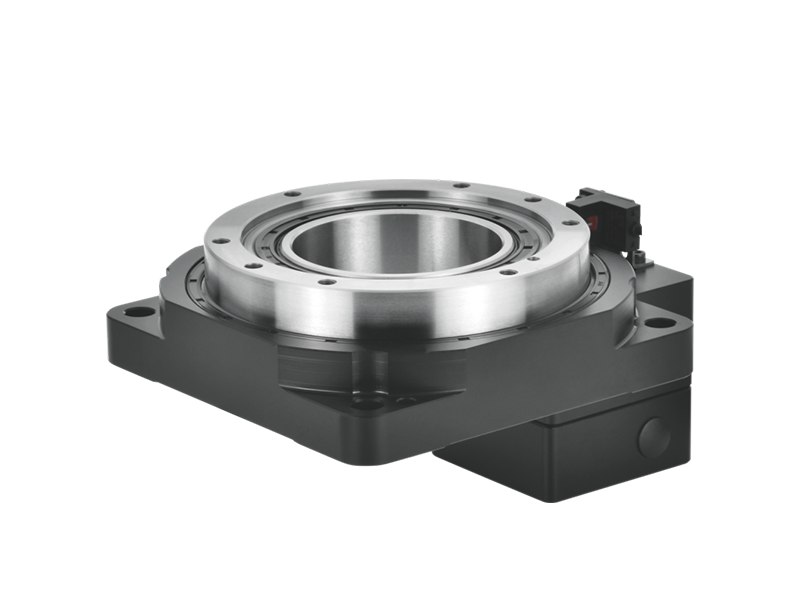
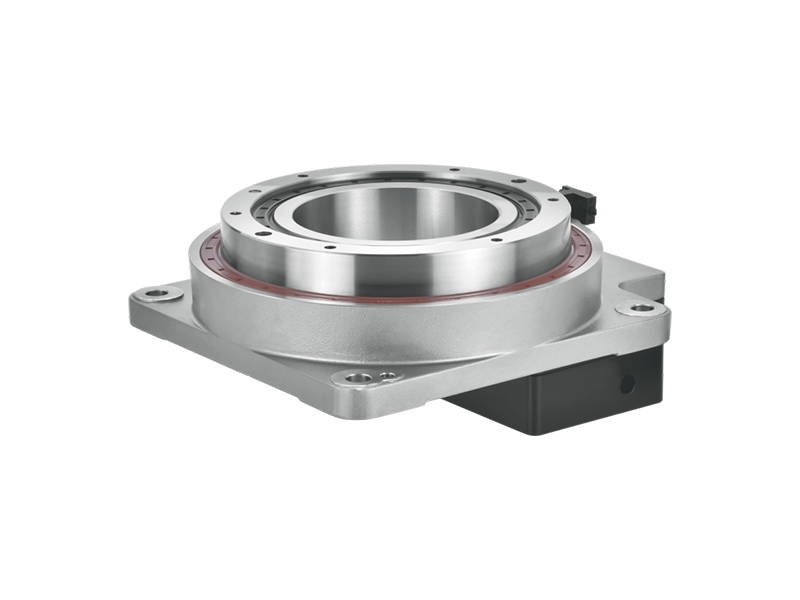
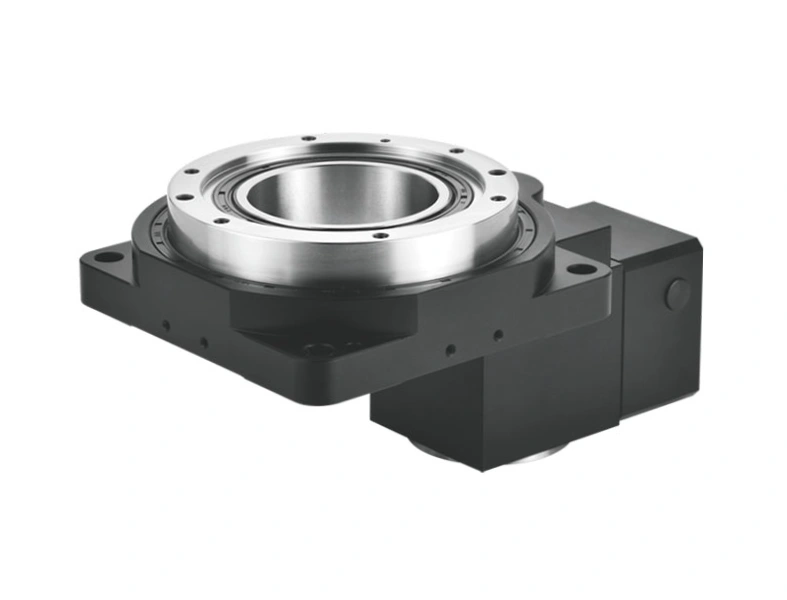
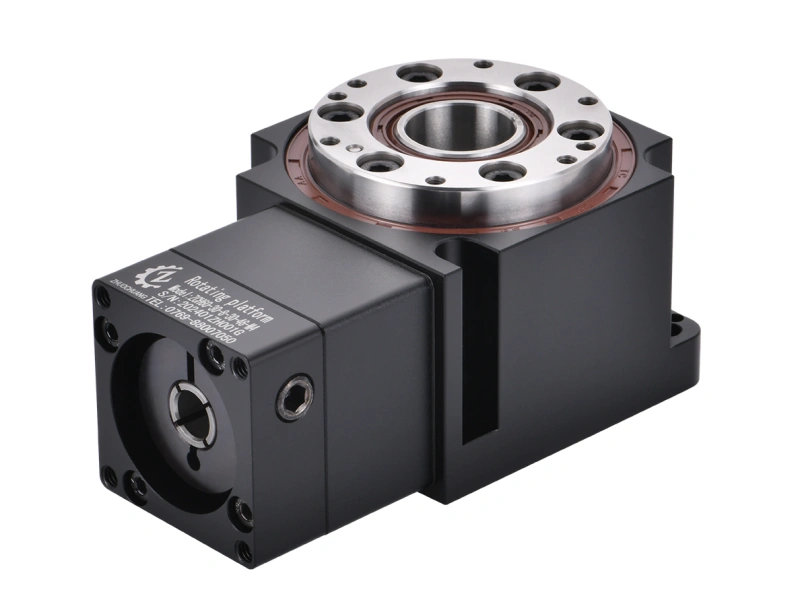
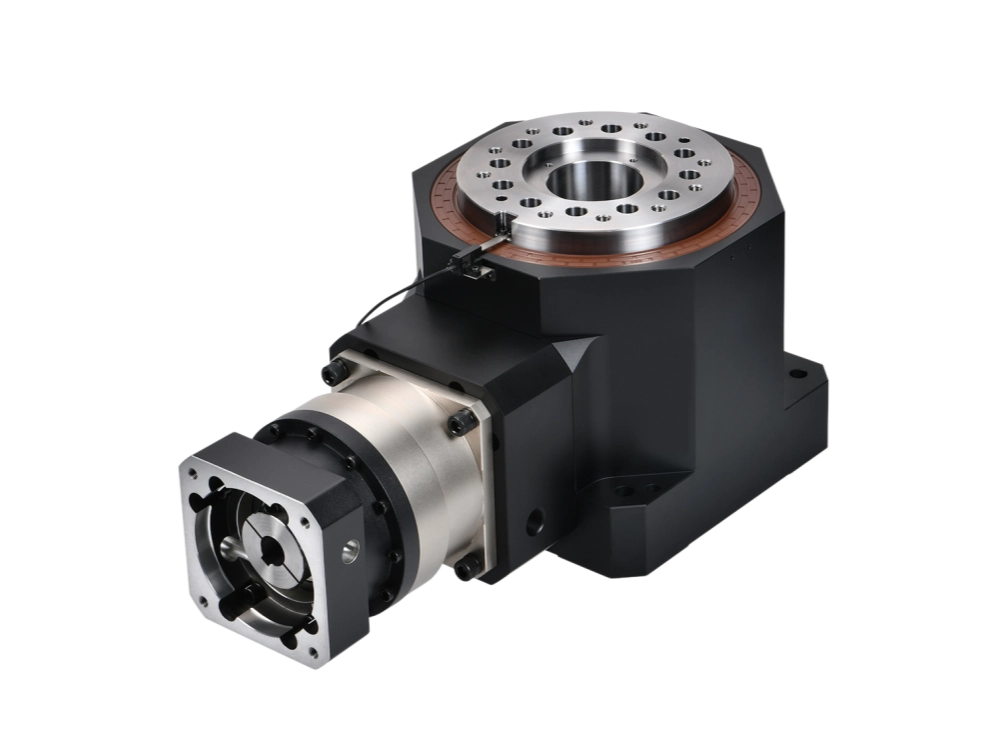
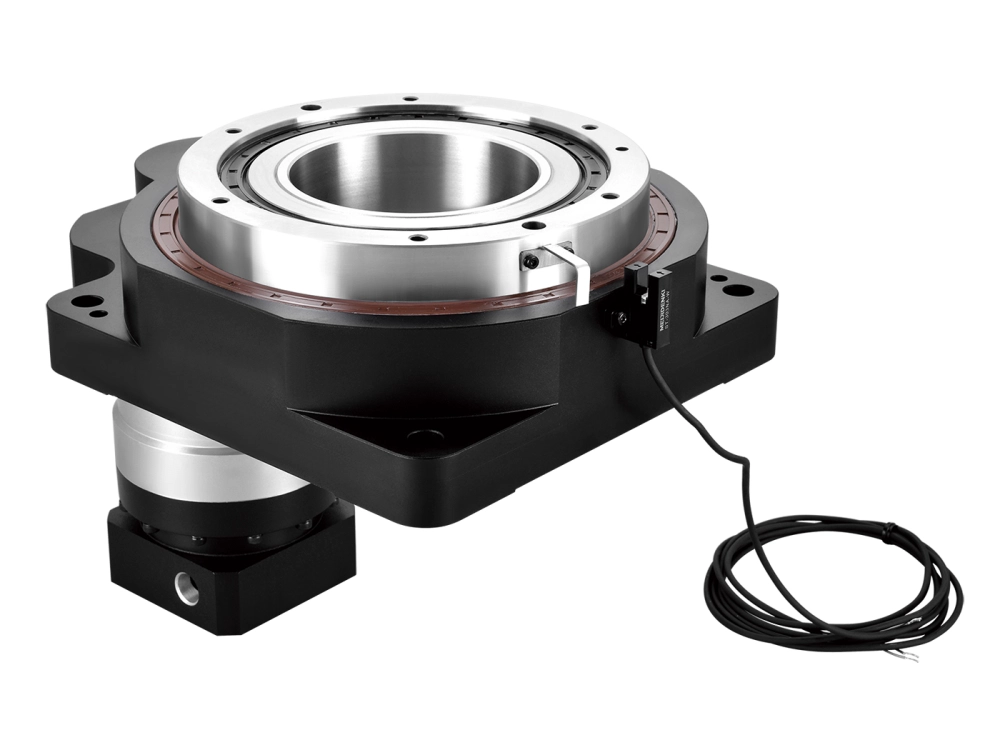
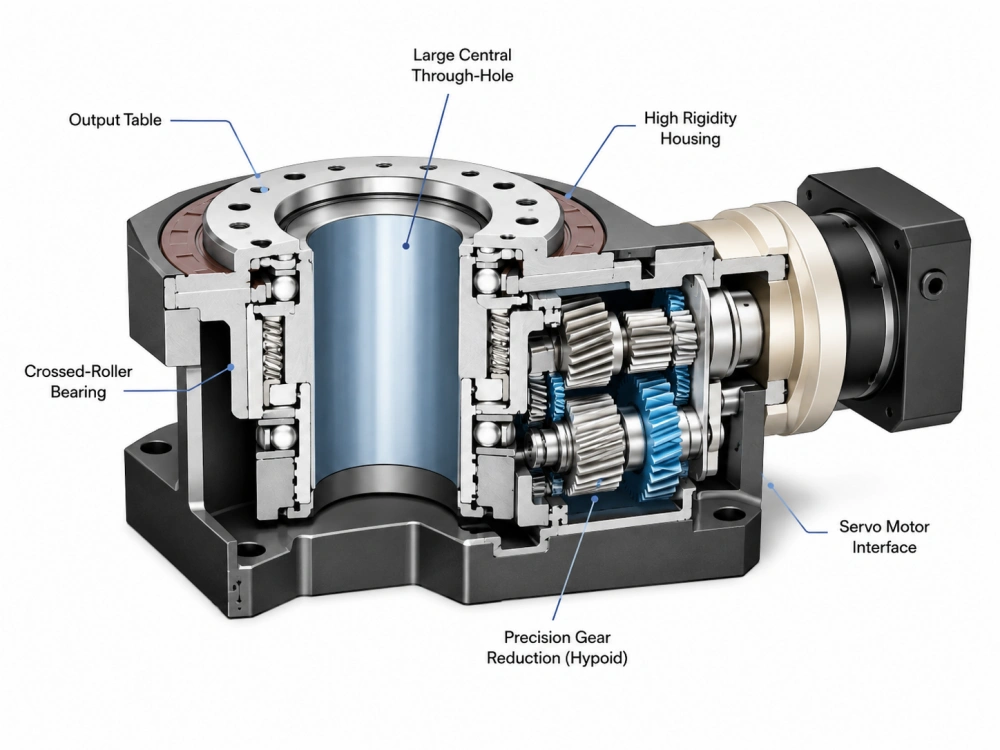
Many of the electric rotary actuators used in high-precision automation today take the form of a hollow rotary table or platform. These units integrate:
- A large-diameter output table for direct fixture mounting
- High-rigidity crossed-roller or angular-contact bearings
- Precision gear reduction (planetary, hypoid, or worm)
- A central through-hole sized for cables and tubing
- Servo or stepper motor interfaces
The result is a single component that replaces a motor, coupling, bearing housing, and rotating plate assembly. Machine layouts become cleaner, assembly time drops, and long-term reliability improves because fewer parts can loosen or misalign.
Zhuochuang’s product range illustrates the variety available. The ZBT Series large-aperture hollow rotary tables emphasize heavy-duty rigidity and large bore size. Other series such as ZCTK steel-shell, ZCTR right-angle, and ZCH hypoid models address different space, load, and mounting constraints. All function as purpose-built electric rotary actuators optimized for automation rather than general valve duty.
Typical Application Scenarios
Vision inspection and multi-angle measurement
The actuator rotates a part under cameras or sensors so every critical surface can be inspected without moving the optics. Repeatable angular positioning and low vibration are essential.
Automated assembly and fastening stations
Fixtures index between load, process, and unload positions. A hollow bore keeps pneumatic or electrical services organized even while the fixture turns.
Electronic manufacturing and semiconductor handling
Compact size, clean operation, and precise stopping accuracy support delicate parts and clean-room constraints.
Robotic work cells
An electric rotary actuator often serves as a seventh or eighth axis, orienting a workpiece so the robot can approach from the optimal direction and reduce cycle time.
Packaging and labeling lines
Continuous or intermittent rotation orients products for printing, labeling, or sealing while maintaining high throughput.
Selection Checklist for Engineers
- Define the required angular range and number of stop positions (fixed or programmable).
- Calculate total inertia and maximum moment load, including fixture offset.
- Determine peak and continuous torque, including safety factor and duty cycle.
- Specify needed repeatability and allowable backlash.
- Confirm whether a hollow bore is required and what diameter is practical.
- Match motor flange, shaft, and electrical interface early.
- Check installation orientation (horizontal, vertical, inverted) and available space.
- Review environmental factors: temperature, dust, wash-down, or clean-room requirements.
- Evaluate total cost of ownership—installation time, cable life, and maintenance access matter as much as purchase price.
When these points are clear, a manufacturer can recommend a suitable series or propose minor customizations such as special table machining, motor adapters, or sealing options.
Working with a Specialized Manufacturer
Catalog data provides a starting point, but real applications often involve unique fixture geometries, unusual duty cycles, or tight space constraints. Sharing a basic load sketch, motor model, cycle time, and accuracy target allows the supplier to verify thermal margins, resonance risks, and bearing life.
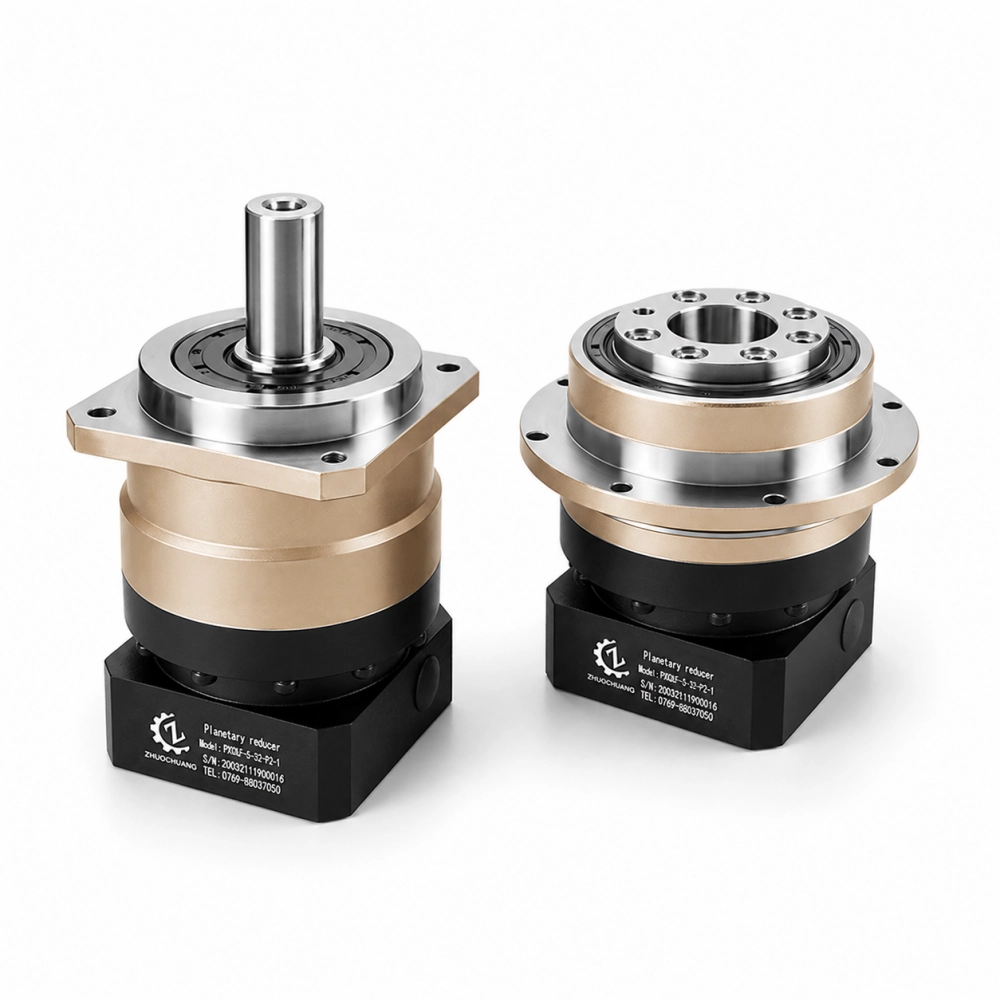
Dongguan Zhuochuang Precision Machinery Co., Ltd. (operating internationally as PlanetDrivePro) designs and manufactures both planetary gearboxes and hollow rotary tables specifically for these automation challenges. The engineering team regularly helps customers match the right electric rotary actuator configuration to the machine layout rather than forcing a standard catalog item into an imperfect fit.
If you are evaluating an electric rotary actuator for a new project or a redesign, contact the technical team with your key parameters. Clear application data leads to faster, more reliable recommendations.
Key Takeaways
An electric rotary actuator is more than a motor that turns. In precision automation it becomes a structural and functional element that supports fixtures, routes services, and delivers repeatable angular positioning under closed-loop control. Choosing the right unit requires attention to load, moment, torque profile, accuracy, cable management, and system integration—not just peak torque numbers.
Hollow rotary tables represent one of the most practical implementations of the electric rotary actuator concept for modern machines. When selected and applied correctly, they simplify design, improve reliability, and give machine builders the flexible motion control that today’s production processes demand.
Frequently Asked Questions
Is a hollow rotary table the same as an electric rotary actuator?
In many automation contexts, yes. A hollow rotary table is a specialized electric rotary actuator optimized for fixture mounting, high rigidity, and center cable routing.
When should I choose electric over pneumatic rotary actuators?
Choose electric when you need programmable angles, consistent speed control, multi-position stopping, or clean operation without compressed air.
How important is the hollow bore size?
Very important if any services (cables, air, vacuum) must reach the rotating side. Undersizing the bore forces external routing that increases maintenance and reduces machine cleanliness.
Can these actuators run continuously?
Many designs support continuous or high-duty-cycle operation when properly sized for torque, speed, and heat dissipation. Always verify the duty cycle against the manufacturer’s thermal ratings.
What information helps a manufacturer recommend the correct model?
Fixture weight and center of gravity, required angles and cycle time, motor preference, accuracy target, available space, and any special environmental conditions.