
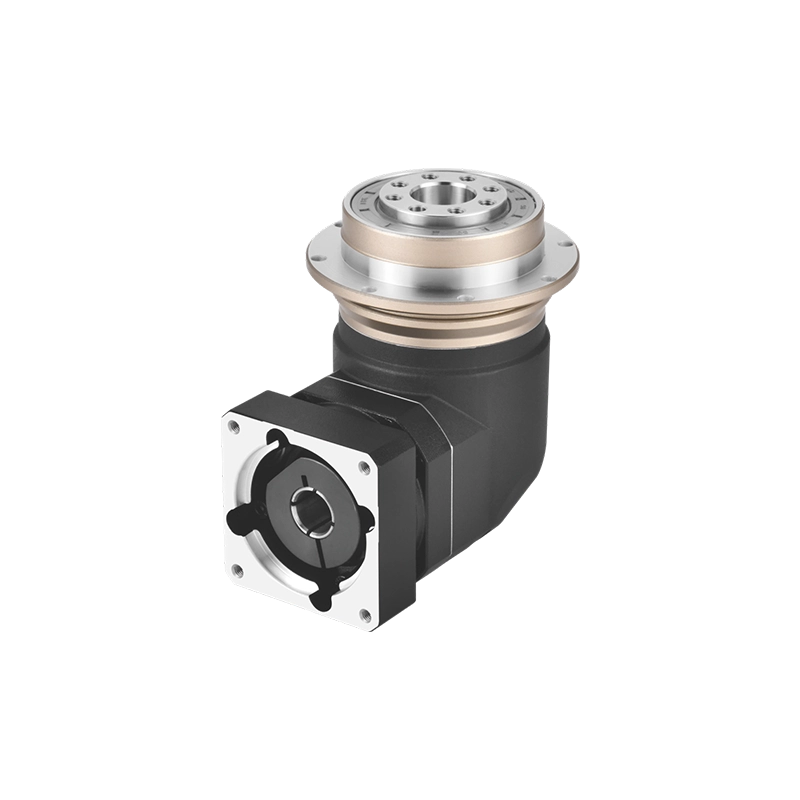
Inside a Hollow Rotary Table Factory
A hollow rotary table is not made precise only at the final inspection table. Its stability comes from machining accuracy, bearing fit, gear engagement, assembly control, and inspection discipline throughout the factory process.
This article walks through how a hollow rotary table manufacturer should think about production quality before delivery. The goal is not to describe a product from a catalog, but to show what makes the rotary table reliable inside real machines.
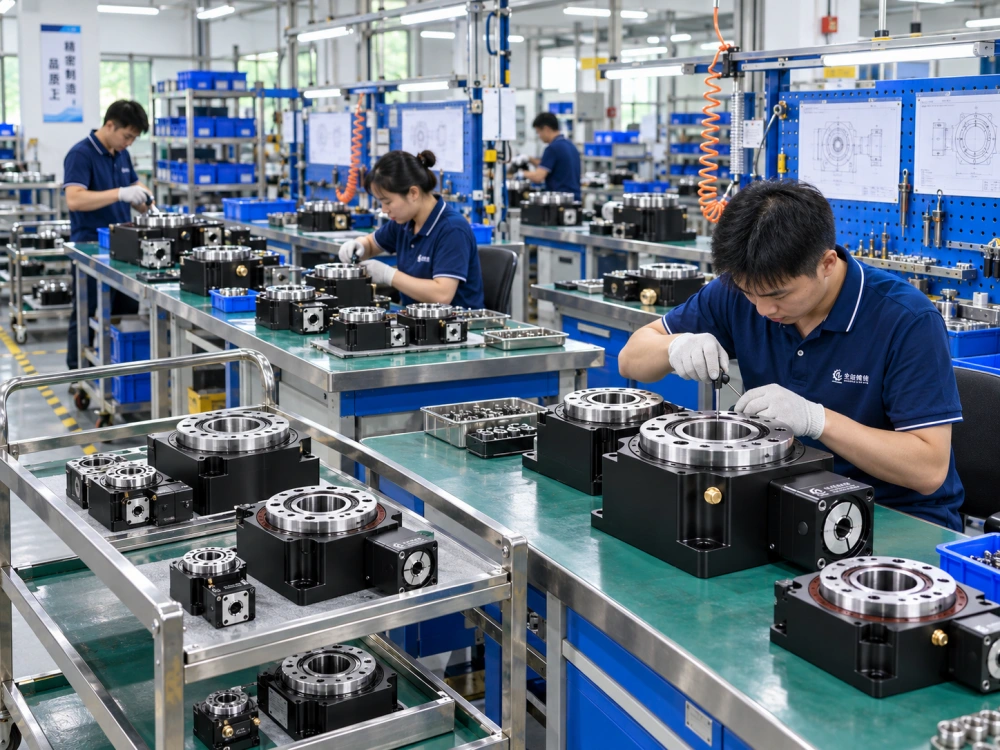
Why Factory Process Matters for a Hollow Rotary Table
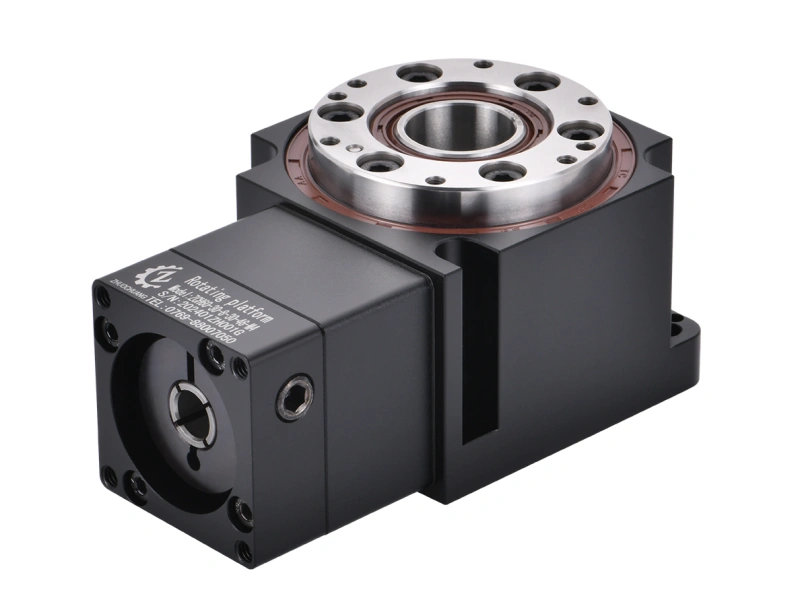
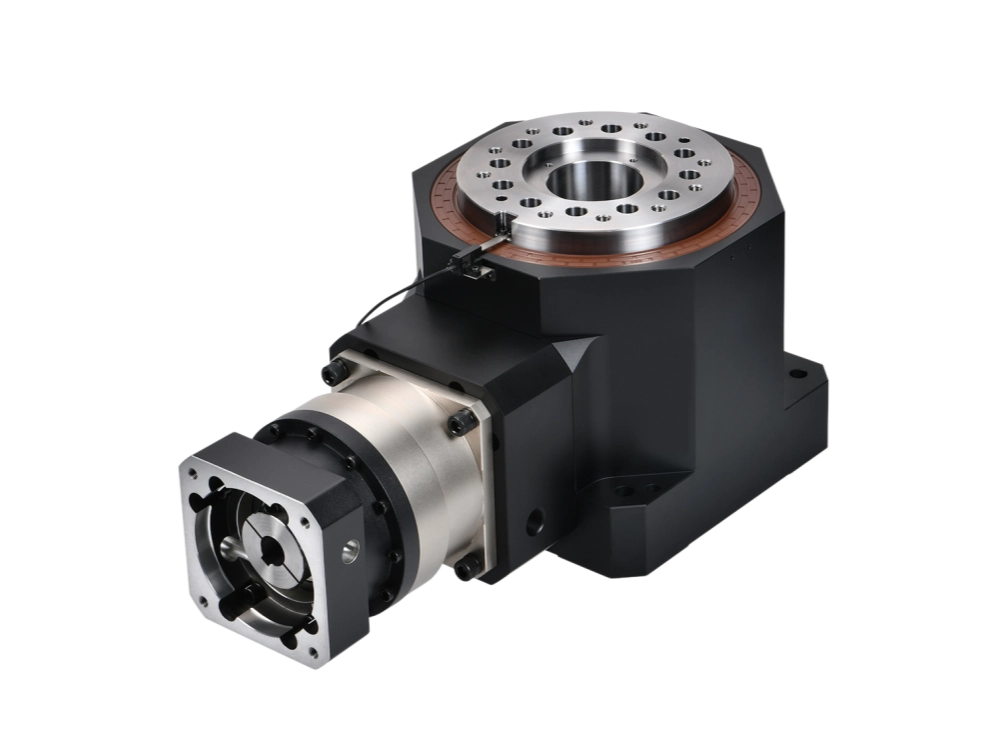
A hollow rotary table is used when the machine needs a compact rotating platform, a central through-hole, and repeatable positioning. The visible product may look simple, but the internal quality depends on many small details that are controlled before the product leaves the factory.
For equipment builders, a stable hollow rotary table can reduce integration problems. For purchasing teams, understanding the factory process helps explain why two similar-looking products may perform differently after installation.
The most important point is this: a hollow rotary table should not be judged only by table size or price. It should be reviewed by machining quality, assembly consistency, backlash control, bearing support, and final inspection.
Factory Process Walkthrough
Click each stage to see what should be controlled during hollow rotary table production.
Housing Machining and Mounting Surface Accuracy
The housing, output table, mounting surface, and motor interface must be machined with stable tolerances. If the mounting surface is not flat or the reference surfaces are inconsistent, the table may create alignment issues after installation.
For a hollow rotary table, the center bore and output table must also keep good concentricity. This affects cable routing, fixture mounting, and the stability of the rotating platform.
Bearing Fit and Rotary Table Rigidity
The bearing system supports axial load, radial load, and moment load. A poor bearing fit can create vibration, runout, or unstable positioning even if the external structure looks strong.
For applications with fixtures, offset loads, or vertical mounting, rigidity should be reviewed together with bearing selection and installation direction.
Gear Engagement and Backlash Control
Backlash is influenced by gear quality, transmission structure, assembly adjustment, and load condition. A hollow rotary table factory should control gear engagement carefully instead of relying only on final inspection.
Stable gear engagement helps improve smooth rotation, repeatability, and long-term positioning performance.
Assembly Is Not Just Putting Parts Together
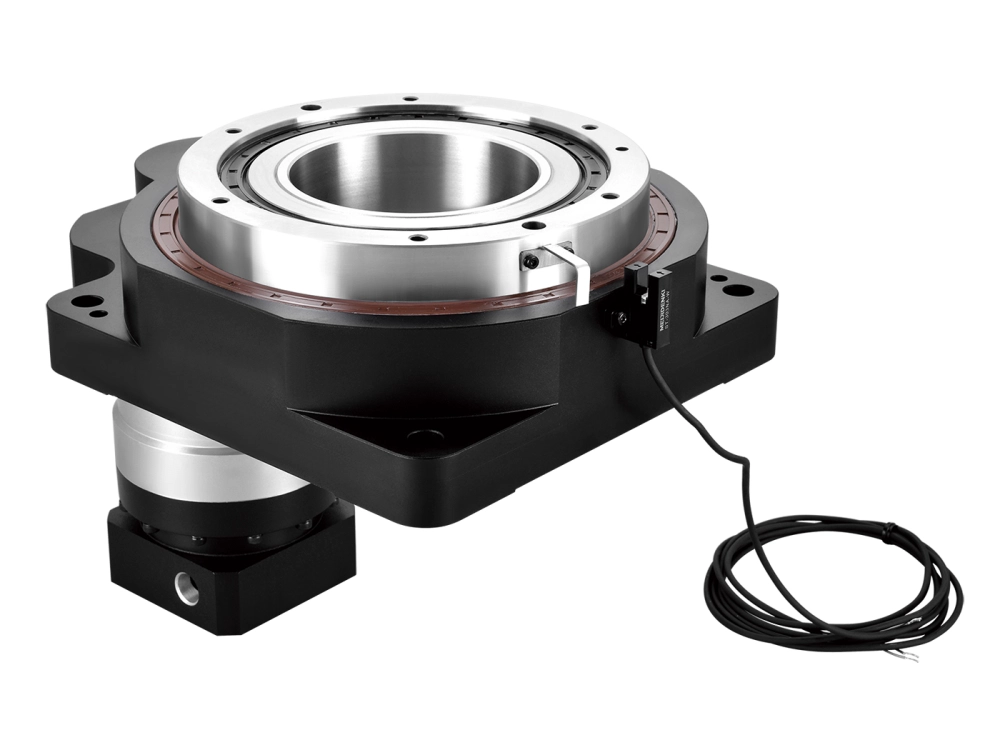
During assembly, technicians need to confirm fit, rotation feel, fastening sequence, lubrication, sensor position, motor interface, and output table behavior. Small assembly differences can affect the final performance of the rotary table.
This is why batch consistency matters for OEM equipment builders who need the same model to perform predictably across different machines.
Inspection Before Packing
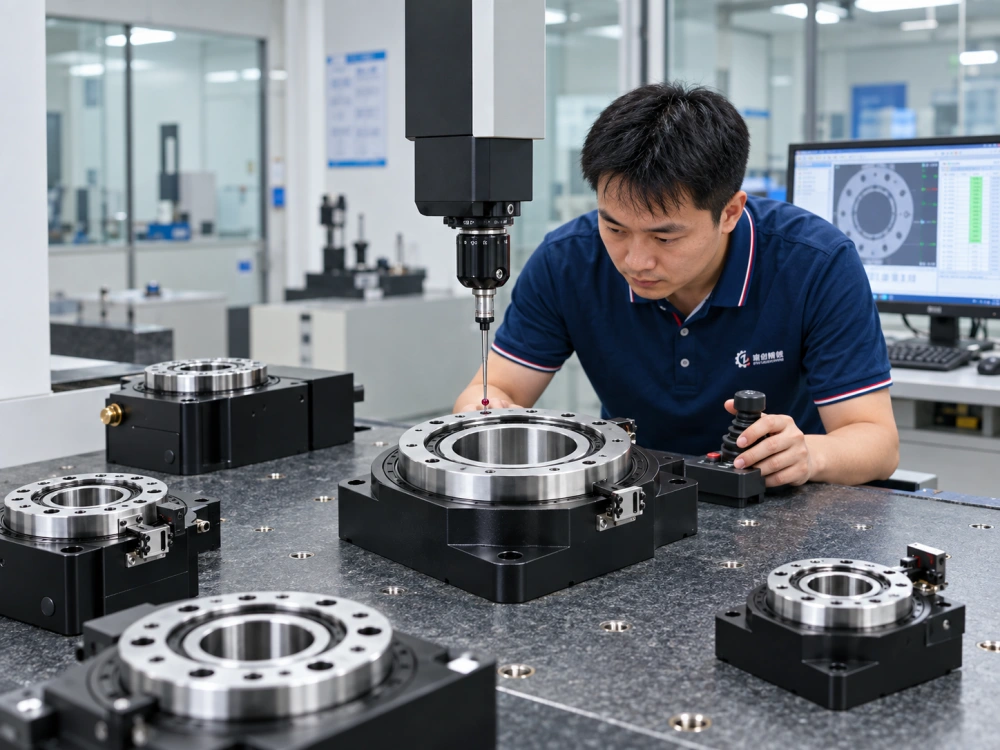
Before delivery, the product should be checked for smooth rotation, interface dimensions, mounting holes, backlash condition, appearance, cable or sensor position, and basic operation consistency.
Inspection cannot replace process control, but it helps confirm that the hollow rotary table is ready for machine integration.
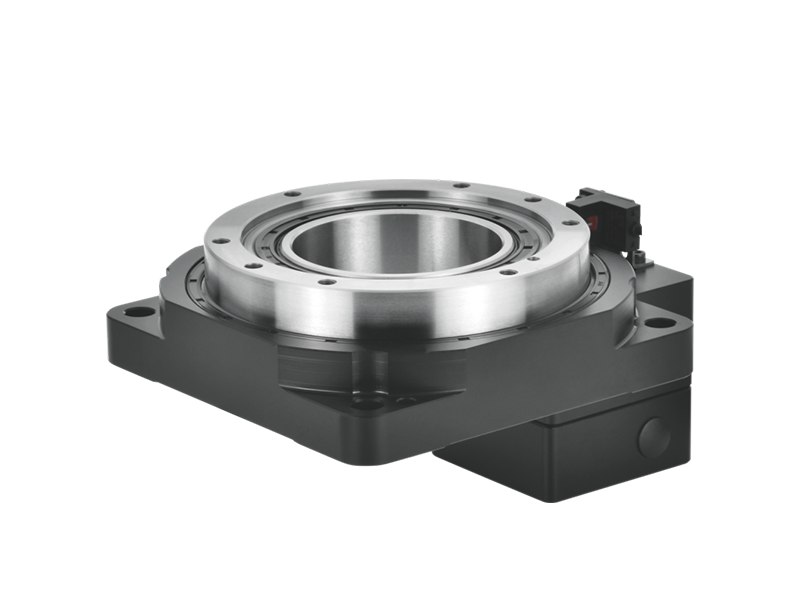
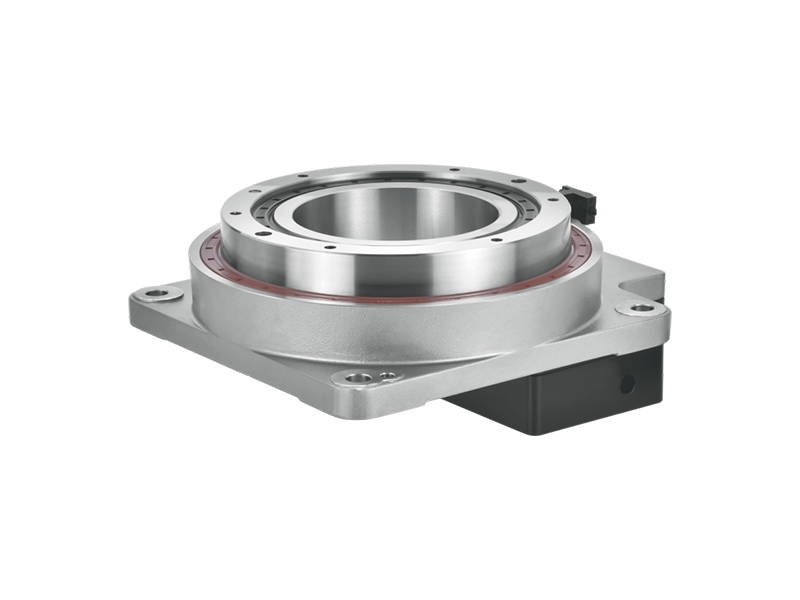
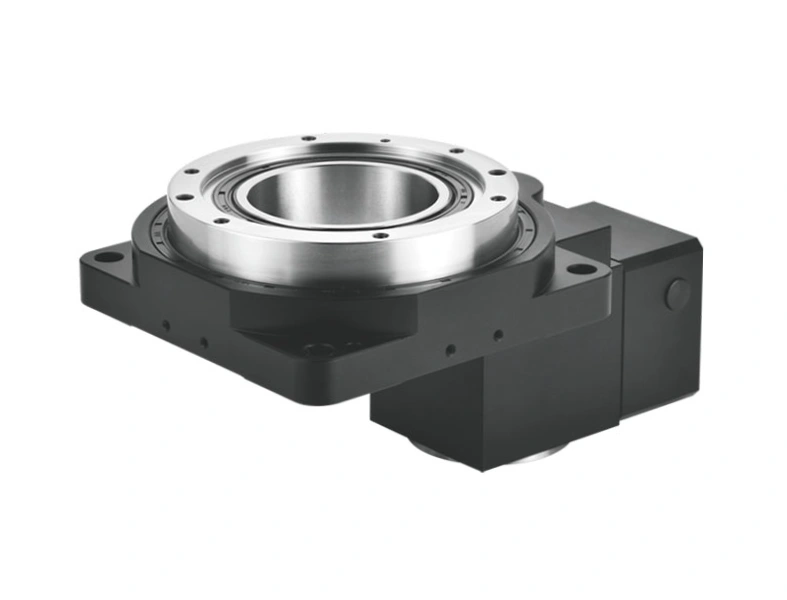
Housing, Flange, and Hollow Bore Accuracy
The housing and flange are the foundation of the hollow rotary table. If the mounting surfaces are not consistent, the equipment builder may face alignment problems when the table is installed into the machine base.
The hollow bore also needs attention. The center hole is not only a visual feature. It may be used for cables, air tubes, vacuum lines, fixture connections, or installation space. Bore accuracy and concentricity can affect both mechanical layout and long-term operation.
This is one reason why hollow rotary table production requires more than rough machining. The structure must support both the rotating table and the central passage at the same time.
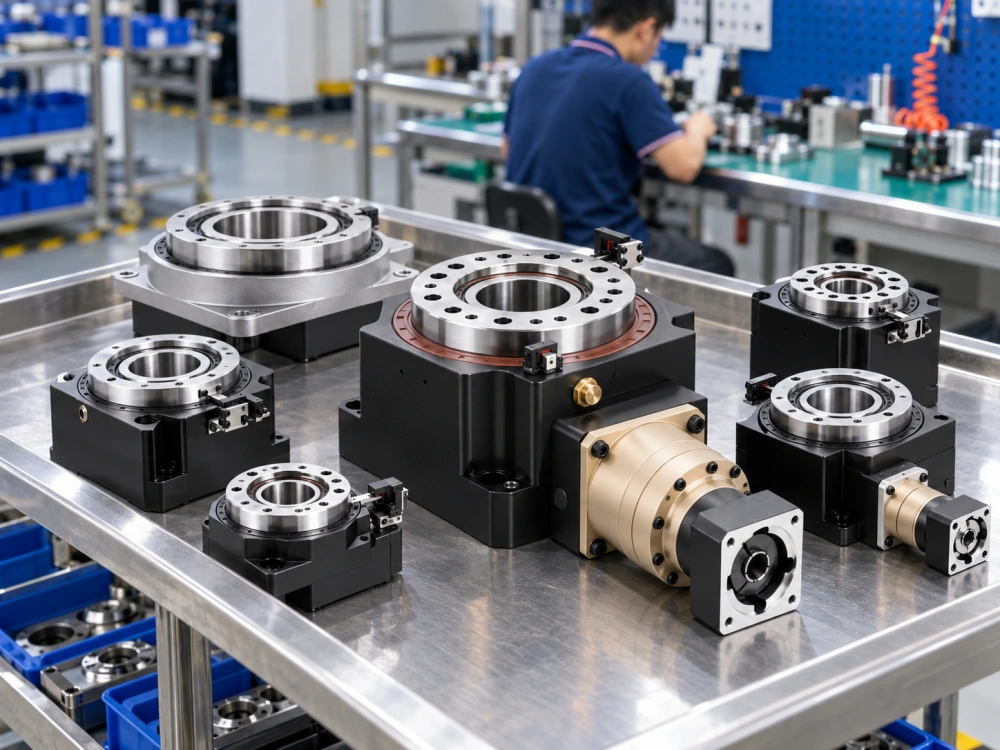
Bearing Support and Rigidity Control
Rigidity is one of the main differences between a suitable hollow rotary table and a weak rotary unit. In many applications, the table does not only carry a light part. It may carry a fixture plate, clamps, sensors, pneumatic components, or an offset workpiece.
The bearing system must support the real load condition. Axial load, radial load, and moment load all matter. If the bearing support is not suitable, the table may rotate, but it may not hold position well under real machine conditions.
For this reason, load information should be reviewed early. The factory cannot choose the right structure only from a model name or table diameter.
Quality Is Built Before Final Inspection
A final test can confirm whether a product passes a check. But stable quality comes from every previous step: machining, bearing fit, gear engagement, assembly method, and inspection discipline.
Ask for Model and Interface ConfirmationMounting and output surfaces should support stable installation.
The table should rotate without obvious roughness, sticking, or abnormal noise.
Backlash should match the application requirement and the selected structure.
Motor, output, mounting holes, and cable positions should match the drawing.
Gear Engagement and Backlash Adjustment
Backlash control is a key part of hollow rotary table manufacturing. Too much backlash may create positioning error or unstable stops. Too little clearance may create heat, noise, poor rotation feel, or shortened service life.
The correct result depends on the transmission structure, gear quality, assembly adjustment, bearing support, lubrication, and expected load. This is why backlash should be treated as a factory process issue, not only a specification printed in a catalog.
For applications such as inspection, assembly, indexing, dispensing, or compact rotary positioning, backlash and repeatability should be discussed together with fixture size and working cycle.
Assembly Process: Where Stability Is Built
A hollow rotary table becomes reliable during assembly only when each part is installed with the correct sequence and fit. The technician needs to control fasteners, bearing seating, gear engagement, sealing parts, sensor position, cable direction, and final rotation feel.
For OEM customers, consistency is very important. If one batch feels different from another batch, machine commissioning becomes more difficult. A stable factory process helps reduce this risk.
When the application has special requirements, such as a larger hollow bore, non-standard mounting, special motor interface, or limited installation space, factory review should happen before production.
What Buyers Should Ask a Hollow Rotary Table Factory
When evaluating a hollow rotary table factory, buyers should ask questions that reveal real process capability rather than only price.
- What hollow bore sizes are available?
- What load and moment conditions can the table support?
- How is backlash checked or controlled?
- Can the motor interface be matched to the selected servo motor?
- Are drawings or installation dimensions provided?
- Can the factory support non-standard mounting holes?
- What inspection is done before delivery?
- Can the model be reviewed based on fixture size and load?
- Is batch consistency controlled for OEM projects?
- Can the factory support sample and small-batch orders?
These questions help buyers understand whether the supplier is only selling a catalog item or actually reviewing the application. A reliable hollow rotary table manufacturer should ask technical questions before recommending a model.
When Custom Requirements Need Factory Review
Some projects can use a standard hollow rotary table model. Others need small changes such as motor adapter adjustment, mounting hole modification, output plate change, cable direction, or a special installation layout.
Customization does not always mean a completely new design. In many cases, it means adjusting a standard structure to fit the customer’s machine. However, the factory still needs to review whether the change affects rigidity, backlash, bearing support, or assembly consistency.
For this reason, buyers should share drawings, photos, motor information, load details, and installation space as early as possible.
Factory Review Is Part of Product Selection
A hollow rotary table is easier to select when the real application is clear. Load weight, fixture diameter, installation direction, motor model, hollow bore requirement, rotation speed, and accuracy expectations all affect model selection.
You can also review our hollow rotary table product range before sending your parameters.
FAQ
What does a hollow rotary table factory control during production?
A factory should control machining accuracy, bearing fit, gear engagement, backlash condition, assembly consistency, rotation smoothness, mounting interface, and inspection before packing.
Is final inspection enough to guarantee hollow rotary table quality?
No. Final inspection is important, but stable quality depends on the full process. Machining, assembly, bearing support, and gear engagement must be controlled before final testing.
Why does hollow bore accuracy matter?
The hollow bore may be used for cables, air tubes, vacuum lines, or fixture connection. Bore size, concentricity, and structure can affect machine layout and rotary table stability.
Can a hollow rotary table be customized?
Yes. Customization may include motor interface, mounting holes, output table, hollow bore size, cable direction, or installation layout. The factory should review whether the change affects rigidity and positioning stability.
What information should buyers provide before model selection?
Useful information includes load weight, fixture size, rotation angle, speed, accuracy requirement, installation direction, motor model, hollow bore requirement, quantity, and any drawings or application photos.
Need Factory Review for a Hollow Rotary Table Project?
Send your application details, fixture size, load condition, motor model, and installation layout. Our team can review whether a standard hollow rotary table or a customized rotary positioning solution is more suitable.