
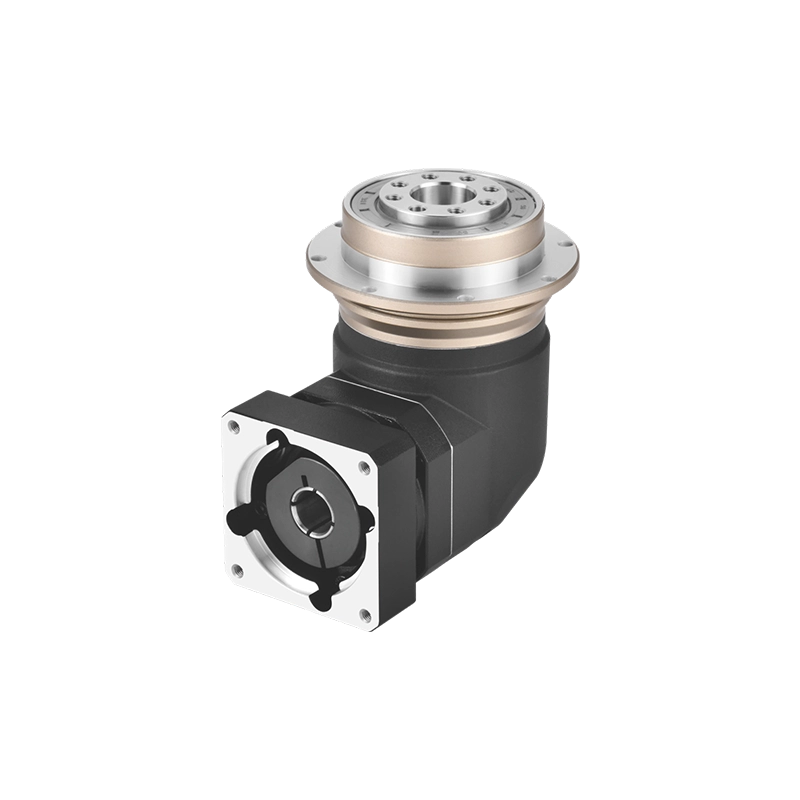
Inline Planetary Gearbox: Structure, Advantages and Selection Guide
Understand how an inline planetary gearbox works, why the coaxial input-output layout is widely used with servo motors, and how to choose the right series, ratio, grade, and supplier for industrial automation.
Best Fit: Straight Motor-to-Load Axis
Inline planetary gearboxes are designed for applications where the servo motor and driven load can share the same centerline.
Compared with right-angle layouts, the inline structure is usually simpler, efficient, compact, and easier to integrate when the machine allows coaxial mounting.
Walk through a modern automation plant and the inline planetary gearbox appears everywhere: behind servo motors, on robot joints, driving ball screw axes, moving packaging lines, and connecting motor power to coaxial machine loads.
This popularity is not accidental. The inline configuration solves the most common industrial drive requirement: speed reduction and torque multiplication between a motor and a load that sit on the same axis. This article explains the structure, advantages, product grades, ratio selection, application choices, and supplier checks for an inline planetary gear reducer.
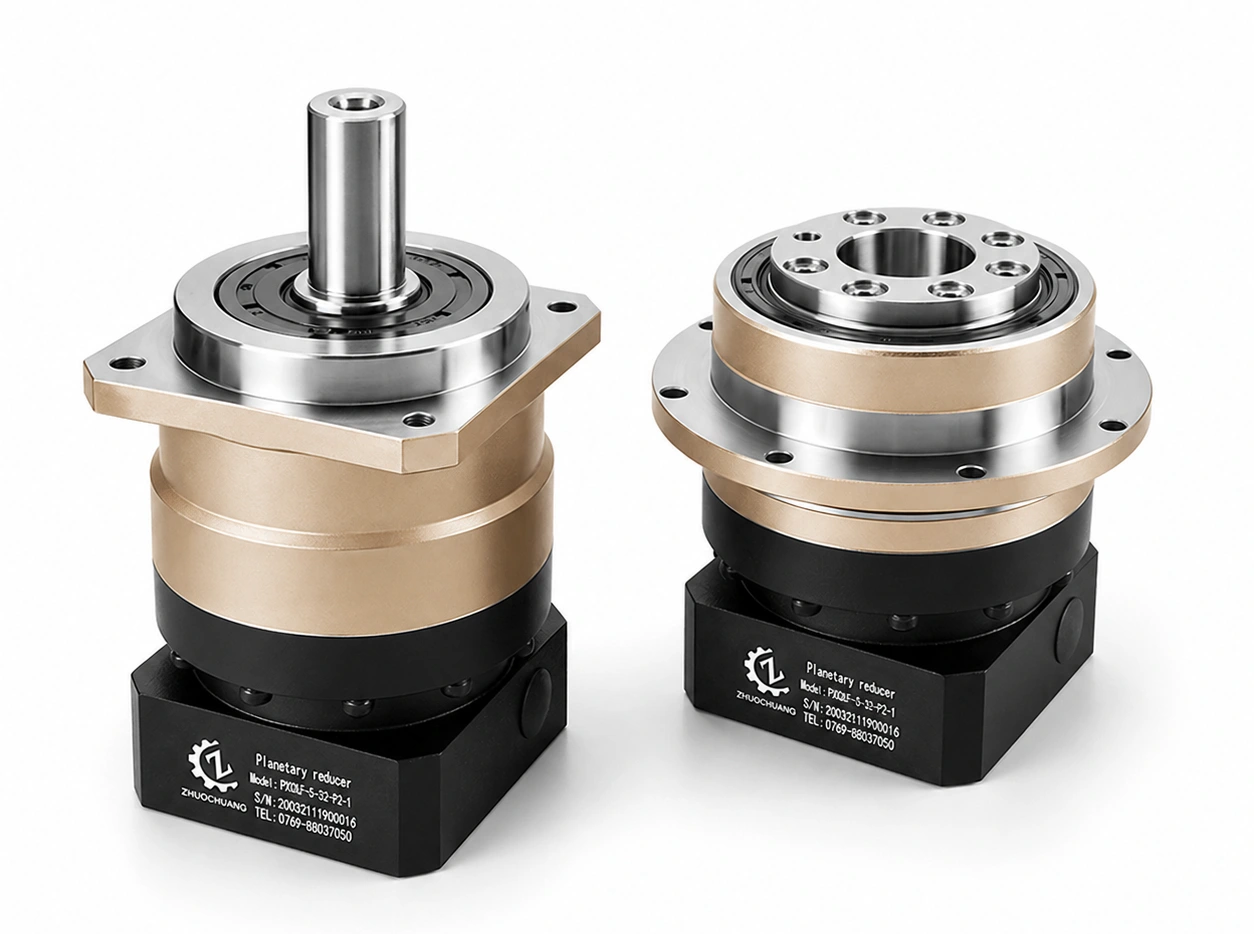
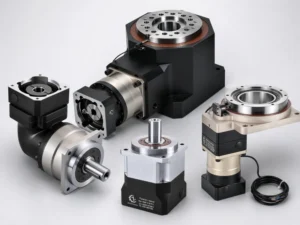
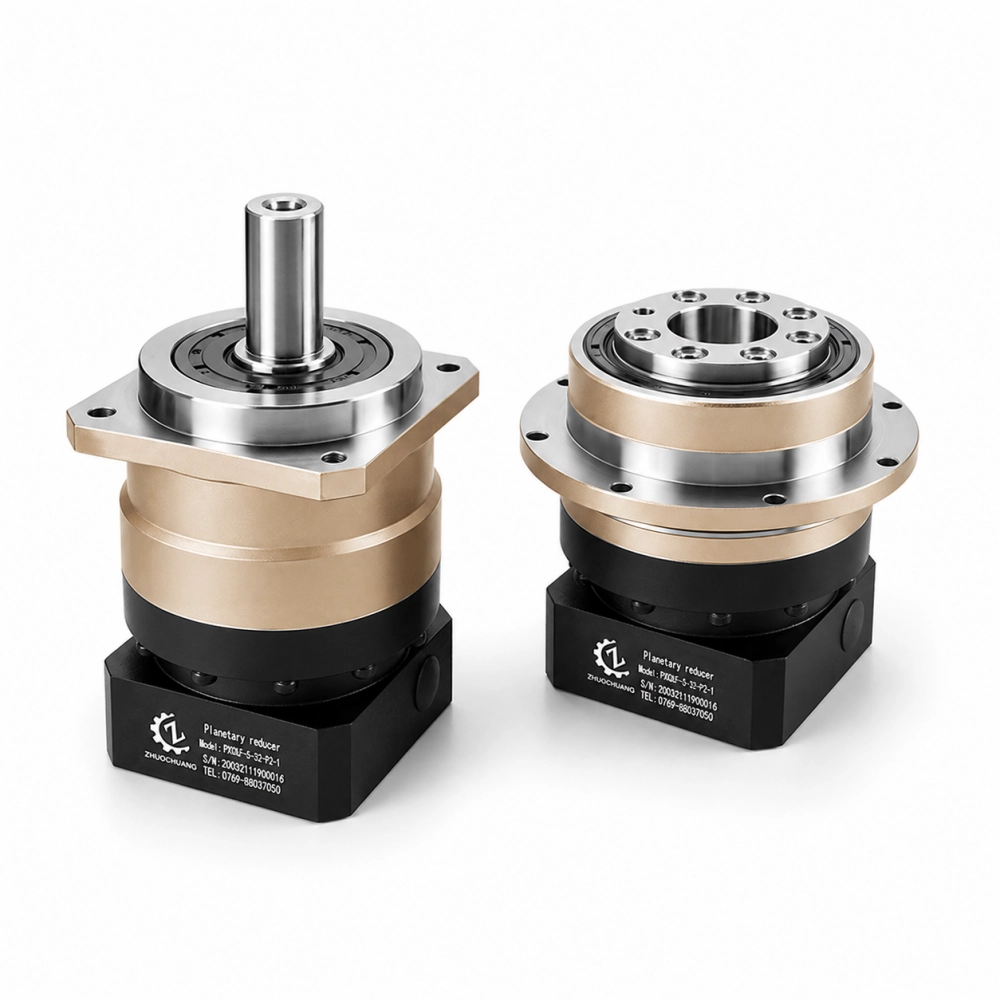
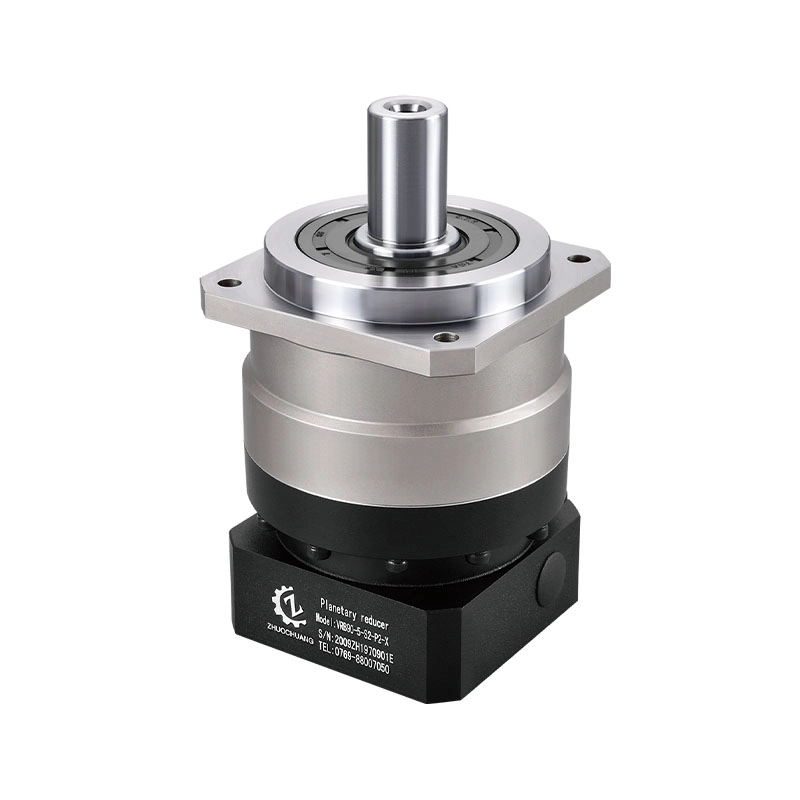
An inline planetary gearbox places the motor input and output shaft on the same rotational axis, making it suitable for clean coaxial servo drive layouts.
What Makes a Gearbox Inline?
The defining characteristic of an inline planetary gearbox is simple: the input shaft and output shaft share the same rotational axis. The motor mounts on one side, the load connects on the opposite side, and the centerline runs straight through the reducer without a 90-degree turn or offset shaft layout.
Inside the housing, a sun gear receives motor input. Planet gears orbit around the sun and share the load through multiple simultaneous gear contacts. The planet carrier delivers the reduced-speed, multiplied-torque output. What the inline configuration adds is geometric symmetry: forces are balanced around the central axis, and the input adapter and output connection align concentrically.
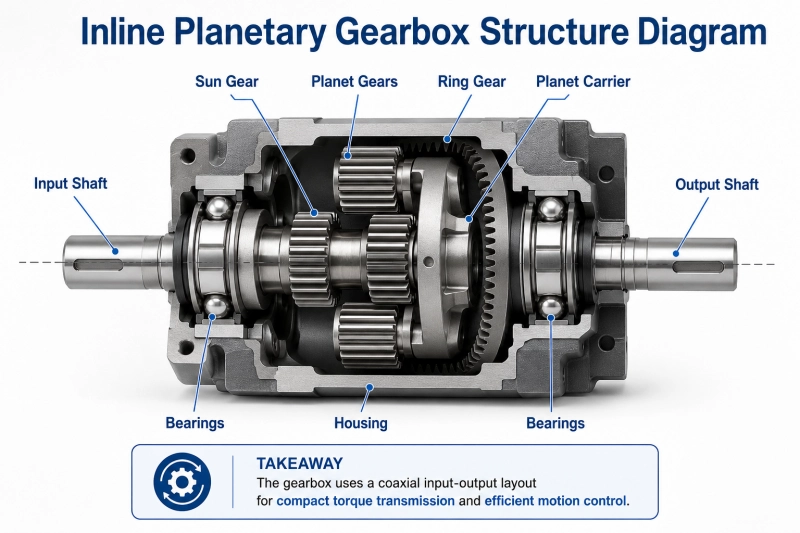
The coaxial structure of an inline planetary gear reducer keeps the motor input, planetary stage, and output load aligned on one centerline.
Structural Advantages That Show Up in Service
The advantages of an inline planetary gearbox are not only geometric. They also affect efficiency, stiffness, mounting accuracy, and long-term reliability in servo-driven machines.
No Bevel or Hypoid Stage
Unlike a right-angle gearbox, an inline unit does not need a direction-changing bevel or hypoid stage. This keeps the mechanical chain short and reduces layout-related complexity.
Balanced Planetary Load Sharing
Multiple planet gears share torque around the central axis, helping distribute load and support compact torque transmission.
Compact Torque Density
The multi-mesh planetary arrangement allows high output torque in a compact housing diameter and manageable axial length.
Good Servo Integration
Inline geometry matches common servo motor flange layouts, making motor adapter alignment and installation more straightforward.
In reversing servo applications, torsional stiffness is especially important. The gearbox should transmit motion quickly when the motor changes direction. A rigid inline planetary gear reducer helps reduce wind-up, improve response, and support stable closed-loop control.
Inline Planetary Gearbox Product Series: How to Read the Differences
Inline planetary gearboxes are not all the same. They range from standard industrial reducers to precision servo-grade units and stainless steel variants. The right series depends on the application’s backlash, environment, torque, speed, and mounting requirements.
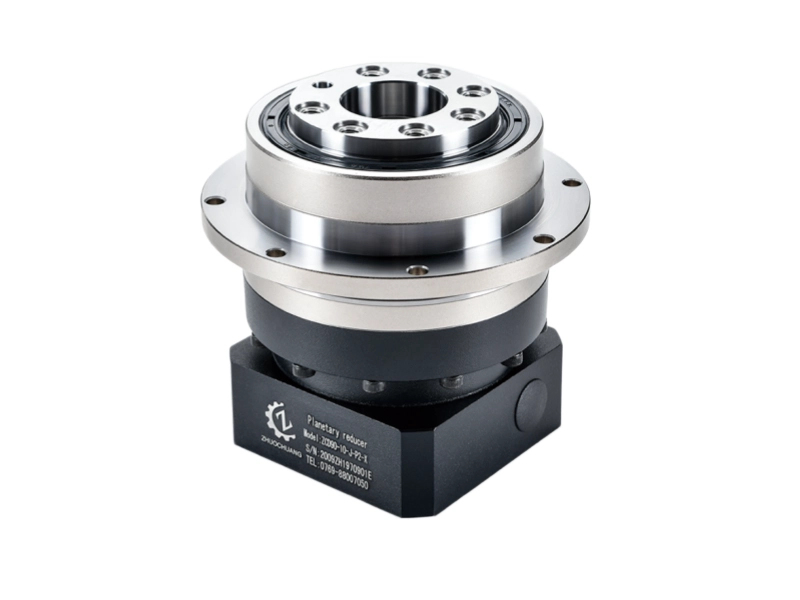
ZCD Series
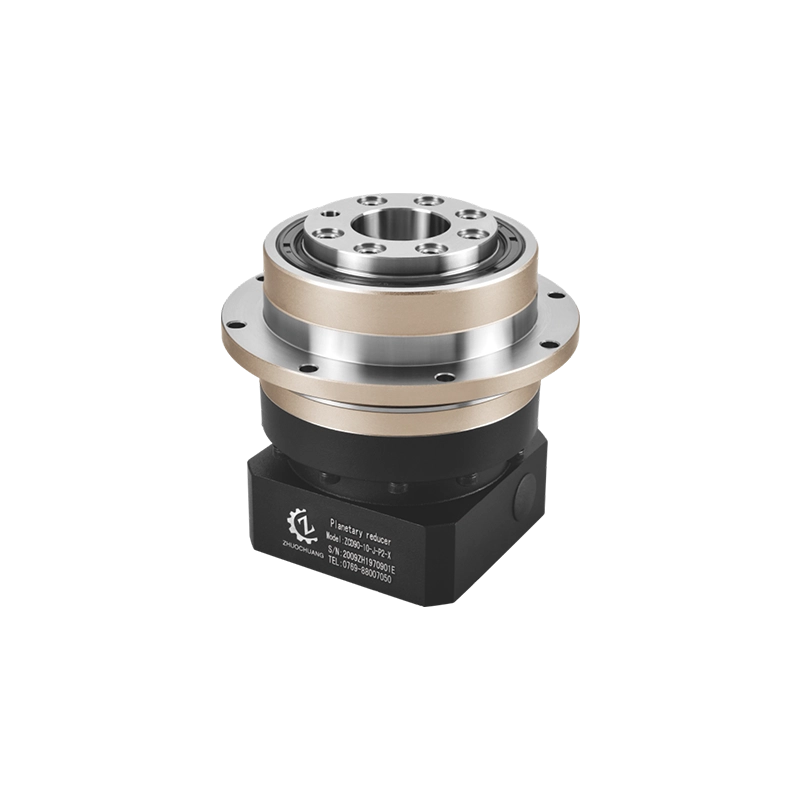
Compact inline gearbox option for servo-driven systems where mounting size and consistent transmission performance matter.
View ZCD Series →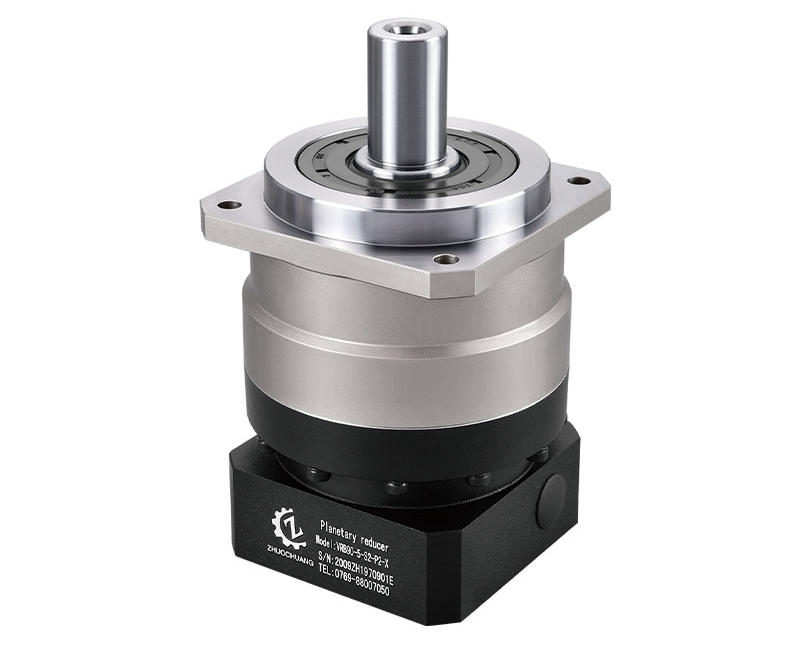
VRB Series
Precision servo gearbox series for automation applications requiring low backlash, stable output, and flexible motor matching.
View VRB Series →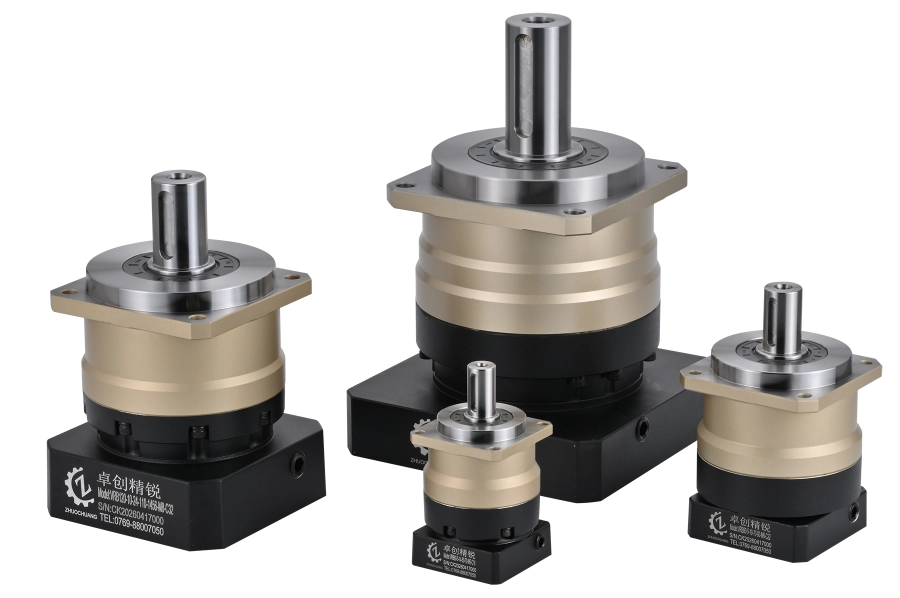
Inline Range
Compare inline planetary gearbox models by ratio, frame size, output interface, motor adapter, and backlash grade.
Browse Inline Range →Standard Industrial Grade
Standard-grade inline units are used for conveyors, transfer systems, material handling equipment, and non-critical rotary drives. They are cost-effective and available across common ratios, but they may not be the best choice for closed-loop servo positioning where backlash and stiffness are important.
Precision Servo Grade
Precision-grade inline planetary gearboxes are designed for servo motor integration. They typically use tighter machining control, controlled assembly, suitable bearing support, and lower backlash than general-purpose reducers. These units are used in CNC axes, robotic joints, automated assembly stations, and indexing systems.
SSP Stainless Steel Inline Planetary Gearboxes
SSP stainless steel inline planetary gearboxes or similar corrosion-resistant inline variants are used where wash-down, humidity, chemical exposure, or food processing environments require better surface protection. For these applications, housing material, seals, lubrication, and cleaning conditions should be confirmed before selection.
Ratio and Stage Count Selection for an Inline Planetary Gear Reducer
Ratio selection for an inline planetary gear reducer starts with required output speed and available motor speed. However, stage count also affects length, efficiency, backlash, inertia, and cost.
| Stage Count | Typical Ratio Range | Selection Notes |
|---|---|---|
| Single-stage | About 3:1 to 10:1 | Shortest structure, lowest complexity, good choice when the required ratio is moderate. |
| Two-stage | About 10:1 to 100:1 | Common in servo automation where higher reduction ratio is needed in a compact inline package. |
| Three-stage | Above 100:1 | Used for very low output speed or high reduction needs; efficiency and backlash should be checked carefully. |
The exact ratio range depends on model series, frame size, stage design, and manufacturer specifications. Buyers should confirm ratio availability, torque rating, backlash grade, and allowable input speed before ordering.
For most servo-driven industrial automation, the required ratio often falls between 5:1 and 50:1. This is usually covered by single-stage or two-stage inline planetary gearboxes.
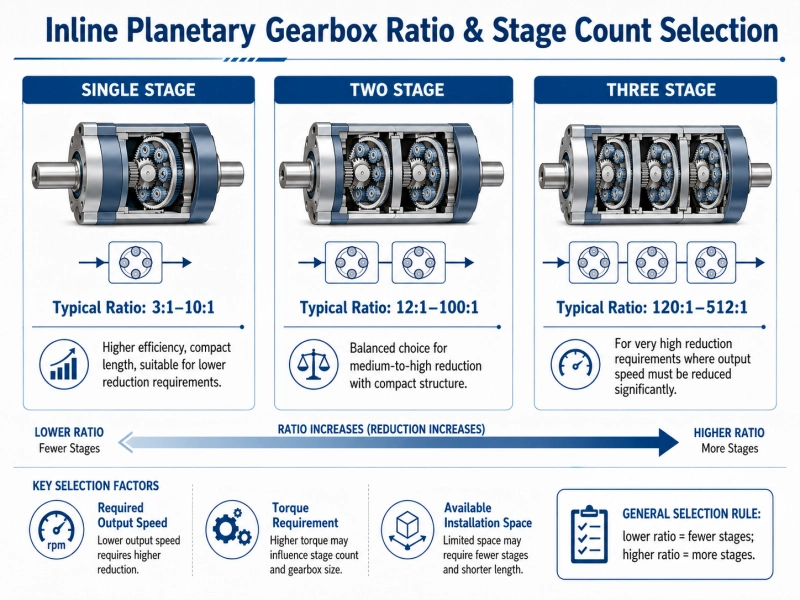
Stage count affects the ratio range, axial length, efficiency, backlash accumulation, and overall gearbox selection.
Selecting an Inline Planetary Gearbox by Application
Ratio and torque are only the starting points. Application context determines whether the gearbox needs precision backlash, stainless housing, high torsional stiffness, sealed construction, or special output interfaces.
CNC Machine Tools and Auxiliary Axes
CNC machine tools usually require controlled backlash, stable output, and reliable repeatability. Rotary tables, auxiliary axes, and positioning systems often need precision-grade inline planetary gearboxes.
Industrial Robotics and Cobots
Robot joints require compact size, stiffness, low backlash, and suitable inertia matching. The gearbox housing size and output interface must fit within the robot link design.
Automated Guided Vehicles
AGV wheel drives and steering units often need sealed housings, strong service life, and impact resistance. Precision backlash may not be as critical as durability and load capacity.
Packaging and Food Processing Machinery
Packaging machines may require high-cycle performance, fast reversing, and precise indexing. Food processing environments may require stainless or corrosion-resistant inline gearbox options.
Conveying and Material Handling
Conveying systems usually focus on continuous torque capacity, thermal rating, sealing, and stable operation. Low backlash is not always necessary unless positioning is involved.
Inline Planetary Gearbox Supplier: What to Confirm Before Ordering
A reliable inline planetary gearbox supplier should help confirm the practical details before production or purchase. The right supplier does more than quote a ratio and price; they help reduce installation and commissioning risk.
Ratio Availability
Inline series usually offer standard ratios, not arbitrary values. Confirm whether your required ratio is available in the selected frame size and stage count.
Motor Adapter Availability
The input adapter must match the servo motor flange, shaft diameter, shaft length, and pilot diameter. Adapter availability can affect delivery time and installation quality.
Backlash and Test Data
For precision servo grades, ask whether backlash is measured by unit, by batch, or only specified as a design value. This matters for CNC, robotics, and high-repeatability equipment.
Output Interface Options
Smooth shaft, keyed shaft, flanged output, and hollow bore may be available depending on series and frame size. Confirm the output interface before finalizing the mechanical design.
Inline Planetary Gearbox Wholesale and Volume Supply
For equipment manufacturers using multiple identical axes, inline planetary gearbox wholesale pricing and volume lead time should be discussed early. Confirm break quantities, production capacity, and spare-unit support.
Documentation and After-Sales Support
Mounting instructions, tightening torque, lubrication guidance, dimensional drawings, and troubleshooting support should be available. These details can prevent installation errors and reduce downtime.
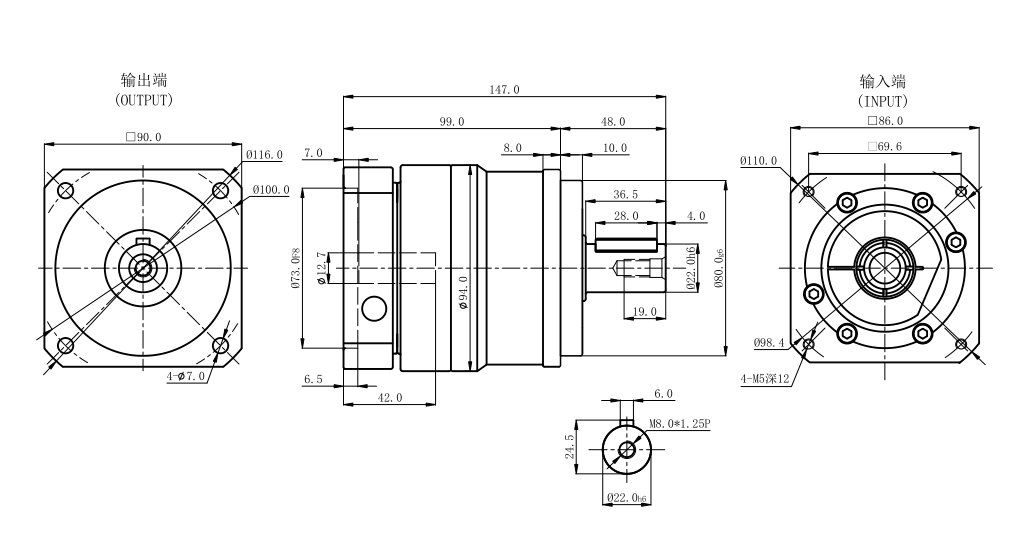
Motor adapter compatibility, output shaft configuration, mounting dimensions, and backlash requirements should be confirmed before ordering an inline planetary gearbox.
Work With a Manufacturer for Inline Gearbox Selection
An inline planetary gearbox is often the most practical choice when the motor and load share a straight axis. The correct model should be selected according to ratio, torque, backlash, output interface, motor adapter, duty cycle, and working environment.
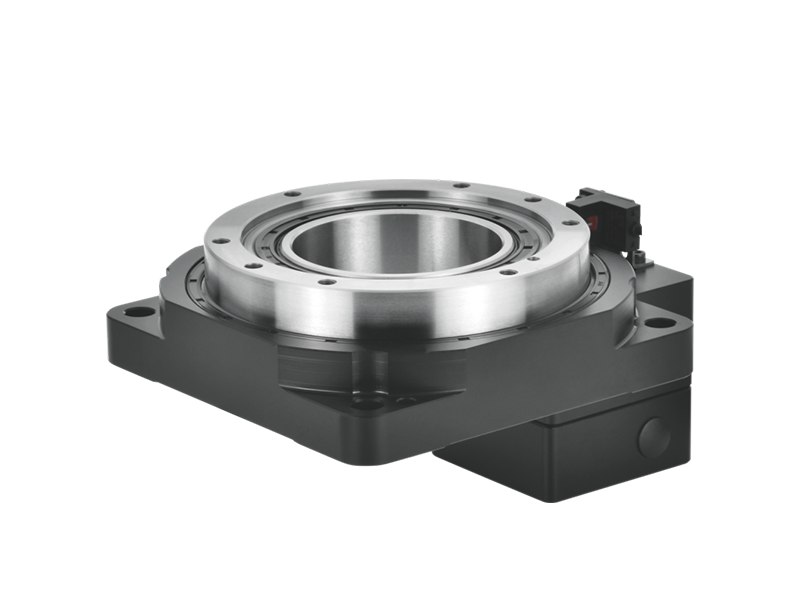
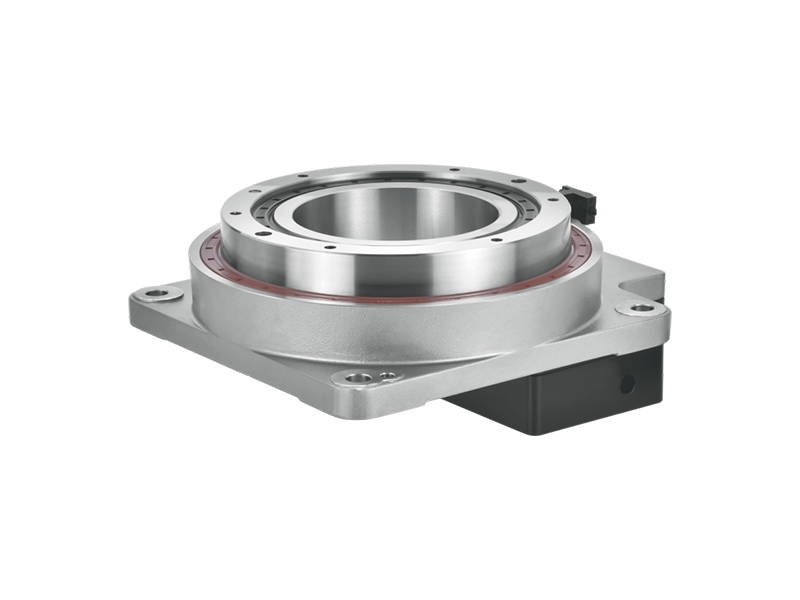
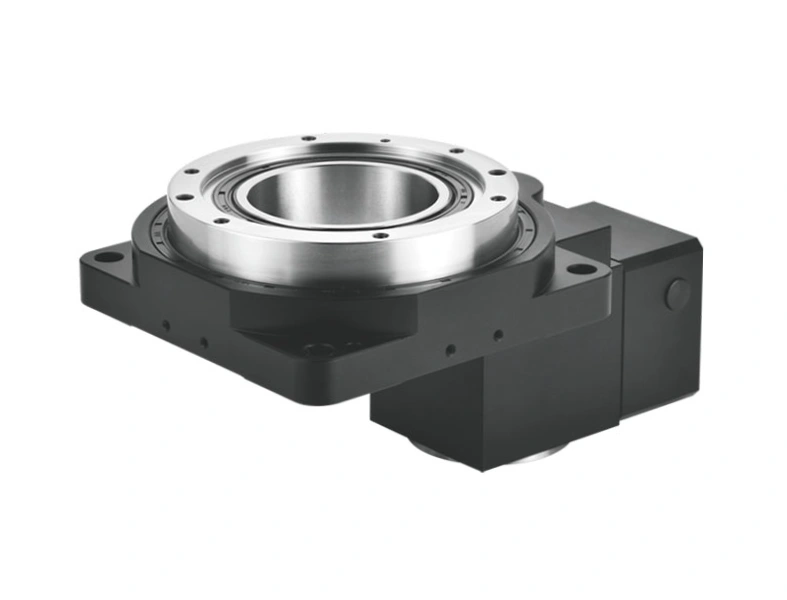
Dongguan Zhuochuang Precision Machinery Co., Ltd manufactures precision planetary gearboxes and hollow rotary tables for automation systems, robotics, CNC machinery, packaging machinery, and precision positioning applications. Our inline planetary gearbox range includes ZCD Series and VRB Series options for servo-driven systems.
FAQ About Inline Planetary Gearboxes
What is an inline planetary gearbox?
An inline planetary gearbox is a reducer where the input shaft and output shaft share the same rotational axis. It is commonly used with servo motors in coaxial drive systems.
What is the difference between inline and right angle planetary gearboxes?
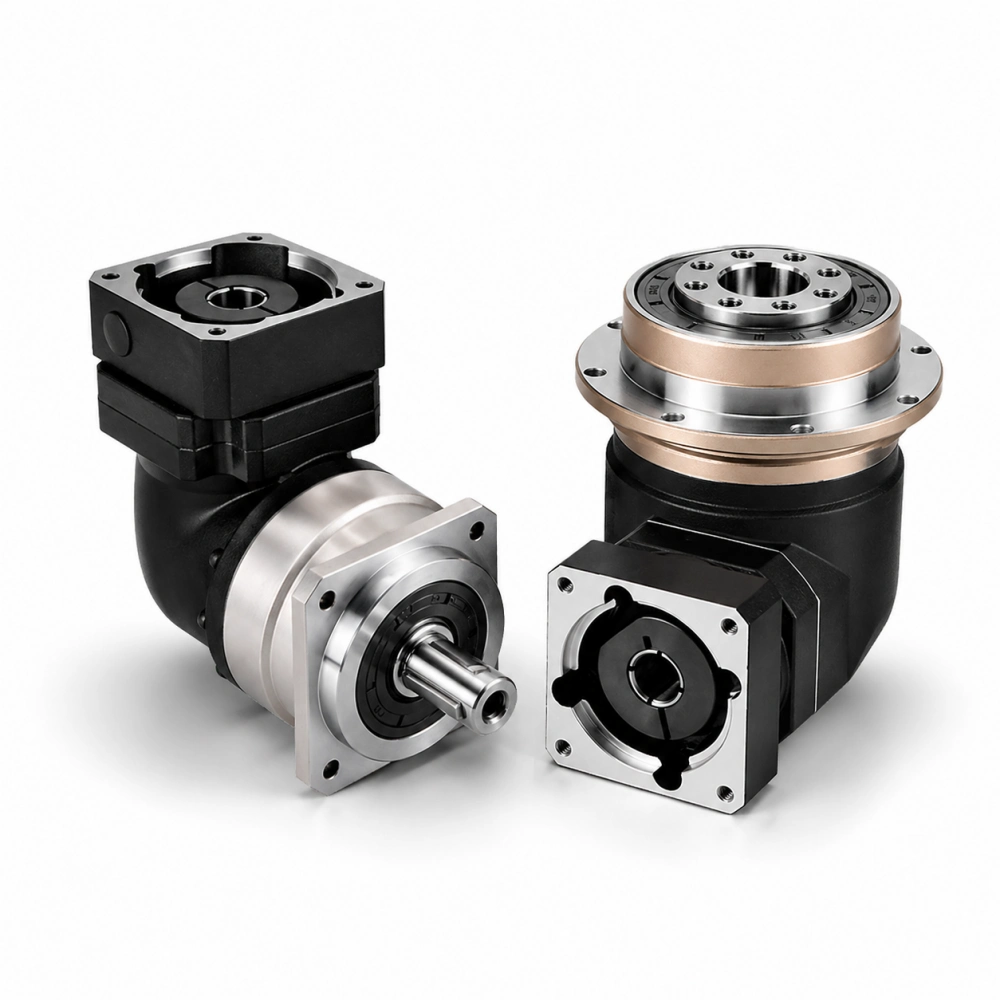
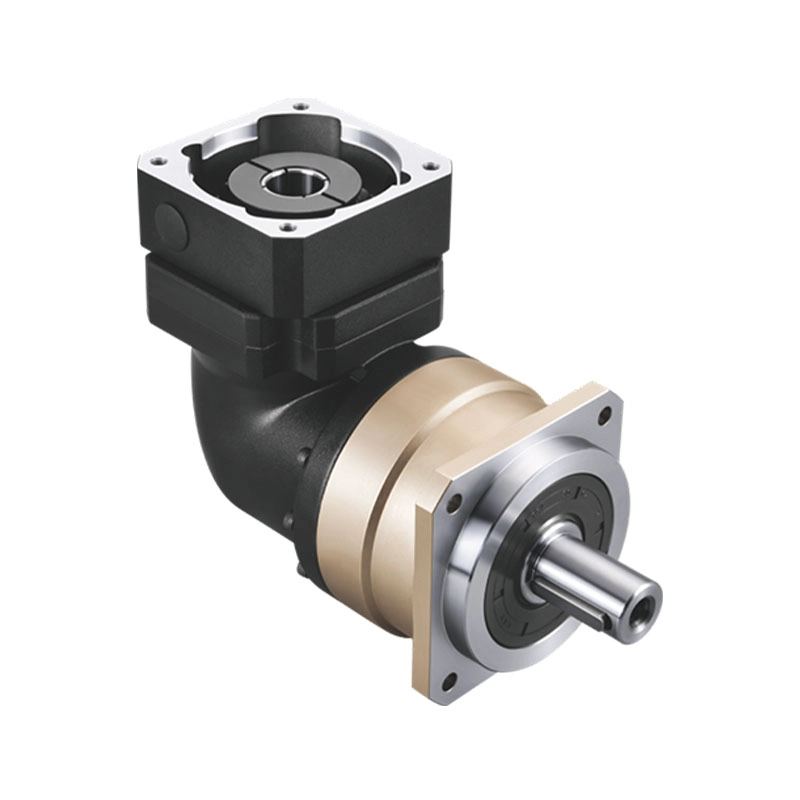
Inline gearboxes keep input and output on the same axis. Right angle gearboxes redirect the drive by 90 degrees. Inline is usually preferred when the machine layout allows straight motor-to-load alignment.
When should I use an inline planetary gear reducer?
Use an inline planetary gear reducer when you need compact torque multiplication, speed reduction, servo motor compatibility, and a coaxial mechanical layout.
Can inline planetary gearboxes be used in food processing?
Yes, but the housing material, sealing, lubrication, and wash-down conditions must be confirmed. SSP stainless steel inline planetary gearboxes or corrosion-resistant options may be suitable for such environments.
This is a well-structured guide to the inline planetary gearbox. The comparison of gearbox grades, ratios, backlash, and application requirements makes the selection process much clearer.
The explanations of coaxial installation and servo motor matching are particularly useful for automation engineers. A practical reference for evaluating an inline gearbox for a new machine design.