
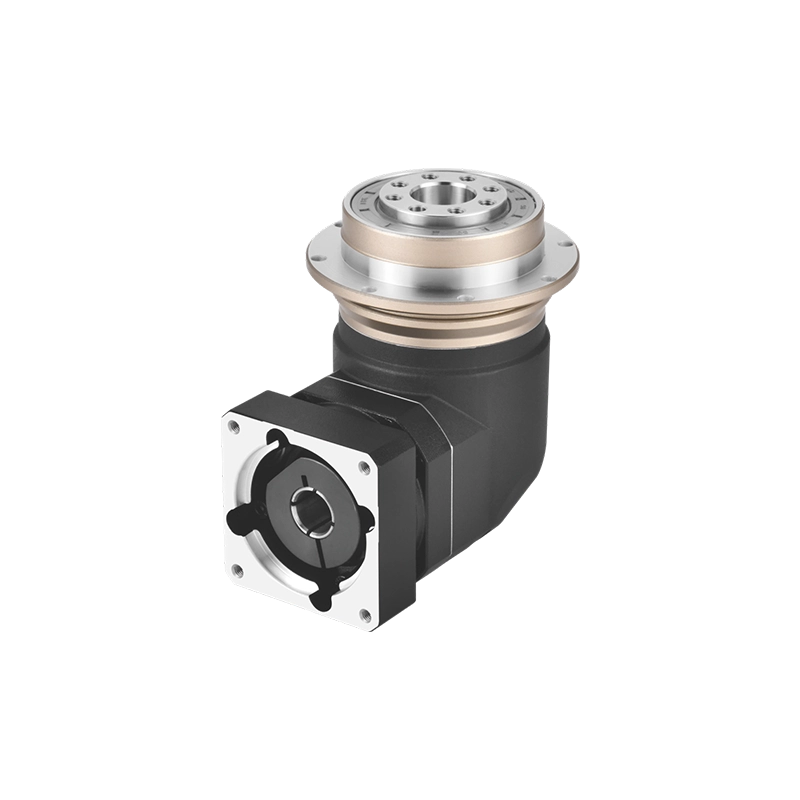
Planetary Gearbox Types: Inline and Right-Angle Designs
Planetary gearbox types are often described in several different ways: by gear layout, output structure, stage count, backlash grade, torque capacity, or mounting style.
This can confuse buyers because one gearbox may belong to several categories at the same time. For example, a precision servo planetary gearbox can be inline, two-stage, low-backlash, flange-output, and compact at the same time.
So the better question is not only:
What types of planetary gearboxes exist?
The better question is:
Which planetary gearbox type fits the machine layout, motor connection, load direction, accuracy target and working duty?
This article gives a practical overview of common planetary gearbox types and explains how engineers can choose the right design without repeating the same selection mistakes.
1. Start with Layout: Inline or Right-Angle
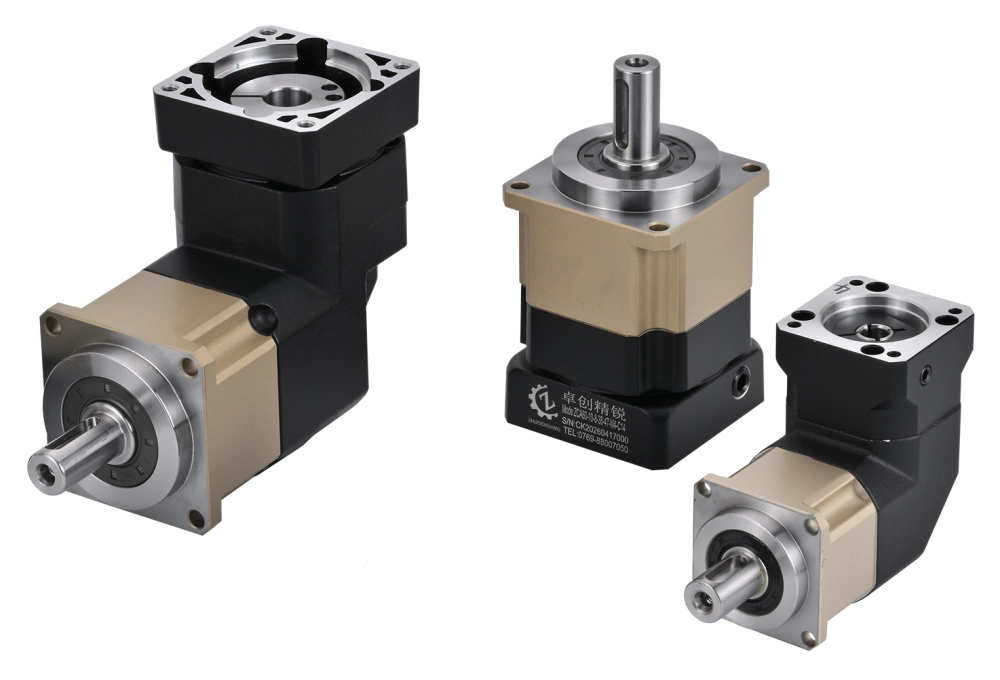
The first practical classification is gearbox layout.
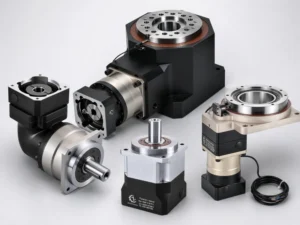
Most industrial planetary gearboxes are selected as either inline or right-angle designs. This choice is usually determined by machine space, motor direction and output shaft direction.
Inline Planetary Gearbox
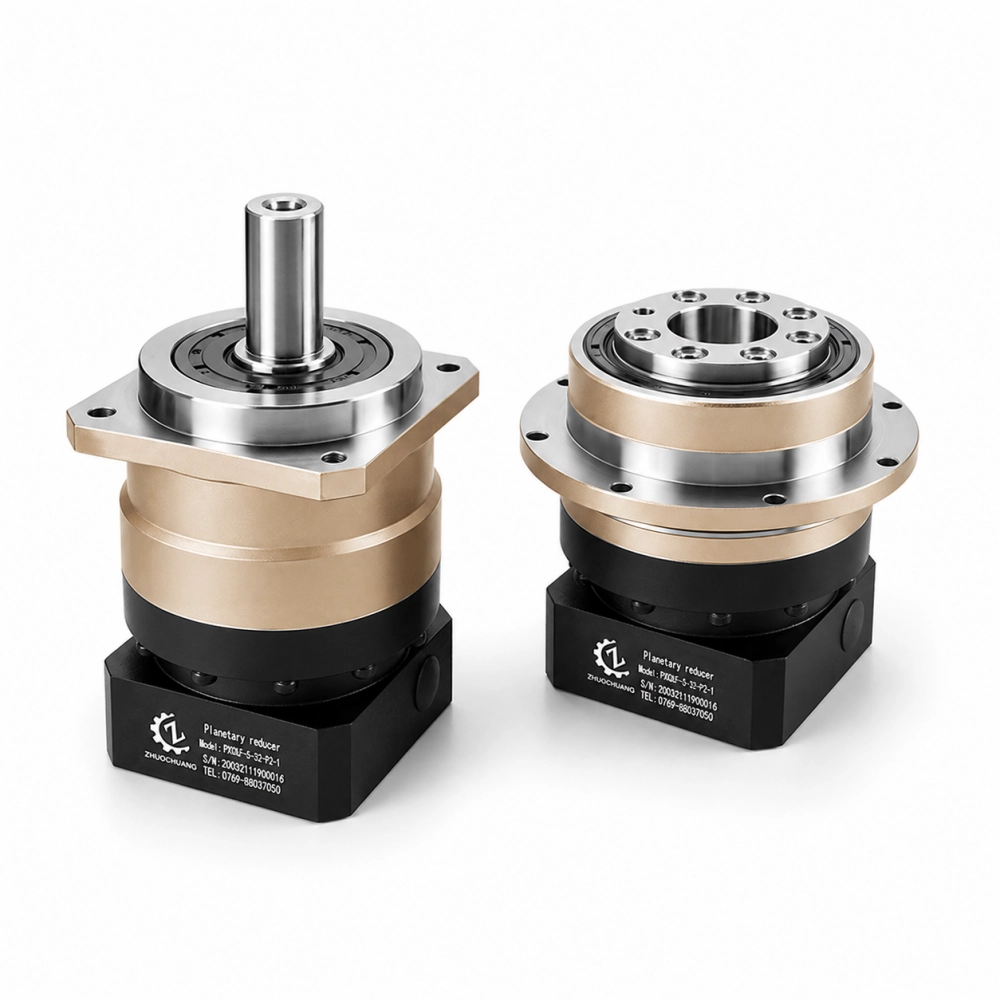
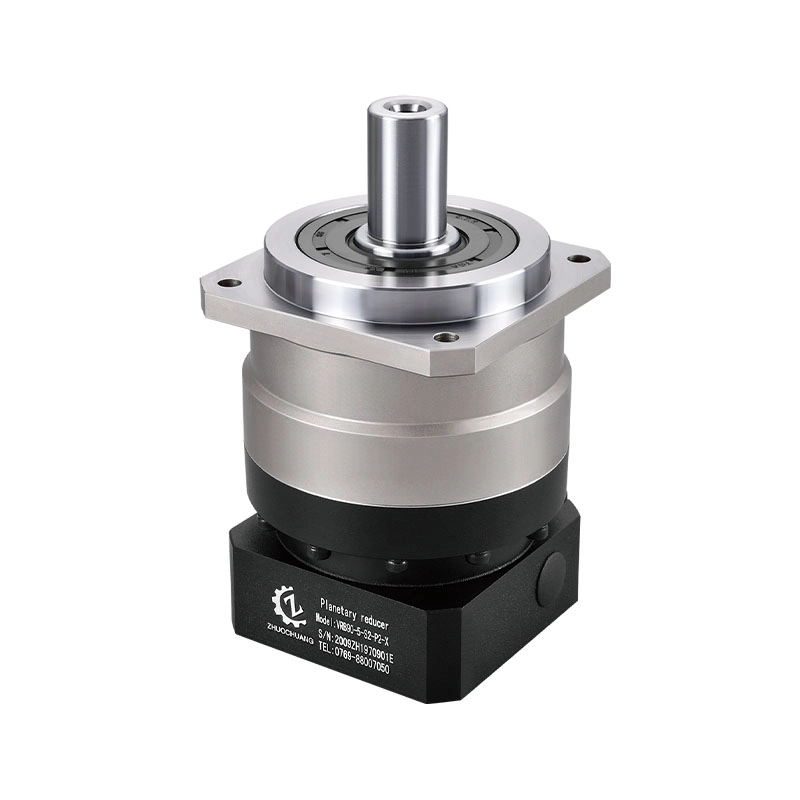
An inline planetary gearbox keeps the motor shaft and output shaft on the same axis. The motor, gearbox and load are arranged in a straight line.
This layout is common in servo automation because it is compact, efficient and easy to mount. It is often used when the machine has enough axial space and the designer wants a direct motor-to-load arrangement.
Inline designs are commonly used in:
- CNC feed axes
- Linear modules
- Conveyor drives
- Packaging equipment
- Automated assembly systems
- Servo-driven positioning units
For Zhuochuang products, this direction connects naturally to the inline planetary gearbox range:
Right-Angle Planetary Gearbox
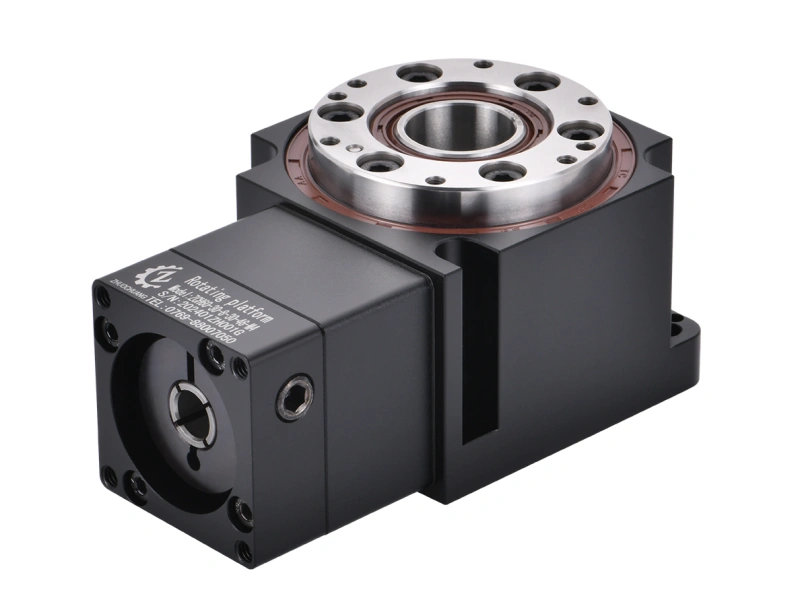
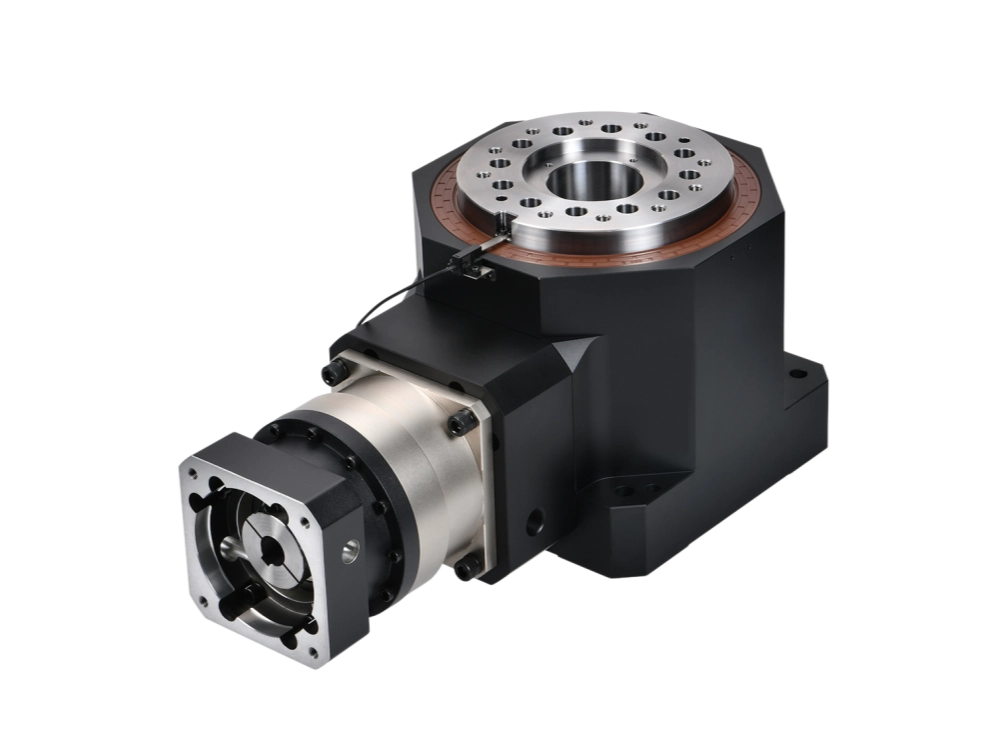
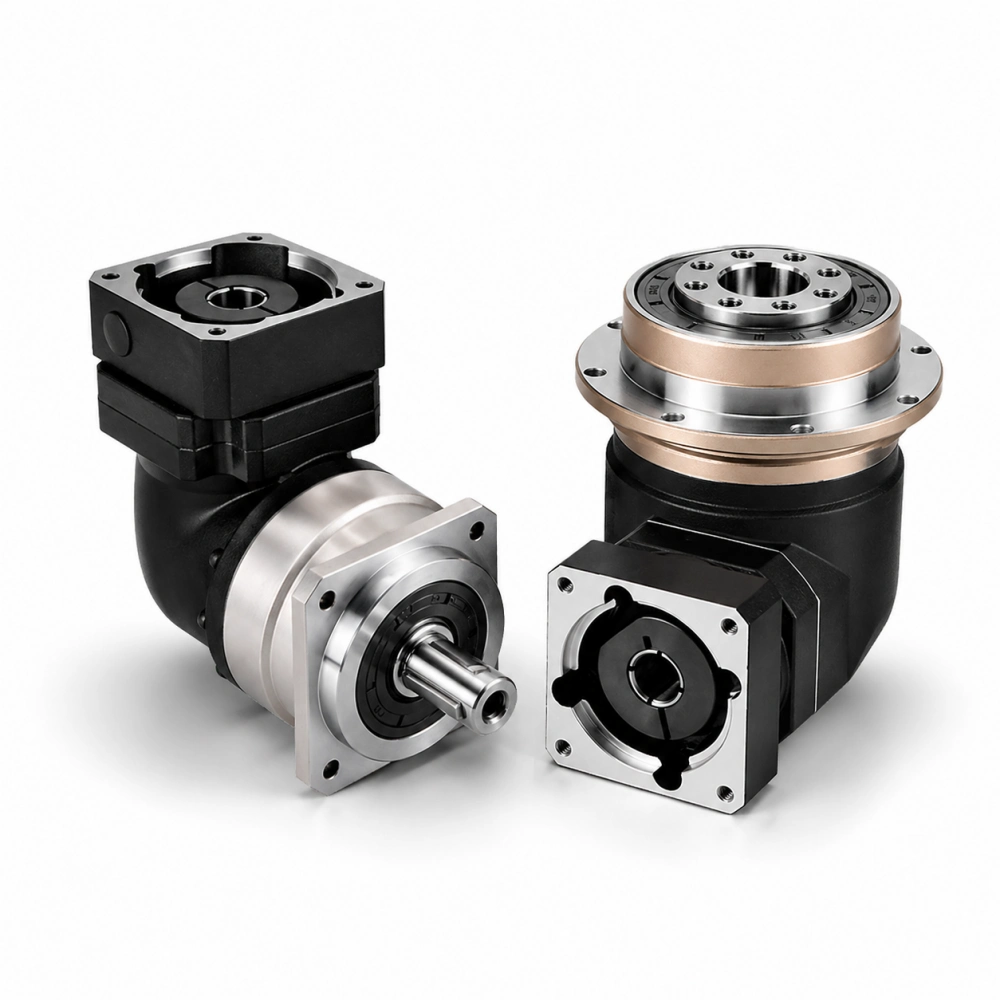
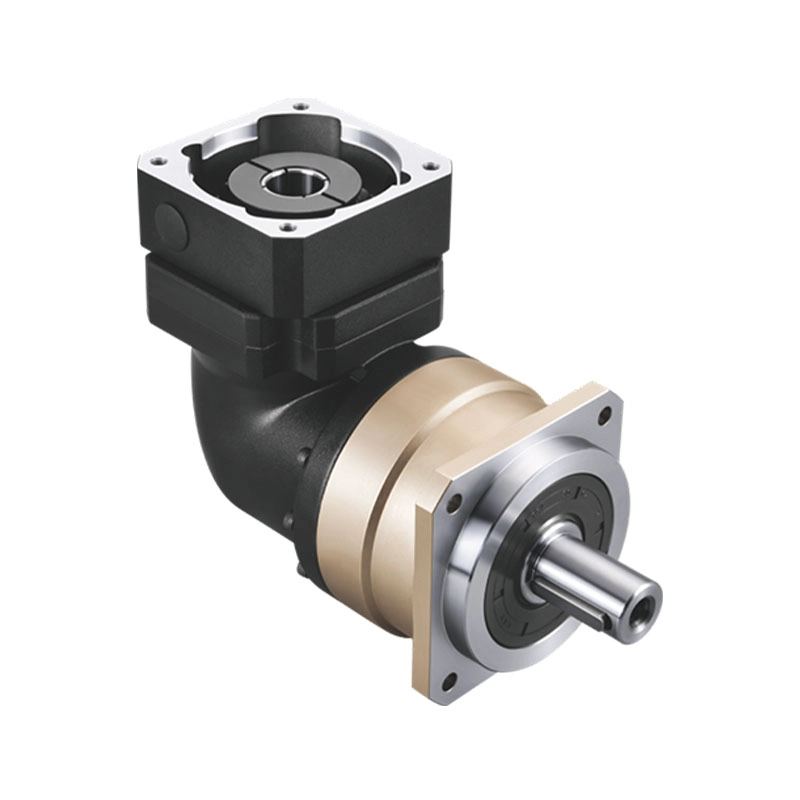
A right-angle planetary gearbox changes the transmission direction by 90 degrees. The motor is mounted perpendicular to the output shaft.
This type is useful when the machine does not have enough axial space, or when the motor needs to be placed beside the driven mechanism instead of behind it.
Right-angle planetary gearboxes are often selected for:
- Compact automation equipment
- Packaging machinery
- Rotary indexing systems
- Servo axes with limited installation length
- Conveyors and transfer systems
- Machine layouts requiring 90-degree power transmission
This category should not be confused with general 90-degree reducers such as worm or bevel reducers. A precision right-angle planetary gearbox is used when the machine still needs servo compatibility, low backlash and controlled motion performance.
For Zhuochuang products, this direction connects to the right-angle planetary gearbox range:
2. Output Type: Shaft, Flange or Hollow Output
The second useful way to classify planetary gearbox types is by output structure.
The output design affects how the gearbox connects to the load, how much radial load it can support, and how compact the final assembly becomes.
Shaft Output Planetary Gearbox
A shaft output gearbox uses a solid output shaft. It is simple, common and easy to connect with couplings, pulleys, sprockets or timing wheels.
This type is useful when the driven component already has its own support structure and the gearbox mainly transmits torque.
However, buyers must check radial and axial load. If a belt or pulley applies side load directly to the gearbox shaft, output bearing capacity becomes important.
Flange Output Planetary Gearbox
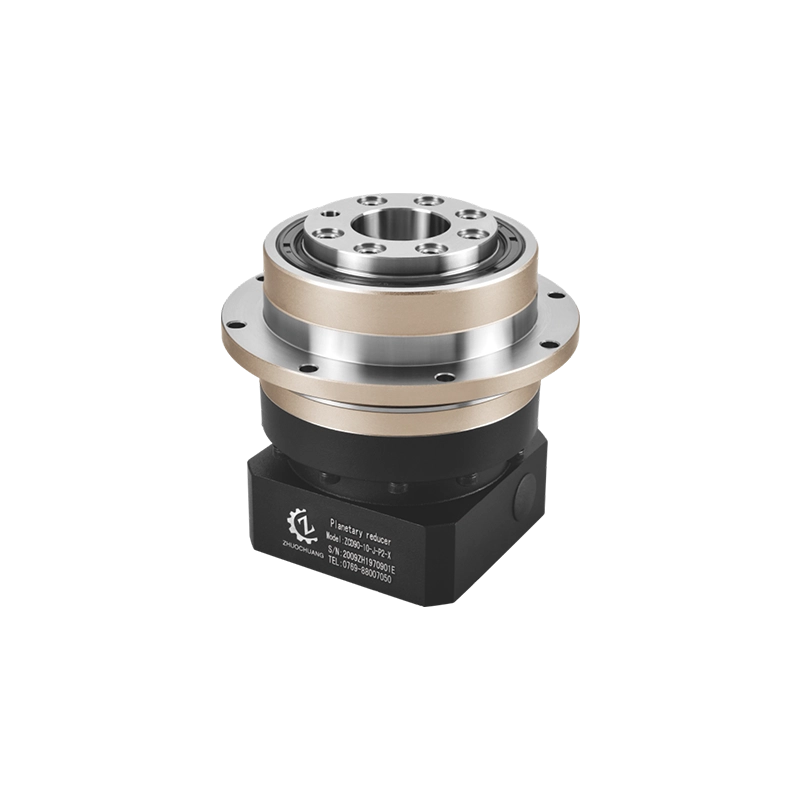
A flange output gearbox provides a wider output mounting face. This can improve connection rigidity and make the reducer easier to mount directly to a rotary mechanism, indexing component or machine fixture.
Flange output designs are often preferred when the application needs stronger support, better alignment or a more compact connection to the load.
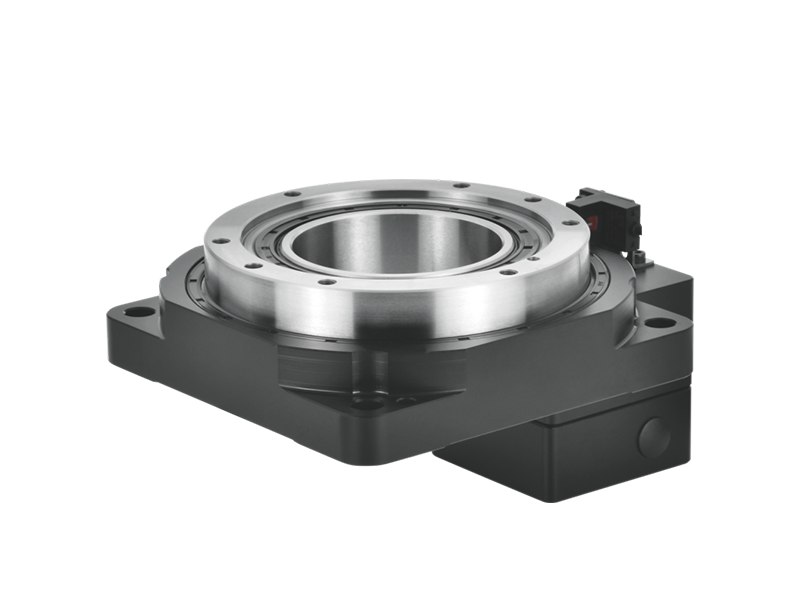
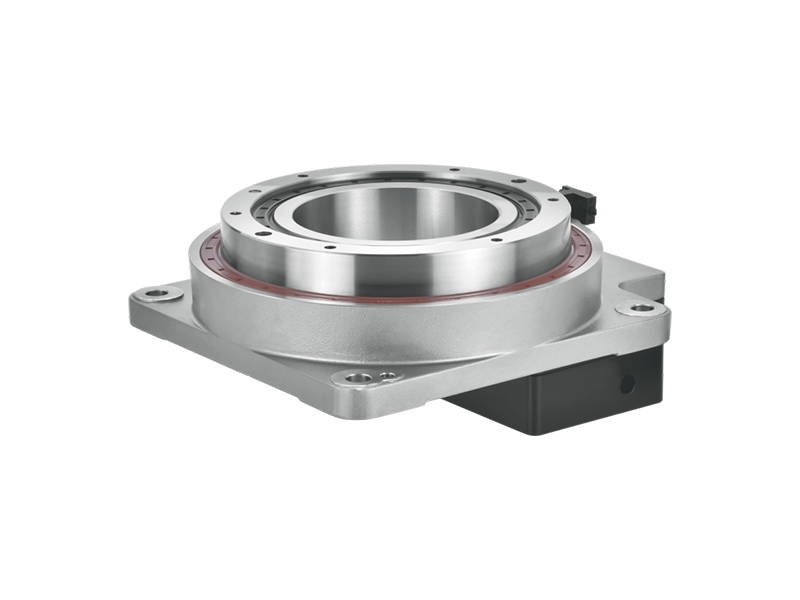
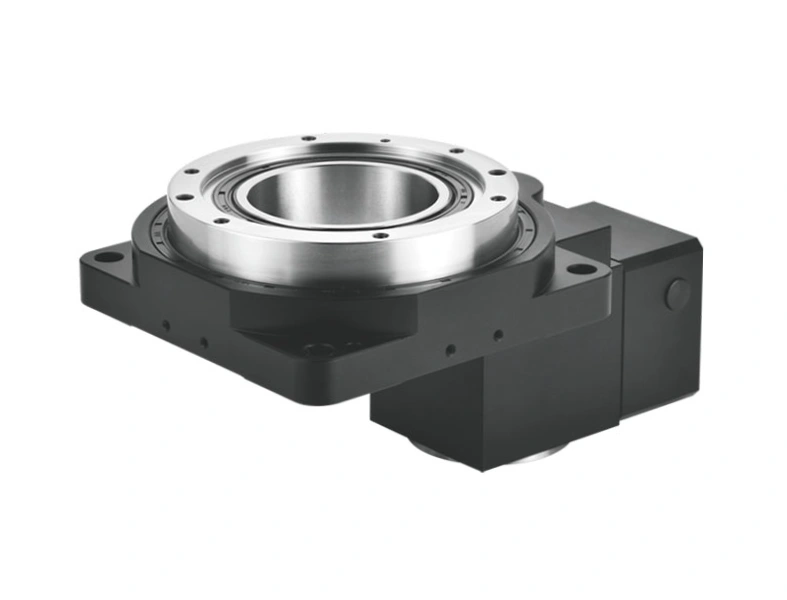
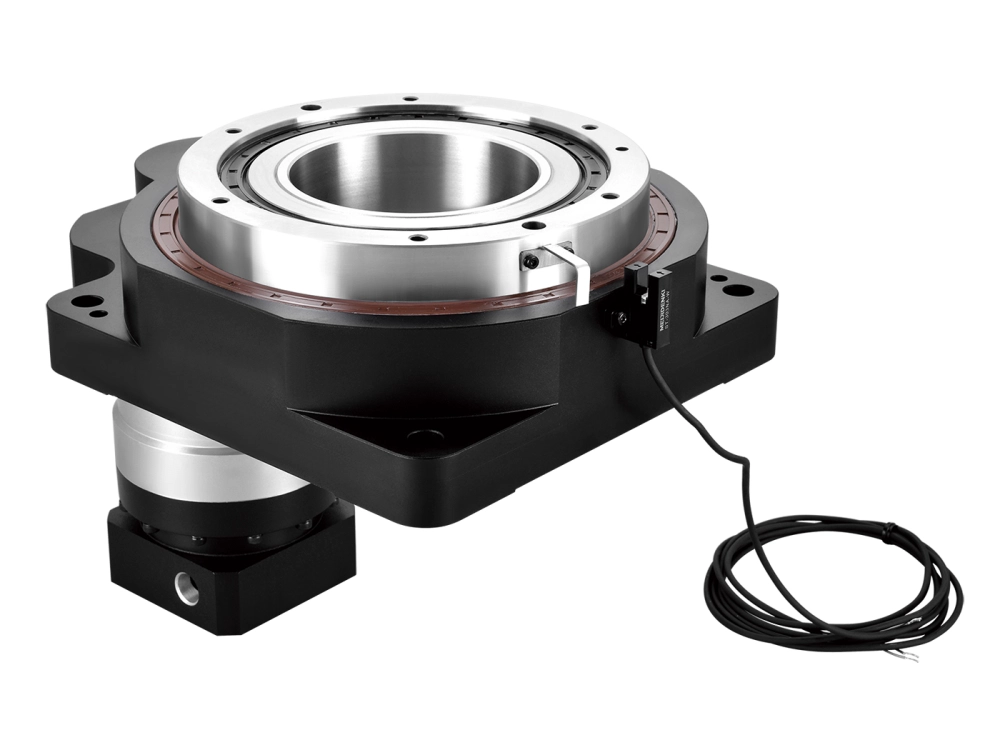
Hollow Output or Rotary Table Style
Some precision motion systems require a hollow output structure for cable routing, air tubes, sensor wiring or fixture integration.
In these cases, the solution may move beyond a standard planetary gearbox and toward a hollow rotary table or rotary positioning platform.
Zhuochuang manufactures both precision planetary gearboxes and hollow rotary tables, so this distinction is important. If the machine only needs speed reduction and torque transmission, a planetary gearbox may be enough. If it needs a large hollow bore and direct load support, a hollow rotary table may be the better structure.
3. Stage Count: Single-Stage, Two-Stage and Multistage
Planetary gearboxes can also be classified by the number of stages.
A single-stage planetary gearbox is usually selected when the required ratio is within the practical single-stage range. It is shorter, simpler and more efficient.
A two-stage planetary gearbox is used when the required ratio is higher than one stage can provide. It gives more reduction and higher torque multiplication, but it also adds length and efficiency loss.
A multistage planetary gearbox is used for even higher ratios. It can solve ratio problems, but the designer must check heat, backlash, axial length and total efficiency carefully.
Because this topic has already been covered separately, this article does not repeat the full calculation. For stage-count details, see:
Multistage Planetary Gearbox Selection Guide
4. Backlash Grade: Standard or Precision Type
Another important classification is backlash grade.
For basic power transmission, a standard planetary gearbox may be enough. But for servo positioning, robotics, CNC machinery and packaging registration, backlash becomes a key performance factor.
A precision planetary gearbox uses tighter gear machining, controlled assembly and stronger internal support to reduce output play.
Low backlash is especially important in:
- Servo indexing
- Robot axes
- CNC positioning
- Vision inspection fixtures
- Packaging registration
- Automated assembly positioning
Backlash should always be checked at the gearbox output. Do not rely only on general words such as precision, high accuracy or low clearance.
For detailed backlash explanation, see:
Low Backlash Planetary Gearbox
5. Torque Type: Compact, Standard or High-Torque Design
Planetary gearboxes are often chosen because they offer high torque density in a compact structure.
But not every planetary gearbox is a high-torque gearbox.
A compact gearbox may save space, but it must still meet torque, peak load, bearing support and duty cycle requirements. A high-torque planetary gearbox may use stronger gears, larger bearings, improved carrier structure and a more rigid housing.
For heavy automation, large indexing systems, high-inertia loads or frequent acceleration, torque selection should include both continuous torque and peak torque.
Useful checks include:
- Continuous output torque
- Peak torque during acceleration
- Emergency stop torque
- Duty cycle
- Service factor
- Output bearing load
If the gearbox is too small, it may fit the space but fail in service. This is why torque capacity must be checked before selecting the smallest frame size.
6. Application Type: Servo, General Transmission or Precision Positioning
Planetary gearbox types can also be separated by application purpose.
A general transmission gearbox may only need to reduce speed and increase torque.
A servo planetary gearbox must do more. It must connect properly with a servo motor, maintain stiffness, limit backlash, support repeated acceleration and help the control system stay stable.
A precision positioning gearbox must also maintain repeatability under working load.
This is why the same ratio does not always mean the same gearbox type. A 10:1 gearbox for a simple conveyor and a 10:1 gearbox for a servo positioning axis may have very different design requirements.
Quick Selection Table
| Machine Requirement | Recommended Gearbox Type | Main Reason |
|---|---|---|
| Motor and load are on the same axis | Inline planetary gearbox | Simple, compact, efficient layout |
| Motor must turn 90 degrees | Right-angle planetary gearbox | Saves axial space and changes direction |
| Direct mounting to rotary mechanism | Flange output type | Better connection rigidity |
| Cable or air tube must pass through center | Hollow rotary table or hollow output design | Allows central routing and direct load support |
| High ratio above single-stage range | Two-stage or multistage planetary gearbox | Achieves higher ratio through stage multiplication |
| Servo positioning and repeatability | Low-backlash precision planetary gearbox | Controls output play and improves motion stability |
| High load or frequent acceleration | High-torque planetary gearbox | Improves torque capacity and durability |
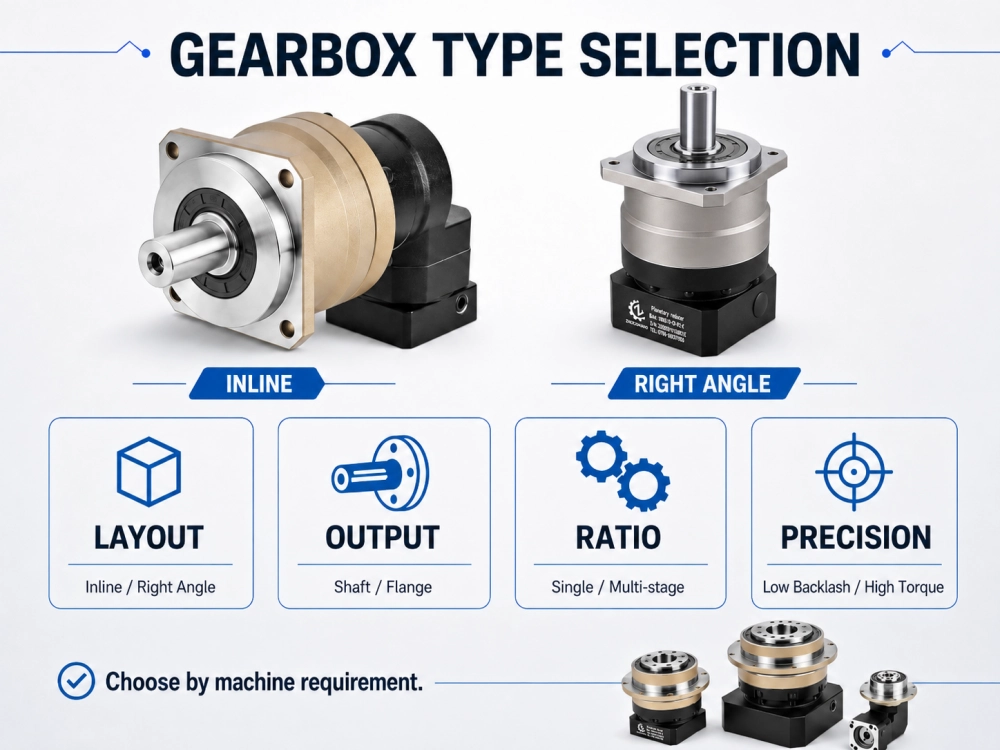
Common Selection Mistakes
Mistake 1: Choosing by Ratio Only
Ratio is important, but it is not enough. Two gearboxes with the same ratio may differ in backlash, torque capacity, bearing support, efficiency, mounting style and service life.
Mistake 2: Choosing the Smallest Frame
A smaller gearbox may look attractive, but undersizing can lead to heat, wear, backlash increase or bearing failure. Compact size should come after torque and duty cycle confirmation.
Mistake 3: Treating All Right-Angle Reducers as the Same
A right-angle planetary gearbox is not the same as a worm reducer or a simple bevel reducer. It is selected when the machine needs a 90-degree layout but still requires servo motion performance.
Mistake 4: Ignoring Output Load
The output shaft or flange must support the real load. If the application uses pulleys, belts, wheels or offset couplings, radial and axial load should be checked carefully.
Mistake 5: Assuming “Precision” Means the Same for Every Supplier
Different suppliers may use different backlash grades, test methods and quality control standards. Ask for actual output backlash, torque rating, mounting dimensions and test data for the selected model.
How Zhuochuang Classifies Planetary Gearbox Selection
At Dongguan Zhuochuang Precision Machinery Co., Ltd, planetary gearbox selection usually begins with the machine layout and motion requirement.
If the motor and load are aligned, an inline planetary gearbox is usually considered first.
If the machine needs a 90-degree power path, a right-angle planetary gearbox may be more suitable.
If the application needs compact rotary positioning with central cable routing or direct table support, a hollow rotary table may be a better direction.
If the machine uses a servo motor, we also check ratio, torque, backlash, input speed, duty cycle, mounting size and output load before recommending a gearbox type.
You can view the main product category here:
Precision Planetary Gearbox Range
For same-axis servo applications:
For 90-degree machine layouts:
For selection support:
Information to Send Before Choosing a Gearbox Type
Before asking for a planetary gearbox recommendation, prepare the following information:
- Motor brand and model
- Motor power and input speed
- Required output speed
- Required ratio
- Continuous torque
- Peak torque
- Backlash target
- Mounting direction
- Available installation space
- Output shaft or flange requirement
- Radial and axial load
- Duty cycle
- Working environment
This information helps determine whether the application needs inline, right-angle, low-backlash, multistage, compact, high-torque or hollow-output motion components.
Final Thought
Planetary gearbox types should not be selected by name alone.
Inline, right-angle, shaft output, flange output, low-backlash, high-torque and multistage designs all solve different engineering problems.
The correct type depends on the machine layout, required ratio, torque, backlash, output load, duty cycle and installation space.
For industrial automation, the best planetary gearbox type is not simply the smallest, cheapest or highest-ratio option. It is the design that fits the real mechanical and servo motion requirement of the machine.