
ZHUOCHUANG · Rotary Table Guide · Application selection
Quick answer: Choose a heavy duty rotary table by checking the complete rotating load, center of gravity, combined bearing loads, inertia, motion profile, positioning requirements, and mounting interfaces. A large fixture needs a moment-load review, not just a payload comparison. Use supplier-confirmed operating limits and a loaded acceptance test before production.
This guide is for machine builders and automation integrators selecting rotary positioning equipment for large or offset fixtures. It explains what to calculate, what to ask a supplier, and what to verify. The worked example is illustrative; it is not a published product capacity or an approval for a particular application.

1. Define the Load Before Choosing a Heavy Duty Rotary Table
A heavy duty rotary table is a rotary positioning unit selected for demanding loads, large fixtures, or substantial moments. The label alone does not specify an allowable payload. A suitable model must satisfy the actual bearing loads, output torque, inertia, duty cycle, mounting arrangement, and positioning requirement together. A kilogram rating without its test conditions is not enough to approve a machine design.
Start with the complete rotating assembly. Include the workpiece, fixture plate, clamps, adapter, fasteners, sensors, and moving services. Record the center of gravity in three dimensions relative to the output mounting surface and rotation axis. Check the empty fixture, fully loaded fixture, and partially loaded positions: the most unbalanced condition may occur during loading rather than normal indexing.
Specify the axis orientation explicitly. A horizontal table rotating about a vertical axis carries weight differently from a vertically mounted table rotating about a horizontal axis. Gravity, process forces, and inertia act in different directions in these arrangements. Do not transfer a rating from one mounting orientation to another without confirmation.
- Axial load: force along the rotation axis.
- Radial load: force perpendicular to that axis.
- Overturning moment: a load that tends to tilt the output table.
- Driving torque: torque required around the rotation axis to produce the commanded motion.
Keep these quantities separate in the selection sheet. A transmission may provide sufficient driving torque while its bearing arrangement or mounting joint remains unsuitable for the applied moment. Conversely, a bearing can support a fixture that the chosen motor cannot accelerate within the required cycle.
2. Check Heavy Duty Rotary Table Moment Loads
Large and offset fixtures make rotary table moment load especially important. For an initial static screening of a horizontal table with a vertical rotation axis, an eccentric weight creates an overturning moment approximately equal to the weight force multiplied by the horizontal offset of its center of gravity. Process forces applied above the mounting face can add further moments.
For a horizontal rotation axis, the offset mass can also create a gravity torque around that axis, changing with angular position. Provide the supplier with the installation drawing and the worst angular positions rather than using the vertical-axis example unchanged.
Ask how allowable axial force, radial force, and moment interact, and whether published figures are static limits or operating limits for the required life. Check the mounting bolts, supporting frame, and fixture plate as well as the rotary unit. A nominally strong table mounted on a flexible plate can still tilt and settle poorly.
3. Match Inertia, Acceleration, and the Working Cycle
Heavy duty rotary table selection must account for how the load moves. Two fixtures of the same mass can require very different acceleration torque when their mass is distributed at different radii. For a point-mass approximation, the inertia contribution is mass multiplied by radius squared: doubling the radius makes that contribution four times larger. Real fixtures need their actual geometry or CAD mass properties.
Prepare a motion profile with indexing angle, acceleration time, constant-speed time if any, deceleration time, dwell, and cycles per minute. Acceleration torque is related to inertia and angular acceleration. The complete drive calculation must also include friction, orientation-dependent gravity torque, process torque, transmission efficiency, and the motor and transmission inertia referred to the correct shaft.
Compare both peak and continuous requirements. A drive that completes one index may overheat during repeated production. Likewise, an aggressive stop may cause vibration or an extended settling period that defeats the desired throughput. State the usable cycle time as motion plus settling plus process dwell.
Choose the reduction ratio with output speed, available torque, reflected inertia, motor operating range, and thermal duty in view. There is no universal servo wattage for a specified payload. Ask for the calculation assumptions and the proposed motor model instead of accepting a motor recommendation based on kilograms alone.
4. Specify Accuracy at the Fixture, Not Only at the Motor
Distinguish positioning accuracy, repeatability, backlash, and stiffness. Repeatability describes how consistently a position can be reached under stated conditions. It does not by itself prove absolute angular accuracy, bidirectional behavior, or resistance to deflection under a machining or assembly force.
Define the measurement location and load condition. For a small angle, tangential displacement is approximately radius multiplied by angular error in radians. At a larger fixture radius, the same angular error produces a larger linear displacement. A requirement stated in millimeters at a working point therefore needs the radius as well as the angular specification.
If a process applies force while the table is stopped, ask whether the transmission alone supports that force or whether a separate brake, clamp, or locking arrangement is required. Holding a load safely and achieving repeatable indexing are different design checks. Do not assume a mechanical positioning unit includes a brake or a complete safety function.
Request acceptance conditions covering direction of approach, fixture load, temperature, speed, settling time, and measurement method. These conditions make quotations comparable and help prevent a no-load catalog figure from becoming an unrealistic loaded-machine promise.
5. Compare Structure, Bore, and Installation Space
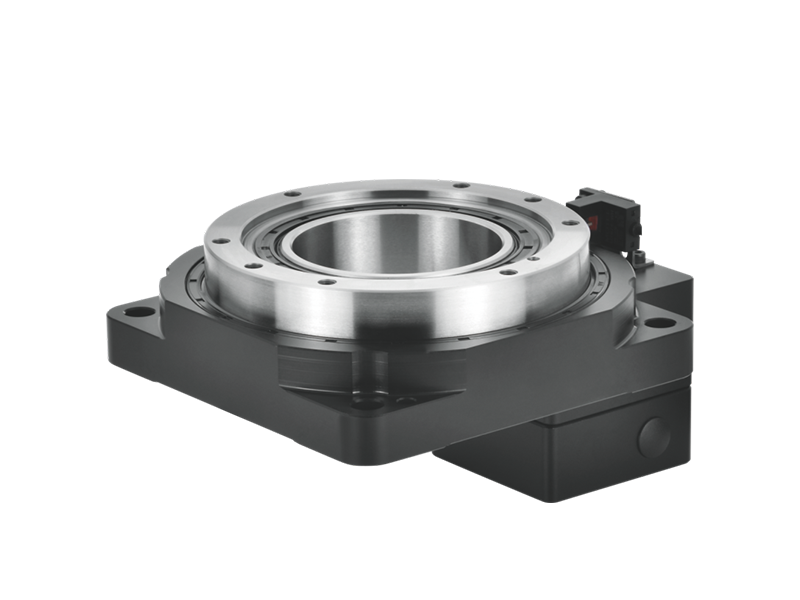
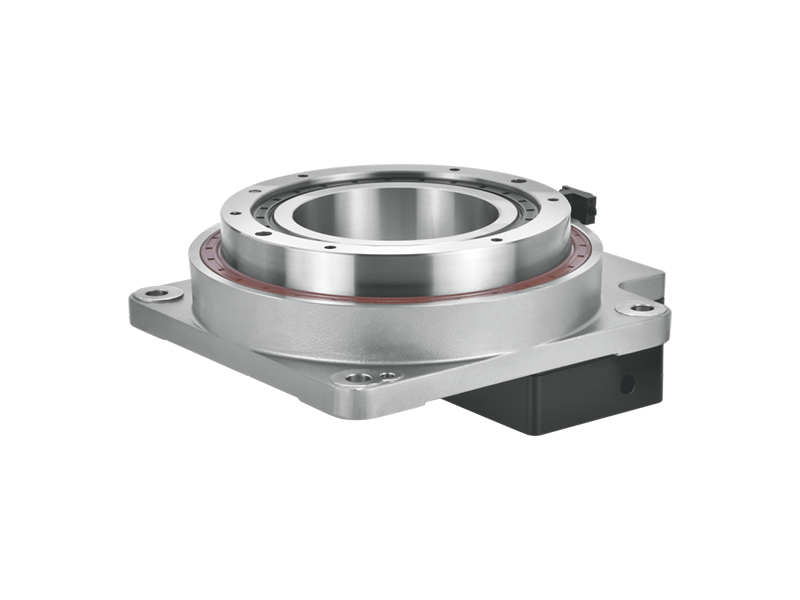
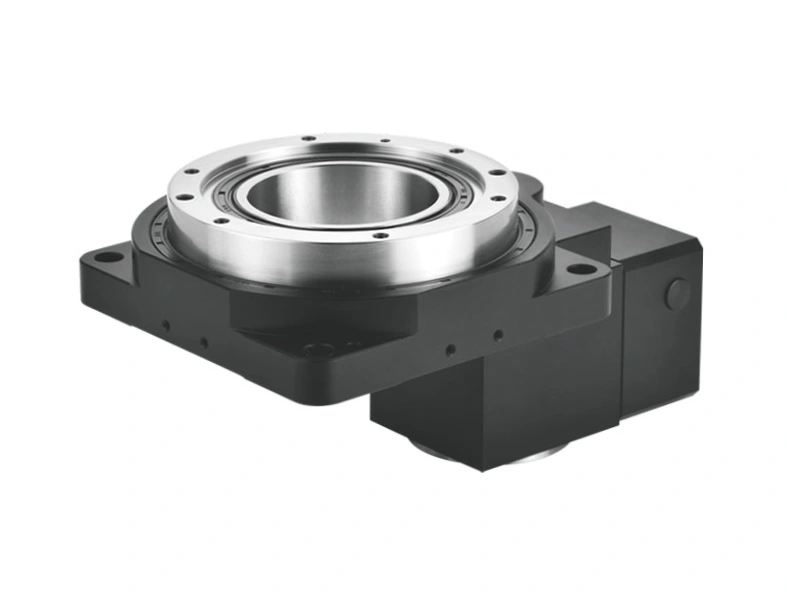
For a heavy duty hollow rotary table, the bore must accommodate the real service package, including connectors, hose fittings, bend radius, protection, and installation access. The presence of a center hole does not make ordinary cables or hoses suitable for unlimited rotation. Continuous rotation with electrical or fluid services may require an appropriate slip ring or rotary union.
Review the output mounting pattern, pilot or locating features, input flange, motor shaft, coupling details, overall height, and service clearances. A larger external fixture plate does not increase the unit’s allowable load. Include cantilevered brackets and any overhang in the load model.
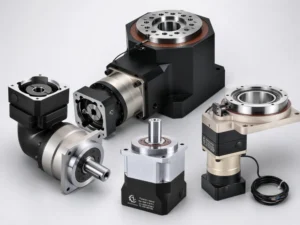
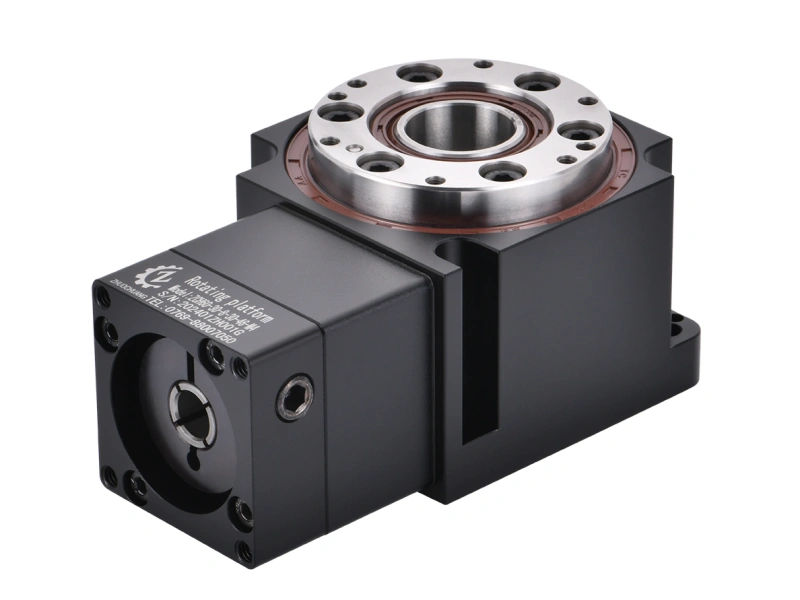
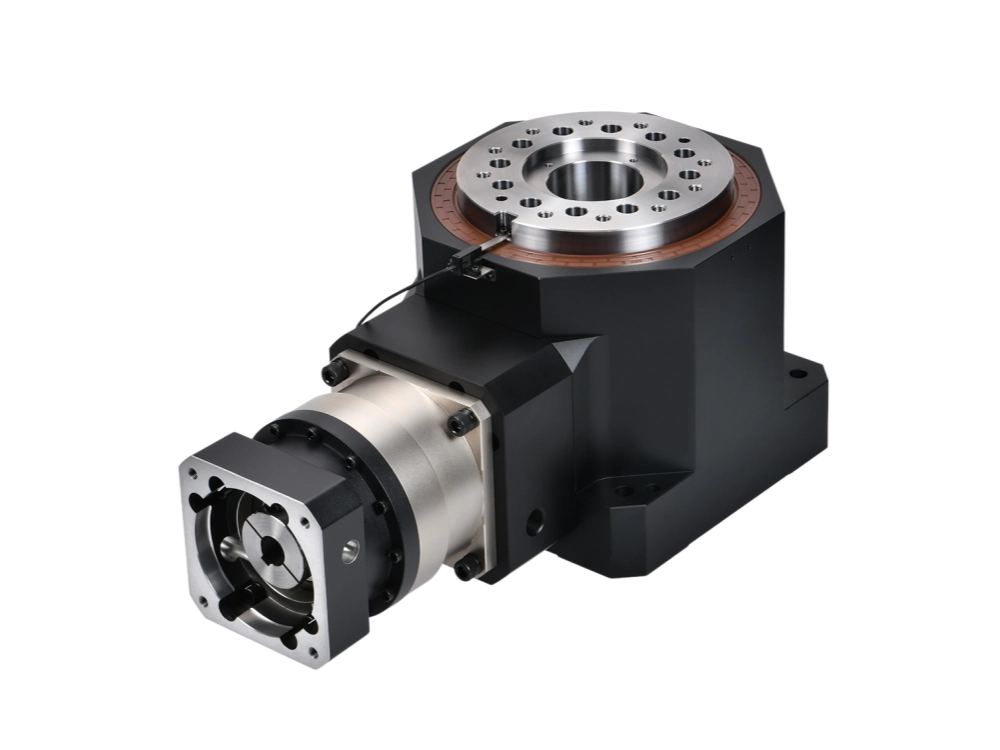
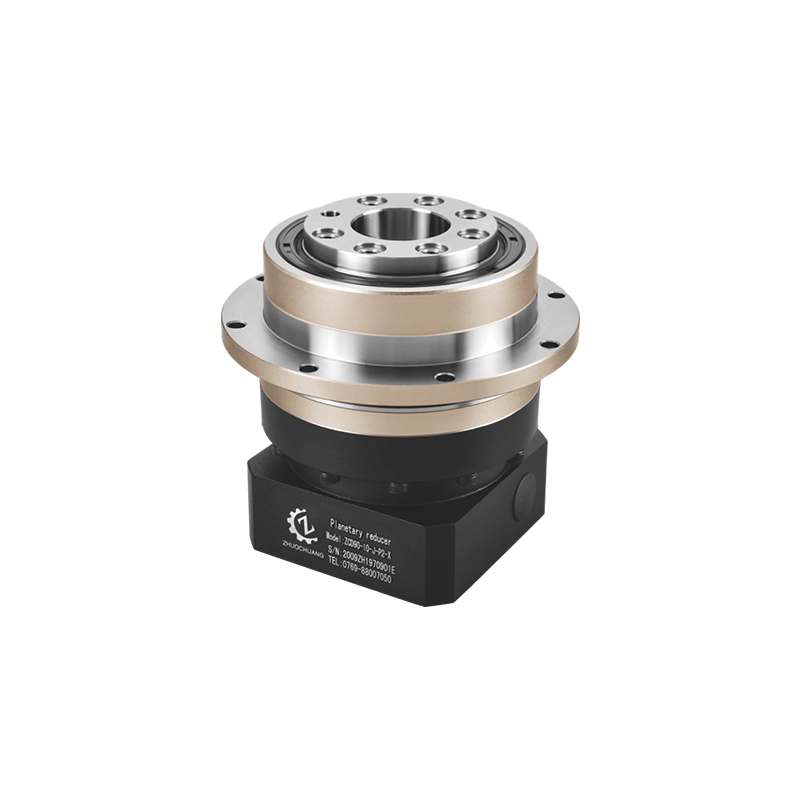
The ZHUOCHUANG range includes the ZCTZ series heavy-duty hollow rotary table and other hollow rotary table configurations. ZCTZ-200 and ZCTZ-280 are candidates to review against a project drawing; the model designation alone is not approval for a particular fixture mass or moment. Confirm the exact configuration, reduction ratio, motor interface, and current specification with the supplier.
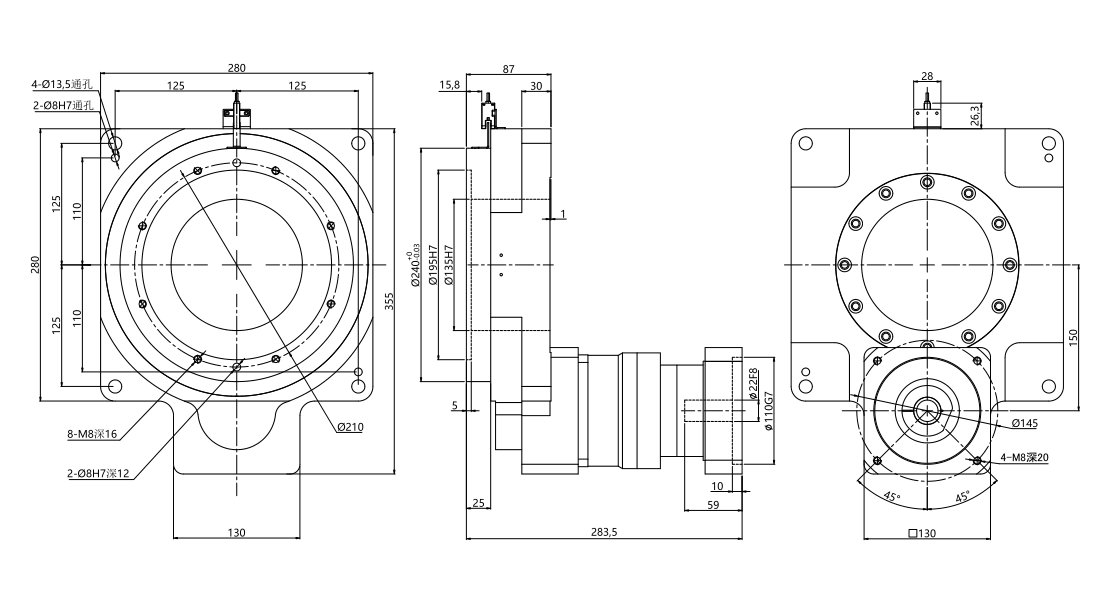
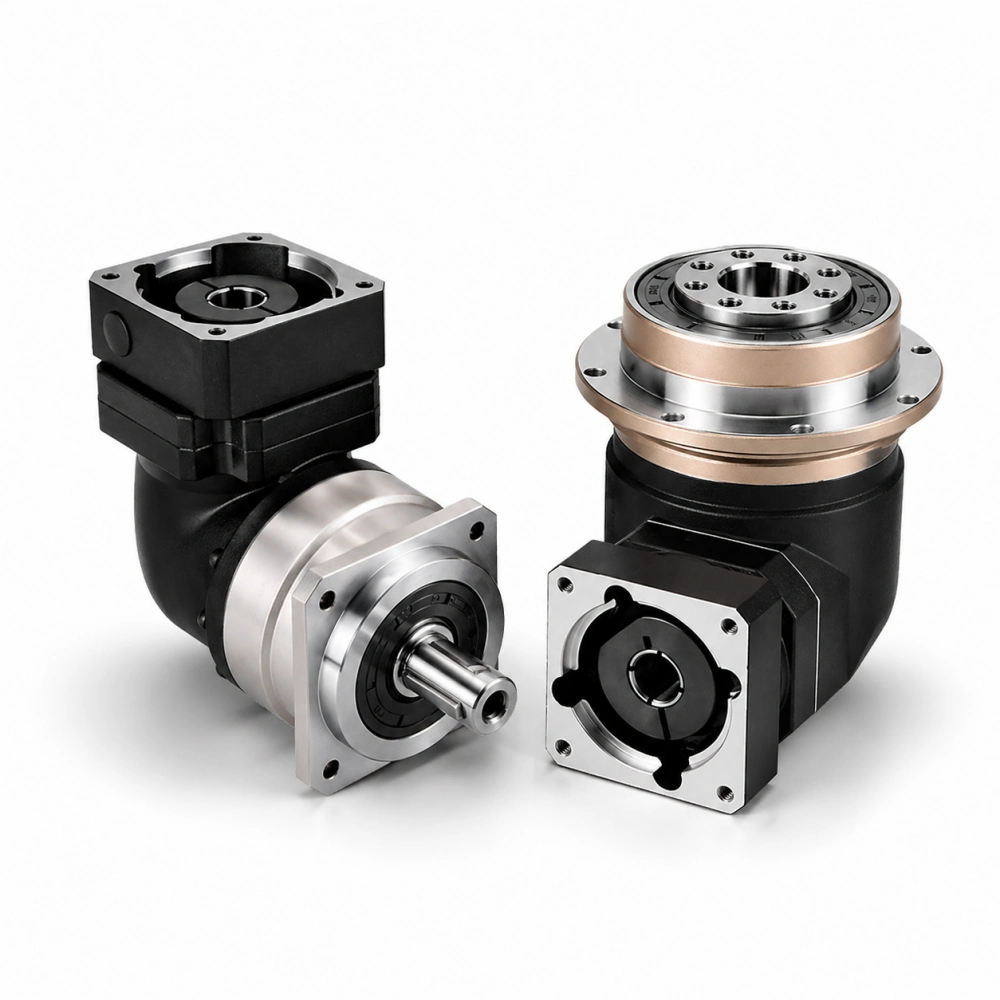
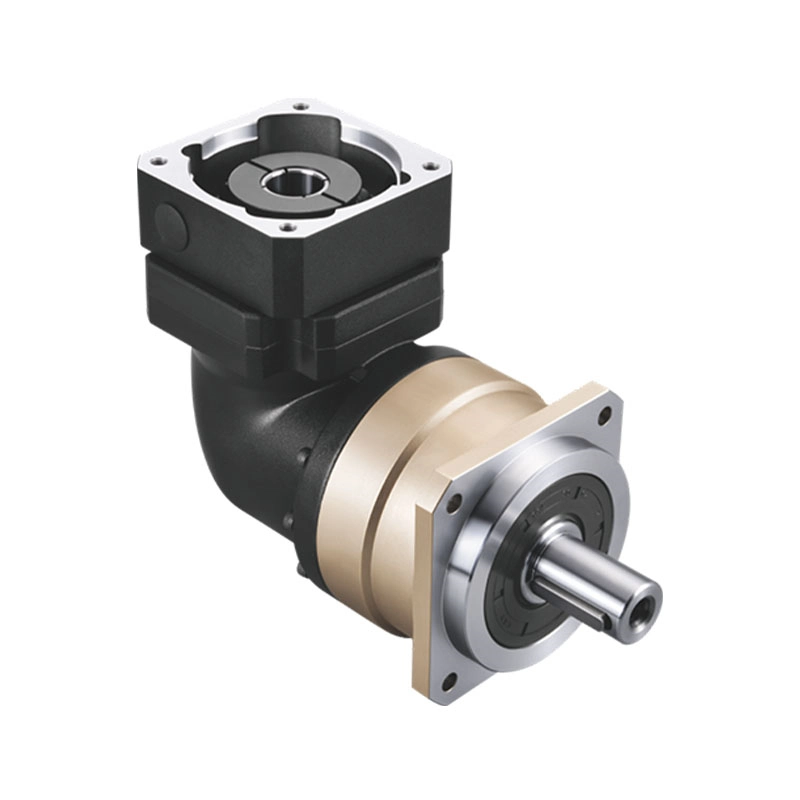
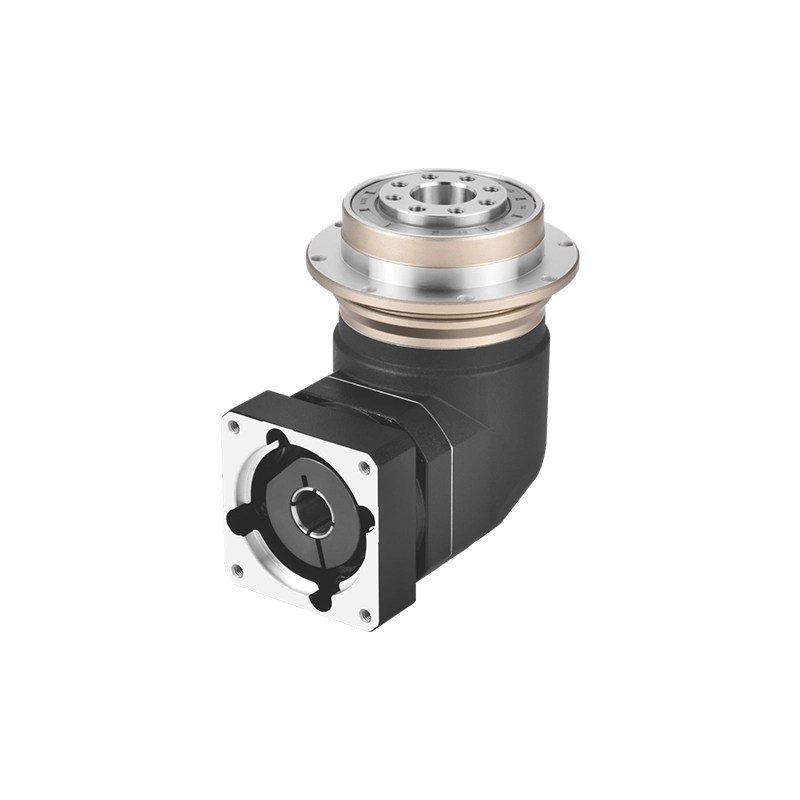
If bore clearance or motor direction is the main constraint, compare the relevant series rather than automatically selecting the largest unit. The ZBT large-bore series addresses bore-related layouts, while the ZCM right-angle series is relevant when input direction drives the packaging decision. Their suitability still depends on the actual load and motion requirements.
6. Send a Complete Heavy Duty Rotary Table RFQ
A useful inquiry lets engineering evaluate the application before price and lead time are finalized. Attach a dimensioned layout or CAD model and identify the mounting face and rotation axis. If a value is unknown, mark it as unknown and ask what additional calculation or measurement is needed.
| Information | What to provide |
|---|---|
| Load and geometry | Total mass in kg; center of gravity and overhang in mm; fixture dimensions; load/unload cases. |
| Orientation and forces | Vertical or horizontal axis; axial/radial forces in N; moments and process torque in N·m; shock conditions. |
| Motion and life | Index angle; speed; acceleration/deceleration; dwell; cycles per minute; hours per day; service-life target. |
| Positioning | Accuracy and repeatability target; direction of approach; working radius; settling-time requirement. |
| Interfaces | Bore clearance; mounting pattern; available envelope; motor brand/model; shaft and flange drawings. |
| Environment and supply | Dust, fluids and temperature; lubrication/access; mechanical table, motor, drive, controller, brake and accessories required. |
Ask the quotation to identify included and excluded components. A rotary positioning table is not automatically a complete welding positioner, CNC fourth axis, or integrated control system. Specify any need for workpiece grounding, welding-current isolation, guarding, braking, or coordinated machine control as a separate application requirement.
For general bore, motor, and series selection, use our companion guide: how to choose a hollow rotary table. Keep one application brief across both the mechanical and controls teams so that the selected table and drive use the same motion assumptions.
7. Validate the Loaded Assembly Before Production
Before releasing the equipment, verify the installation and perform a controlled loaded test appropriate to the machine. Confirm mounting flatness and fastener requirements using the supplied instructions. Check clearance through the full travel, including service lines, neighboring equipment, and loading access.
Measure positioning and settling at the actual working point. Test relevant load states and directions of approach, and monitor drive current, temperature, vibration, noise, and repeatability over the intended operating cycle. An unloaded demonstration cannot establish performance with an offset production fixture.
Record the approved model, ratio, motor, fixture drawing revision, motion profile, lubrication requirements, and acceptance results. If the fixture becomes larger, the center of gravity shifts, or the index time is shortened, repeat the application review. A successful original selection does not automatically cover later changes.
Heavy Duty Rotary Table FAQ
How much weight can a heavy duty rotary table carry?
There is no single capacity implied by “heavy duty.” The answer depends on the model, orientation, center of gravity, combined forces and moments, speed, duty cycle, and required life. Provide the total fixture and workpiece load and ask for application-specific confirmation.
Is rotary table load capacity the same as output torque?
No. Load capacity concerns the supported forces and moments under specified conditions. Output torque concerns the torque transmitted around the rotation axis. Both must be checked, together with inertia and the motion cycle.
Can a larger fixture plate be fitted to a smaller table?
Possibly, if the mounting and application checks pass. A larger plate adds mass and inertia and can increase overhang or moment loads. Its diameter does not establish suitability; evaluate the complete assembly.
Does a hollow bore allow unlimited rotation?
The bore provides routing space. Ordinary cables and hoses can still twist. Assess the travel range and use suitable rotary service connections when continuous rotation is required.
Which ZHUOCHUANG series should I review for a heavy fixture?
Start by reviewing the ZCTZ series for heavy-duty hollow rotary positioning applications, then confirm the exact model against your load, moment, motion, and mounting data. If another constraint dominates, compare the wider product range with the supplier.
Selection Resources and Application Review
Use this guide to prepare an application brief, then verify the exact model against its current specifications. Record the load orientation, center of gravity, combined forces and moments, motion profile, and loaded positioning target. The calculation above explains a screening method; it is not a product load rating.
For an additional overview of rotary positioning terminology and typical uses, see HollowRotary’s hollow rotary actuator and table overview. This is related product information, rather than an independent engineering standard or proof of a model’s capacity.
ZHUOCHUANG is the brand of Dongguan Zhuochuang Precision Machinery Co., Ltd. For model selection, use our hollow rotary table product range and send your drawing and application brief. Request current specifications, an application review, and a clear scope of supply with your quotation.