
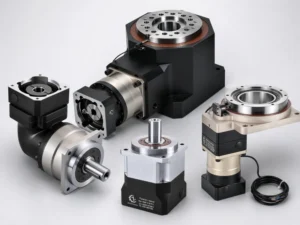
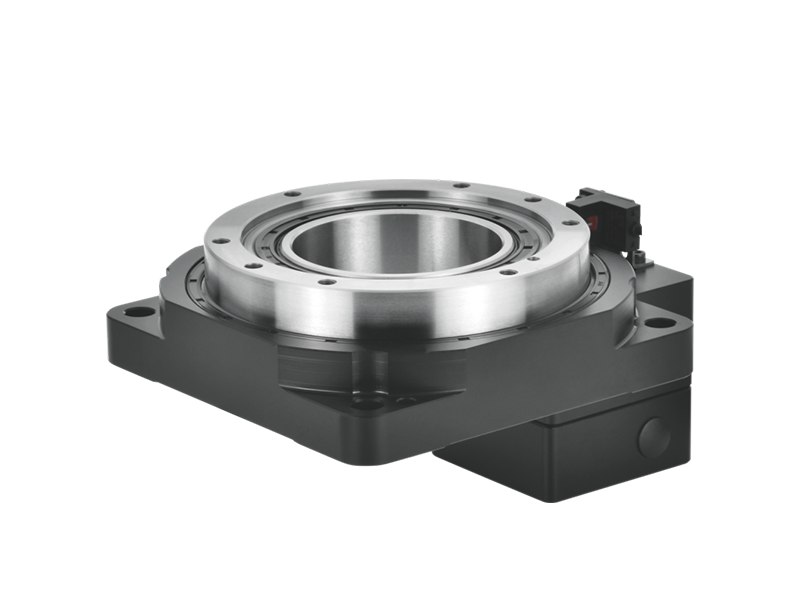
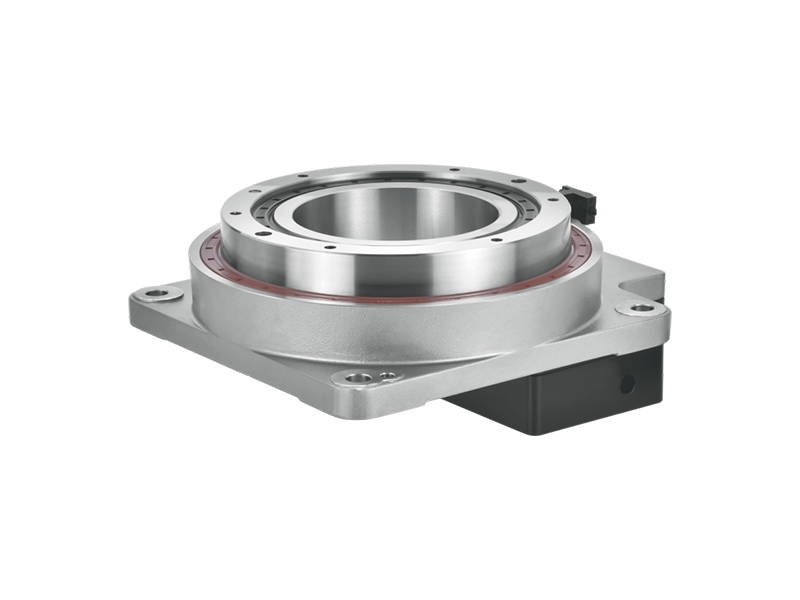
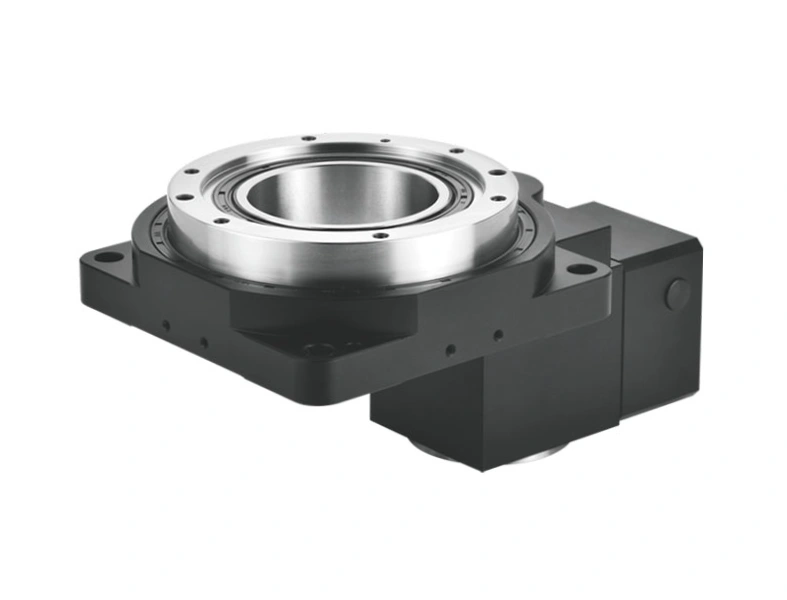
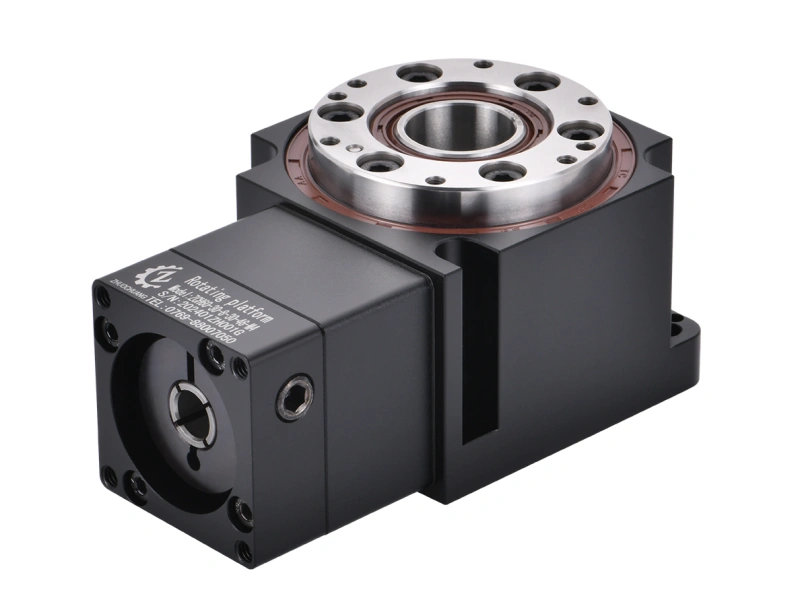
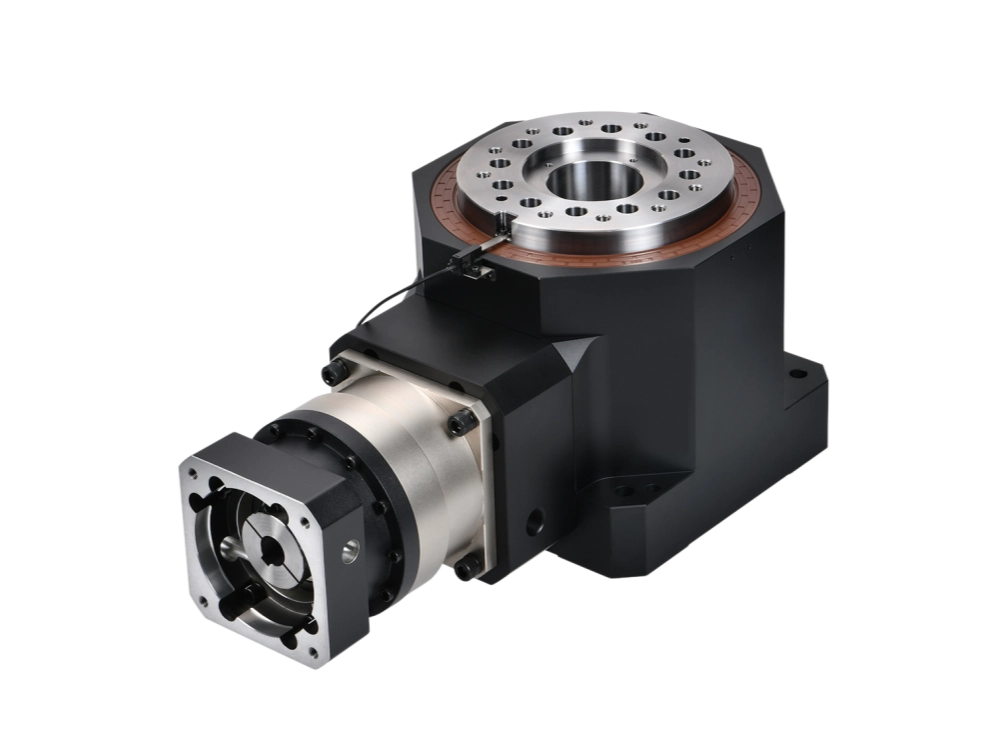
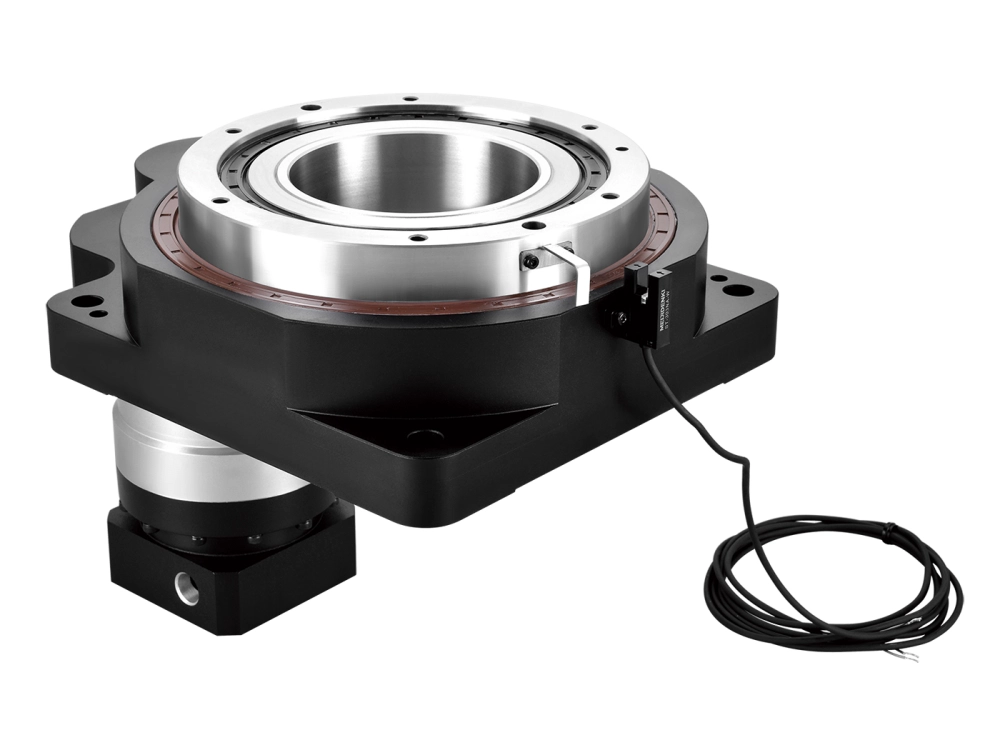
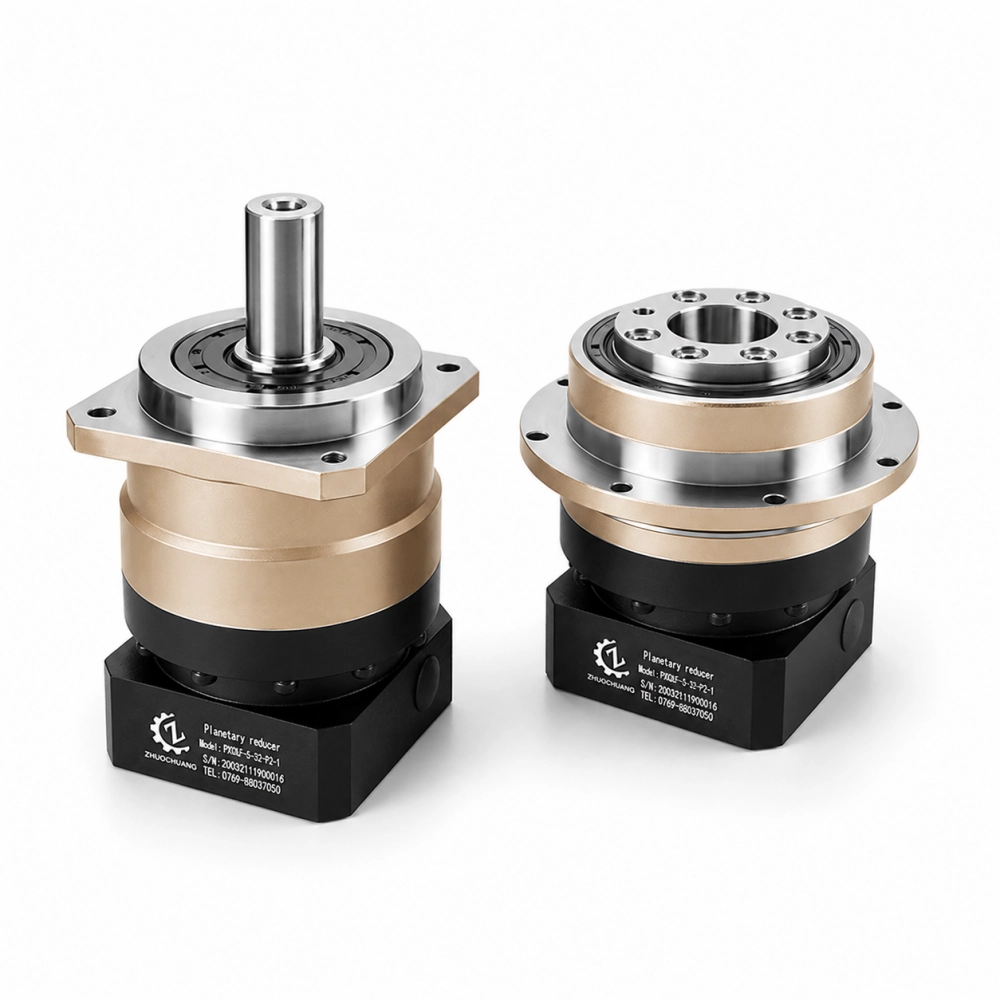
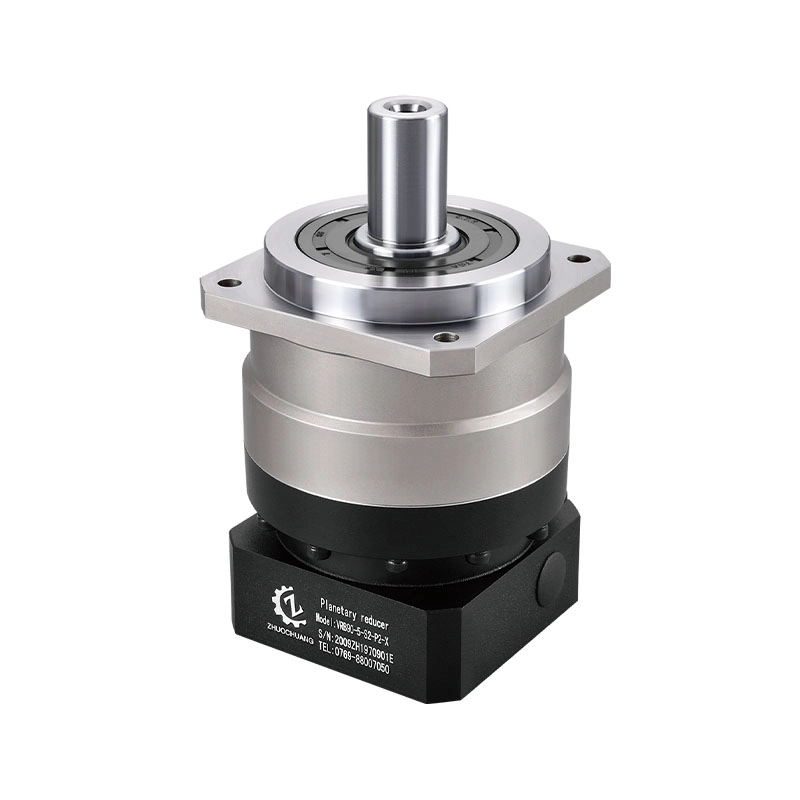
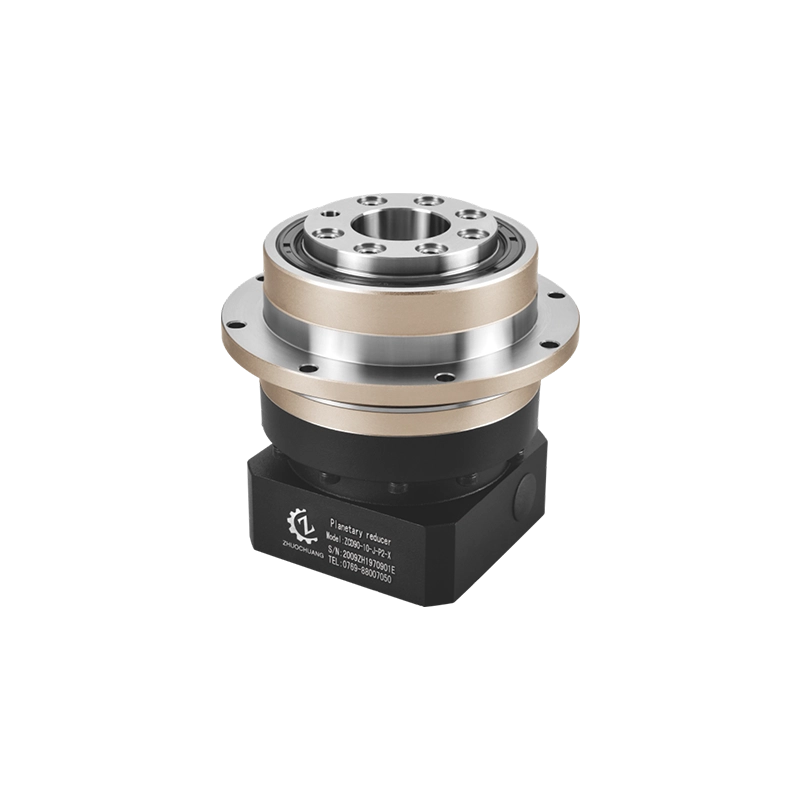
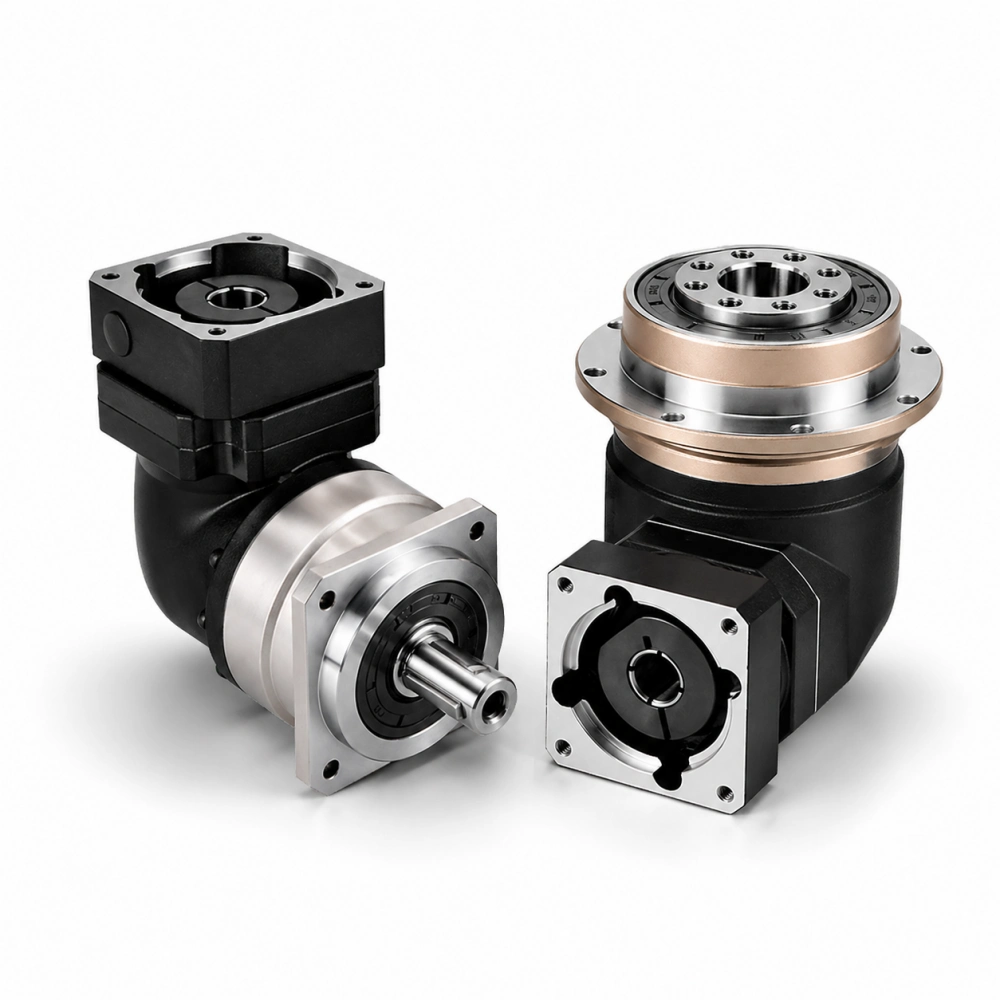
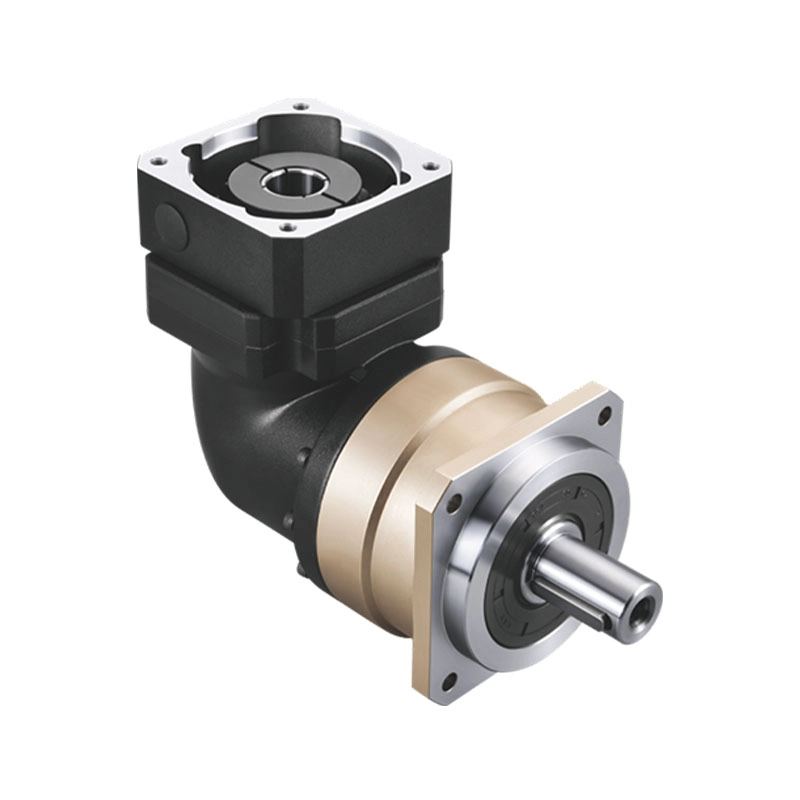
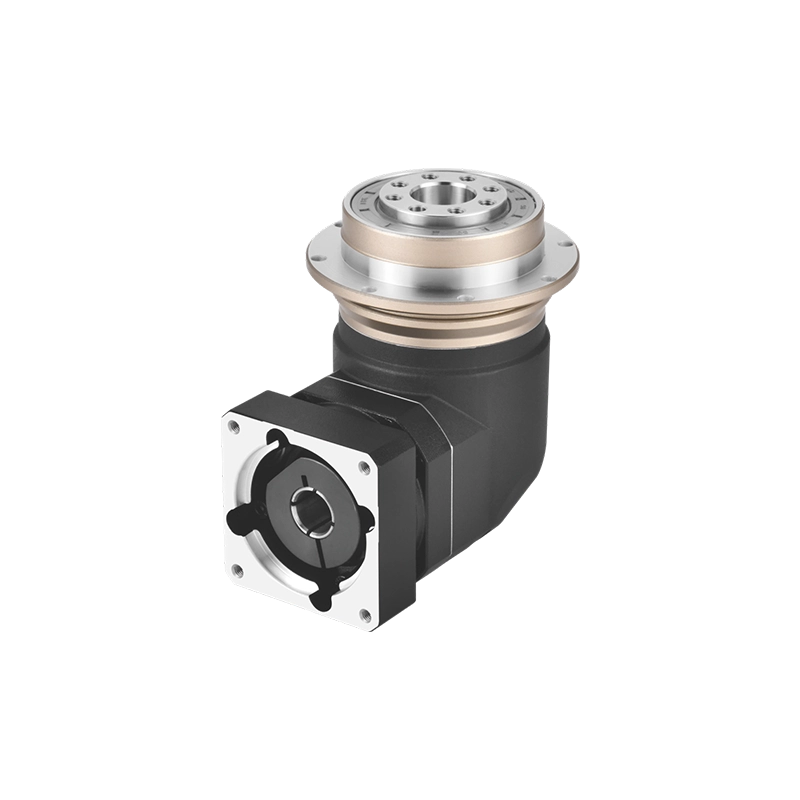
In precision engineering, the planetary gearbox gear ratio is the heartbeat of motion control. It dictates how power is transformed from the motor to the application, balancing the delicate trade-off between speed and torque. For engineers and procurement managers at Dongguan Zhuochuang Precision Machinery Co., Ltd, understanding these mechanics is vital for optimizing machine performance.
This comprehensive guide delves into the mathematics, material science, and practical applications of gear ratios in epicyclic gearing systems.
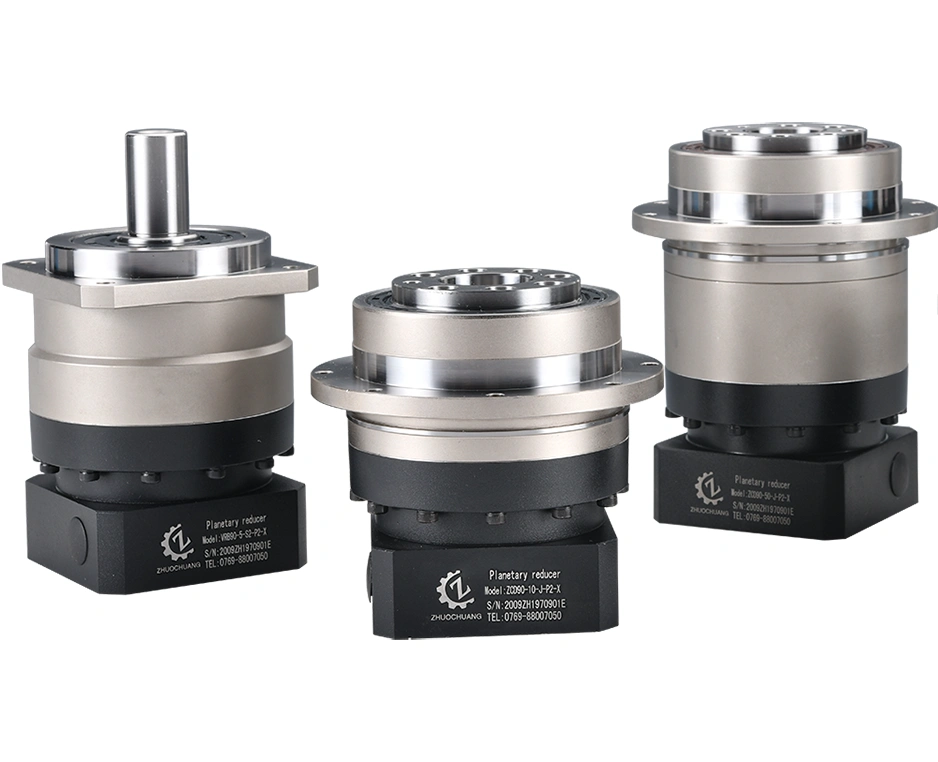
1. Defining the Planetary Gearbox Architecture
To understand the ratio, one must first visualize the internal harmony of an epicyclic set. Unlike standard spur gears, a planetary system shares the load across multiple contact points:
- The Sun Gear: Located at the center, it acts as the primary input.
- The Planet Gears: Typically three or more gears that “orbit” the sun, mounted on a mobile carrier.
- The Ring Gear (Annulus): The stationary outer ring with internal teeth that keeps the system contained.
This arrangement allows for a higher torque density in a compact footprint, which is why planetary gearboxes are the preferred choice for high-end automation.
2. The Science of Calculation: Mastering the Formulas
Calculating the gear ratio of a planetary gearbox is unique because the planet carrier serves as the output. When the ring gear is held stationary—the standard configuration for most industrial reducers—the formula is:
The Mathematical Formula
$$R = 1 + \frac{Z_{ring}}{Z_{sun}}$$
Where:
- $R$: The total reduction ratio.
- $Z_{ring}$: Number of teeth on the Ring Gear.
- $Z_{sun}$: Number of teeth on the Sun Gear.
Practical Example: The 5:1 Ratio Breakdown
Imagine a sun gear with 18 teeth and a ring gear with 72 teeth.
$$R = 1 + (72 / 18) = 1 + 4 = 5$$
This creates a 5:1 ratio. For every 5 rotations of your servo motor, the output shaft completes exactly 1 rotation. This mechanical advantage multiplies the input torque by 5 (minus efficiency losses).
3. Multi-Stage Gearsets: Achieving High Torque
A single-stage planetary gearbox typically reaches a maximum ratio of 10:1. Attempting a higher ratio in a single stage often leads to a sun gear that is too small to handle the input torque. To solve this, we use multi-stage systems.
- 2-Stage Gearboxes: Ratios from 15:1 to 100:1.
- 3-Stage Gearboxes: Ratios from 100:1 up to 1000:1 or more.
The calculation is multiplicative:
Total Ratio = Stage 1 Ratio × Stage 2 Ratio.
At Zhuochuang, our modular design allows us to combine precision-ground stages to achieve the exact torque profile required for heavy-duty industrial applications.
4. Material Science: Why 20CrMnTi Makes the Difference
A theoretical gear ratio is only as good as the steel that supports it. In high-ratio applications, the teeth on the sun gear face immense stress.
At our Dongguan facility, we utilize 20CrMnTi (Chromium-Manganese-Titanium) alloy steel for our planetary gears. Here is why this matters for your SEO-optimized machinery:
- Carburizing & Quenching: We apply a deep heat treatment to ensure a hard, wear-resistant outer shell (HRC 58-62) with a tough, ductile core. This prevents tooth breakage under high-torque loads.
- Precision Grinding: After heat treatment, gears are ground to reach DIN 6 or ISO 6 accuracy. This ensures that the actual gear ratio remains constant and doesn’t fluctuate due to tooth profile errors.
- Torque Resilience: High-quality materials allow our gearboxes to handle the increased radial and axial loads that come with high reduction ratios.
5. Industry Applications: Matching Ratio to Task
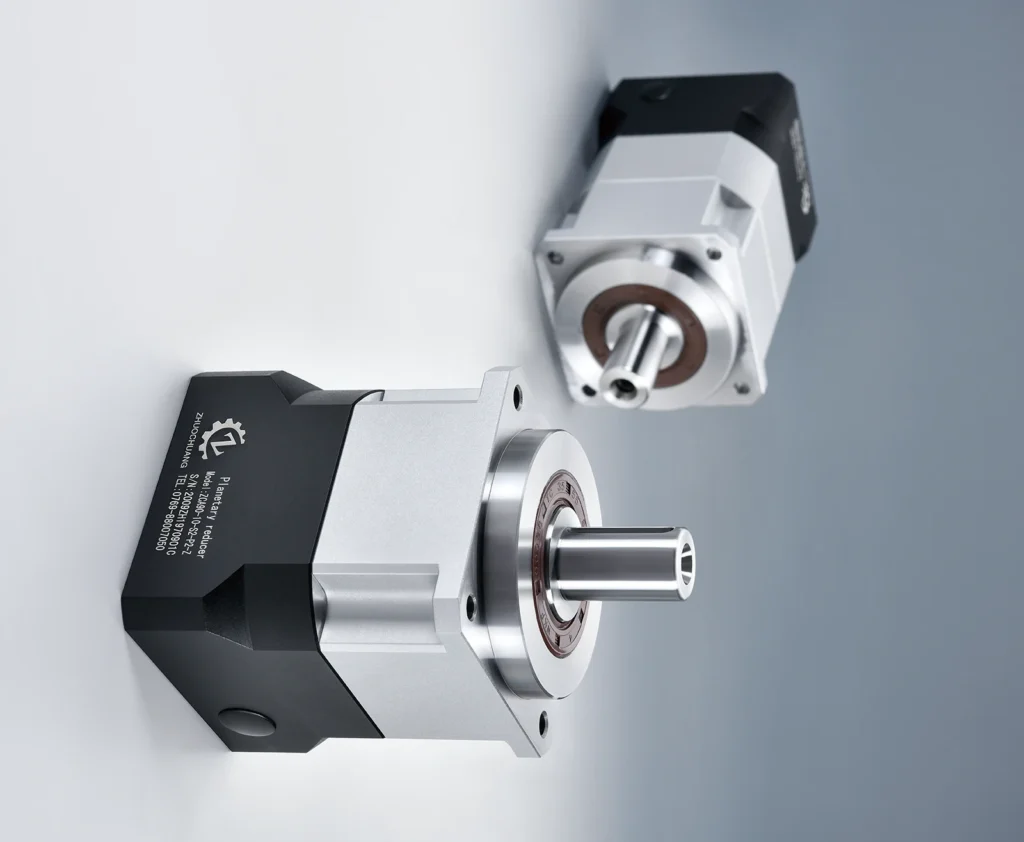
Choosing the right planetary gearbox gear ratio depends heavily on the industry. Here is how we help different sectors at planetdrivepro.com:
A. Robotics & AGVs
For Automated Guided Vehicles (AGVs), a ratio between 10:1 and 25:1 is common. This provides the necessary torque to move heavy payloads while maintaining enough speed for efficient warehouse logistics.
B. CNC Machining Centers
In CNC applications, precision is king. Low-ratio gearsets (e.g., 3:1 to 7:1) are often paired with high-end servo motors to maintain rapid positioning speeds while reducing Backlash (< 3 arcmin) for intricate milling tasks.
C. Solar Tracking Systems
Solar trackers require massive torque at extremely low speeds to follow the sun’s path. Here, 3-stage planetary gearboxes with ratios exceeding 100:1 are utilized to provide the holding torque necessary to resist wind loads.
6. Engineering FAQ: Common Gear Ratio Questions
Q1: Does a higher gear ratio always mean more torque?
Technically, yes. However, you must stay within the gearbox’s rated nominal torque. Exceeding the mechanical limit of the housing or gears will lead to failure regardless of the ratio.
Q2: How does the gear ratio affect backlash?
In multi-stage gearboxes, backlash can accumulate. This is why our ZPT and ZPL series use precision-matched gearsets to ensure that even at 100:1, the backlash remains within elite industrial tolerances.
Q3: Can I customize a non-standard gear ratio?
Yes. As an OEM/ODM-capable factory, Zhuochuang can adjust tooth counts to provide specific ratios like 13.5:1 if your application requires a unique pulse-per-revolution count.
Q4: Does the gear ratio impact lubrication?
High-ratio gearboxes generate more heat due to increased friction surfaces. We use high-grade synthetic grease that maintains viscosity across a wide temperature range, ensuring longevity.
Q5: What is the efficiency loss per stage?
A single-stage Zhuochuang gearbox is ~97% efficient. A 2-stage unit is ~94%, and a 3-stage is ~90%. Higher ratios naturally introduce more internal friction.
7. The Zhuochuang Advantage: Precision and Value
Located in the heart of Dongguan’s manufacturing district, Dongguan Zhuochuang Precision Machinery Co., Ltd has bridged the gap between high-precision Japanese engineering and cost-effective manufacturing.
- ISO 9001:2015 Standards: Every planetary gearset undergoes rigorous testing on CMM machines before assembly.
- Rapid Lead Times: Our integrated supply chain ensures that your Planetary Gearbox Gear Ratio Calculation translates into a physical product in your hands faster than European competitors.
- Competitive Pricing: By optimizing our internal production of ring gears and carriers, we offer a significant cost advantage for OEM projects.
Conclusion: Engineering Your Success
Understanding and calculating the planetary gearbox gear ratio is fundamental to industrial success. It is the bridge between motor potential and mechanical reality. At Zhuochuang, we provide the expertise and the hardware to ensure that bridge is strong, precise, and durable.
Ready to find the perfect ratio for your project? Visit planetdrivepro.com to view our full 2026 catalog or contact our engineering team for a customized quote.