
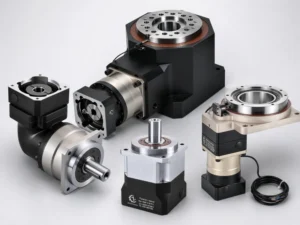
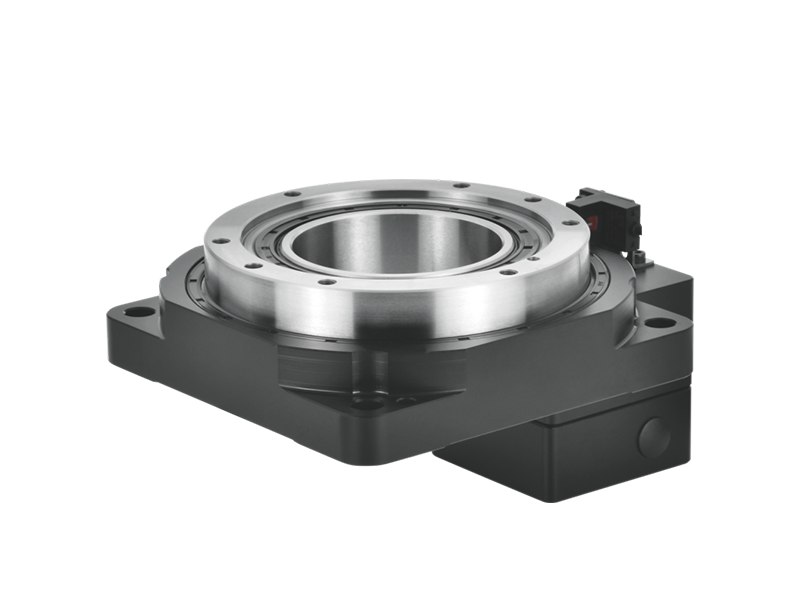
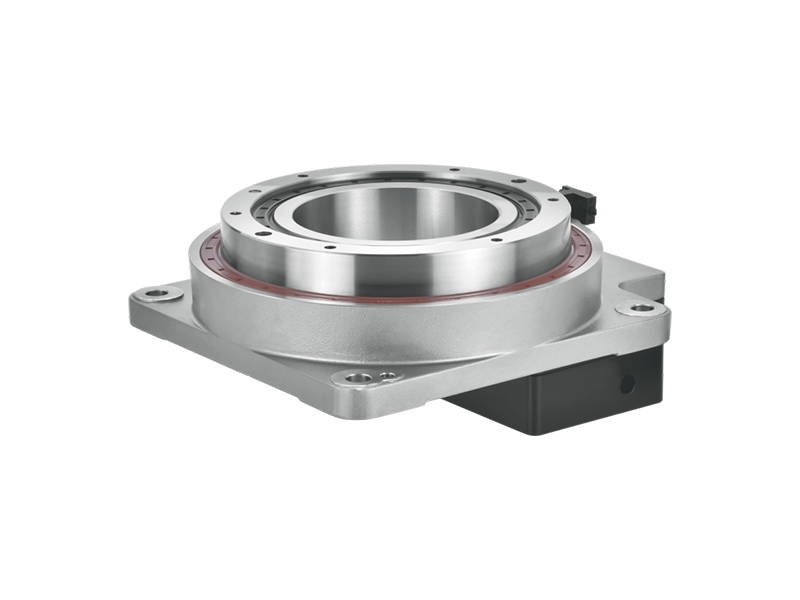
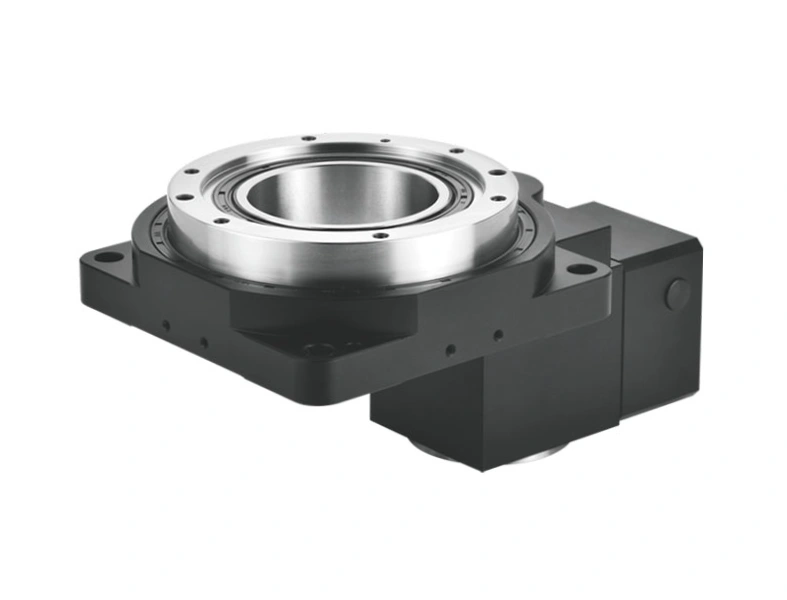
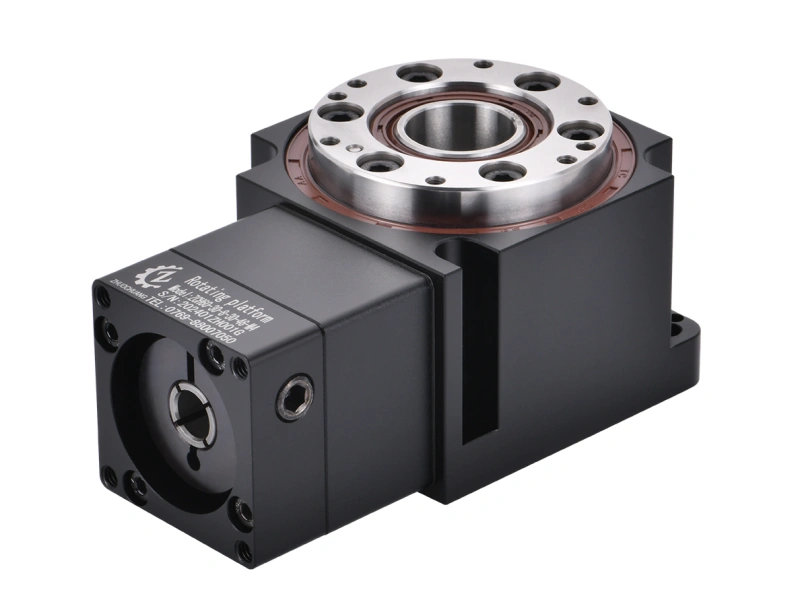
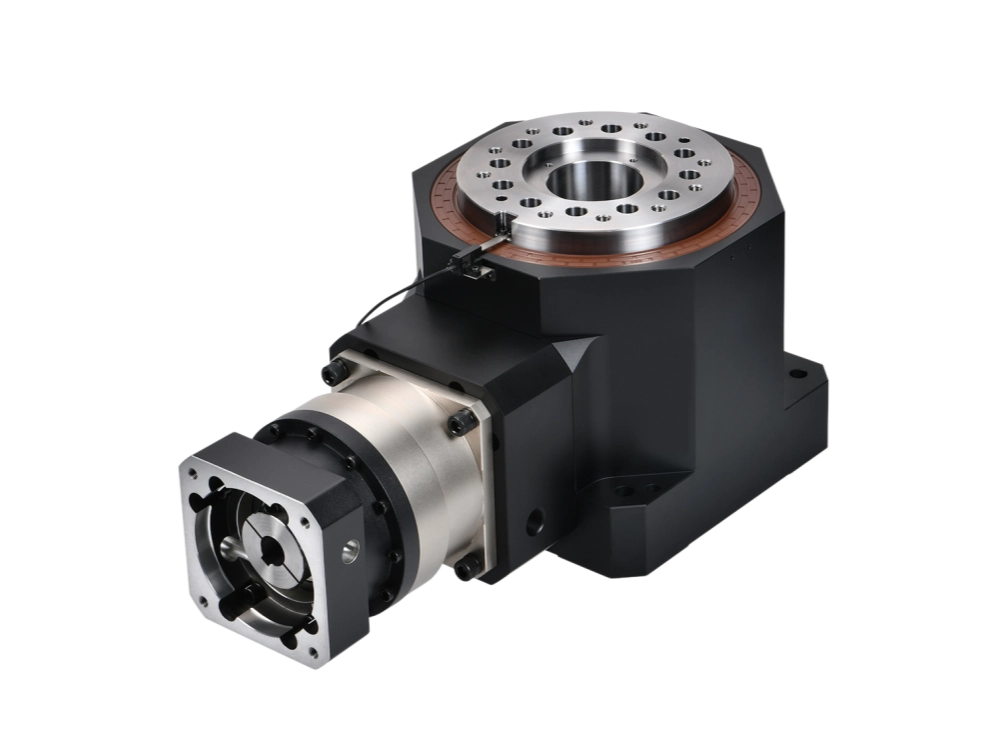
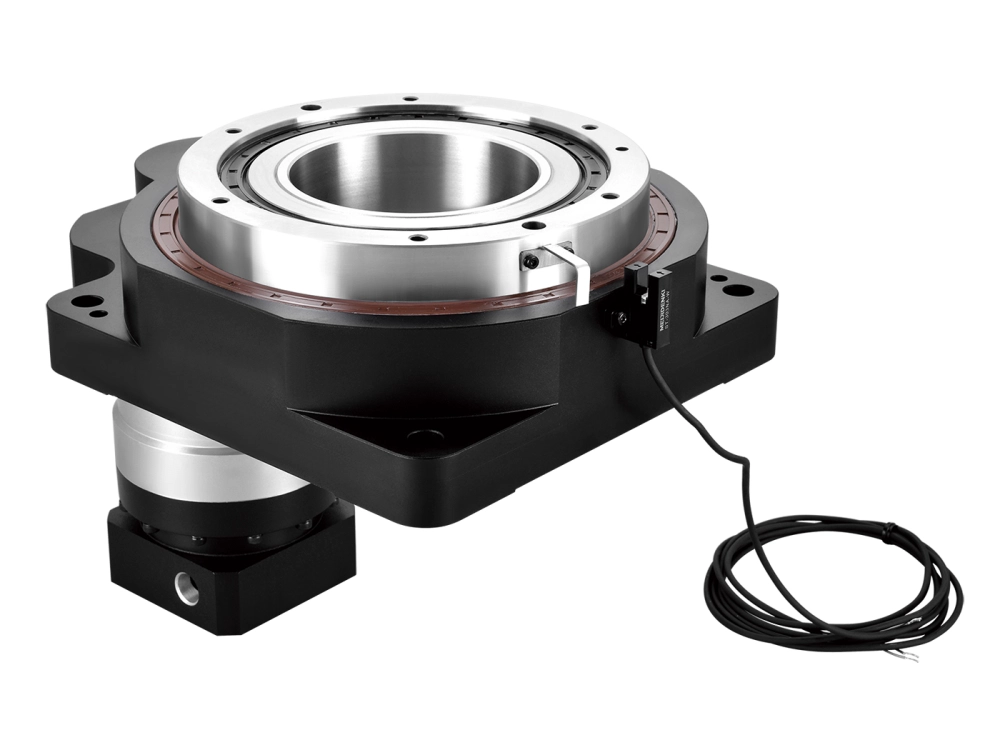
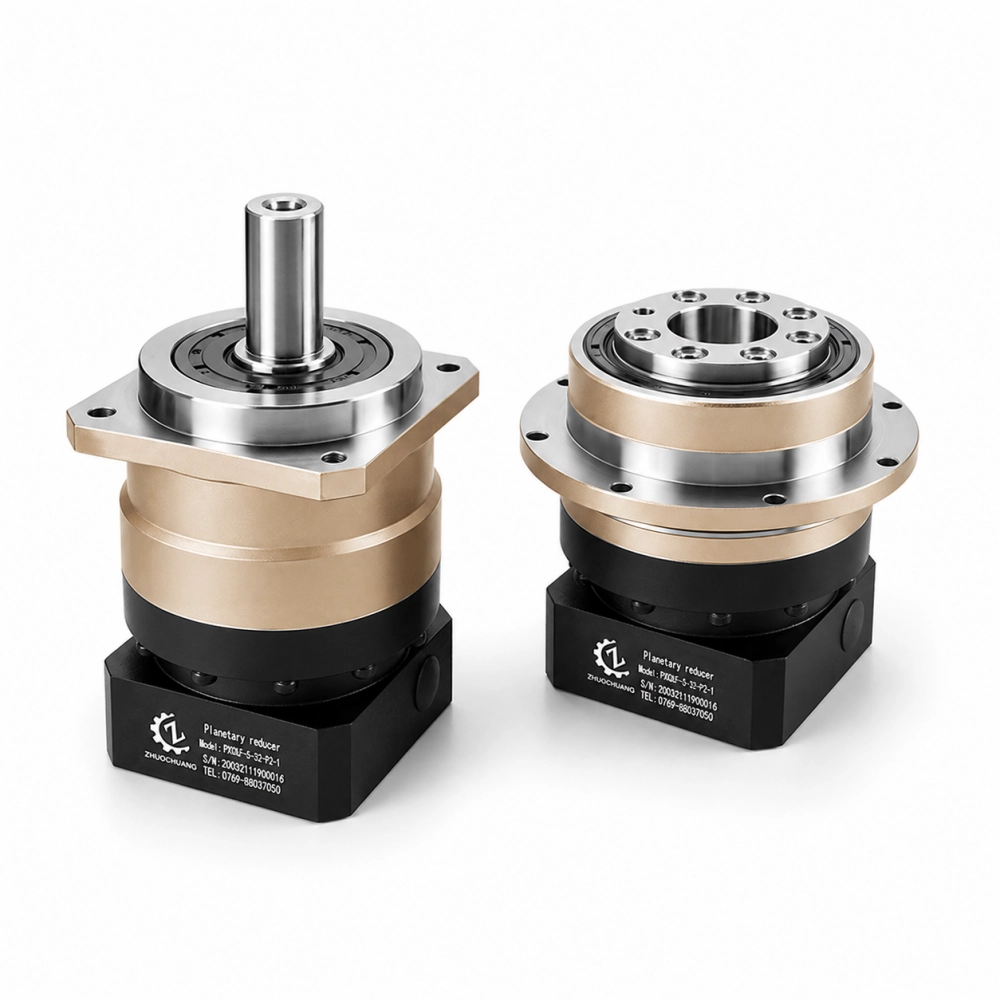
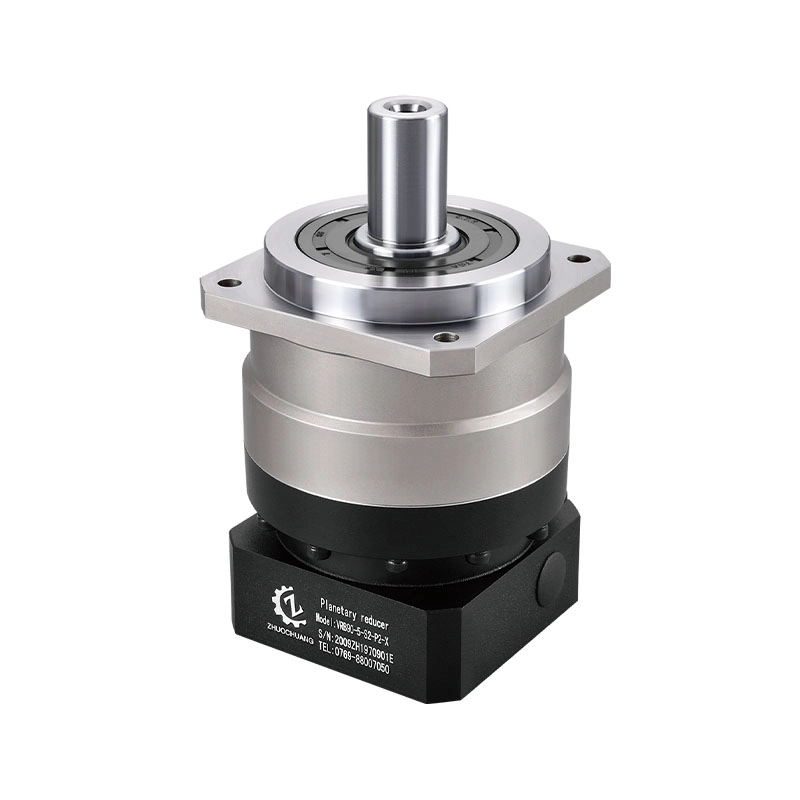
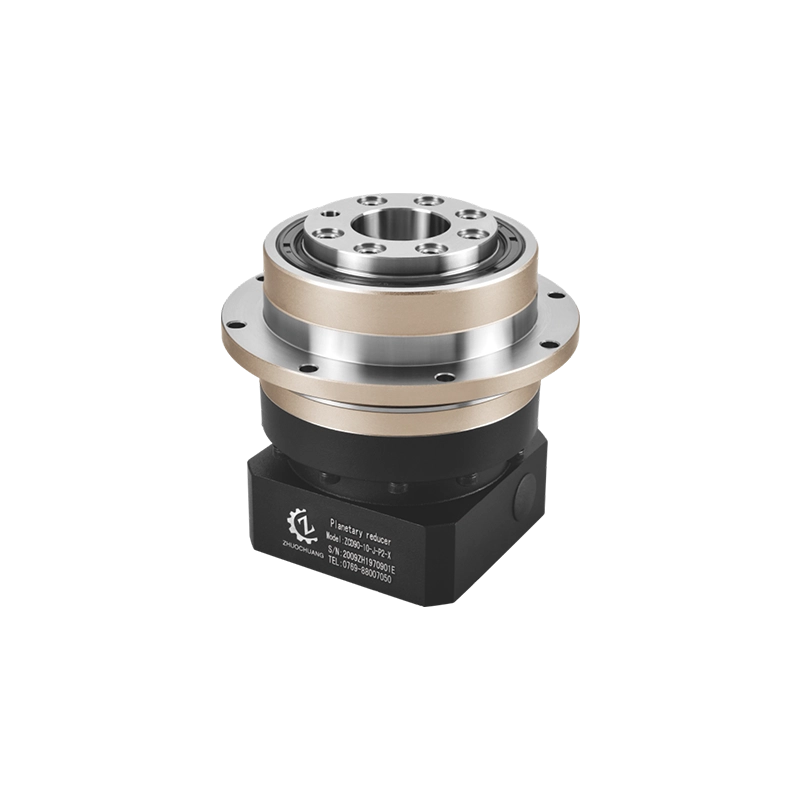
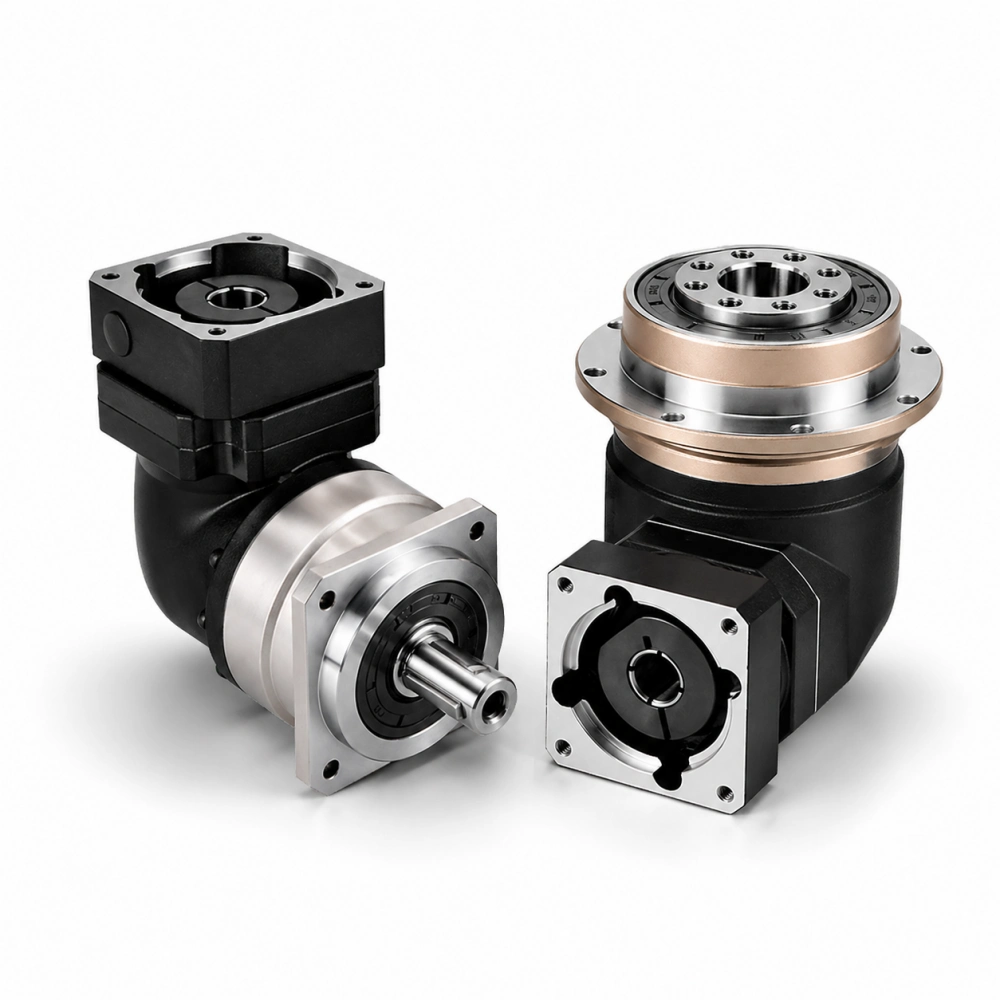
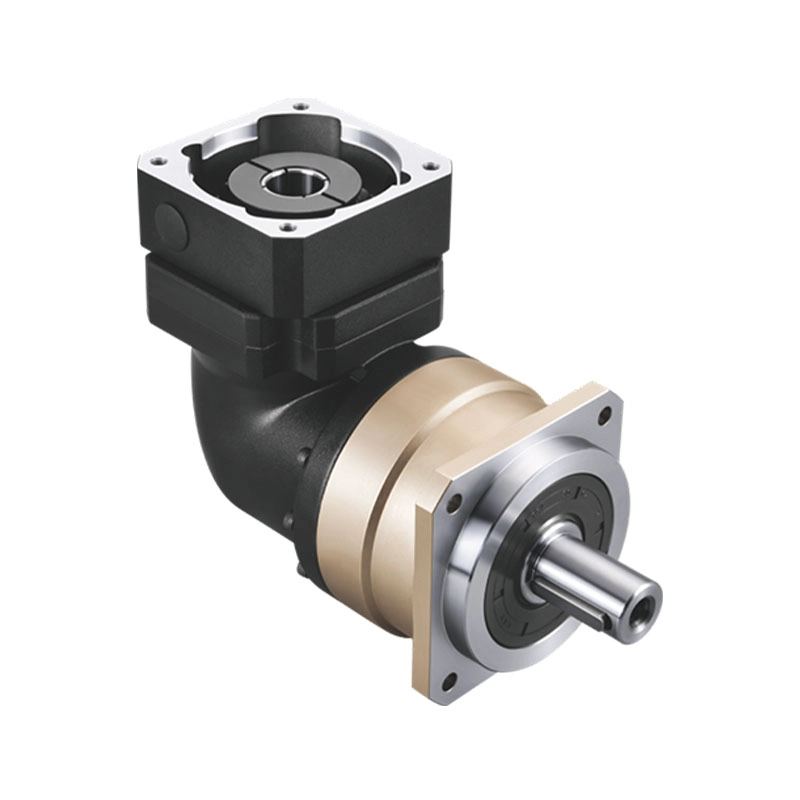
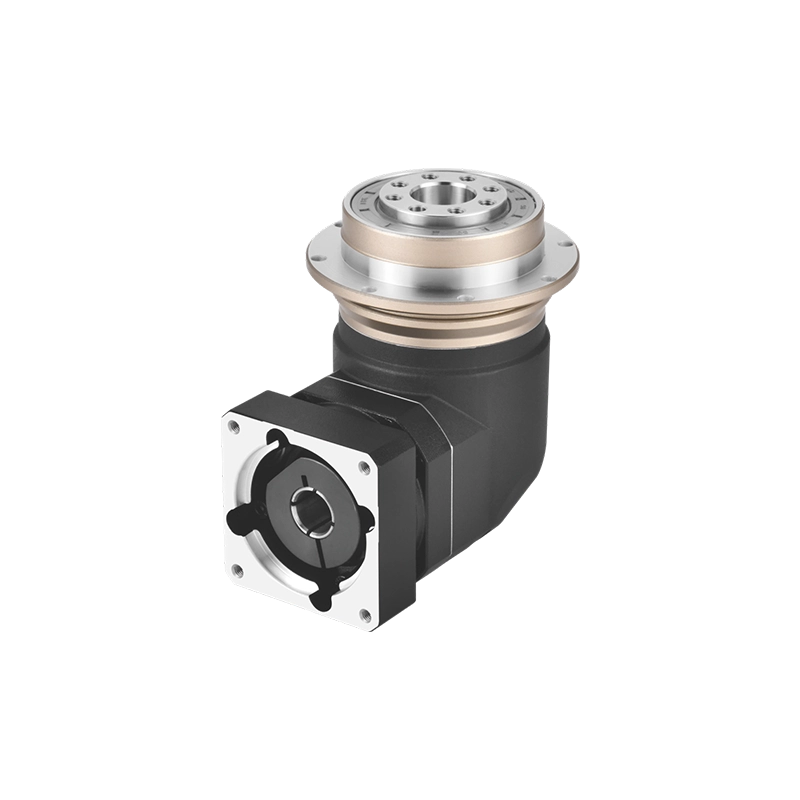
A machine builder rarely needs a completely new gearbox on the first day of a project. More often, a proven planetary platform already meets the ratio, torque and backlash requirement, but its motor interface, output connection or mounting envelope does not match the machine. That is where a custom planetary gearbox becomes useful. A custom precision planetary gearbox project should therefore begin with the interfaces and duty cycle that the standard unit cannot satisfy.
Have a Motor Drawing and Machine Envelope?
Send the motor model, required ratio, torque cycle, backlash target and installation drawing. A qualified custom planetary gearbox manufacturer should identify whether the project needs a standard unit, an interface modification or a deeper engineering review.
Submit Drawings for Initial ReviewDoes the Machine Need a Custom Planetary Gearbox?
The word “custom” can describe three very different projects. Separating them early prevents a simple adapter change from being treated like a new transmission design.
Standard gearbox
A catalog ratio, frame size, output shaft and available motor adapter fit the machine. Selection and drawing confirmation are required, but no product modification is needed.
Standard platform, adapted interfaces
The internal planetary platform remains proven while the input adapter, output shaft, flange, mounting feature or connector arrangement is changed. This is the most practical route to a custom planetary gearbox for OEM equipment.
New or substantially revised design
The requested ratio, load, speed, envelope or service life cannot be met by an existing platform. Gear geometry, bearings, housing, lubrication and validation may all require new engineering.
Most automation projects should test Level 1 and Level 2 first. Reusing a qualified gearset preserves known tooth contact, bearing support and assembly control. A custom planetary gear reducer does not need to be new in every dimension to solve a genuine machine-integration problem. For many OEMs, the safest customized planetary gear reducer retains the proven internal transmission and changes only controlled external interfaces.
Start a Custom Planetary Gear Reducer with the Machine Drawing
A useful review starts with one assembly drawing showing the motor, reducer, driven component and surrounding structure. Isolated dimensions can be correct and still produce an assembly that cannot be installed. The drawing should establish four reference systems:
- the motor shaft and pilot centerline;
- the gearbox mounting face and available axial length;
- the output connection and load application point;
- the machine datum used to position the driven element.
Mark fixed dimensions separately from preferred dimensions. For example, an existing motor flange may be fixed, while the adapter thickness can change within a permitted range. A pulley position may be fixed by belt alignment, while its hub length can be adjusted. This distinction gives the custom planetary gearbox manufacturer room to propose a reliable solution without changing the machine’s critical geometry.
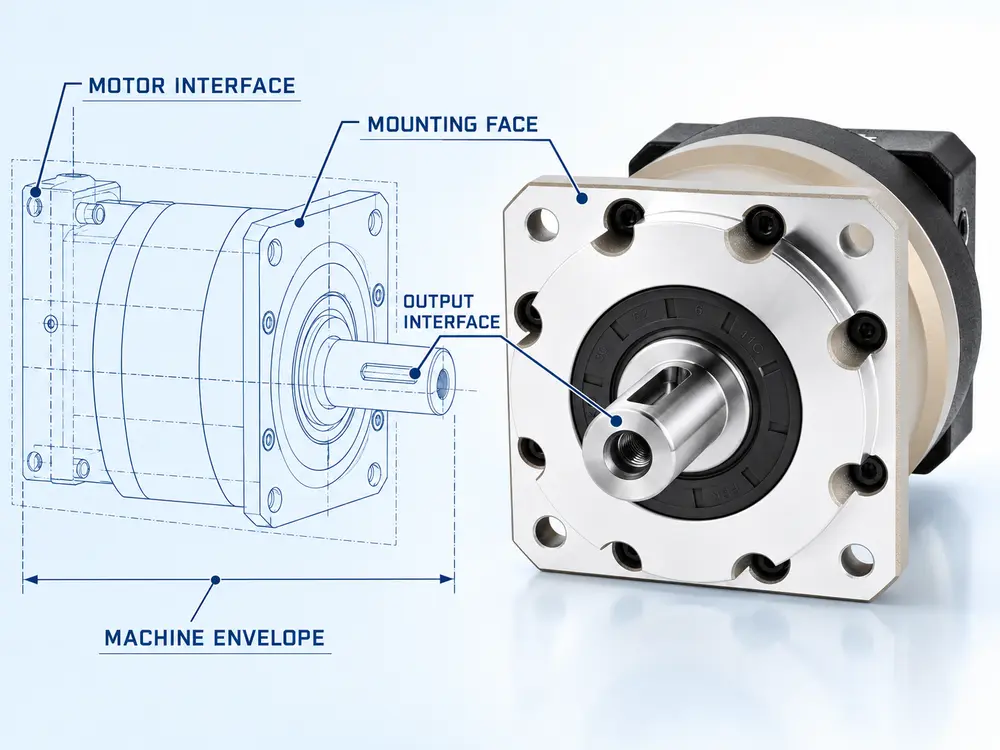
Five Interfaces in a Custom Planetary Gearbox Drawing
1. Motor flange and input connection
Provide the complete motor model rather than motor power alone. The review needs flange width, pilot diameter, bolt pattern, shaft diameter, shaft length and key or clamping details. The adapter must center the motor accurately and allow the input coupling to engage at the intended position. An incorrect shaft insertion depth can create axial force, poor clamping or interference even when the bolt pattern fits. This centering control is especially important in a custom precision planetary gearbox connected to a frequently reversing servo motor.
2. Output shaft or rotating flange
Define how torque enters the driven component. A smooth shaft, keyed shaft, pinion seat or rotating flange creates different requirements for fit, retention and external load. If the output drives a pulley, sprocket or pinion, include radial force and its distance from the gearbox face. The separate guide to planetary gearbox bearings and output loads explains why torque capacity alone cannot approve an overhung load.
3. Stationary mounting interface
Show the machine plate, bolt access, locating pilot and required mounting orientation. Do not confuse the stationary mounting flange with a rotating output flange. Bolt holes hold the unit; the locating pilot establishes concentricity. If the design relies on bolts alone for location, assembly variation can affect shaft alignment.
4. Housing envelope and surrounding clearance
Supply the maximum diameter, axial length and all keep-out zones. Include cable connectors, lubrication access, nearby guards and tool clearance for installation. A compact gearbox body is not useful if the motor connector hits the frame or the mounting screws cannot be tightened.
5. Environment and sealing boundary
State ambient temperature, dust, moisture, washdown, cleanroom or corrosion exposure. Housing material, surface treatment, sealing and lubricant compatibility must be reviewed together. A stainless outer component alone does not make the complete assembly suitable for aggressive cleaning or chemical exposure.
Unsure Which Dimensions May Change?
Send a marked drawing with fixed dimensions, preferred dimensions and available tolerances. This makes it easier to preserve the proven planetary platform while adapting the interfaces that matter.
Request a Customization ReviewRatio, Backlash and Load Cannot Be Customized Independently
A requested ratio may look like a single number, but it affects stage count, available gear combinations, housing length, efficiency, inertia and input-speed limits. Start with rated motor speed and required machine speed:
Required ratio = motor speed ÷ required output speed
Then check the nearest available ratio within the selected series. A small machine-speed adjustment may allow a standard ratio and avoid a new gearset. The planetary gearbox ratio guide covers the calculation in more detail; this article focuses on whether the resulting interface can be produced and validated.
Backlash Criteria for Custom Servo Gearboxes
Backlash needs an operating context. “Zero backlash” is not a complete specification. State the permissible positioning error, reversal frequency, applied torque and expected service life. Lower backlash can require tighter manufacturing and assembly control, but the machine’s coupling, frame, bearings and driven mechanism also contribute to lost motion. Custom servo gearboxes should therefore be approved as part of the complete motion chain. When several custom servo gearboxes operate in one machine, use the same test torque and acceptance method for every axis.
A customized planetary gear reducer also needs a defined input-speed limit. Changing the ratio or adding a stage can alter efficiency, thermal behavior and reflected inertia. These effects matter in fast-reversing servo axes even when the required output torque remains unchanged. A custom planetary gear reducer should never be approved from output torque and ratio alone.
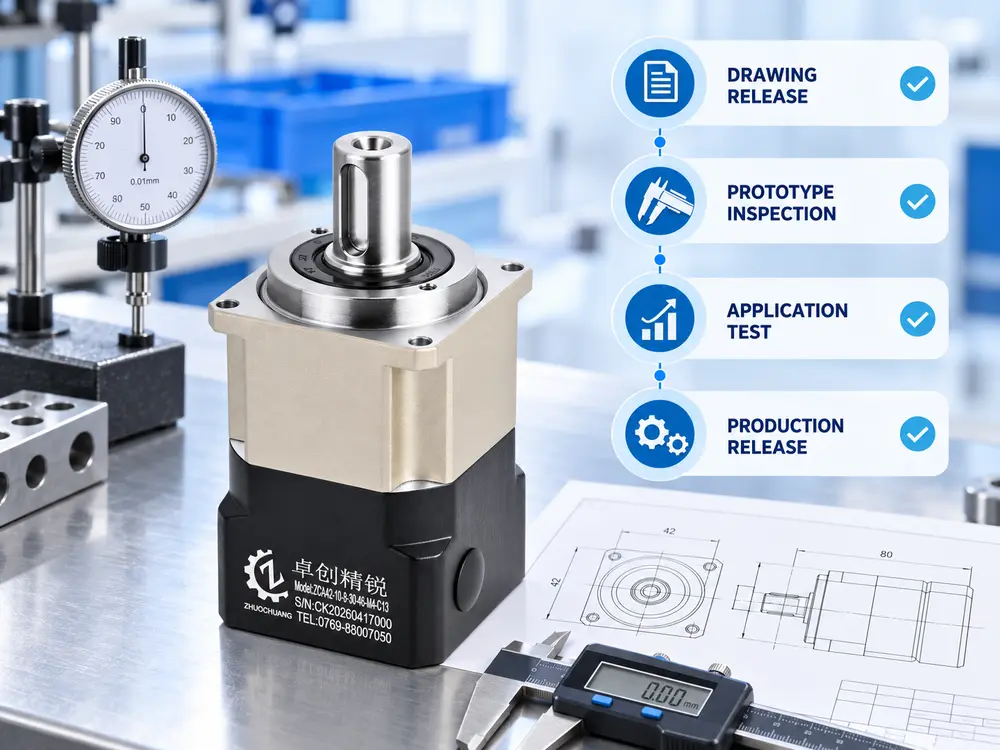
How a Custom Precision Planetary Gearbox Reaches Production
A credible custom planetary gearbox project needs approval gates. Skipping them may save days before the sample is built and lose weeks when the assembly reaches the machine. The same control is important for custom servo gearboxes used across several axes of one OEM machine. A custom precision planetary gearbox also needs measurable prototype acceptance limits rather than approval based only on appearance or no-load rotation.
Gear rating standards can support design comparison, but they do not replace validation of the assembled drive. A responsible custom planetary gearbox manufacturer must still evaluate the selected bearings, housing, interfaces, lubrication and application duty. ISO 6336-1 explains general influence factors for calculating spur and helical gear load capacity and explicitly distinguishes gear-design comparison from assurance of a complete drive system. See the ISO 6336-1:2019 overview.
What a Custom Planetary Gearbox Manufacturer Reviews Before Quoting
| Change | Typical engineering effect | What the buyer should provide |
|---|---|---|
| Motor adapter | Usually retains the internal platform; requires interface and coupling checks. | Complete motor drawing and model. |
| Output shaft or flange | May affect machining, heat treatment, runout, bearing load and tooling. | Connection drawing, torque and external-load position. |
| Non-standard ratio | May require new gears, stage review, strength calculation and longer validation. | Required speeds, acceptable speed range and torque cycle. |
| Lower backlash grade | Requires suitable components, tighter assembly control and measurement criteria. | Allowable error, test torque and operating condition. |
| Housing or mounting change | Can affect stiffness, alignment, sealing, tooling and installation access. | Machine assembly drawing and fixed datums. |
| Special material or finish | Adds material sourcing, process control and compatibility review. | Environment, cleaning method and required standard. |
The price of a custom planetary gearbox should be discussed after the design level is known. A one-off adapter is different from a new hardened shaft, and both are different from a new gear ratio. For repeat orders, also state estimated annual quantity and batch size. Those figures help the custom planetary gearbox manufacturer decide whether dedicated tooling, fixtures or inspection methods are economical. They also prevent a custom planetary gear reducer quotation from hiding prototype and production assumptions in one number.
RFQ Package for a Custom Planetary Gearbox
A concise technical package produces a better quotation than a long email with missing load data. Send:
- motor brand, complete model, rated speed, maximum speed and drawing;
- required output speed or ratio, including acceptable alternatives;
- continuous torque, acceleration torque, emergency-stop torque and duration;
- load inertia, acceleration time, reversals and starts per hour;
- backlash target and the operating condition used to judge it;
- output connection, radial force, axial force, load distance and external supports;
- mounting drawing, available envelope and fixed interface dimensions;
- duty cycle, daily operating time, ambient temperature and contamination;
- prototype quantity, expected annual quantity and target delivery date;
- required inspection report, certificate, labeling and packaging.
If some values are unknown, send the machine drawing and motion description first. The supplier can identify missing parameters before a custom planetary gearbox development route is approved. This early review is useful for both one-off mechanisms and repeat-production custom servo gearboxes. You can also review the available planetary gearbox range to see whether a proven inline or right-angle platform already matches most of the requirement.
For a repeated OEM program, the approved customized planetary gear reducer drawing should carry a controlled revision number. Later changes to the motor, shaft, finish or test requirement can then be reviewed without confusing the validated sample with a new configuration. The same revision control should cover the inspection record for every custom precision planetary gearbox released to production.
Questions to Resolve Before Approving the Drawing
Can a standard gearbox become a custom model by changing only the motor adapter?
Yes. If the ratio, torque, backlash, speed and output structure already fit, a motor-adapter change may be the only necessary modification. The coupling position and shaft engagement still need drawing approval.
Can any output shaft be made longer?
Not automatically. A longer shaft can increase bending moment and deflection. The shaft geometry, material, bearing support, radial load and load distance must be checked together.
Does a custom ratio always require a new gearbox?
No. First compare nearby catalog ratios and determine whether the motor command or machine speed can be adjusted. A truly non-standard ratio may require new gear components and additional validation.
What should be approved for a customized planetary gear reducer prototype?
Approve the exact drawing revision, interfaces, ratio, backlash grade, test criteria, materials or finishes, quantity, lead time and responsibility for application testing. The prototype agreement for a customized planetary gear reducer should also state which changes would require a new sample.
Turn the Requirement into an Approachable Drawing
Send your motor model, machine drawing, ratio, torque profile, backlash target and order quantity. Dongguan Zhuochuang Precision Machinery Co., Ltd. can review whether a proven platform or a custom planetary gear reducer is appropriate, then define the interface changes required for your application.
Request Selection and Quotation