
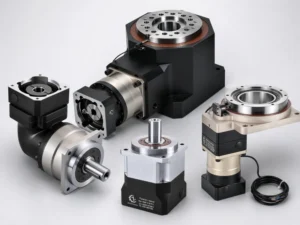
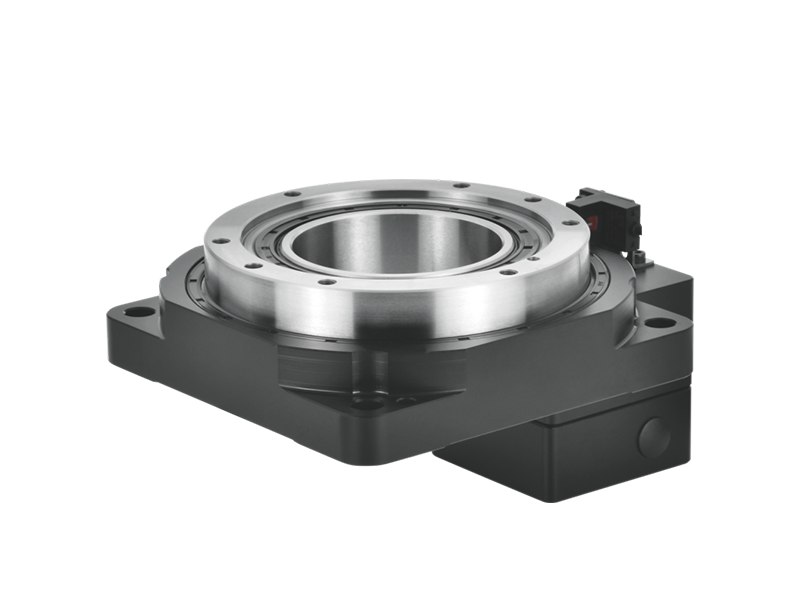
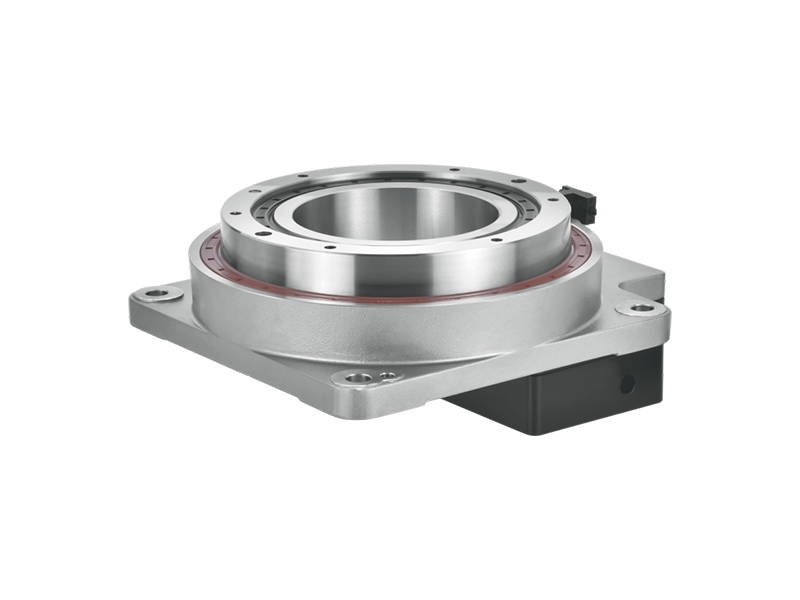
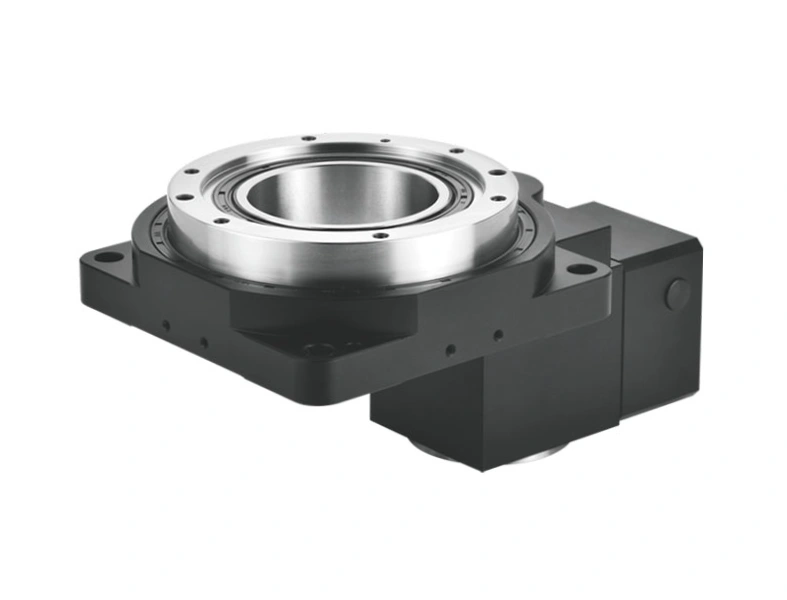
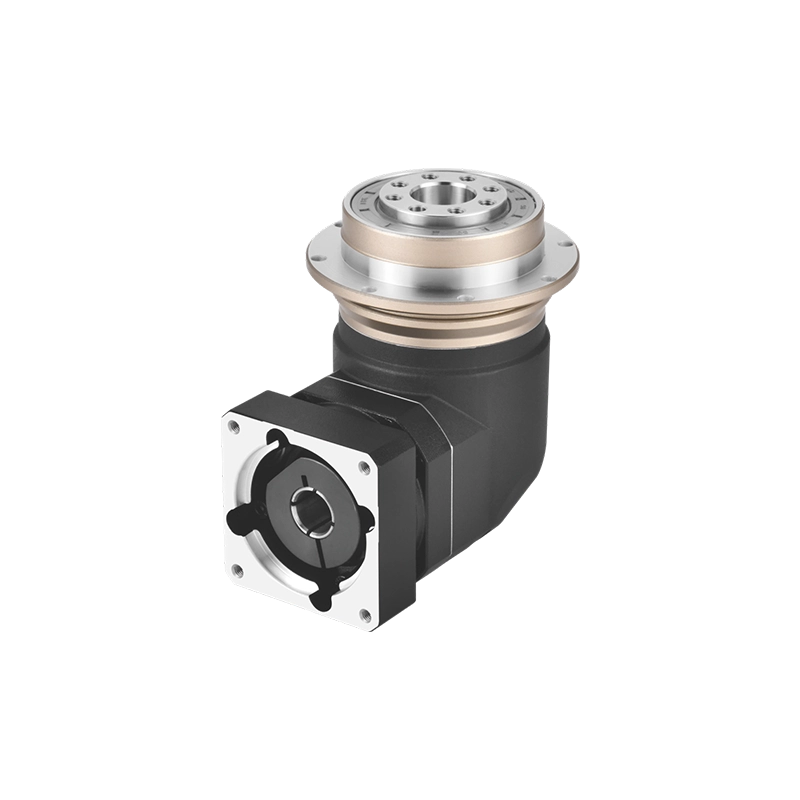
Most right angle servo gearbox selection guides focus on the static numbers — ratio, torque, backlash, motor flange. Those numbers matter, but they only tell part of the story. Once a servo axis needs to accelerate, stop, reverse, and hold position dozens of times per minute, what actually determines machine performance is the gearbox’s dynamic behavior: how it responds to sudden torque demand, how much inertia it adds to the motor’s control loop, and how quickly the axis settles after a move.
This is the part of selecting a high speed right angle gearbox that gets skipped most often — and the part that causes the most commissioning problems when a machine runs faster than the original test conditions.
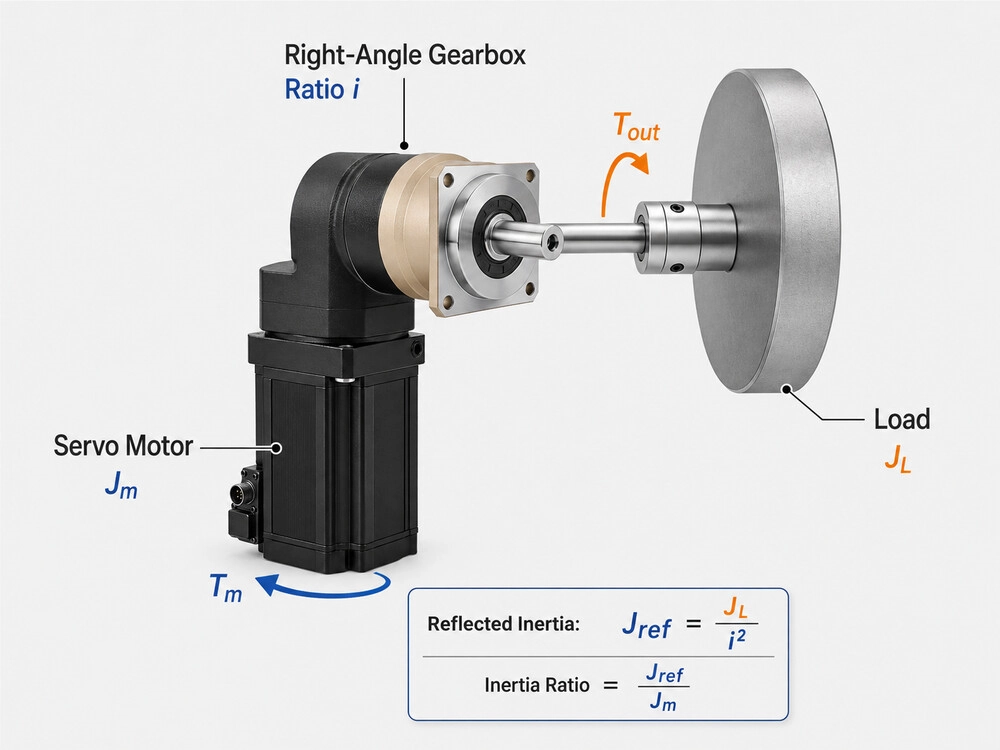
Dynamic performance in a right angle servo gearbox depends on inertia ratio, torsional stiffness, and how the direction-changing stage responds under acceleration.
Why Dynamic Response Matters More at High Speed
A servo motor does not simply run at a set speed. In most automation cycles, it spends much of its time accelerating and decelerating rather than moving at constant velocity. The faster the required cycle rate, the shorter the acceleration window, and the higher the torque demand during that window.
A right angle servo gearbox sits directly inside this control loop. Its inertia, stiffness, and internal damping all affect how the servo drive responds to a motion command — and how well the actual mechanical output tracks what the controller intended. At low speed and light duty, small weaknesses in the gearbox are easy to miss. At high speed with frequent reversals, they show up as overshoot, vibration, or a longer-than-expected settling time before the axis is truly in position.
Inertia Matching: The First Number Most Buyers Skip
Every right angle servo gearbox reflects a certain amount of load inertia back to the motor shaft, scaled by the square of the gear ratio. If this reflected inertia is too high relative to the motor’s own rotor inertia, the servo loop becomes harder to tune — the motor has to work harder to accelerate and decelerate the combined system, and gains often need to be reduced to avoid instability.
For a high speed right angle gearbox, this matters even more than for a slow-moving axis, because the acceleration and deceleration events happen more often and more abruptly. A gearbox with a well-controlled reflected inertia, combined with an appropriately sized motor, allows tighter servo gains and faster, more stable settling.
Before selecting a right angle servo gearbox, ask the supplier for the gearbox’s moment of inertia at the input shaft. Many datasheets omit this value, but it is one of the most useful numbers for confirming whether a motor and gearbox combination will actually behave well in a fast-cycling application — not just whether the torque numbers are large enough.
Torsional Stiffness and Settling Time
Torsional stiffness describes how much a gearbox twists under a given torque load. In a right angle servo gearbox, stiffness comes from both the planetary reduction stage and the direction-changing bevel or hypoid stage — two gear meshes in series, rather than one.
When stiffness is low, the output shaft does not track the input motion instantly. Under rapid acceleration, this shows up as a small delay or oscillation before the load reaches its commanded position — often called settling time. For applications like high speed indexing, pick-and-place transfer, or synchronized multi-axis motion, a longer settling time directly limits how fast the machine can cycle, even if the servo motor itself is capable of higher speed.
A right angle servo gearbox built for high-dynamic applications should be evaluated on stiffness at the complete output, not just the planetary stage in isolation. The direction-changing stage is often the weaker link, and a supplier that cannot provide combined stiffness data may not have tested the gearbox under realistic dynamic load.
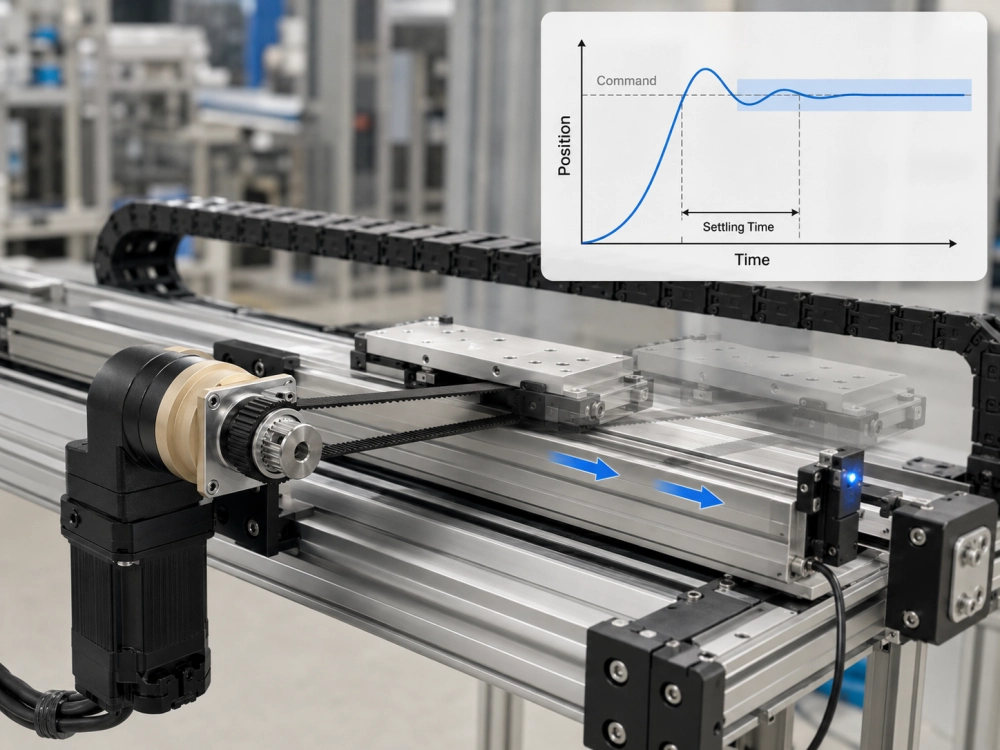
In fast-cycling automation, a stiffer right angle servo gearbox generally settles into position faster after each move, allowing higher effective cycle rates.
Acceleration Torque vs Rated Torque
Datasheets typically list rated (continuous) torque prominently, but for a high speed right angle gearbox running a fast duty cycle, peak or acceleration torque is often the more important figure. During rapid starts and stops, instantaneous torque demand can be several times higher than the continuous rating.
If the gearbox is only sized against continuous torque, it may be undersized for the acceleration spikes the application actually generates. This does not always cause immediate failure — it more commonly shows up as gradually increasing backlash, bearing wear, or reduced service life as the gearbox absorbs repeated overload events it was never rated to handle continuously.
When specifying a right angle servo gearbox for a high-cycle application, provide the supplier with your actual motion profile — move distance, cycle time, acceleration and deceleration time, and dwell time — rather than just a target ratio and torque number. This allows the acceleration torque to be checked against the gearbox’s peak rating, not just its continuous rating.
Why Worm Gearboxes Struggle in This Specific Area
It is worth noting briefly why a worm gearbox for a servo motor is rarely chosen for high-dynamic applications, separate from the efficiency and thermal reasons commonly discussed elsewhere. A worm gear mesh relies on sliding contact, and sliding contact does not respond to sudden torque reversal the same way a rolling planetary mesh does — backlash and internal compliance tend to be higher, which works against fast, repeatable settling. For applications where dynamic response and settling time genuinely matter, this is one more reason a planetary-based right angle servo gearbox is typically the better starting point.
Resonance and Mechanical Coupling
A servo system, motor, gearbox, coupling, and load together form a mechanical system with its own resonant frequencies. If the servo drive’s control bandwidth approaches a resonance created by gearbox compliance or coupling flexibility, the result can be audible noise, vibration, or instability at certain speeds — sometimes only appearing once the machine runs faster than it did during initial testing.
A right angle servo gearbox with higher torsional stiffness generally pushes resonant frequencies higher, giving the servo drive more usable bandwidth before instability appears. This is one reason two gearboxes with identical ratio and torque ratings can produce noticeably different real-world dynamic performance — stiffness and inertia, not just torque capacity, decide how the axis actually behaves at speed.
What to Provide When Requesting a High Speed Right Angle Servo Gearbox
To get a recommendation that actually holds up at production speed, provide more than ratio and torque. A complete request should include:
- Servo motor model, including rotor inertia if known
- Target cycle rate and full motion profile (move distance, accel/decel time, dwell time)
- Load inertia at the output, or enough detail to estimate it
- Required backlash and positioning tolerance
- Whether direction reverses frequently within the cycle
- Mounting orientation and any resonance-sensitive structure nearby
With this information, a supplier can check inertia ratio, acceleration torque margin, and stiffness against the actual application — rather than only confirming that rated torque and ratio look sufficient on paper.
Where This Fits Into Selection
Dynamic response is not a replacement for the standard selection checklist — ratio, torque, backlash, motor interface, and output configuration still need to be confirmed. It is an additional layer that matters specifically when the axis needs to move fast, cycle often, and settle quickly. For applications like packaging fold-and-seal stations, high-speed indexing, and pick-and-place transfer axes, this layer is often what separates a gearbox that works on paper from one that performs on the actual machine.
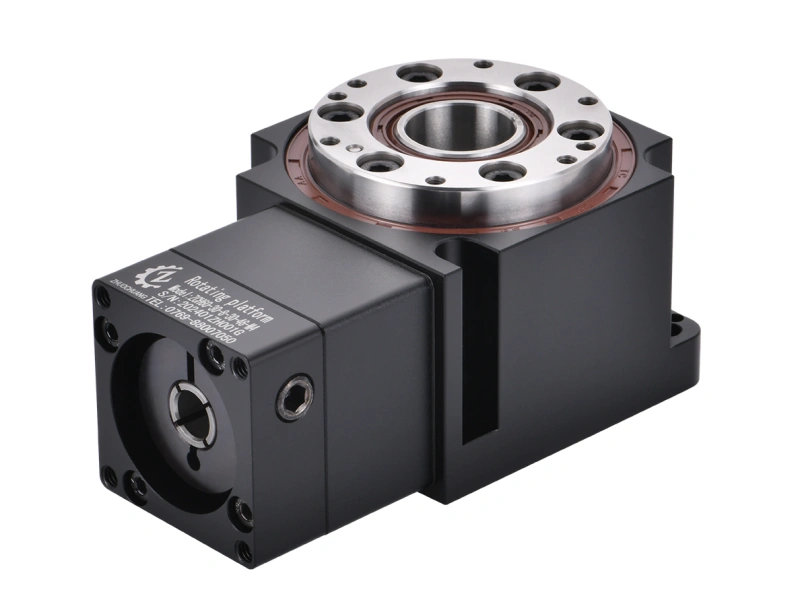
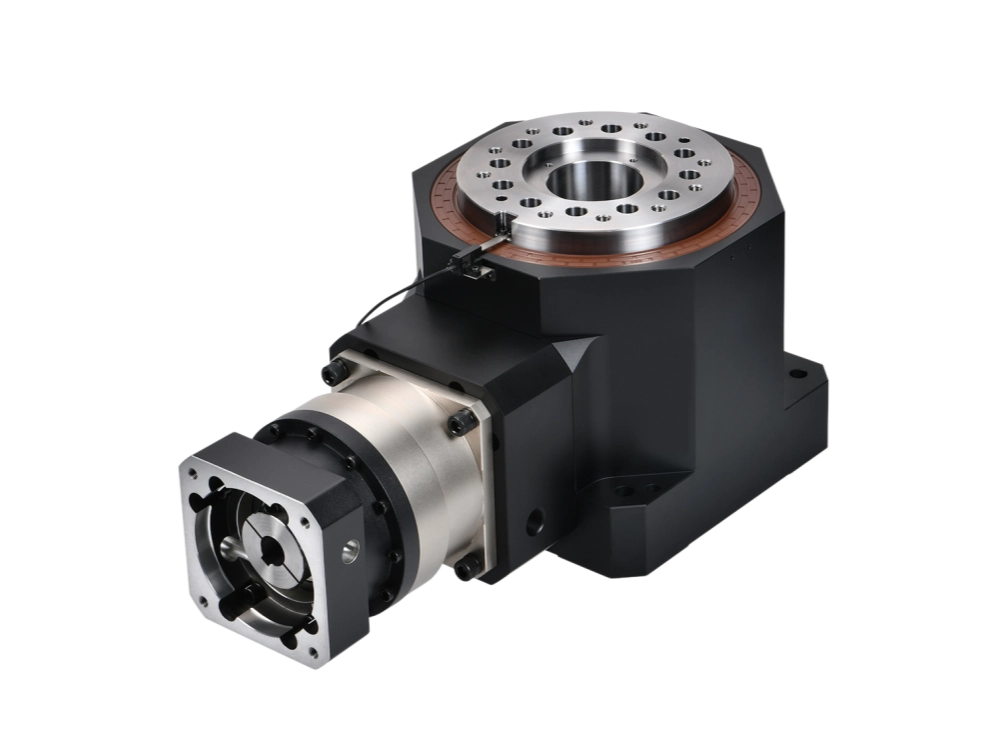
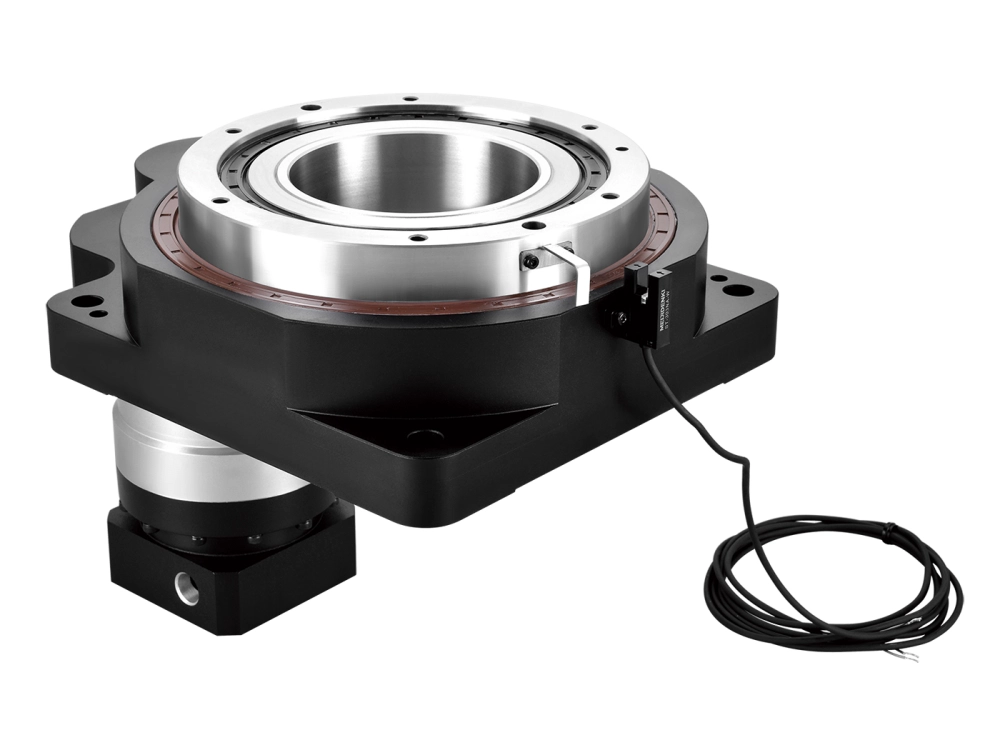
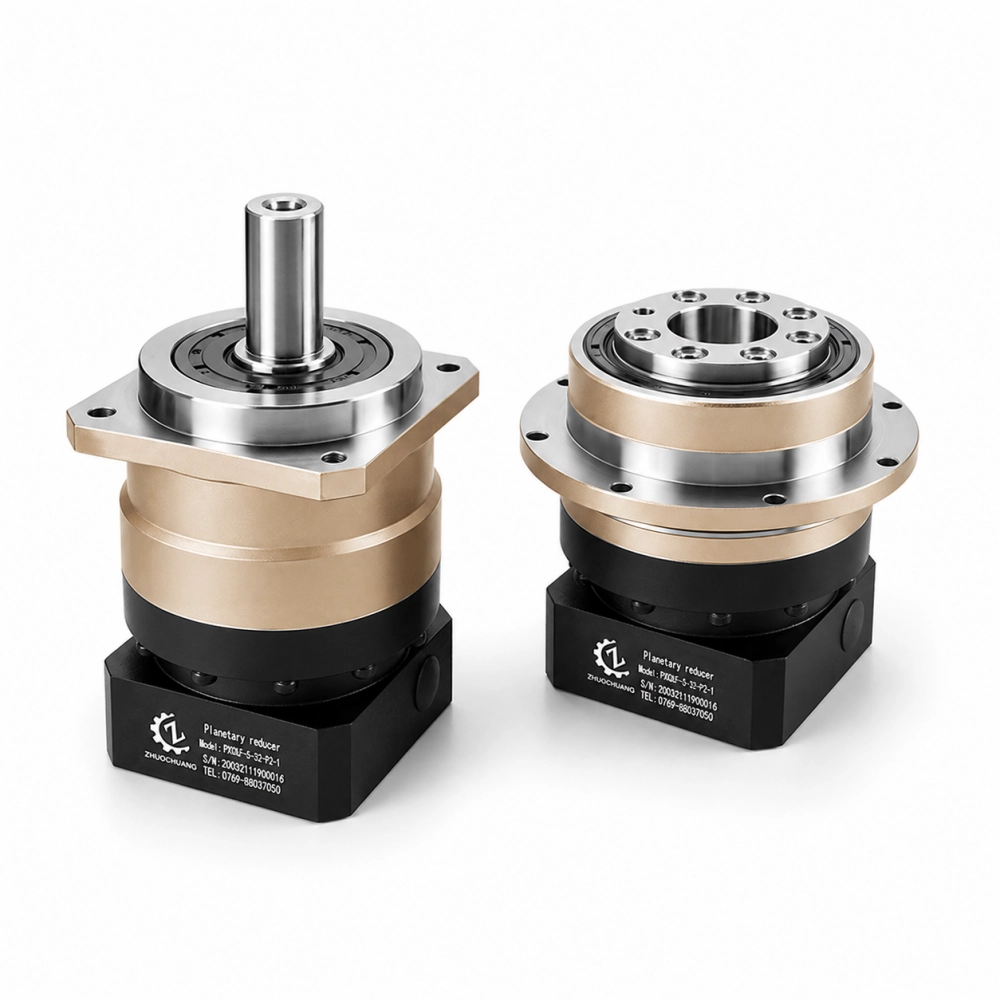
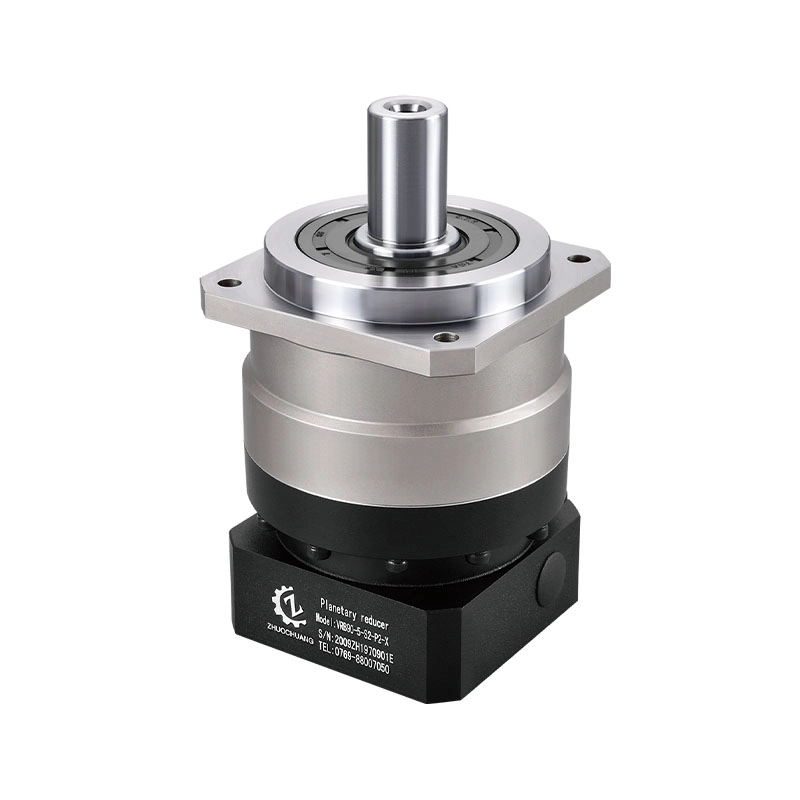
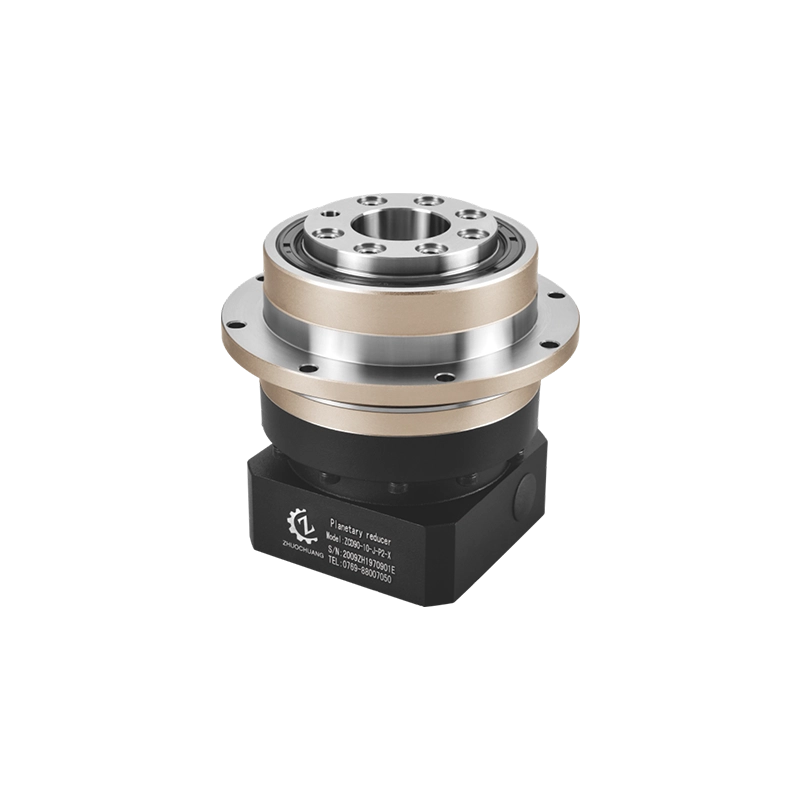
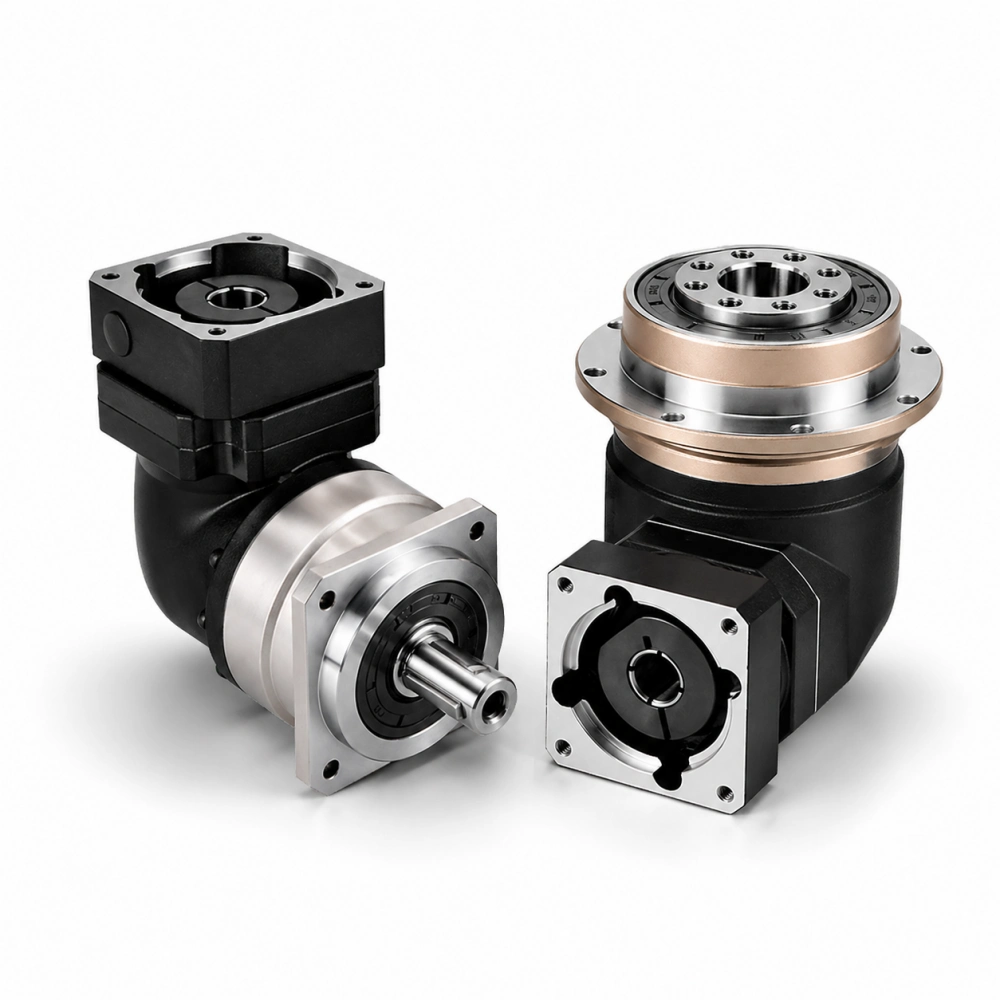
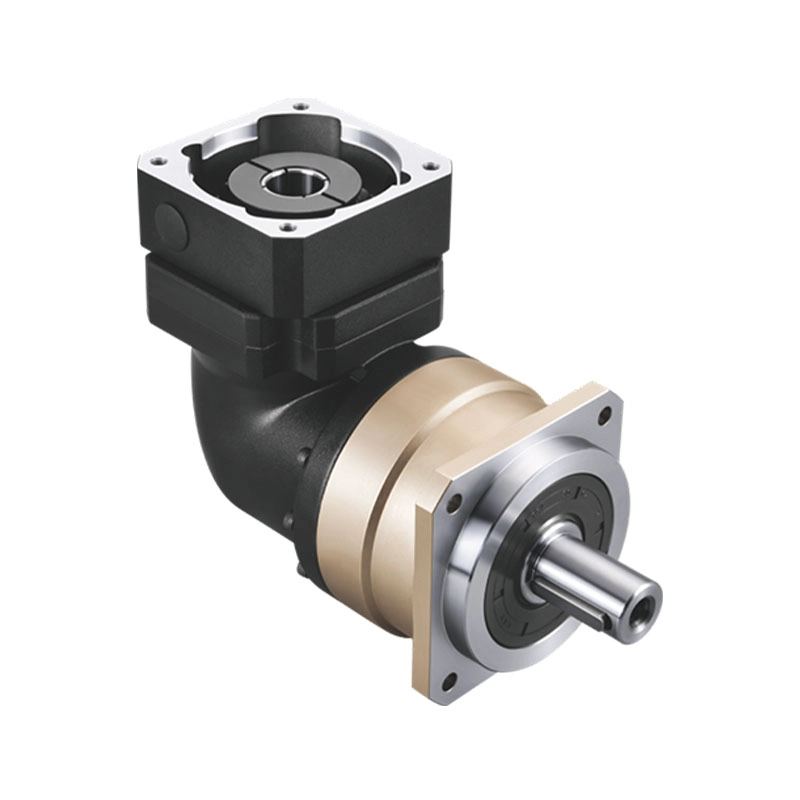
Zhuochuang’s right angle servo gearbox range, including the VRBR series and ZCDR series, is built with the stiffness and low-backlash characteristics needed for high speed, high-cycle servo applications, and our engineering team can review inertia matching and acceleration torque against your motion profile.
Conclusion
A right angle servo gearbox is often selected on ratio, torque, and backlash alone, and for many applications that is enough. But once the axis needs to run fast, reverse often, and settle into position quickly, dynamic factors — inertia ratio, torsional stiffness, acceleration torque margin, and resonance — start to matter just as much as the numbers on the front of the datasheet.
For a high speed right angle gearbox application, the safest approach is to share the actual motion profile with your supplier rather than relying on ratio and torque alone. A gearbox that looks correctly sized on paper can still underperform in a fast-cycling machine if its dynamic characteristics were never checked against the real duty cycle.
If you’re specifying a right angle servo gearbox for a fast-cycling axis, contact our engineering team with your servo motor model, motion profile, and positioning requirement for a direct review.
FAQ
What makes a right angle servo gearbox suitable for high speed applications?
Low reflected inertia, high torsional stiffness across both the planetary and direction-changing stages, and enough peak torque margin to absorb acceleration spikes without added wear are the main factors that determine high speed suitability.
What is inertia matching and why does it matter?
Inertia matching compares the gearbox and load inertia, reflected to the motor shaft, against the motor’s own rotor inertia. A poor match makes the servo loop harder to tune and can limit how fast and precisely the axis can move.
Why does settling time matter more at high cycle rates?
Settling time is the delay between the motor reaching its commanded position and the load actually stopping and stabilizing. At high cycle rates, this delay directly limits how many cycles per minute the machine can achieve, even if the motor itself is capable of higher speed.
Is peak torque more important than rated torque for a high speed right angle gearbox?
For fast-cycling applications, yes. Acceleration and deceleration events often demand torque well above the continuous rating, and sizing only against rated torque can lead to gradual wear from repeated overload.
Why is a worm gearbox usually avoided in high-dynamic servo applications?
A worm gear mesh relies on sliding contact, which typically has more backlash and compliance than a rolling planetary mesh. This works against fast, repeatable settling, making a planetary-based right angle servo gearbox the more common choice for high-dynamic axes.
What information should I send for a high speed right angle servo gearbox recommendation?
Provide your servo motor model, target cycle rate, full motion profile, load inertia, backlash requirement, and mounting orientation so the supplier can check inertia ratio, stiffness, and acceleration torque against your actual application.
Related Reading
- Right Angle Servo Gearbox Selection Guide — backlash, torque, motor interface, and replacement checklist for servo applications.
- Right Angle Planetary Gearbox for Servo Drive Layouts — when a 90-degree layout makes sense versus an inline gearbox.
- Worm Gear Reducer vs Planetary Gearbox Selection — a full mechanical comparison for buyers still deciding between the two technologies.