
Types of Gear Reducers and When Planetary Designs Fit Best
There are many types of gear reducers used in industrial machines. Some are selected for low cost. Some are selected for high shock load. Some are selected for compact right-angle layouts. Others are selected because the machine needs low backlash, high stiffness, servo response and repeatable positioning.
That is why the best reducer is not simply the strongest, cheapest or smallest reducer.
The better question is:
Which gear reducer type fits the real motion problem of the machine?
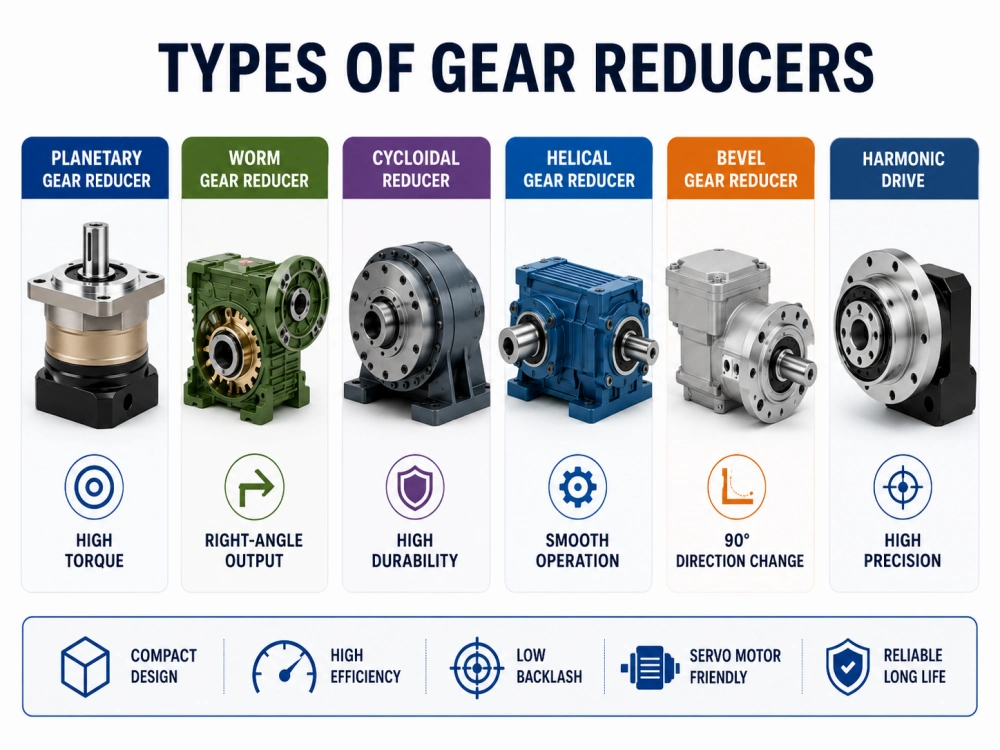
This article compares common gear reducer types from a practical automation point of view. It explains where worm reducers, cycloidal reducers, helical reducers, bevel reducers, harmonic drives and planetary gear reducers are usually considered, and why precision planetary gearboxes are often a strong choice for servo-driven industrial equipment.
Start with the Machine Problem, Not the Reducer Name
A gear reducer is used to reduce motor speed and increase usable output torque. But reducer selection is rarely solved by ratio alone.
Before choosing a reducer type, engineers should understand the real operating condition:
- Is the machine driven by a servo motor or a simple AC motor?
- Does the axis need positioning accuracy?
- Is backlash important?
- Is the load continuous or intermittent?
- Will the reducer face shock load?
- Is the installation space inline or right-angle?
- Does the output side have radial or axial load?
- Is efficiency or heat generation important?
- Does the machine need fast acceleration and reversing?
Once these questions are clear, the reducer type becomes easier to judge.
Worm Gear Reducer: Simple Right-Angle Transmission
A worm gear reducer is widely used for simple right-angle speed reduction. It can provide large reduction in a compact form, and it is often used in conveyors, lifts, gates, adjustment mechanisms and low-speed machinery.
The main advantage is layout simplicity and cost control.
However, worm reducers usually have lower efficiency than precision planetary gearboxes. Heat can become a concern in continuous-duty applications. Backlash and torsional stiffness may also limit their use in servo positioning systems.
A worm reducer may be suitable when the application is simple, low speed and not highly sensitive to backlash.
But when the machine needs servo response, low backlash and higher efficiency, a precision planetary gearbox is usually a better direction.
Helical and Spur Gear Reducers: General Industrial Power Transmission
Helical and spur gear reducers are common in industrial power transmission. They are often used in conveyors, pumps, mixers, production lines and general machinery.
Helical gears can run more smoothly than simple spur gears because of their angled tooth contact. Spur gear reducers are simple and direct, but may be noisier at higher speeds.
These reducers are useful when the main requirement is stable power transmission rather than compact servo positioning.
For general machinery, they can be reliable and practical. For compact servo axes where low backlash, high torque density and motor matching are important, a planetary reducer may provide a more suitable structure.
Cycloidal Reducer: Strong Shock Load Capacity
A cycloidal reducer uses a cycloidal disc and rolling contact structure to transmit torque. It is often considered when the application has shock load, high reduction ratio or heavy-duty low-speed motion.
Cycloidal reducers are commonly seen in robot joints, heavy rotary motion, indexing systems, AGV drives and industrial equipment where impact resistance matters.
Their strength is load distribution and shock resistance.
The trade-off is that the structure may be larger, heavier or less efficient depending on design. For high-response servo axes, CNC equipment, packaging machines and compact automation, engineers must compare stiffness, backlash, efficiency, size and servo tuning carefully.
For applications where high shock load is the main issue, cycloidal may be considered first. For compact servo automation with efficiency, low backlash and fast response requirements, a precision planetary gearbox may be more practical.
Bevel Gear Reducer: Changing Direction with Gear Meshes
A bevel gear reducer changes power direction through bevel gears. It is often used when the input and output shafts must meet at an angle, commonly 90 degrees.
Bevel reducers can be useful in machine layouts where direction change is the main requirement.
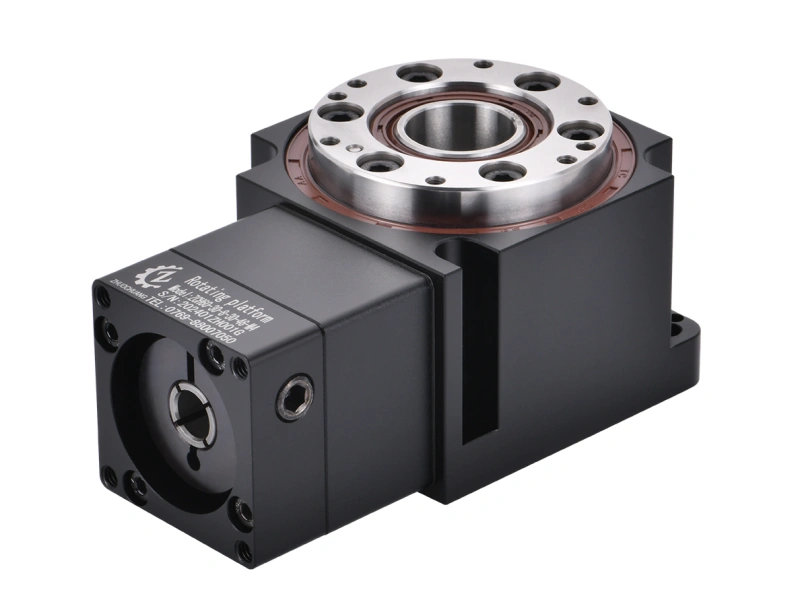
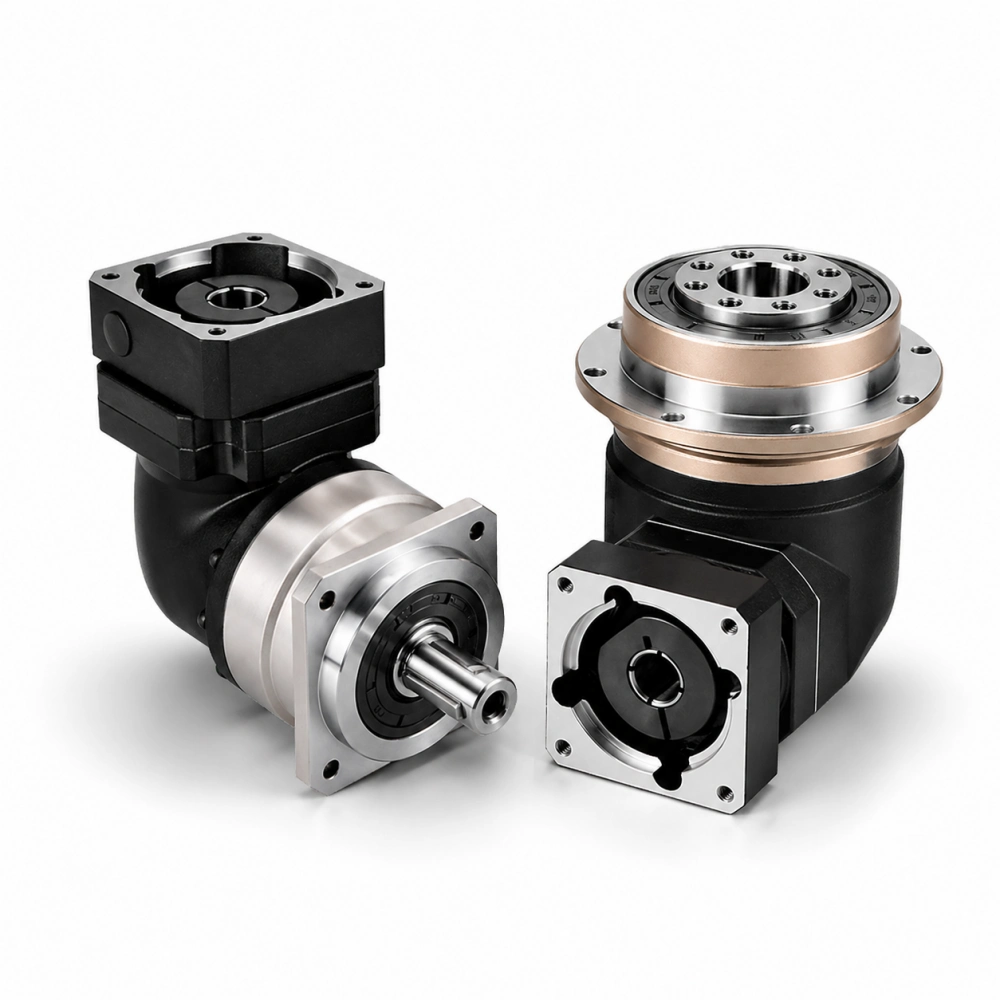
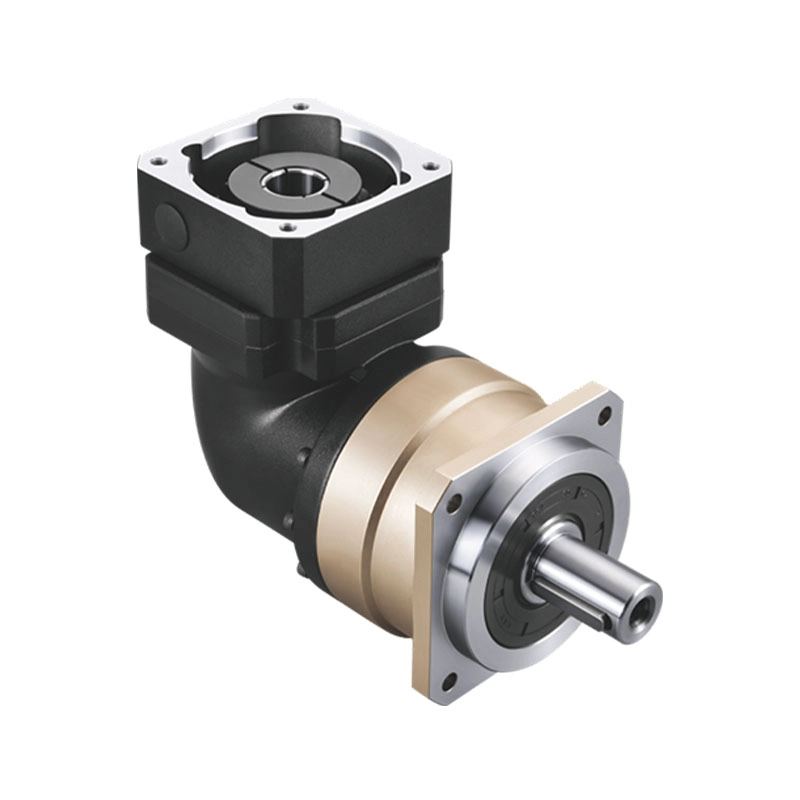
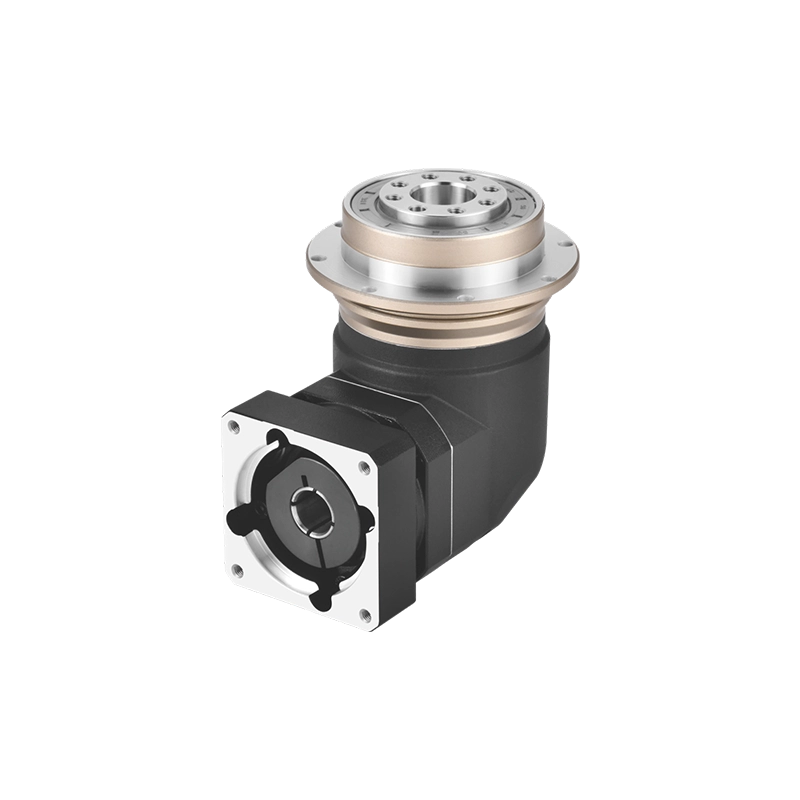
But a basic bevel reducer is not always the same as a precision right-angle planetary gearbox. A precision right-angle planetary gearbox combines a 90-degree layout with planetary reduction, servo motor mounting and controlled motion performance.
For machine layouts that need both space saving and servo precision, Zhuochuang right-angle planetary gearboxes can be reviewed here:
For a specific right-angle series, buyers may also review:
ZCDR Series Right Angle Planetary Gearbox
Harmonic Drive: Zero Backlash in Compact Precision Motion
A harmonic drive, also called a strain wave gear, is often selected for compact precision applications where near-zero unloaded backlash is important.
It is commonly used in small robot joints, optical systems, laboratory automation and compact precision positioning devices.
The key advantage is near-zero backlash in a small package.
The limitation is that harmonic drives use a flexible spline. This flexibility can create compliance under load. In applications with changing torque, high stiffness demand or continuous-duty industrial motion, engineers must compare torsional stiffness, heat, torque capacity and service life.
For small-frame zero-backlash applications, harmonic drive can be a good fit. For industrial servo automation where stiffness, efficiency and torque capacity are important, a precision planetary gearbox often becomes a more practical choice.
Planetary Gear Reducer: Compact, Efficient and Servo-Friendly
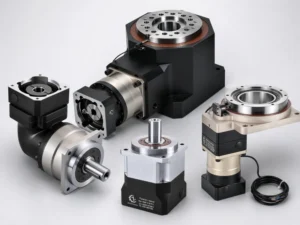
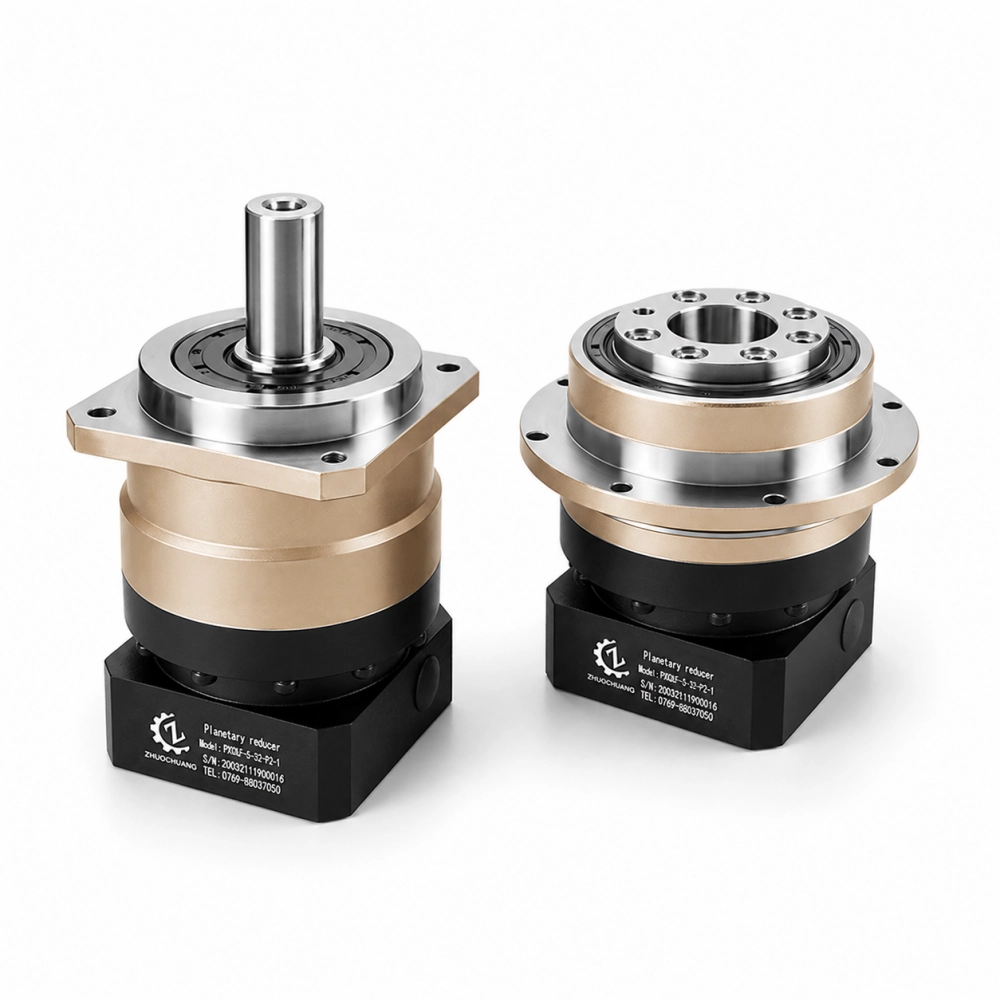
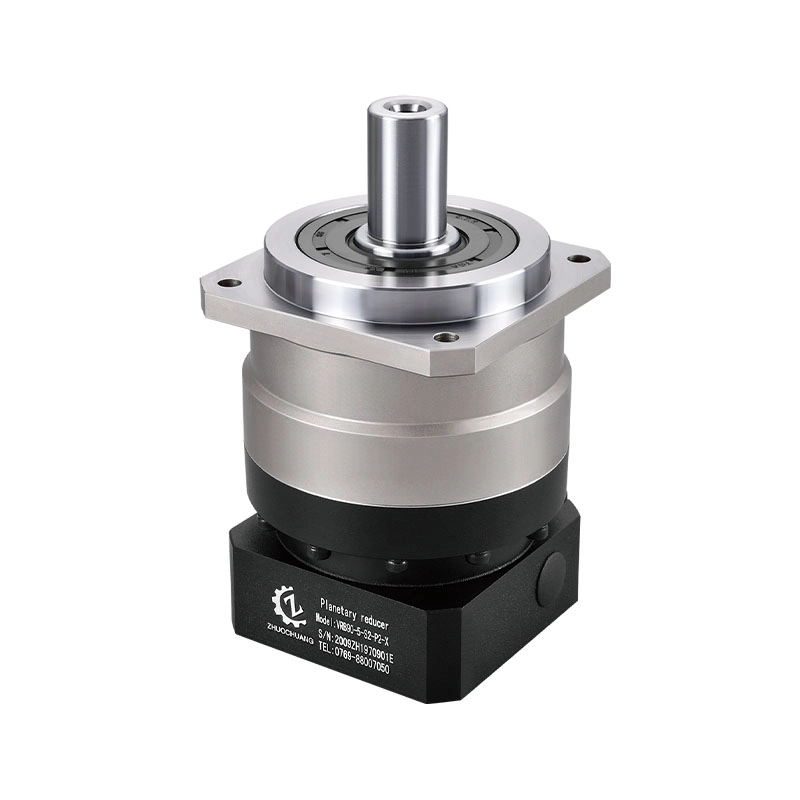
A planetary gear reducer uses a sun gear, planet gears, ring gear and carrier. Multiple planet gears share the load, giving the structure good torque density in a compact package.
This makes planetary reducers especially useful in servo automation.
Key advantages include:
- Compact size with high torque density
- Good efficiency compared with many high-ratio reducer types
- Low backlash options for precision motion
- Inline and right-angle configurations
- Good compatibility with servo and stepper motors
- Strong suitability for repeated acceleration and reversing
- Practical use in CNC, packaging, robotics and automation equipment
Zhuochuang precision planetary gearbox products can be reviewed here:
Precision Planetary Gearbox Range
For same-axis servo layouts, review:
Right-Angle Planetary Gearbox: When Layout and Precision Both Matter
Some machines do not have enough space for a straight motor-gearbox-load arrangement. In these cases, a right-angle reducer can solve the layout problem.
But not every right-angle reducer gives the same motion performance.
A worm reducer may be enough for simple low-speed transmission. A bevel reducer may be enough for direction change. A right-angle planetary gearbox is more suitable when the machine still needs servo control, low backlash, rigidity and repeatable motion.
This is why right-angle planetary gearboxes are widely used in:
- Packaging machinery
- Automated transfer systems
- Rotary indexing equipment
- Compact servo axes
- Conveyor positioning systems
- Robotics auxiliary axes
For space-limited machine designs, a right-angle planetary gearbox can reduce installation length while maintaining precision transmission.
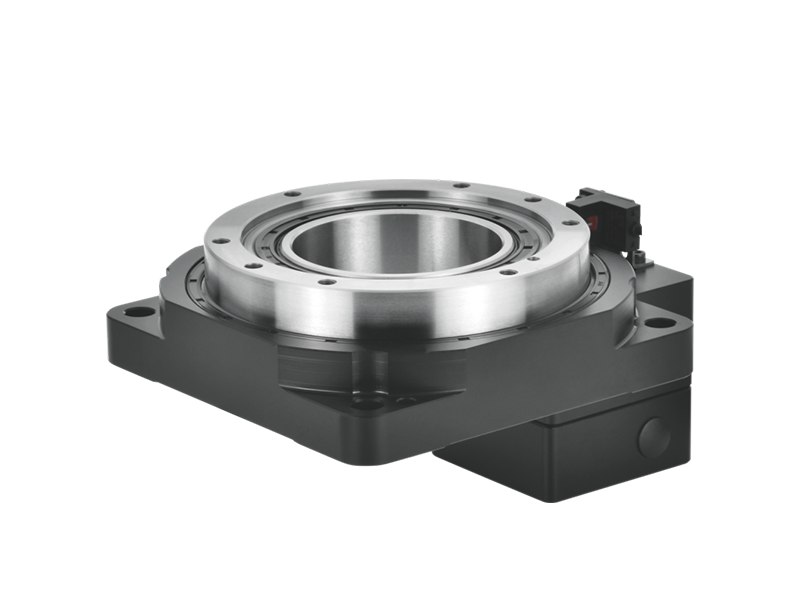
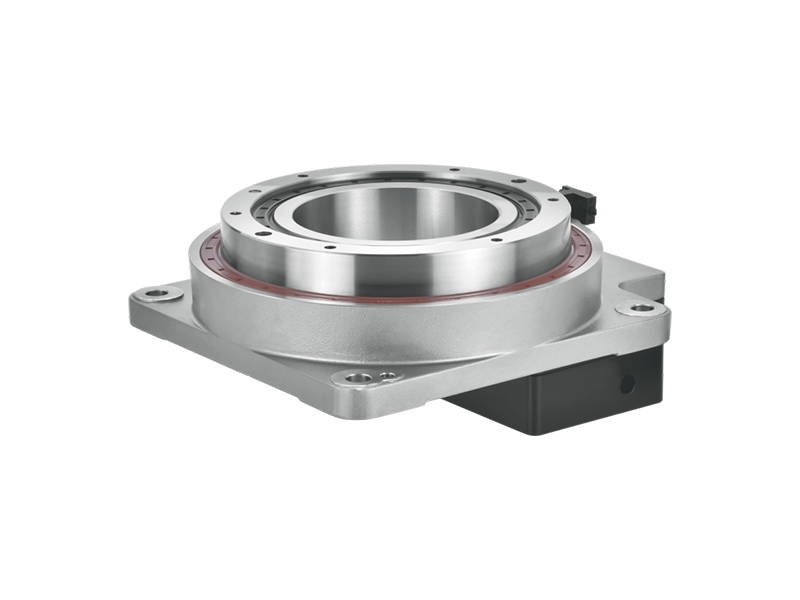
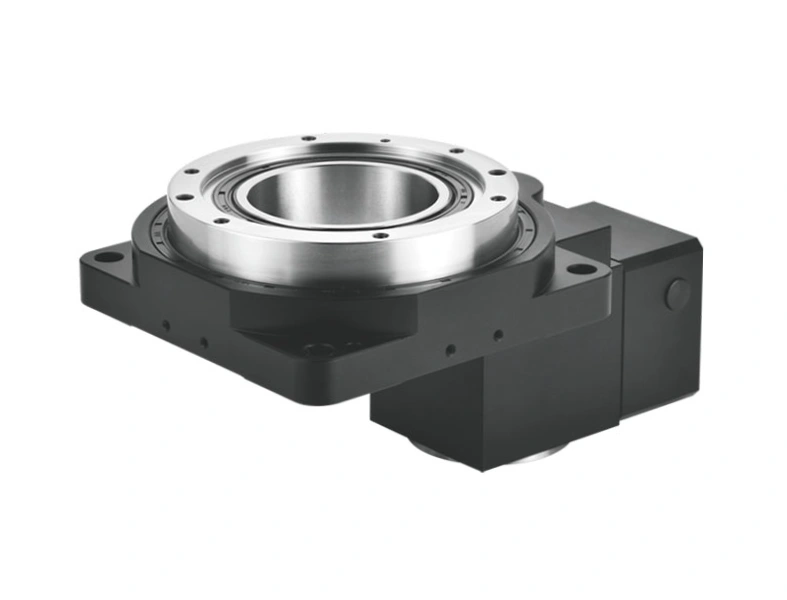
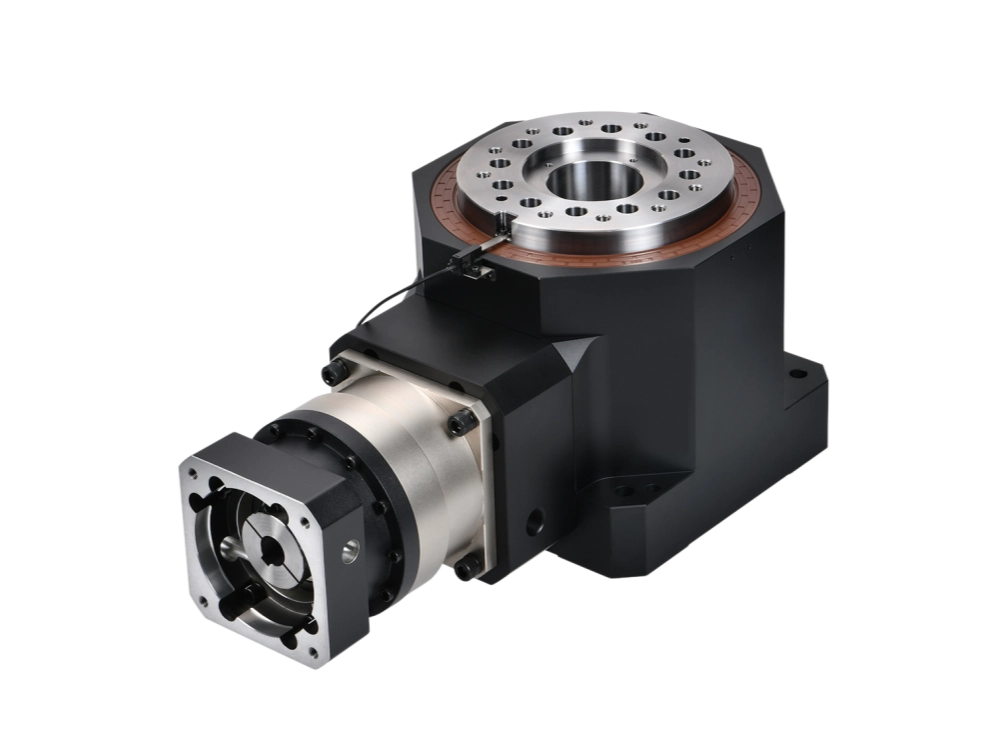
Hollow Rotary Table: Not Just Another Gear Reducer
Some buyers search for gear reducers when the real application needs rotary positioning with direct load support.
In that case, a hollow rotary table may be more suitable than a standard reducer.
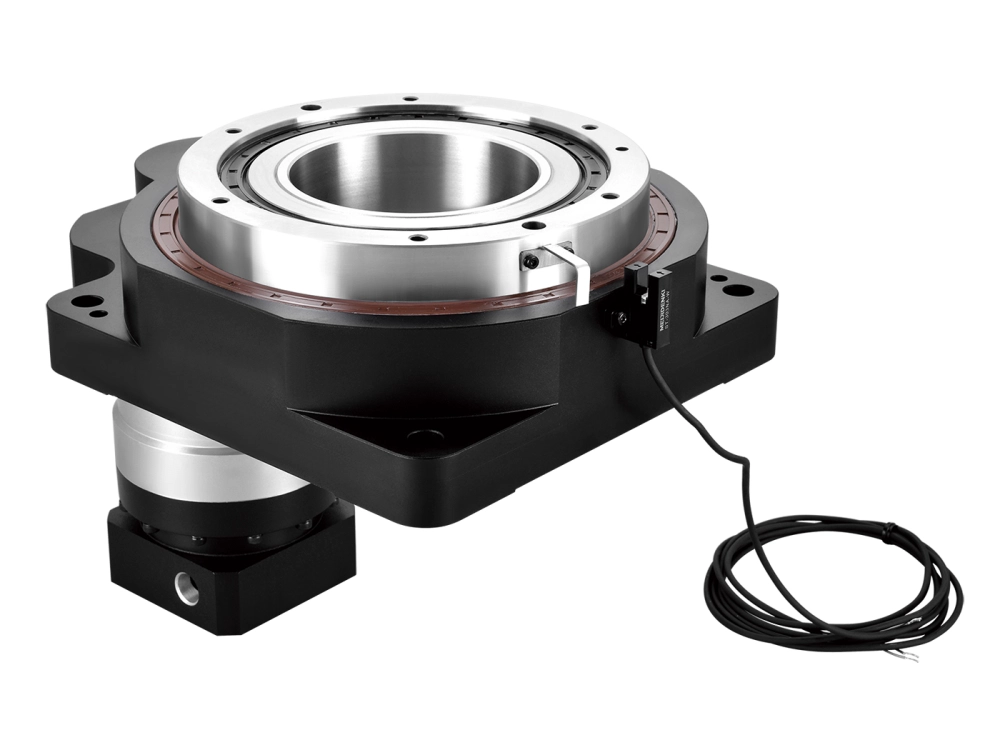
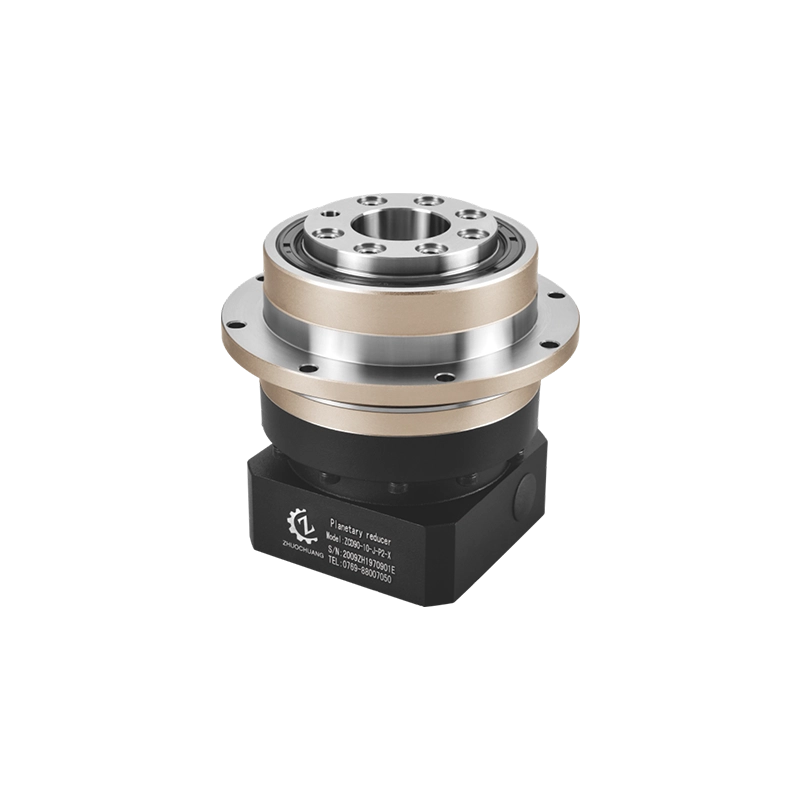
A hollow rotary table provides a large central bore, direct load mounting, rotary positioning and compact integration. It is often used when cables, air tubes or sensors need to pass through the center of the rotating platform.
This is different from a normal gear reducer.
If the application needs a large hollow bore, direct table support and positioning accuracy, review Zhuochuang hollow rotary table products:
For compact hollow rotary applications, you may also review:
ZCH Series Hollow Rotary Table
Quick Comparison of Gear Reducer Types
| Reducer Type | Best Fit | Main Strength | Main Caution |
|---|---|---|---|
| Worm gear reducer | Simple low-speed right-angle transmission | Compact layout and cost control | Efficiency and backlash may limit servo use |
| Helical / spur reducer | General industrial power transmission | Stable and widely used | May not be compact enough for precision servo axes |
| Cycloidal reducer | Shock load and high-ratio heavy-duty motion | Strong impact resistance | Size, efficiency and servo response should be checked |
| Bevel gear reducer | Direction change and right-angle layout | Simple 90-degree transmission | Not always suitable for low-backlash servo positioning |
| Harmonic drive | Small-frame zero-backlash applications | Compact and near-zero backlash | Compliance under load should be checked |
| Planetary gear reducer | Servo automation, CNC, robotics, packaging | Compact, efficient, low backlash options | Ratio, torque, backlash and duty cycle must be confirmed |
When Planetary Gear Reducers Fit Best
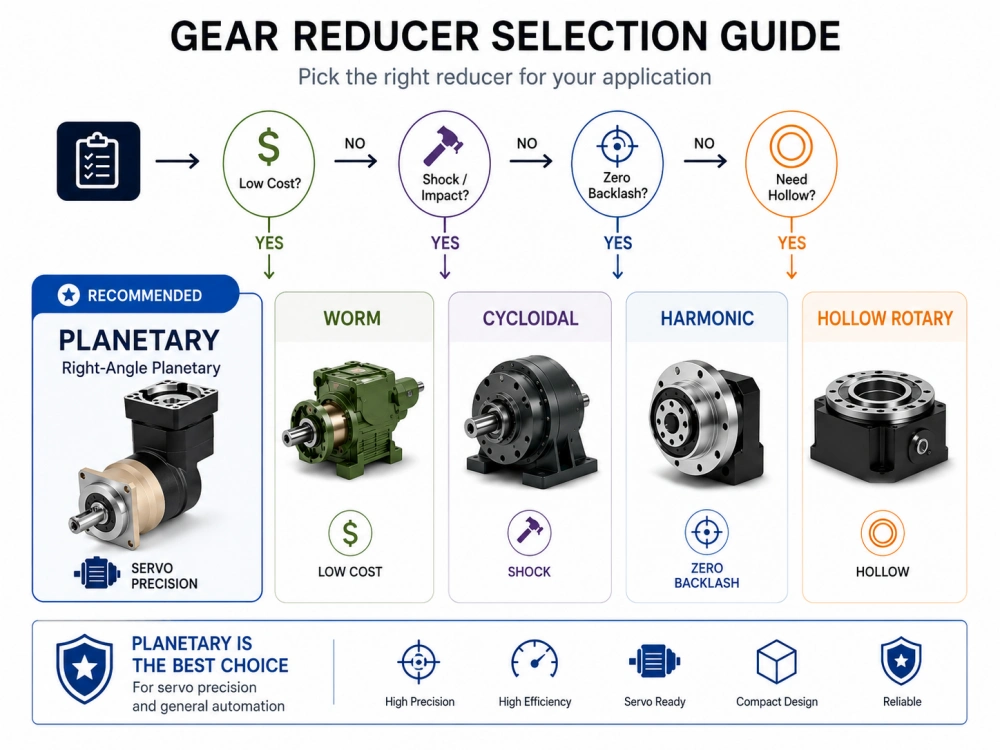
A planetary gear reducer is often a strong choice when the machine needs more than simple speed reduction.
It fits especially well when the application requires:
- Servo motor matching
- Compact size
- High torque density
- Low backlash
- Good torsional stiffness
- High efficiency
- Frequent acceleration and deceleration
- Repeatable positioning
- Inline or right-angle layout options
Typical applications include CNC machinery, packaging equipment, robotics, automated assembly lines, precision conveyors, indexing axes and industrial motion systems.
For buyers comparing reducer types, planetary gearboxes are often the practical middle ground between compact size, precision performance, cost and availability.
When Another Reducer Type May Be Better
Planetary gear reducers are useful in many precision automation systems, but they are not the answer to every problem.
A worm reducer may be enough for simple low-speed motion.
A cycloidal reducer may be better for heavy shock load.
A harmonic drive may be better for very small zero-backlash joints.
A helical reducer may be better for simple continuous-duty power transmission.
A hollow rotary table may be better when the machine needs direct rotary support and cable routing through the center.
The best choice depends on the real machine condition.
Selection Information to Send Before Choosing a Reducer Type
Before asking for a reducer recommendation, prepare the following data:
- Motor type and model
- Input speed
- Required output speed
- Required ratio
- Continuous torque
- Peak torque
- Backlash target
- Load inertia
- Duty cycle
- Mounting direction
- Available installation space
- Output shaft or flange requirement
- Radial and axial load
- Working environment
This information helps determine whether the application should use a planetary gearbox, worm reducer, cycloidal reducer, bevel reducer, harmonic drive or hollow rotary table.
Where Zhuochuang Fits
Dongguan Zhuochuang Precision Machinery Co., Ltd manufactures precision planetary gearboxes and hollow rotary tables for automation, CNC machinery, robotics, packaging equipment and precision positioning systems.
Our focus is not on every reducer type in the market. Our strength is precision planetary transmission and rotary positioning products for industrial motion control.
If your machine requires servo compatibility, low backlash, compact structure, torque density and stable positioning, Zhuochuang can help review whether an inline planetary gearbox, right-angle planetary gearbox or hollow rotary table is the correct direction.
For product selection support, contact us here:
Contact Zhuochuang for Gearbox Selection
Final Thought
There are many types of gear reducers, and each reducer type has a reason to exist.
The mistake is not choosing worm, cycloidal, bevel, helical, harmonic or planetary.
The real mistake is choosing a reducer type before understanding the machine’s load, ratio, layout, backlash, duty cycle, efficiency and positioning requirement.
For simple transmission, several reducer types may work. For precision servo automation, a planetary gear reducer often becomes the practical choice because it combines compact size, torque density, efficiency, low-backlash options and motor compatibility.