
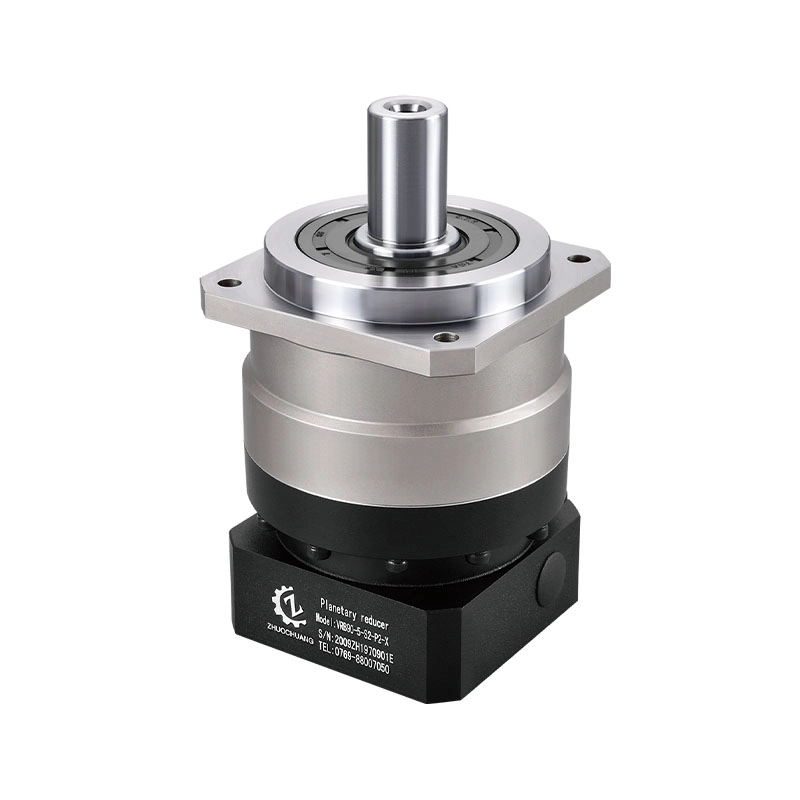
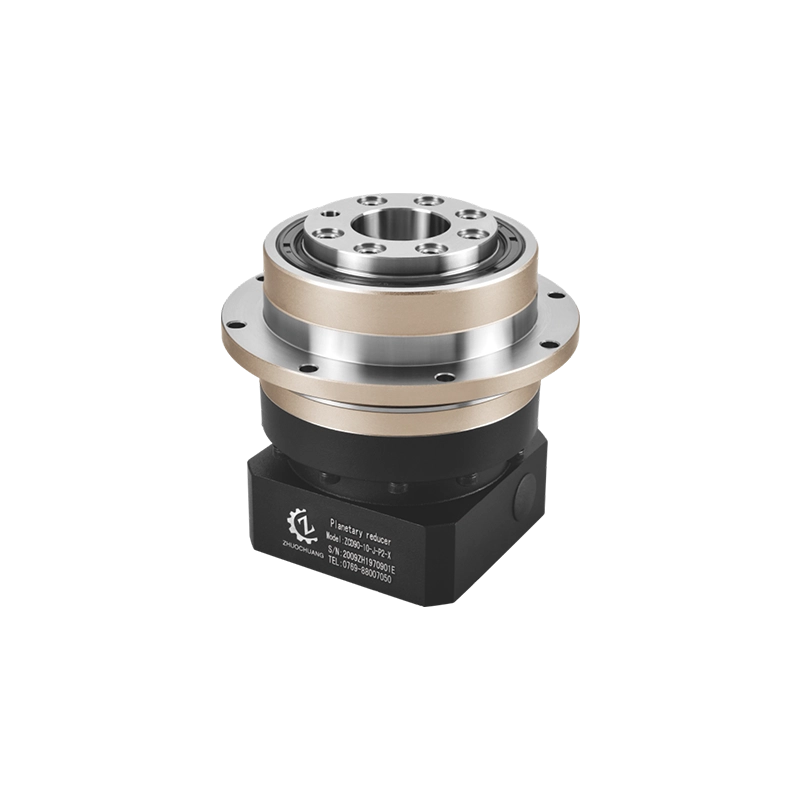
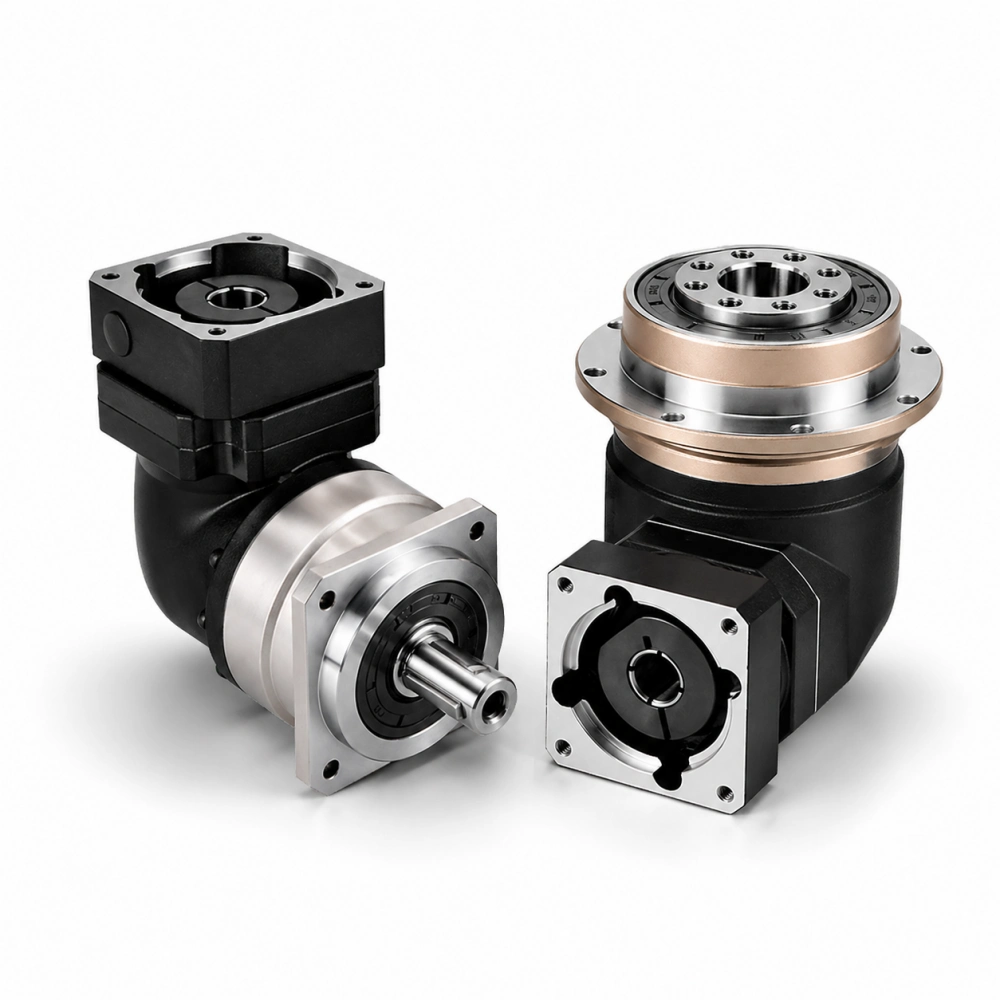
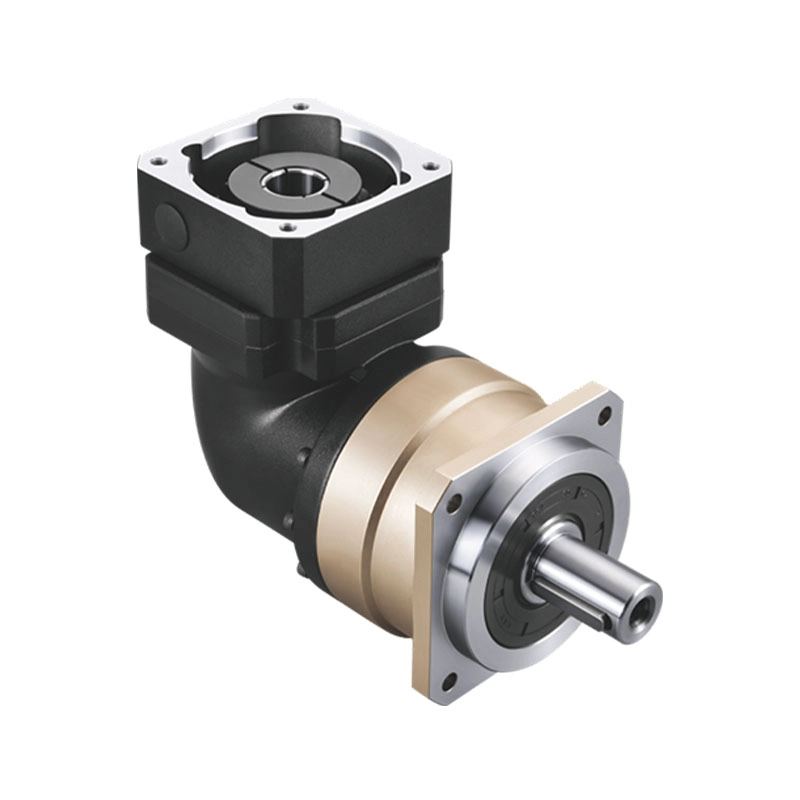
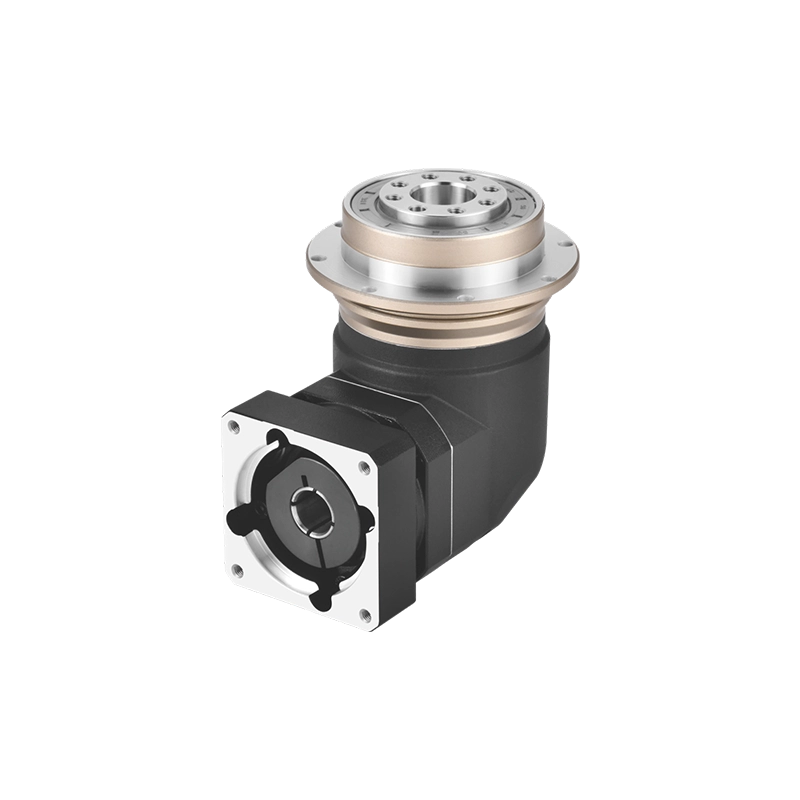
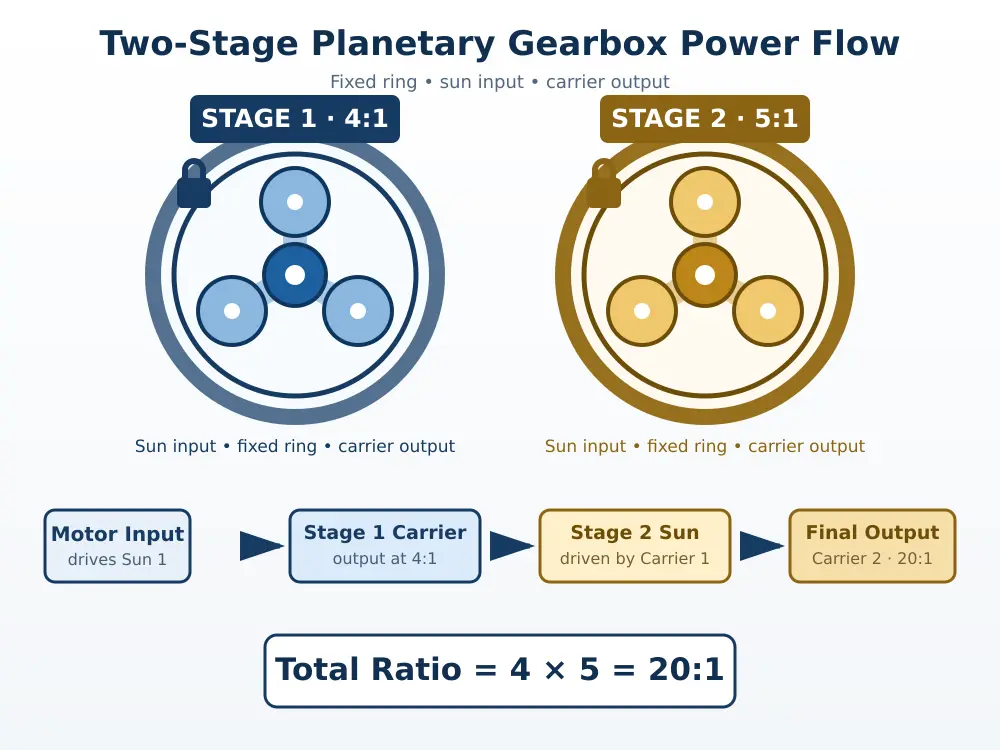
A double reduction gearbox uses two consecutive gear-reduction stages to lower input speed and increase usable output torque. The output of the first stage becomes the input of the second, so the total reduction ratio equals the first-stage ratio multiplied by the second-stage ratio. For example, a 4:1 stage followed by a 5:1 stage produces a total ratio of 20:1.
Two stages are useful when one stage cannot provide the required ratio within practical limits for gear size, tooth strength, input speed or installation space. However, adding a second stage also adds length, rotating inertia, friction, heat, cost and possible backlash. A double reduction gearbox should therefore be selected because the motion requirement needs it—not simply because two stages sound stronger.
This guide explains how double reduction works across different gearbox types and then focuses on the 2 stage planetary gearbox used with servo motors in industrial automation.
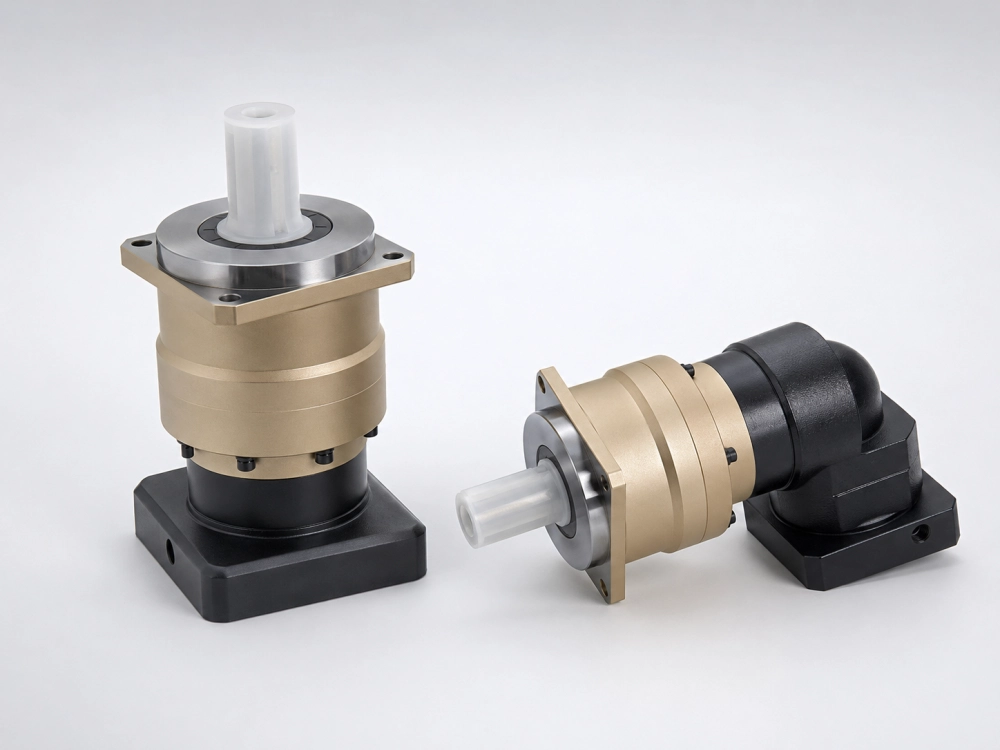
What Is a Double Reduction Gearbox?
A double reduction gearbox, also called a two-stage gearbox, contains two reduction stages connected in series. Power enters the first stage at relatively high speed and low torque. The first stage reduces that speed, and its output drives the second stage. The final output therefore turns more slowly and can deliver more torque than the motor shaft, subject to gearbox efficiency and rated capacity.
The term describes the number of reduction stages, not one specific gear geometry. A double reduction gear reducer may use:
- Two spur or helical gear stages;
- A helical stage combined with a worm stage;
- Two worm stages;
- Two planetary stages; or
- Another engineered combination of gear sets.
This distinction matters in search results and supplier discussions. A double reduction worm gear reducer is one form of double reduction gearbox, but the two terms are not interchangeable. Worm, helical and planetary arrangements can have very different efficiency, backlash, noise, input-speed and load characteristics.
How Does a Double Reduction Gearbox Work?
The power path can be understood as four steps:
- The motor drives the first-stage input gear.
- The first stage reduces speed and transfers power to an intermediate member or shaft.
- The intermediate member drives the second reduction stage.
- The second stage delivers the final output speed and torque to the machine.
In a conventional parallel-shaft unit, the intermediate shaft may carry the driven gear of stage one and the driving pinion of stage two. In a 2 stage planetary gearbox, the exact internal arrangement differs: each stage uses a sun gear, planet gears, ring gear and carrier, with one stage connected to the next inside a compact coaxial housing.
Splitting the total ratio allows each stage to operate within a practical ratio range. It can avoid an extremely small driving gear, an excessively large driven gear or an unsuitable gear-tooth combination. This is often the real reason to use double reduction. It is not automatically a method for increasing the load rating of a given gearbox frame.
Double Reduction Gearbox Calculations
Total reduction ratio
Multiply the ratios of the two stages:
Total ratio (itotal) = first-stage ratio (i1) × second-stage ratio (i2)
For example:
itotal = 4 × 5 = 20:1
The ratios are multiplied, not added. A 4:1 stage followed by a 5:1 stage does not produce 9:1.
Output speed
For a gearbox used as a speed reducer:
Output speed (nout) = input speed (nin) ÷ total ratio
If a servo motor runs at 3,000 rpm and the total ratio is 20:1, the theoretical output speed is:
3,000 ÷ 20 = 150 rpm
Approximate output torque
An initial estimate can be made with:
Estimated output torque = input torque × total ratio × total efficiency
This equation is only a calculation estimate. Actual output torque must stay within the rated, acceleration and emergency torque limits of the selected model. Gear teeth, bearings, shafts, carrier, housing and thermal conditions all impose limits. A motor torque of 5 N·m with a ratio of 20:1 does not mean that every 20:1 gearbox can safely deliver 100 N·m.
Combined efficiency
Stage efficiencies are also multiplied:
Total efficiency (ηtotal) = η1 × η2
If each stage has an efficiency of 95%, the combined theoretical efficiency is 0.95 × 0.95 = 0.9025, or 90.25%. Never assume that two stages retain the efficiency of one stage. The actual value depends on gear type, ratio, speed, lubrication, temperature, load and manufacturing quality.
Single vs Double Reduction Gearbox
| Selection factor | Single reduction | Double reduction |
|---|---|---|
| Reduction stages | One | Two in series |
| Ratio capability | Best when one stage can provide the required ratio | Useful when the required ratio exceeds a practical single-stage range |
| Axial length and parts | Usually shorter and simpler | Usually longer, with more internal parts |
| Efficiency | Generally higher within the same gear family | Stage losses compound |
| Backlash sources | One gear stage | Two stages must be controlled |
| Rotating inertia | Usually lower | Additional components can increase input inertia |
| Cost | Usually lower | Usually higher due to added gears and assembly |
| Best reason to select | The required ratio and load fit one stage | Two stages provide a more practical ratio, package or gear geometry |
Use one stage when it meets the required ratio, torque, speed, precision and service life. A simpler power path normally reduces losses and cost. Choose a double reduction gearbox when the application requires a ratio or performance combination that one stage cannot provide reliably in the available design.
Double Reduction Worm, Helical and Planetary Gearboxes
Double reduction worm gear reducer
A double reduction worm gear reducer uses two stages that include worm gearing, sometimes as two worm units connected in series. This arrangement can achieve very low output speeds and large reduction ratios. Its sliding tooth contact, however, can create greater efficiency loss and heat than rolling-contact gear arrangements. Load holding must be verified; a high worm ratio should not be treated as a certified brake.
This type is commonly considered for slow conveyors, mixers, lifts and general industrial equipment where extremely low speed is more important than high servo efficiency or precise reversing response.
Double reduction helical gear reducer
A helical double reduction gear reducer can provide smooth running, useful efficiency and substantial industrial torque. Parallel-shaft and right-angle arrangements are possible depending on the additional gear geometry. These reducers often fit continuous-duty material handling and processing machinery, but they may not provide the compact coaxial motor-to-output layout expected in a servo axis.
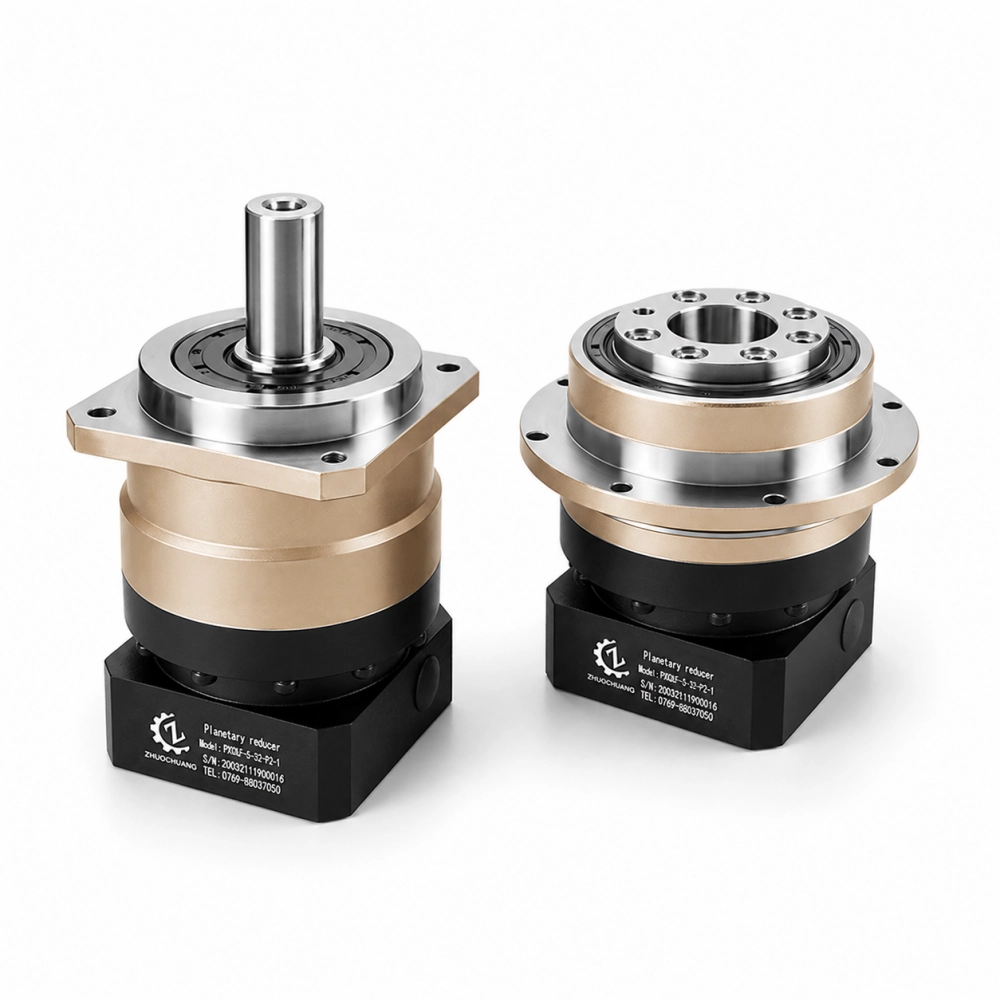
Two-stage planetary gearbox
A 2 stage planetary gearbox divides the ratio between two planetary stages while maintaining a compact coaxial power path. Multiple planet gears share load around the central sun gear, which supports high torque density. When manufactured and assembled for precision motion, the structure can also provide low backlash, high torsional stiffness and good compatibility with servo motors.
These advantages make the two-stage planetary arrangement especially relevant to robotics, CNC machinery, packaging equipment, inspection systems, assembly machines and other automation axes. It is not the best choice for every double-reduction application, but it is often the most relevant choice when accurate servo positioning and compact installation matter.
When Does a Two-Stage Planetary Gearbox Fit?
The practical decision should begin with the available ratios in the manufacturer’s series. A ratio that requires two stages in one design may be available in one stage in another design. Do not select the stage count from a universal ratio rule.
A two-stage planetary gearbox is commonly considered when:
- The required ratio is not available in the selected single-stage series;
- The servo motor speed must be reduced to a substantially lower machine speed;
- A coaxial and relatively compact transmission is required;
- Low backlash and repeatable reversing motion are important;
- The available single-stage gear geometry would be impractical; or
- The manufacturer’s two-stage model provides the necessary rated torque and bearing capacity.
A two-stage planetary gearbox may be unnecessary when a single-stage ratio already meets the machine requirement. It may also be unsuitable if the added length, inertia or backlash works against a highly dynamic axis. Selection should be based on the complete servo system rather than ratio alone.
This article focuses on the decision to use exactly two stages. For a broader explanation of stage combinations, see our guide to multistage planetary gearboxes. For available inline configurations, visit our inline planetary gearbox range.
How to Select a Double Reduction Gearbox
1. Calculate the required ratio from real operating speed
Use the motor’s operating speed at the required machine condition, not automatically its maximum catalog speed. Calculate the target ratio, then compare it with the supplier’s actual available ratios and permitted input speeds.
2. Build the complete torque profile
Provide continuous torque, acceleration torque, reversing torque and emergency-stop torque. For vertical axes, include gravity and braking conditions. Apply the correct service factor for shock load, operating hours and start-stop frequency.
3. Check gearbox ratings instead of calculated torque alone
The calculated torque after reduction is not a gearbox rating. Compare it against the manufacturer’s allowable output torque, input speed, cycle conditions and service life. If the driven load creates belt pull, pinion force or an overhung mass, also verify radial load, axial load and tilting moment.
4. Evaluate backlash, stiffness and inertia together
In a servo system, ratio is only one part of the result. Backlash affects direction reversal; torsional stiffness affects wind-up under load; reflected inertia influences motor control. A high ratio can improve the motor-to-load inertia relationship, but extra gearbox inertia and compliance still need to be included in the system model.
5. Confirm motor and machine interfaces
Send the complete servo motor model or motor drawing. Confirm the motor flange, pilot, shaft diameter, shaft length and key or smooth-shaft design. On the output side, verify the gearbox shaft or flange, mounting face, bolt pattern, locating diameter and available installation length.
6. Review efficiency and thermal duty
Because stage losses compound, continuous operation needs a thermal check. High input speed, frequent acceleration, heavy load, elevated ambient temperature and restricted airflow can all increase operating temperature. Gearbox efficiency should also be included when estimating the motor power needed at the load.
7. Consider direction of rotation
Each external gear mesh reverses direction, while internal planetary arrangements follow their own kinematic relationships. Do not infer final output direction from the words “double reduction.” Confirm direction using the manufacturer’s drawing and rotation notation, especially when replacing another reducer.
Common Double Reduction Gearbox Selection Mistakes
Adding stage ratios instead of multiplying them
A 3:1 first stage and a 10:1 second stage give 30:1, not 13:1. Use actual ratios when an exact final speed matters.
Assuming two stages automatically double torque capacity
Two stages multiply the theoretical torque according to the combined ratio and efficiency, but the safe output remains limited by the rated capacity of the complete gearbox.
Calling every double reduction gearbox a double worm reducer
The stage count and gear type are separate specifications. Confirm whether the unit is worm, helical, bevel, planetary or a hybrid design before comparing efficiency or precision.
Choosing the highest available ratio
Excessive reduction can make the machine too slow, raise reflected motor speed requirements and reduce useful output power. Choose the ratio from the motion requirement.
Ignoring efficiency in motor sizing
Not all input power reaches the load. Combined stage losses affect output torque, energy use and heat. This is particularly important when comparing a double reduction worm gear reducer with a two-stage planetary gearbox.
Using stage count as a precision specification
Two-stage does not automatically mean low backlash. Backlash grade, tooth finishing, bearing support, carrier accuracy and assembly control determine whether a gearbox is appropriate for precision positioning.
Where Zhuochuang Planetary Gearboxes Fit
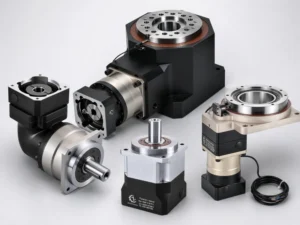
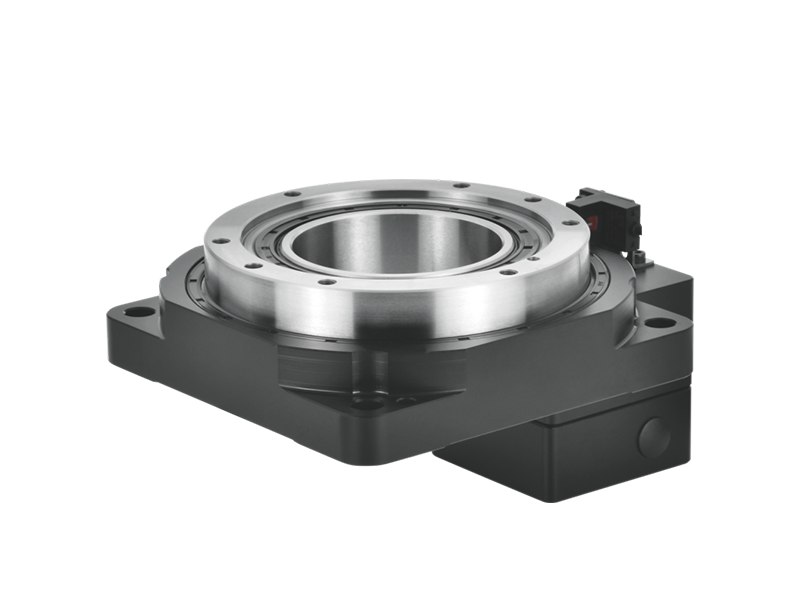
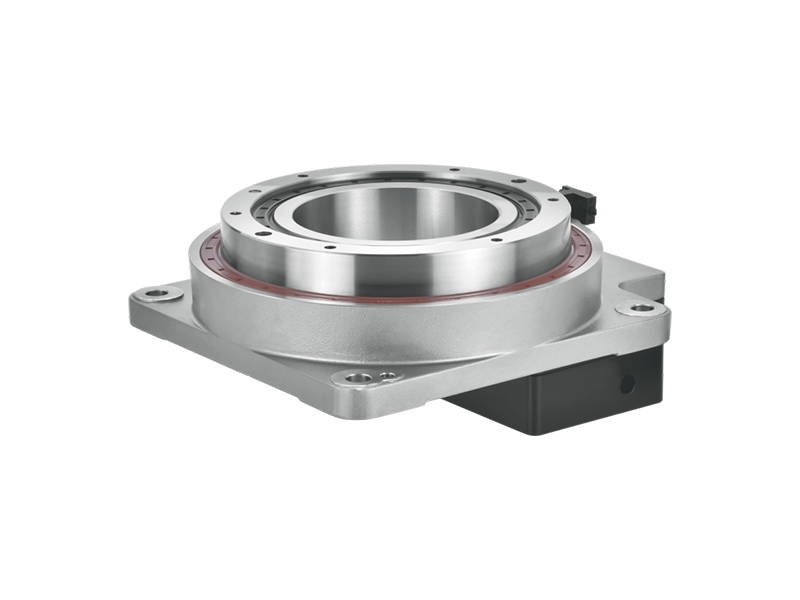
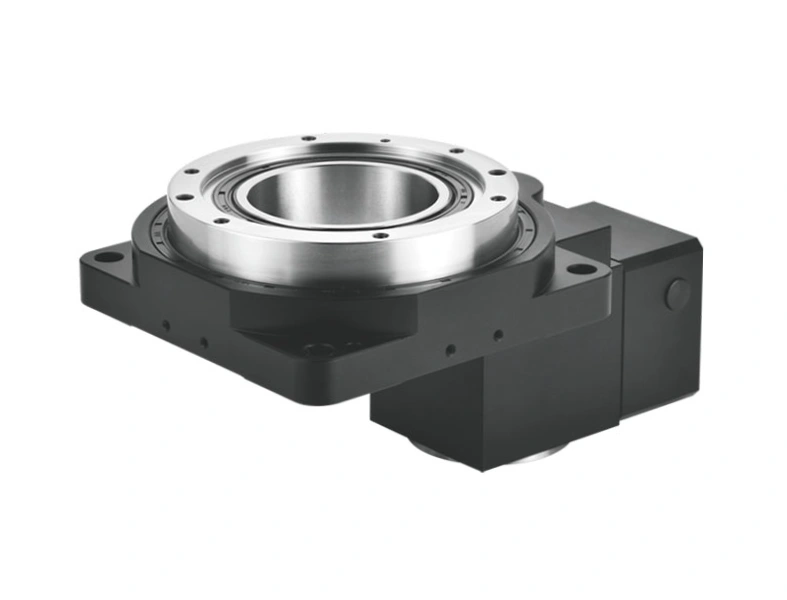
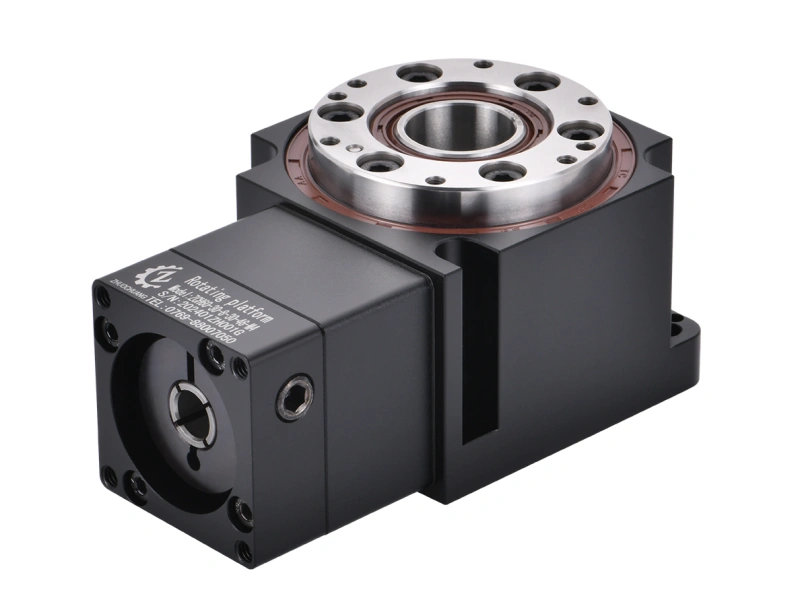
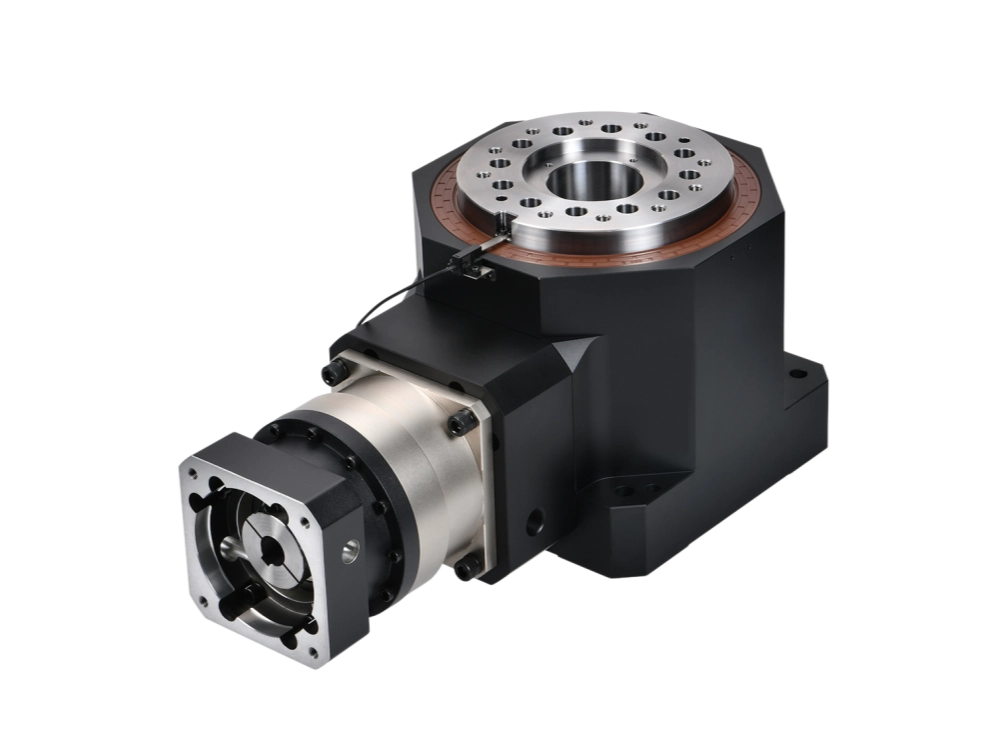
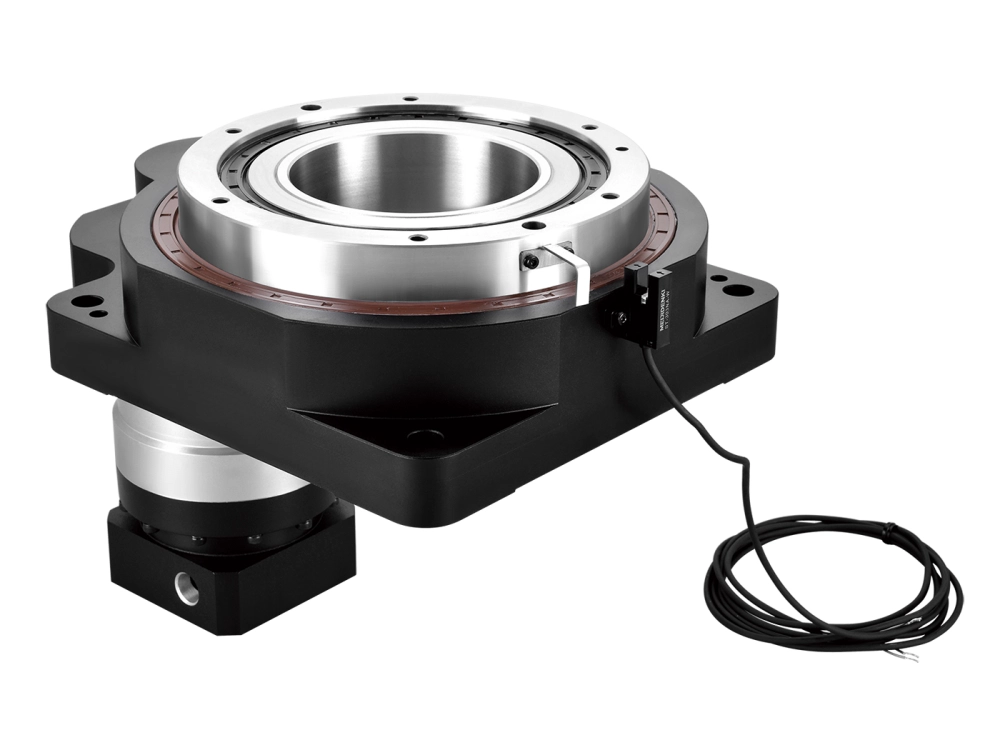
Dongguan Zhuochuang Precision Machinery Co., Ltd. manufactures precision planetary gearboxes and hollow rotary tables for industrial automation. Zhuochuang planetary gearboxes are designed for applications that require servo or stepper motor matching, compact transmission, controlled backlash and accurate mechanical interfaces.
Our relevant solution to a double-reduction requirement is normally a one-stage or 2 stage planetary gearbox selected from the required ratio, torque, motor model, precision and load conditions. We do not position our products as general double worm reducers. This distinction helps buyers reach the correct product instead of comparing unrelated gearbox structures under one broad keyword.
For applications with limited axial space, a right-angle planetary gearbox may provide a more practical motor layout. Inline and right-angle arrangements should still be compared by ratio, backlash, efficiency, input speed, output load and installation dimensions.
Information Needed for Gearbox Selection
Send the following information for a model recommendation and quotation:
- Motor brand and complete model number;
- Rated and maximum motor speed;
- Required output speed or total ratio;
- Continuous, peak and emergency-stop torque;
- Load inertia and motion cycle;
- Required backlash and positioning accuracy;
- Radial, axial and moment loads at the output;
- Mounting orientation and available space;
- Duty cycle and operating environment;
- Machine drawing, motor drawing and required quantity.
Frequently Asked Questions
What is a double reduction gearbox?
A double reduction gearbox uses two gear-reduction stages connected in series. The first stage reduces motor speed, and its output enters the second stage for further reduction. The total ratio is the product of both stage ratios.
What is the formula for a double reduction gearbox ratio?
Multiply the first-stage ratio by the second-stage ratio: itotal = i1 × i2. For example, 5:1 multiplied by 8:1 produces a total ratio of 40:1.
What is the difference between single and double reduction gearboxes?
A single reduction gearbox has one reduction stage, while a double reduction gearbox has two. Double reduction can provide a larger total ratio, but it normally adds components, length, losses, inertia and cost.
Is a double reduction gearbox the same as a two-stage gearbox?
Usually, yes. In general industrial terminology, both describe two consecutive reduction stages. The supplier should still identify the actual gear type and arrangement.
Is a double reduction gearbox always a worm gearbox?
No. A double reduction worm gear reducer is one possible design. Double reduction can also use helical, spur, planetary or combined gear arrangements.
Why use a two-stage planetary gearbox with a servo motor?
A two-stage planetary gearbox can provide ratios unavailable in a selected single-stage series while maintaining a compact coaxial layout, high torque density and motion-control characteristics suitable for servo automation. Final selection must still consider backlash, stiffness, inertia, torque and bearing loads.
Does a second reduction stage increase backlash?
It introduces another gear stage whose clearances contribute to the complete transmission. Whether the final backlash is acceptable depends on gear accuracy, bearing support, assembly control and the manufacturer’s stated total backlash rating.
Can I select a double reduction gear reducer from motor power and ratio only?
No. Selection also requires the motor model, input speed, complete torque cycle, load inertia, backlash, radial and axial loads, installation interface, duty cycle, environment and required service life.
Final Selection Rule
Use a double reduction gearbox when two practical stages meet the required ratio and machine constraints better than one stage. Multiply ratios and efficiencies, but never treat calculated torque as the gearbox’s allowable rating.
For servo-driven automation, the decision often leads back to a correctly sized one-stage or two-stage precision planetary gearbox. Choose the stage count only after checking the real motor speed, output motion, torque profile, backlash, stiffness, external loads and mounting drawings.