
Cam Indexer vs Servo Indexer: How to Choose the Right Rotary Indexing Technology
By the time an engineer is comparing a cam indexer against a servo indexer, the basic question of “do I need indexing?” is already answered. What’s left is a harder, more practical decision: which drive technology fits the production line’s real operating pattern — not just today, but over the next several years of product changes, volume shifts, and maintenance cycles. This guide is written for that decision, not as an introduction to how indexing works.
If you want the underlying mechanics — how a barrel cam, worm gear, Hirth coupling, or planetary drive actually produces indexed rotation — our rotary indexing table mechanism guide covers that in detail. Here, we focus on the commercial and operational trade-offs machine builders actually weigh before ordering.
The Real Question Behind “Cam Indexer vs Servo Indexer”
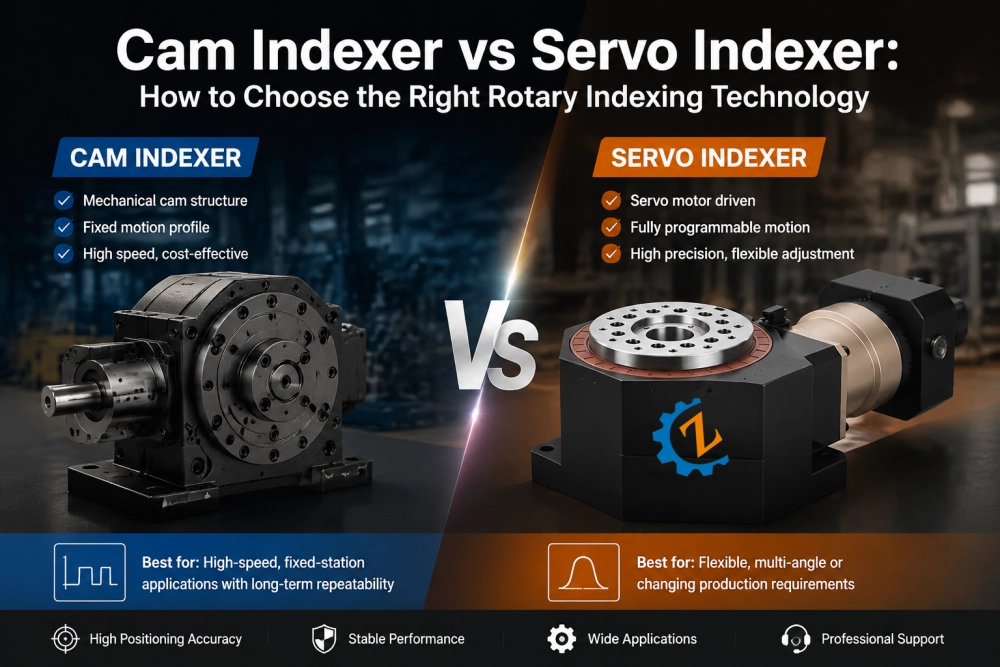
Both a rotary cam indexer and a servo rotary indexer can move a table from one station to the next and hold it there. The difference that actually matters to a buyer isn’t which one is “more precise” in isolation — both can be built to tight repeatability specs. It’s which one matches how the machine will actually be used: fixed station count for years, or a line that needs to change angle counts, dwell times, or product variants without a hardware rebuild.
Cam Indexer: What It’s Actually Good At
A cam indexer (also called a rotary cam indexer or mechanical indexer when built around a barrel cam and roller followers) converts continuous motor rotation into a fixed, mechanically-guaranteed indexing motion. Once the cam is machined, the motion profile — acceleration, dwell, deceleration — is locked into the hardware itself.
The practical advantages that matter for a buying decision:
- No controller tuning risk. The motion is defined by the cam geometry, not by servo loop parameters that need to be set up and validated.
- Strong at high, stable cycle rates. For a fixed station count running at high speed for years, a cam indexer is often the more cost-effective and mechanically simpler solution.
- Lower electronics footprint. No servo drive, no motion controller cabinet space, fewer points of electronic failure.
The trade-off is flexibility. Changing the station count, indexing angle, or dwell pattern generally means replacing the cam — a real cost and lead-time item, not a settings change.
Servo Indexer: What It’s Actually Good At
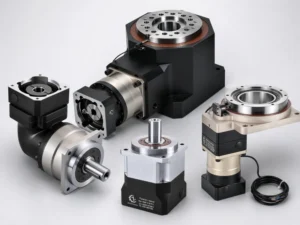
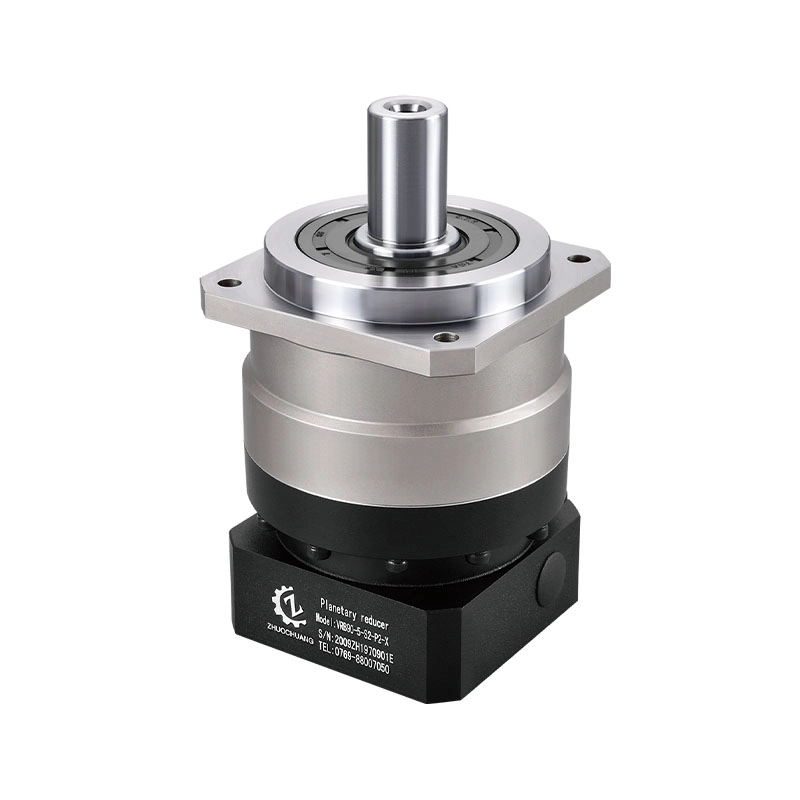
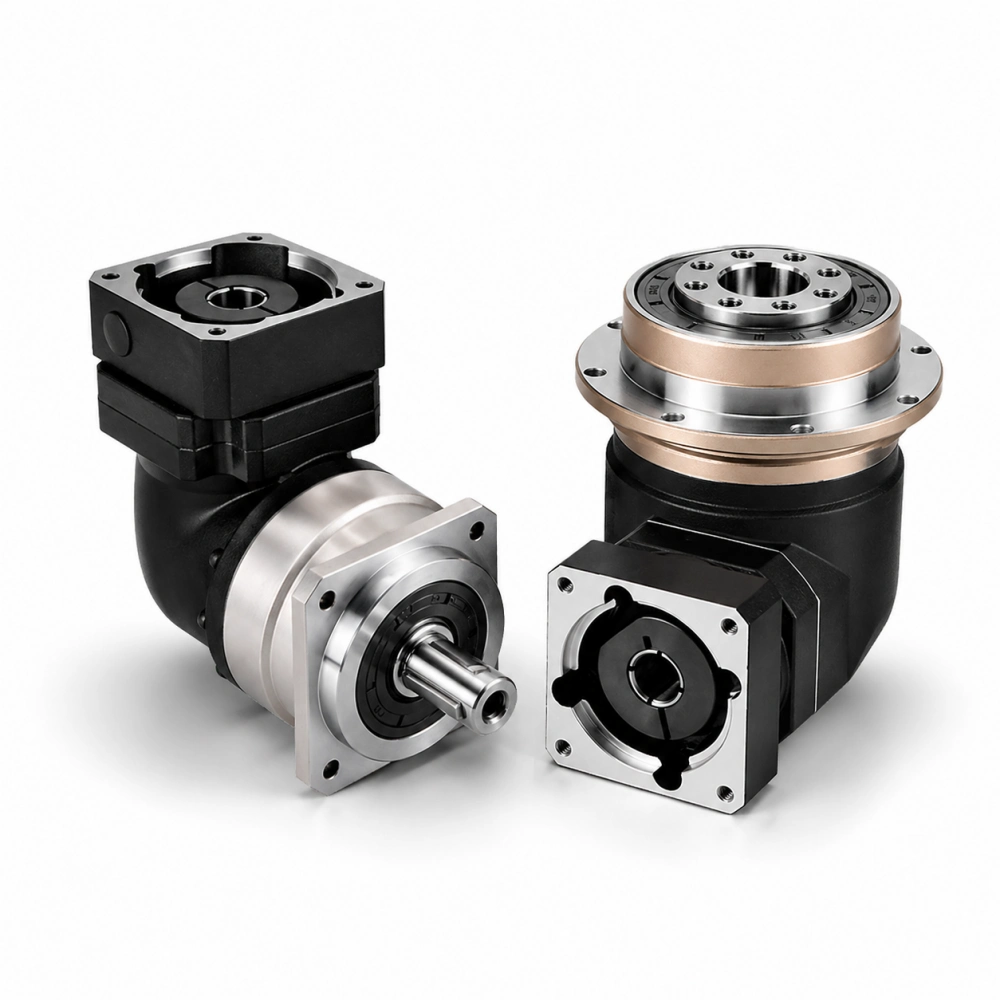
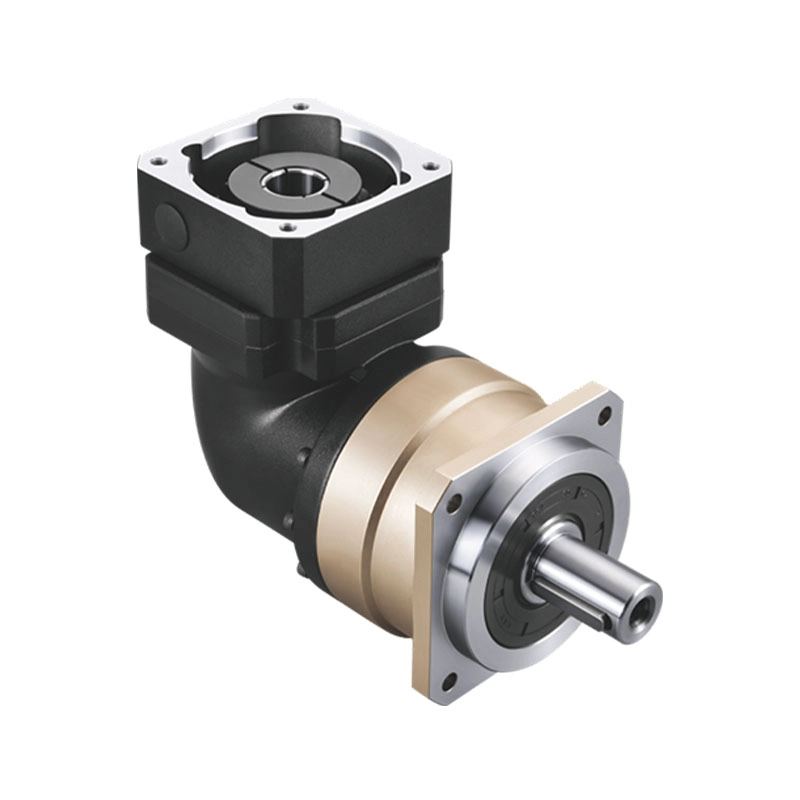
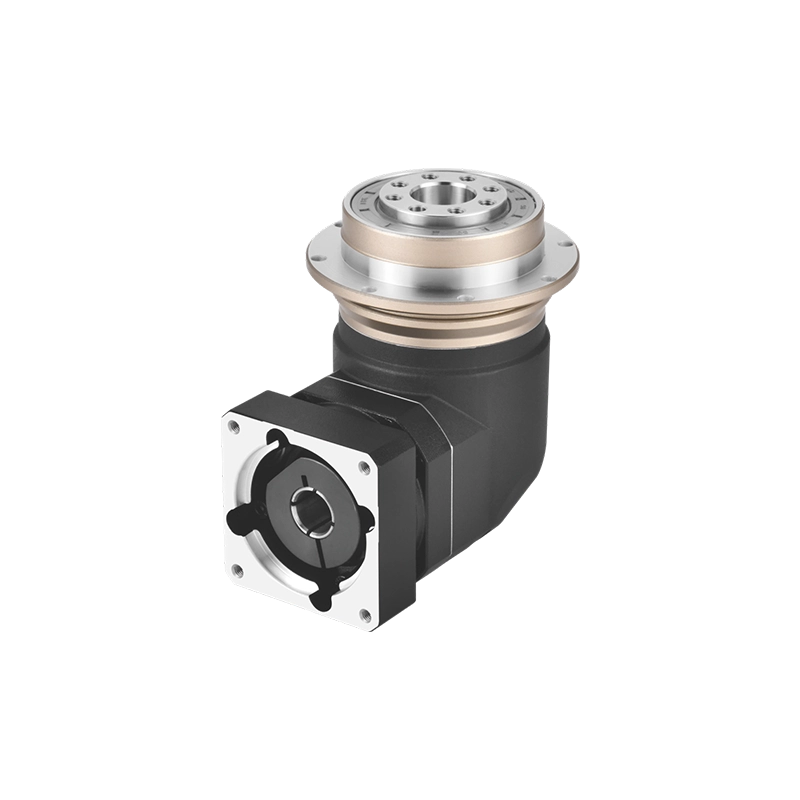
A servo indexer (often called a servo rotary indexer or servo-driven indexing table) uses a servo motor and drive train — commonly a precision gearbox — to move the table through a programmed motion profile. The station count, dwell time, indexing angle, and even acceleration curve are set in software.
The practical advantages:
- Changeover without new hardware. A different product variant, station count, or dwell pattern is usually a program change, not a mechanical rebuild.
- Integration with the rest of the line. Servo control makes it straightforward to coordinate the indexing axis with vision systems, sensors, robots, or PLC-triggered process steps.
- One drive platform across product families. The same servo table hardware can often support multiple product variants, reducing the number of unique mechanical assemblies a plant has to stock and maintain.
For a deeper look at what to check when specifying servo-driven positioning — load, inertia, torque margin, backlash — see our servo rotary table guide.
Six Factors That Actually Decide the Choice
In practice, machine builders weigh these together rather than picking one “winner” attribute:
- Production stability. Fixed station count and stable product for years favors a cam indexer. Frequent product changes or evolving station requirements favor a servo indexer.
- Changeover cost and lead time. A new cam is a machined part with real lead time. A new servo program is a configuration task, usually completed in-house.
- Control cabinet space and complexity. A cam indexer needs less electrical infrastructure. A servo indexer needs a drive, often a motion controller, and cabinet space for both.
- Maintenance profile. Cam followers and the cam track are mechanical wear items with a known service life. Servo systems shift some maintenance risk to electronics and drive tuning, but eliminate cam-replacement costs.
- Noise and vibration at speed. At very high cycle rates on small tables, a well-made cam indexer is often smoother and quieter than a servo system pushed to match the same speed.
- Coordination with other automation. If the indexing axis needs to interact with vision inspection, variable dwell for different process steps, or robot handoffs, servo control generally integrates more directly.
Total Cost of Ownership: Where the Math Often Surprises Buyers
A cam indexer usually has a lower purchase price for a fixed application. But total cost of ownership isn’t just the purchase price — it includes what happens the first time the process needs to change. If a plant reconfigures its line every one to two years, the accumulated cost of new cams, machining lead time, and re-validation can offset the cam indexer’s lower upfront cost. If the line runs the same product configuration for its full service life, that flexibility premium on a servo indexer may never get used.
The honest way to evaluate this isn’t a generic rule of thumb — it depends on your actual changeover frequency, product roadmap, and how many stations the machine needs over its life. This is exactly the kind of question worth working through with a supplier before committing to either drive type.
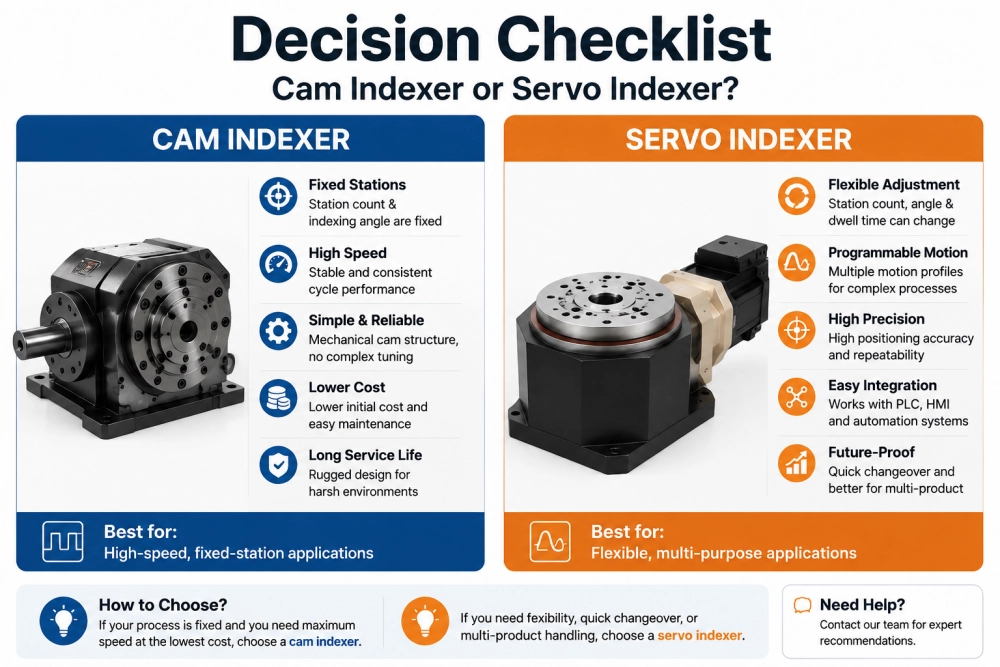
Decision Checklist: Cam Indexer or Servo Indexer?
A cam indexer tends to fit better when:
- Station count and indexing angle are fixed for the foreseeable production life
- Cycle rate is high and consistent
- The machine has limited control cabinet space or budget for servo drives
- The process does not need to coordinate indexing timing with variable external events
A servo indexer tends to fit better when:
- Station count, dwell time, or indexing angle may change across product variants
- The line needs to run multiple products on shared hardware
- Indexing needs to coordinate with vision inspection, sensor feedback, or robot cycles
- The machine footprint benefits from a compact, hollow-bore rotary unit for cable and air-line routing
Where a Hollow Rotary Table Fits Into This Decision
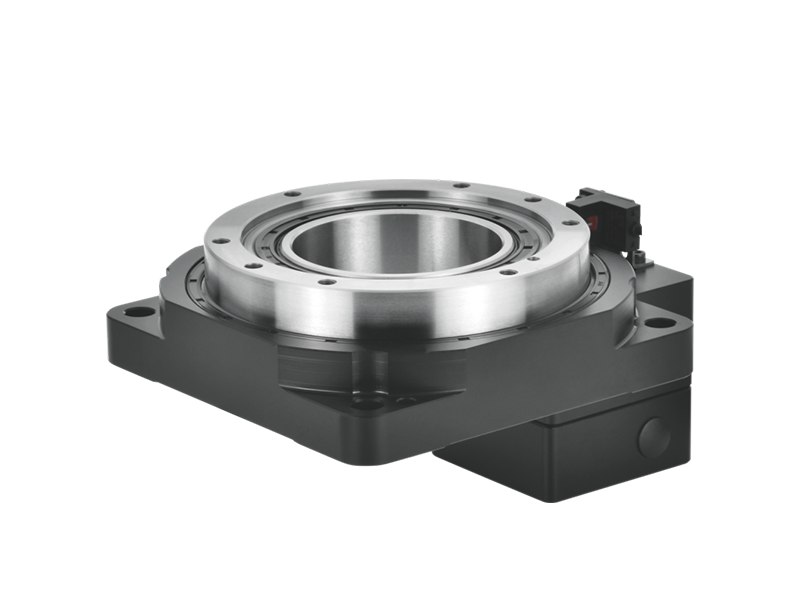
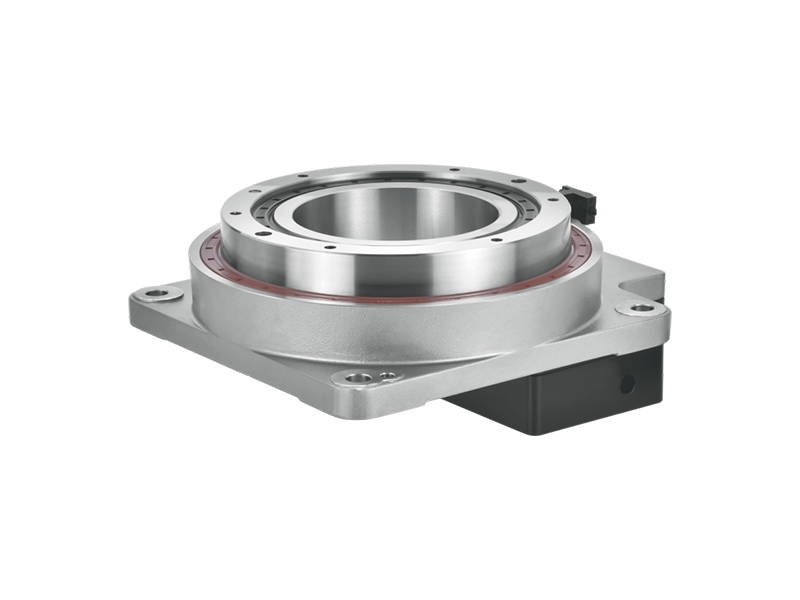
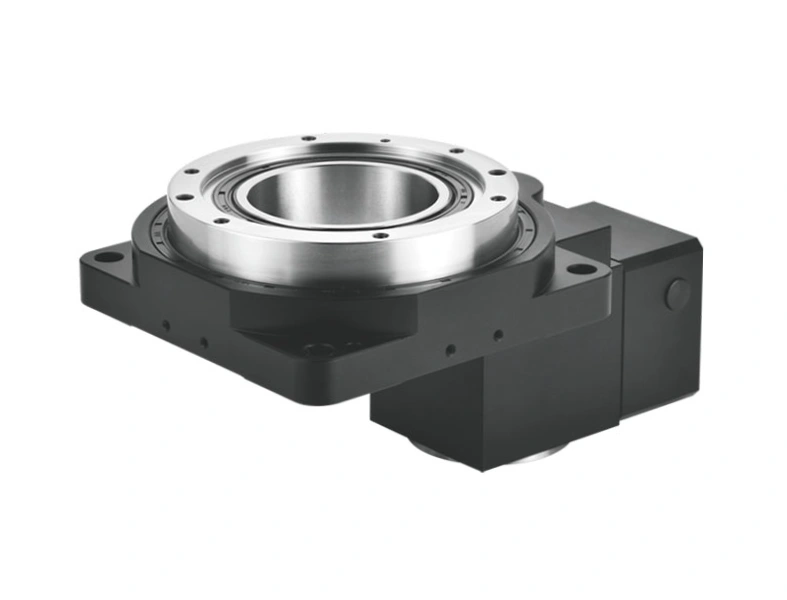
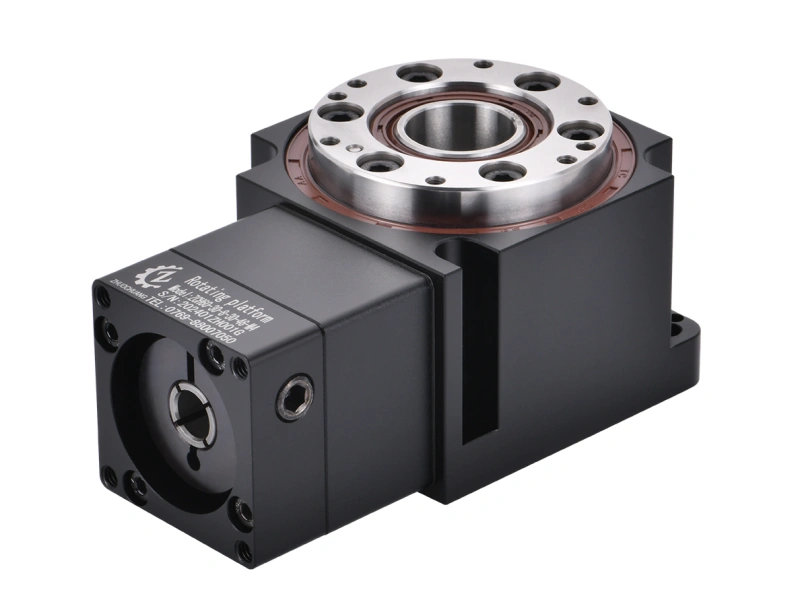
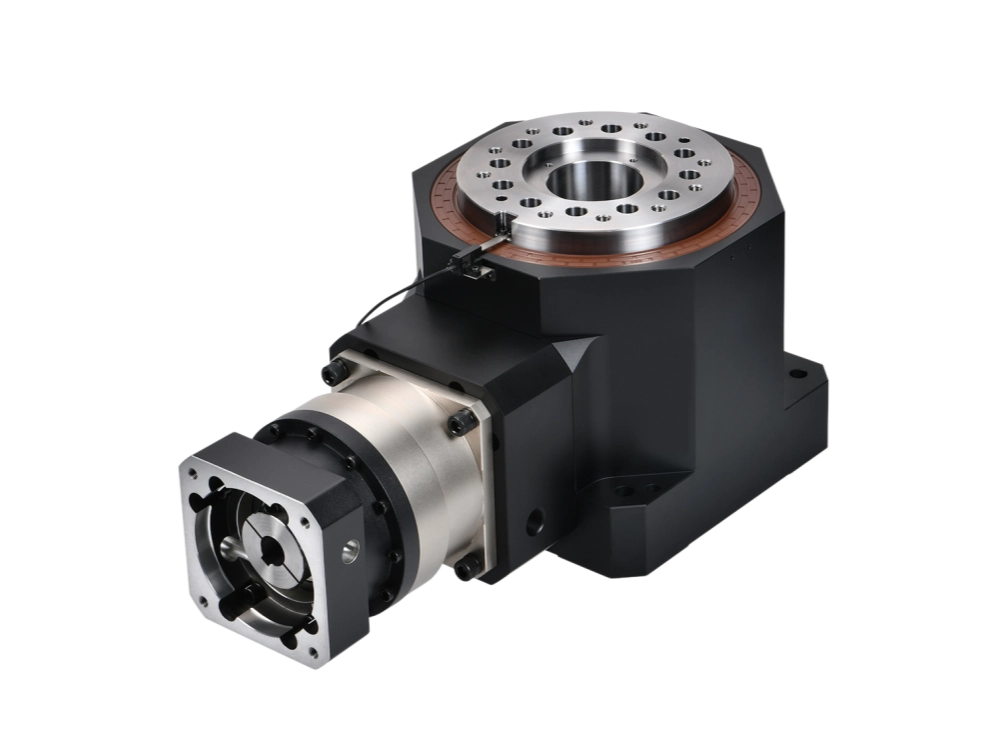
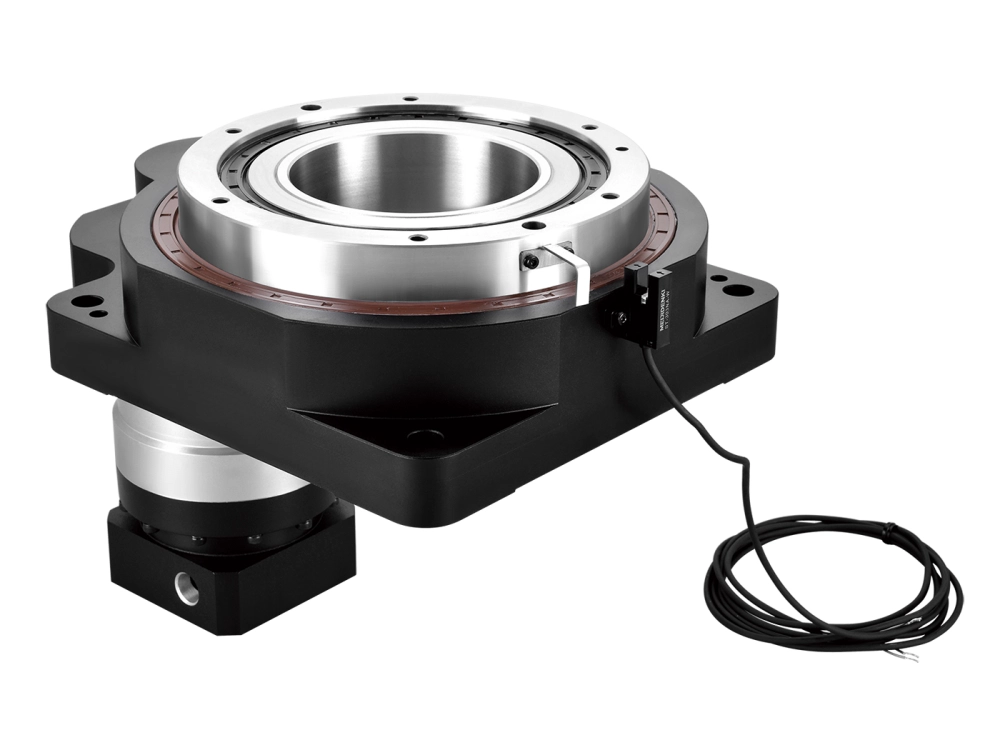
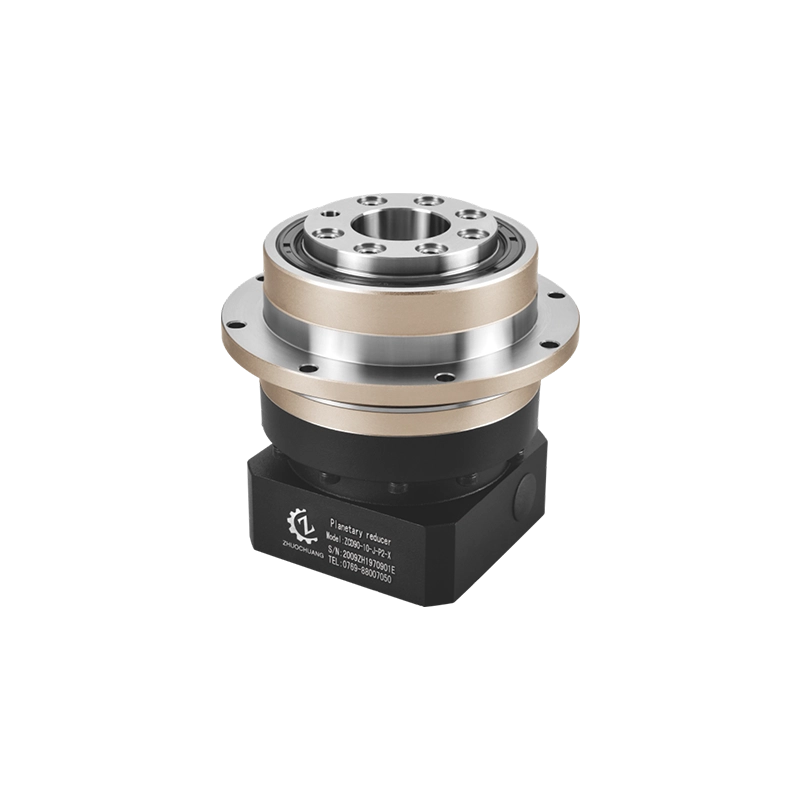
Once a project lands on servo-driven indexing, the next practical question is usually how to route sensor cables, pneumatic lines, or vacuum tubing to the fixtures mounted on the rotating table. A hollow rotary table — built around a precision planetary drive with a center-through bore — lets those lines pass through the axis of rotation instead of wrapping around the outside, which keeps compact servo-indexed stations cleaner and easier to service. It’s a natural fit for the servo-indexer side of this decision, particularly in vision inspection, electronics assembly, and multi-station testing equipment.
What to Send Us for a Recommendation
Because the right choice depends on your actual production pattern rather than a generic spec sheet, the fastest way to get a useful recommendation is to share the real application details:
- Current and expected future station count
- Required cycle time and dwell time per station
- Expected frequency of product or configuration changes
- Total rotating load and fixture inertia
- Whether cables, air lines, or vacuum tubing need to pass through the rotating center
- Available control cabinet space and existing servo/motor platform, if any
Send this through our contact page and our engineering team can help you weigh the cam-vs-servo trade-off against your actual production plan, not a generic comparison.
FAQ
Is a servo indexer always more accurate than a cam indexer?
Not necessarily. Both technologies can be built to tight repeatability specifications. The meaningful difference is usually flexibility and changeover cost, not raw accuracy — a well-built cam indexer can match or exceed a servo indexer’s repeatability at a fixed station configuration.
Can a cam indexer be converted to a servo indexer later?
Generally no, not as a simple retrofit. The cam mechanism is built around a fixed motion profile, so switching to programmable indexing usually means replacing the drive mechanism rather than modifying the existing cam assembly.
Which is cheaper: cam indexer or servo indexer?
A cam indexer typically has a lower upfront cost for a fixed, stable application. A servo indexer often costs more initially but can avoid the recurring cost of new cams if the production line changes configuration over time. The better comparison is total cost of ownership over the machine’s expected service life, not just the purchase price.
Do servo indexers need more maintenance than cam indexers?
They require different maintenance, not necessarily more. Cam indexers have mechanical wear items (cam track, followers) with a defined service life. Servo indexers shift maintenance attention toward the drive electronics and motor, while eliminating the mechanical cam-wear and cam-replacement cost entirely.
What is an indexing gearbox, and how does it relate to this comparison?
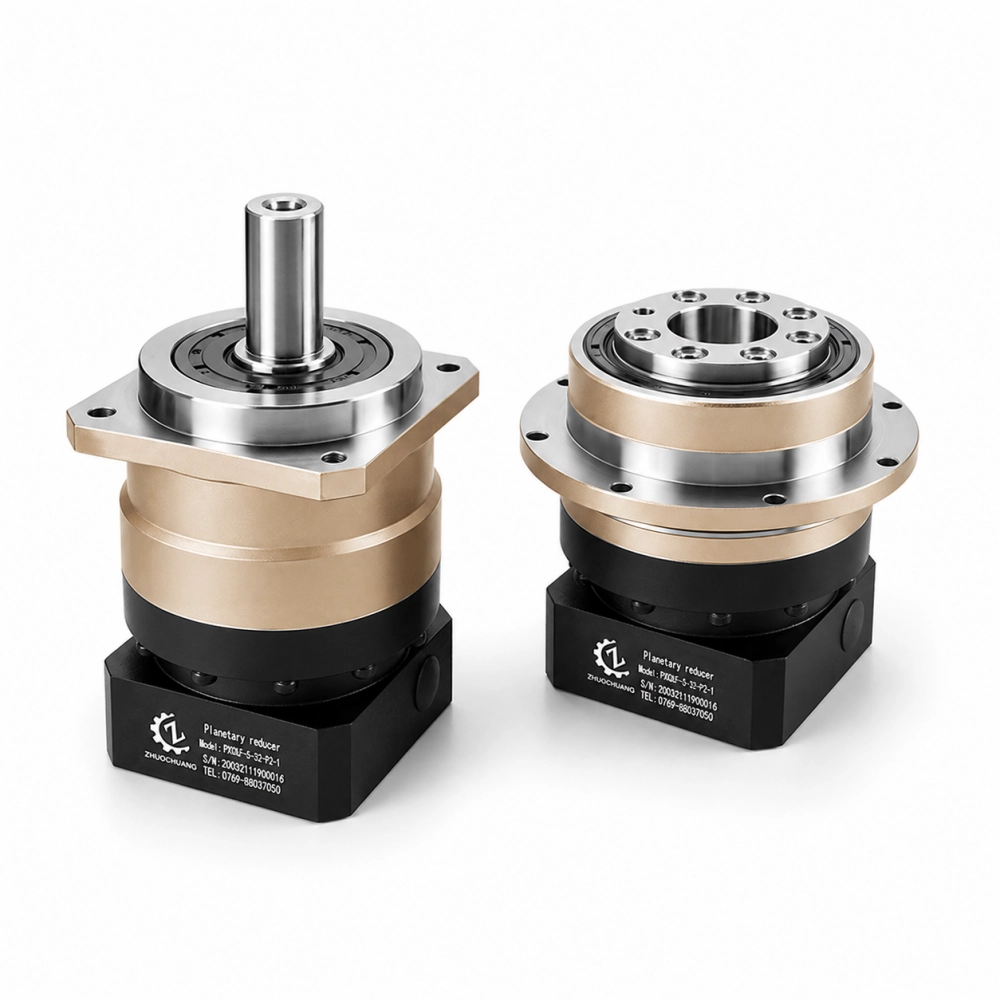
An indexing gearbox is the precision gear-driven transmission — often planetary-based — that transfers torque from the motor to the table in a servo indexer. It’s a component within the servo indexing approach rather than a separate category to compare against cam indexers directly.
Great detailed breakdown of cam versus servo indexers! The total cost of ownership analysis is especially helpful for evaluating long-term production needs. At Micro Gear Motor OEM, we frequently see how precision requirements drive these decisions. Thanks for the clear and practical guide!